
Features
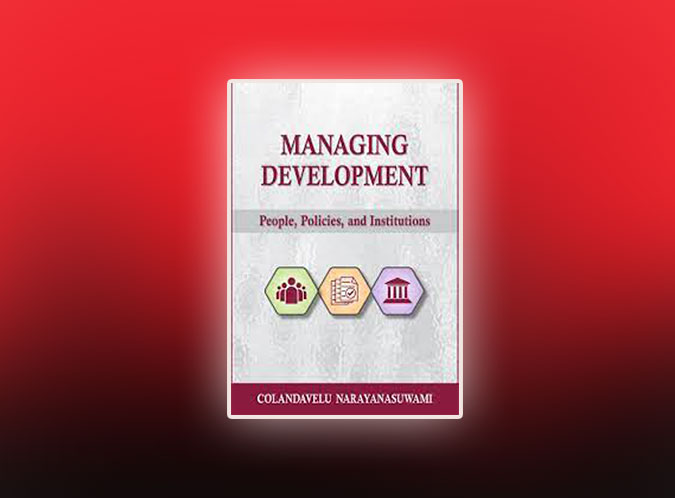
Taking Sri Lanka Forward- Excerpts from C. Narayanasuwami’s “Managing Development: People, Policies and Institutions

Confronting issues of debt restructuring, economic stability and sustainability- a long-term perspective
Sri Lanka’s financial crisis has created greater awareness of the need for financial, economic and institutional reform and the development of a holistic approach to the planning, implementation and monitoring of economic and social policies and programs. Substantial efforts have been made in Sri Lanka for over one year or so to restructure debt and increase revenues but the conditions for long-term economic stability are yet to be fully addressed as these require multi-faceted initiatives at different levels. Reform measures are unlikely to be implemented expeditiously given the current socioeconomic pressures. Any reform initiatives will be time consuming and will require political cohesion and commitment.
The visit of the IMF team this month will throw some light on measures to be adopted with immediate and long-term results orientation.It would be prudent to think in terms of overall structural changes, some requiring immediate attention and others planned for a longer-term intervention. Looking at similar emergencies encountered in South America, South Africa and Asian countries such as Pakistan a number of short and long-term structural changes are warranted. Do the current programs, policies and the institutional framework provide adequate flexibility to enhance public sector performance, governance mechanisms and institutional capacity to address stabilisation issues? We had reviewed a few books and reports on economic management and found that considerable efforts need to be made to bring the country to sustainable levels of economic performance.
We reviewed, among others, a recent publication authored by a Sri Lankan Asian Development Bank Professional, Mr. C. Narayanasuwami, previously of the Ceylon Civil Service who last headed the then Agrarian Research and Training Institute (now known as Hector Kobbekaduwa Agrarian Research and Training Institute) prior to joining the international civil service.
The book was released simultaneously in Colombo, Manila and Sydney. Some of the key aspects covered in the book entitled, ‘Managing Development: People, Policies and Institutions’ apply to the situation in several developing countries in the Asia-Pacific region with a few areas specifically addressing issues of particular relevance to Sri Lanka. Governance. The section on Governance, for example, deals primarily with the Sri Lankan situation and acknowledges that ‘sound governance would require (i) an effective policy framework, (ii) a qualified, competent, trained, and skilled workforce at different levels, (iii) an appropriate emoluments and salary structure that takes into account differences in performance levels, (v) a corruption free management system, and (vi) an overall politico-legal framework that supports non-discriminatory policies and promotes initiative and dynamism in project and program execution.
Evidently, transparency, predictability, accountability, stakeholder participation, rule of law, an efficient and uncorrupted public service, independence of judiciary, and media freedom, among others, are vital components of good governance. Sri Lanka has suffered substantially in upholding many of these values largely due to the adoption of undemocratic and often ill-conceived policies and practices in implementing varied development programs. No significant changes have occurred to reverse the culture of corruption and public sector inefficiencies and instil discipline in the maintenance of law and order’.
Public Sector Performance. Reference is made to the deterioration of public service standards in Sri Lanka and the following excerpt captures the current weaknesses that impede development performance.‘Over the past 30 years, about 40 percent of development projects failed to achieve their intended objectives within the stipulated time frames or within the expected budgetary allocations because of the lack of capacity to plan, implement, and deliver in a coordinated and integrated manner.
Some of the major factors that contributed to this situation are identified as follows; (i) politicization of the public service, (ii) lack of an enabling environment for improving performance, (iii) inadequate punitive strategies, (iv) inconsistent recruitment standards for public services, (v) inadequacies in the compensation and benefit packages, (vi) disproportionate expansion in the public sector-at present at least one-third of the public sector personnel are considered as superfluous and (vii) ethnic conflict and its debilitating impact on public sector morale’.
‘The politicization of the public service initially arose out of a felt need, largely driven by the desire to transform a highly elitist pro-western bureaucracy to meet the demands of a nation that had emerged from the shackles of colonialism. However, when public servants used this opportunity to seek favours and ignore tradition-bound value systems and ethical conduct, a service that built its reputation on its ability to withstand political pressures, maintain impartiality, objectivity and transparency in its dealings since the time of the British rule, began to crumble.
Loyalty was linked to political parties and individuals rather than to institutions and programs’. We consider the situation a major impediment to implementation of vital development projects. Capacity for decision-making is virtually non-existent due to the politicisation of the public sector. A radical transformation of the public sector is called for. Capacity Constraints. The book identifies capacity constraints as a major impediment to project/program implementation and provides some insights based on ADB experience in developing countries.
ADB has defined capacity as ‘strengthening the national framework within a developing member country (DMC) that affects the direction, management, and sustenance of the development process in a sector and the economy as a whole’. ‘In recent years ADB has linked capacity building closely with governance and has emphasized that good governance implies the capacity to provide citizens with an acceptable level of public services in an effective and efficient manner. Despite efforts made by multilateral agencies capacity constraints continue to pose challenges to development initiatives, as proven in Sri Lanka.
The limited success is attributable to shortcomings in the approaches adopted and the inability of countries like Sri Lanka to change, adapt, adjust and learn from lessons of experience’. The book refers to the efforts made and states as follows; ‘Over the years, a substantial number of development projects in most of the sectors failed to realise their full potential due to inadequate implementation capacities.
Evidence suggests that funds allocated by multilateral agencies lapsed on several occasions due to less than satisfactory disbursement processes, The factors that impeded more effective utilization of foreign aid is summarised as follows;(i)inadequate understanding of management systems, including a thorough understanding of the broad based objectives and goals of projects/programs, (ii) rigidity of policy structures that were bound by archaic regulations irrelevant to modern concepts of management, (iii) presence of multiple institutions whose roles overlapped with one another making decision making difficult because of conflicts that had political undertones, (iv) inadequate monitoring of development operations that had high foreign equity and funding support, and (v) weak public accountability and transparency that raised concerns among donors, and inadequate counterpart budget provisions.
Overall, lack of a results-based management system, complex administrative procedures, poor policy and institutional environment, weak procurement systems, and inadequate counterpart budget provisions contributed to the slow absorption of aid resources’.
The above excerpts coincide with some of the management shortcomings identified by the World Bank and the IMF in their deliberations with the Government in recent months.A major area identified as a constraint to development operations by international donors is the weak institutional capacity of implementing agencies. The book has a lot to offer in this regard and some useful excerpts are provided below;
Institution Building
. ‘institution building is aimed at strengthening capabilities for planning, organising, implementing, monitoring and evaluating development projects and programs sponsored by public, private, or grassroots level organisations. The major focus of governments should be on the approaches and issues related to increasing the capability of development institutions to make effective use of available human, physical, and financial resources.
The strengths and weaknesses of institutions as well as behavioural factors have often influenced the nature and pace of the development process. Many failures in development projects are not only due to production or technological inadequacies but also to institutional deficiencies, largely because self-sustaining capacity to implement projects is not emphasized at the time of project formulation. Studies of rural development in Asia have confirmed that inadequacies in the institutional framework have hindered the effective implementation of rural development programs’.
‘Institutional development has been impeded by shortages of trained staff, including competent middle-level managers who could provide the leadership to manage development projects. The available key staff are often burdened with multiple assignments and are denied the opportunity to provide the required focus and direction for project implementation.
The designers of complex projects do not examine thoroughly the capacities of each agency to implement complex components. Programs that depend on key individuals had collapsed when they left and equivalent replacements were not found. This raises the question of leadership and the importance of formulating appropriate policies and procedures for attracting and retaining staff in developing countries’.
The foregoing analysis covers a large number of countries in the Asia-Pacific region. It applies to the situation in Sri Lanka as well and though senior politicians and administrators are aware of the issues highlighted, very little has been done to address the issues primarily due to the lack of political will to institute radical change in the approaches to institutional reform. Little has been done up to date to transform the overall institutional framework. It is realised that the most important element in institution building is leadership but the efforts made to redress this inadequacy have had disastrous results. Nothing short of a substantial change to the institutional framework will remedy this situation’.
Leadership.
The book provides some insights into the role of leadership to provide the right impetus to improve managerial capability and to eventual success in project/program delivery. We quote some extracts below;
‘The most important element in institution building is leadership because change processes require intensive, skilful, and highly committed management, both of internal and of environmental relationships.
Managing uncertainty is part of the process of leadership and this requires immense skills and capacity for organisational learning. It is said that leadership is many things. It is meticulously shifting the attention of the institution through the mundane language of management systems. It is altering agenda so that new priorities get enough attention. It is being visible when things are going awry and invisible when they are working well. It is building a loyal team at the top that speaks more or less with one voice. Leadership does not refer to mere exercise of power but motivating, mobilizing, and transforming a group of individuals engaged in a common task to deliver effectively and efficiently the overall output expected of the agency.
Project completion reports and audits of completed projects undertaken by multilateral agencies have documented the success and failure of projects that have benefitted or suffered from competent or incompetent leadership. Similarly, the success stories of big private corporations in the developed world lend support to the spectacular achievement of leaders who were able to work within the framework of approved budgets and staff and yet motivate staff to achieve higher goals’
The above excerpt illustrates the significance of leadership in delivering successful outcomes. Sri Lanka has many examples which have proven that the right leadership stimulated progress and achieved expected successes. However, in recent years this has been an issue which even the President has had to lament on. There are key areas under the IMF/ World Bank assistance programs that envisage quick and methodical implementation of reform measures and development initiatives.
The lack of an institutional arrangement where a capable, experienced and proven leader assumes responsibility for the total implementation of key reform initiatives, including management of development projects, supported by a team of chosen set of administrative and professional staff is the need of the hour. It is important that the organisational structure provides for freedom of action within stipulated limits and concedes considerable authority to implement processes without reference to multiple sources. The political head of this organisational entity should ideally be the Finance Minister or the President himself who would ensure the independence of the entity to work diligently to deliver expected outputs on time and within budget.
Reviewing the book further we found some interesting thoughts and ideas that are relevant to many countries in the region, including Sri Lanka. The book covers a wide ground on the subjects of monitoring and evaluation and their relevance and significance for project development, management and evaluation. An interesting observation is ‘that in most countries of the developing world, monitoring is often conceived as collection of information and development of reporting systems, with little attention paid to using the information and reporting systems as effective management tools for controlling financial and physical performance. Management controls provide the project implementors the tools for determining whether or not the organisation is proceeding toward the objective as planned. Control has to do with making events conform to plans. It is an organic function of management which coordinates the project affairs so that project objectives are achieved’.
Control is exercised through various tools and one such tool is performance indicators which are identified at the design stage of a project as they are key variables in determining whether a project is progressing as envisaged during design. Performance indicators have to be specific, measurable, attainable, reliable and time-bound (SMART). Indicators are the quantitative or qualitative variables that provide a simple and reliable means to measure achievement, to reflect the changes connected to an intervention, or to help assess the performance of an organisation against the stated outcome. A comprehensive monitoring system postulates the need for good performance indicators, realistic target setting and collection of appropriate baseline data that would provide a comparison to gauge results during and after implementation’.
These are tools that are essential for project management and such systems have been established and are operational in Sri Lanka. There are however doubts whether the systems are being put to effective use for project management. There have been reports that lack of competent staff have often hampered the execution of appropriate strategies for implementation of a sound monitoring program. In the context of the current economic crisis it would be absolutely crucial to fine tune these tools for better collection, analysis and reporting of progress in the achievement of targets.
Evaluation
The role of evaluation in development management is being increasingly appreciated by developing countries due to continued interactions and emphasis by donors on accountability and performance management issues. There is however, a long way to go to institutionalise evaluation infrastructure in the context of emerging need to improve the quality of decision making. Some excerpts from the book under review provide interesting insights into the role and function of evaluation in improving policy formulation.’ The OECD defines evaluation as the systematic and objective assessment of an ongoing or completed project, program, or policy, including its design, implementation and results.
The aim is to determine the relevance and fulfillment of objectives, development efficiency, effectiveness, impact and sustainability. ‘An evaluation should provide information that is credible and useful, enabling the incorporation of lessons learned into the decision-making process of both recipients and donors’ Evaluation differs from monitoring-monitoring is essentially a management activity confining its concerns to the implementation cycle of program/project. Monitoring is concerned with day-to-day management aspects whereas evaluation deals with ongoing and post-project impact and effectiveness of a project. Evaluation ascertains the relevance of the project, challenges all aspects of the project design, examines performance of inputs and implementing agents against targets and may even enable redesigning or re-planning of project activities’.
‘Evaluation also uses performance indicators formulated at the design stage of a project to measure outputs, outcomes and impact. The selection of indicators is governed by the changes that are sought or anticipated. In general terms, performance indicators are included under three broad categories-economic, social and environmental’.
The above references to monitoring and evaluation are intended to highlight their relevance in the context of ongoing efforts to resuscitate the economy. It is important to ascertain whether these tools of management are currently being used to assess development operations to obtain sufficient and acceptable outcomes demanded by donors and investment partners.
The current crisis calls for the establishment of an appropriate mechanism to continuously measure results and take remedial measures, when required, to improve outcomes. For projects to succeed and improve incomes and revenues anticipated at the outset, closer supervision, monitoring and evaluation would be a prerequisite and will be demanded by donors whether it is the world Bank, IMF or ADB.
Our review of the book was intended to ascertain areas that could provide information on lessons learned to improve performance, particularly to removing the constraints to progress and economic advancement in the context of the serious economic and financial issues faced by Sri Lanka leading to bankruptcy announcement.
Though no immediate solutions could be discerned due to the nature of the subjects covered, considerable insights were gained on the long-term public sector management issues that require prompt remedial initiatives. The issues discussed herein such as removing the constraints to capacity development, improving implementation capacities of agencies, public sector performance and enhancing the approaches to management of investment projects, including greater emphasis to the establishment of a sound institutional framework are valid and require closer attention.
Overall, the need of the hour is to institutionalise the implementation machinery that could serve as a catalyst to produce results. Malaysia and Singapore introduced super implementation frameworks to achieve success in project and program delivery. Sri Lanka needs a super implementation department or ministry under the overall supervision of the President to initiate constant project reviews, alter strategies of implementation when needed, and set up effective small units under competent leaders for physical, social, environmental and procurement related aspects of implementation. Leadership is the primary component that will orchestrate delivery. Consequently, the appointment of a highly competent head/leader to organise, manage and deliver becomes crucial. If such a leader is appointed there will definitely be greater success in achieving the goals of recovery faster.






Message from Malaiyaha Tamil community to govt:
Insights from SSA Cyclone Ditwah Survey
When climate disasters strike, they don’t affect everyone equally. Marginalised communities typically face worse outcomes, and Cyclone Ditwah is no exception. Especially in a context where normalcy is far from “normal”, the idea of returning to normalcy or restoring a life of normalcy makes very little sense.
The island-wide survey (https://ssalanka.org/reports/) conducted by the Social Scientists’ Association (SSA), between early to mid-January on Cyclone Ditwah shows stark regional disparities in how satisfied or dissatisfied people were with the government’s response. While national satisfaction levels were relatively high in most provinces, the Central Province tells a different story.
Only 35.2% of Central Province residents reported that they were satisfied with early warning and evacuation measures, compared to 52.2% nationally. The gap continues across every measure: just 52.9% were satisfied with immediate rescue and emergency response, compared with the national figure of 74.6%. Satisfaction with relief distribution in the Central Province is 51.9% while the national figure stands at 73.1%. The figures for restoration of water, electricity, and roads are at a low 45.9% in the central province compared to the 70.9% in national figures. Similarly, the satisfaction level for recovery and rebuilding support is 48.7% in the Central Province, while the national figure is 67.0%.
A deeper analysis of the SSA data on public perceptions reveals something important: these lower satisfaction rates came primarily from the Malaiyaha Tamil population. Their experience differed not just from other provinces, but also from other ethnic groups living in the Central Province itself.
The Malaiyaha Tamil community’s vulnerability didn’t start with the cyclone. Their vulnerability is a historically and structurally pre-determined process of exclusion and marginalisation. Brought to Sri Lanka during British rule to work for the empire’s plantation economies, they have faced long-term economic exploitation and have repeatedly been denied access to state support and social welfare systems. Most estate residents still live in ‘line rooms’ and have no rights to the land they cultivate and live on. The community continues to be governed by an outdated estate management system that acts as a barrier to accessing public and municipal services such as road repair, water, electricity and other basic infrastructures available to other citizens.
As far as access to improved water sources is concerned, the Sri Lanka Demographic Health Survey (2016) shows that 57% of estate sector households don’t have access to improved water sources, while more than 90% of households in urban and rural areas do. With regard to the level of poverty, as the Department of Census and Statistics (2019) data reveals, the estate sector where most Malaiyaha Tamils live had a poverty headcount index of 33.8%; more than double the national rate of 14.3%. These statistics highlight key indicators of the systemic discrimination faced by the Malaiyaha Tamil community.
Some crucial observations from the SSA data collectors who enumerated responses from estate residents in the survey reveal the specific challenges faced by the Malaiyaha Tamils, particularly in their efforts to seek state support for compensation and reconstruction.
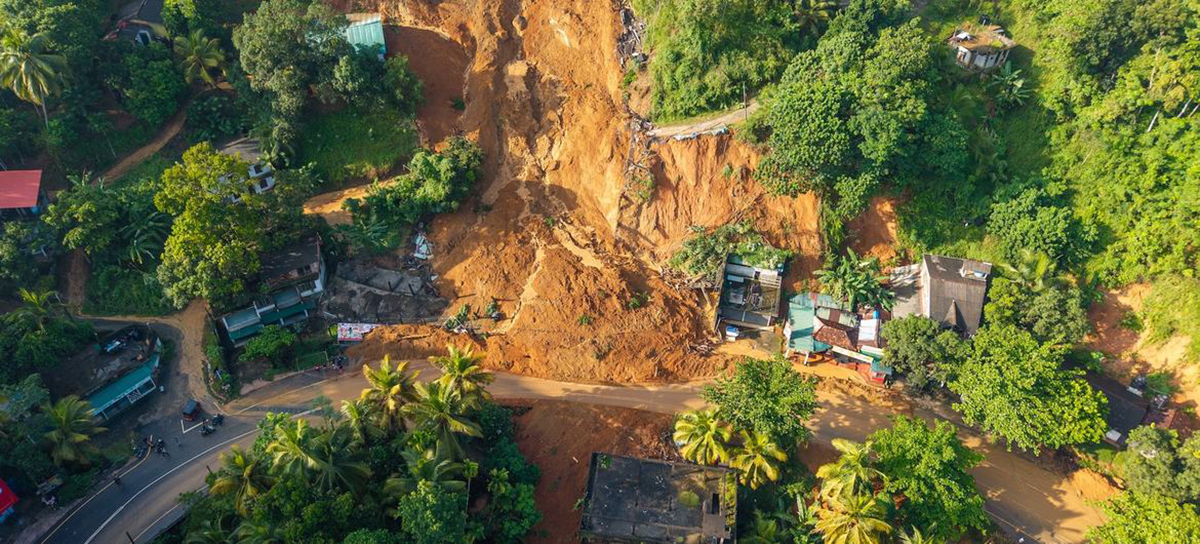
First, the Central Province experienced not just flooding but also the highest number of landslides in the island. As a result, some residents in the region lost entire homes, access roadways, and other basic infrastructures. The loss of lives, livelihoods and land was at a higher intensity compared to the provinces not located in the hills. Most importantly, the Malaiyaha Tamil community’s pre-existing grievances made them even more vulnerable and the government’s job of reparation and restitution more complex.
Early warnings hadn’t reached many areas. Some data collectors said they themselves never heard any warnings in estate areas, while others mentioned that early warnings were issued but didn’t reach some segments of the community. According to the resident data collectors, the police announcements reached only as far as the sections where they were able to drive their vehicles to, and there were many estate roads that were not motorable. When warnings did filter through to remote locations, they often came by word of mouth and information was distorted along the way. Once the disaster hit, things got worse: roads were blocked, electricity went out, mobile networks failed and people were cut off completely.
Emergency response was slow. Blocked roads meant people could not get to hospitals when they needed urgent care, including pregnant mothers. The difficult terrain and poor road conditions meant rescue teams took much longer to reach affected areas than in other regions.
Relief supplies didn’t reach everyone. The Grama Niladhari divisions in these areas are huge and hard to navigate, making it difficult for Grama Niladharis to reach all places as urgently as needed. Relief workers distributed supplies where vehicles could go, which meant accessible areas got help while remote communities were left out.
Some people didn’t even try to go to safety centres or evacuation shelters set up in local schools because the facilities there were already so poor. The perceptions of people who did go to safety centres, as shown in the provincial data, reveal that satisfaction was low compared to other affected regions of the country. Less than half were satisfied with space and facilities (42.1%) or security and protection (45.0%). Satisfaction was even lower for assistance with lost or damaged documentation (17.9%) and information and support for compensation applications (28.2%). Only 22.5% were satisfied with medical care and health services below most other affected regions.
Restoring services proved nearly impossible in some areas. Road access was the biggest problem. The condition of the roads was already poor even before the cyclone, and some still haven’t been cleared. Recovery is especially difficult because there’s no decent baseline infrastructure to restore, hence you can’t bring roads and other public facilities back to a “good” condition when they were never good, even before the disaster.
Water systems faced their own complications. Many households get water from natural sources or small community projects, and not the centralised state system. These sources are often in the middle of the disaster zone and therefore got contaminated during the floods and landslides.
Long-term recovery remains stalled. Without basic infrastructure, areas that are still hard to reach keep struggling to get the support they need for rebuilding.
Taken together, what do these testaments mean? Disaster response can’t be the same for everyone. The Malaiyaha Tamil community has been double marginalised because they were already living with structural inequalities such as poor infrastructure, geographic isolation, and inadequate services which have been exacerbated by Cyclone Ditwah. An effective and fair disaster response needs to account for these underlying vulnerabilities. It requires interventions tailored to the historical, economic, and infrastructural realities that marginalized communities face every day. On top of that, it highlights the importance of dealing with climate disasters, given the fact that vulnerable communities could face more devastating impacts compared to others.
(Shashik Silva is a researcher with the Social Scientists’ Association of Sri Lanka)
by Shashik Silva ✍️

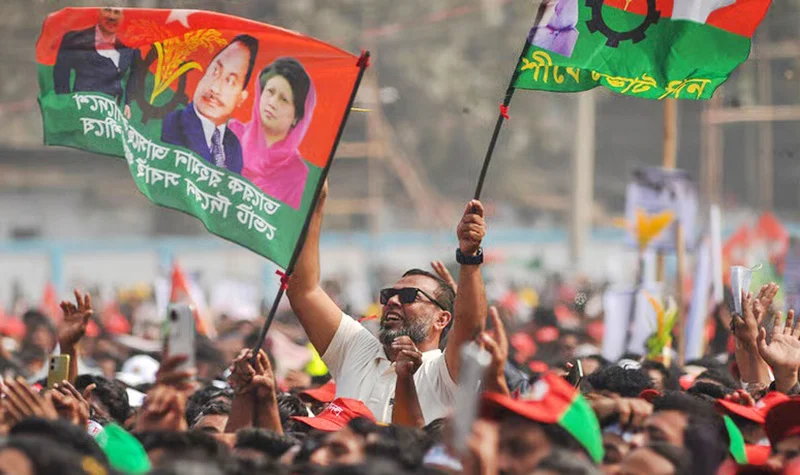
 Will the Bangladesh parliamentary election bring into being a government that will ensure ethnic and religious harmony in the country? This is the poser on the lips of peace-loving sections in Bangladesh and a principal concern of those outside who mean the country well.
The apprehensions are mainly on the part of religious and ethnic minorities. The parliamentary poll of February 12th is expected to bring into existence a government headed by the Bangladesh Nationalist Party (BNP) and the Islamist oriented Jamaat-e-Islami party and this is where the rub is. If these parties win, will it be a case of Bangladesh sliding in the direction of a theocracy or a state where majoritarian chauvinism thrives?
Chief of the Jamaat, Shafiqur Rahman, who was interviewed by sections of the international media recently said that there is no need for minority groups in Bangladesh to have the above fears. He assured, essentially, that the state that will come into being will be equable and inclusive. May it be so, is likely to be the wish of those who cherish a tension-free Bangladesh.
The party that could have posed a challenge to the above parties, the Awami League Party of former Prime Minister Hasina Wased, is out of the running on account of a suspension that was imposed on it by the authorities and the mentioned majoritarian-oriented parties are expected to have it easy at the polls.
A positive that has emerged against the backdrop of the poll is that most ordinary people in Bangladesh, be they Muslim or Hindu, are for communal and religious harmony and it is hoped that this sentiment will strongly prevail, going ahead. Interestingly, most of them were of the view, when interviewed, that it was the politicians who sowed the seeds of discord in the country and this viewpoint is widely shared by publics all over the region in respect of the politicians of their countries.
Some sections of the Jamaat party were of the view that matters with regard to the orientation of governance are best left to the incoming parliament to decide on but such opinions will be cold comfort for minority groups. If the parliamentary majority comes to consist of hard line Islamists, for instance, there is nothing to prevent the country from going in for theocratic governance. Consequently, minority group fears over their safety and protection cannot be prevented from spreading.
Therefore, we come back to the question of just and fair governance and whether Bangladesh’s future rulers could ensure these essential conditions of democratic rule. The latter, it is hoped, will be sufficiently perceptive to ascertain that a Bangladesh rife with religious and ethnic tensions, and therefore unstable, would not be in the interests of Bangladesh and those of the region’s countries.
Unfortunately, politicians region-wide fall for the lure of ethnic, religious and linguistic chauvinism. This happens even in the case of politicians who claim to be democratic in orientation. This fate even befell Bangladesh’s Awami League Party, which claims to be democratic and socialist in general outlook.
We have it on the authority of Taslima Nasrin in her ground-breaking novel, ‘Lajja’, that the Awami Party was not of any substantial help to Bangladesh’s Hindus, for example, when violence was unleashed on them by sections of the majority community. In fact some elements in the Awami Party were found to be siding with the Hindus’ murderous persecutors. Such are the temptations of hard line majoritarianism.
In Sri Lanka’s past numerous have been the occasions when even self-professed Leftists and their parties have conveniently fallen in line with Southern nationalist groups with self-interest in mind. The present NPP government in Sri Lanka has been waxing lyrical about fostering national reconciliation and harmony but it is yet to prove its worthiness on this score in practice. The NPP government remains untested material.
As a first step towards national reconciliation it is hoped that Sri Lanka’s present rulers would learn the Tamil language and address the people of the North and East of the country in Tamil and not Sinhala, which most Tamil-speaking people do not understand. We earnestly await official language reforms which afford to Tamil the dignity it deserves.
An acid test awaits Bangladesh as well on the nation-building front. Not only must all forms of chauvinism be shunned by the incoming rulers but a secular, truly democratic Bangladesh awaits being licked into shape. All identity barriers among people need to be abolished and it is this process that is referred to as nation-building.
On the foreign policy frontier, a task of foremost importance for Bangladesh is the need to build bridges of amity with India. If pragmatism is to rule the roost in foreign policy formulation, Bangladesh would place priority to the overcoming of this challenge. The repatriation to Bangladesh of ex-Prime Minister Hasina could emerge as a steep hurdle to bilateral accord but sagacious diplomacy must be used by Bangladesh to get over the problem.
A reply to N.A. de S. Amaratunga
A response has been penned by N.A. de S. Amaratunga (please see p5 of ‘The Island’ of February 6th) to a previous column by me on ‘ India shaping-up as a Swing State’, published in this newspaper on January 29th , but I remain firmly convinced that India remains a foremost democracy and a Swing State in the making.
If the countries of South Asia are to effectively manage ‘murderous terrorism’, particularly of the separatist kind, then they would do well to adopt to the best of their ability a system of government that provides for power decentralization from the centre to the provinces or periphery, as the case may be. This system has stood India in good stead and ought to prove effective in all other states that have fears of disintegration.
Moreover, power decentralization ensures that all communities within a country enjoy some self-governing rights within an overall unitary governance framework. Such power-sharing is a hallmark of democratic governance.

 Valentine’s Day is all about celebrating love, romance, and affection, and this is how some of our well-known personalities plan to celebrate Valentine’s Day – 14th February:
Merlina Fernando (Singer)
Yes, it’s a special day for lovers all over the world and it’s even more special to me because 14th February is the birthday of my husband Suresh, who’s the lead guitarist of my band Mission.
We have planned to celebrate Valentine’s Day and his Birthday together and it will be a wonderful night as always.
We will be having our fans and close friends, on that night, with their loved ones at Highso – City Max hotel Dubai, from 9.00 pm onwards.
Lorensz Francke (Elvis Tribute Artiste)
On Valentine’s Day I will be performing a live concert at a Wealthy Senior Home for Men and Women, and their families will be attending, as well.
I will be performing live with romantic, iconic love songs and my song list would include ‘Can’t Help falling in Love’, ‘Love Me Tender’, ‘Burning Love’, ‘Are You Lonesome Tonight’, ‘The Wonder of You’ and ‘’It’s Now or Never’ to name a few.
To make Valentine’s Day extra special I will give the Home folks red satin scarfs.
Emma Shanaya (Singer)
I plan on spending the day of love with my girls, especially my best friend. I don’t have a romantic Valentine this year but I am thrilled to spend it with the girl that loves me through and through. I’ll be in Colombo and look forward to go to a cute cafe and spend some quality time with my childhood best friend Zulha.
JAYASRI

Emma-and-Maneeka
This Valentine’s Day the band JAYASRI we will be really busy; in the morning we will be landing in Sri Lanka, after our Oman Tour; then in the afternoon we are invited as Chief Guests at our Maris Stella College Sports Meet, Negombo, and late night we will be with LineOne band live in Karandeniya Open Air Down South. Everywhere we will be sharing LOVE with the mass crowds.
Kay Jay (Singer)
I will stay at home and cook a lovely meal for lunch, watch some movies, together with Sanjaya, and, maybe we go out for dinner and have a lovely time. Come to think of it, every day is Valentine’s Day for me with Sanjaya Alles.
Maneka Liyanage (Beauty Tips)
On this special day, I celebrate love by spending meaningful time with the people I cherish. I prepare food with love and share meals together, because food made with love brings hearts closer. I enjoy my leisure time with them — talking, laughing, sharing stories, understanding each other, and creating beautiful memories. My wish for this Valentine’s Day is a world without fighting — a world where we love one another like our own beloved, where we do not hurt others, even through a single word or action. Let us choose kindness, patience, and understanding in everything we do.
Janaka Palapathwala (Singer)
Janaka
Valentine’s Day should not be the only day we speak about love.
From the moment we are born into this world, we seek love, first through the very drop of our mother’s milk, then through the boundless care of our Mother and Father, and the embrace of family.
Love is everywhere. All living beings, even plants, respond in affection when they are loved.
As we grow, we learn to love, and to be loved. One day, that love inspires us to build a new family of our own.
Love has no beginning and no end. It flows through every stage of life, timeless, endless, and eternal.
Natasha Rathnayake (Singer)
We don’t have any special plans for Valentine’s Day. When you’ve been in love with the same person for over 25 years, you realise that love isn’t a performance reserved for one calendar date. My husband and I have never been big on public displays, or grand gestures, on 14th February. Our love is expressed quietly and consistently, in ordinary, uncelebrated moments.
With time, you learn that love isn’t about proving anything to the world or buying into a commercialised idea of romance—flowers that wilt, sweets that spike blood sugar, and gifts that impress briefly but add little real value. In today’s society, marketing often pushes the idea that love is proven by how much money you spend, and that buying things is treated as a sign of commitment.
Real love doesn’t need reminders or price tags. It lives in showing up every day, choosing each other on unromantic days, and nurturing the relationship intentionally and without an audience.
This isn’t a judgment on those who enjoy celebrating Valentine’s Day. It’s simply a personal choice.
Melloney Dassanayake (Miss Universe Sri Lanka 2024)
 I truly believe it’s beautiful to have a day specially dedicated to love. But, for me, Valentine’s Day goes far beyond romantic love alone. It celebrates every form of love we hold close to our hearts: the love for family, friends, and that one special person who makes life brighter. While 14th February gives us a moment to pause and celebrate, I always remind myself that love should never be limited to just one day. Every single day should feel like Valentine’s Day – constant reminder to the people we love that they are never alone, that they are valued, and that they matter.
I’m incredibly blessed because, for me, every day feels like Valentine’s Day. My special person makes sure of that through the smallest gestures, the quiet moments, and the simple reminders that love lives in the details. He shows me that it’s the little things that count, and that love doesn’t need grand stages to feel extraordinary. This Valentine’s Day, perfection would be something intimate and meaningful: a cozy picnic in our home garden, surrounded by nature, laughter, and warmth, followed by an abstract drawing session where we let our creativity flow freely. To me, that’s what love is – simple, soulful, expressive, and deeply personal. When love is real, every ordinary moment becomes magical.
Noshin De Silva (Actress)
Valentine’s Day is one of my favourite holidays! I love the décor, the hearts everywhere, the pinks and reds, heart-shaped chocolates, and roses all around. But honestly, I believe every day can be Valentine’s Day.
It doesn’t have to be just about romantic love. It’s a chance to celebrate love in all its forms with friends, family, or even by taking a little time for yourself.
Whether you’re spending the day with someone special or enjoying your own company, it’s a reminder to appreciate meaningful connections, show kindness, and lead with love every day.
And yes, I’m fully on theme this year with heart nail art and heart mehendi design!
Wishing everyone a very happy Valentine’s Day, but, remember, love yourself first, and don’t forget to treat yourself.
Sending my love to all of you.

When Prez has to do others’ work

Vehicle permit revival threatens governance credibility – Advocata

Beware of risk of misuse of lost or stolen mobile phones if they fall into wrong hands

High Court puts off case against ex-Minister Johnston and two others

CBSL warns against domestic transactions in foreign currency

Sri Lanka gears up for global cycling adventure

‘Dates have the highest sugar content to fight Coronavirus’

Sunday Island 27 December – Headlines

#SundayIsland 17th December – Headlines

Sunday Island – 28th March

Sunday Island Headlines – 21 March

Sunday Island – 21st February – Headlines
-
 Features6 days ago
My experience in turning around the Merchant Bank of Sri Lanka (MBSL) – Episode 3
-
 Business6 days ago
Remotely conducted Business Forum in Paris attracts reputed French companies
-

 Business6 days ago
Four runs, a thousand dreams: How a small-town school bowled its way into the record books
-

 Business6 days ago
ComBank and Hayleys Mobility redefine sustainable mobility with flexible leasing solutions
-
 Business3 days ago
Autodoc 360 relocates to reinforce commitment to premium auto care
-
 Midweek Review3 days ago
A question of national pride
-

 Business7 days ago
GREAT 2025–2030: Sri Lanka’s Green ambition meets a grid reality check
-

 Opinion2 days ago
Will computers ever be intelligent?