
Latest News
T20 World Cup: Hosts, defending champions and a bunch of hopefuls in Group 2

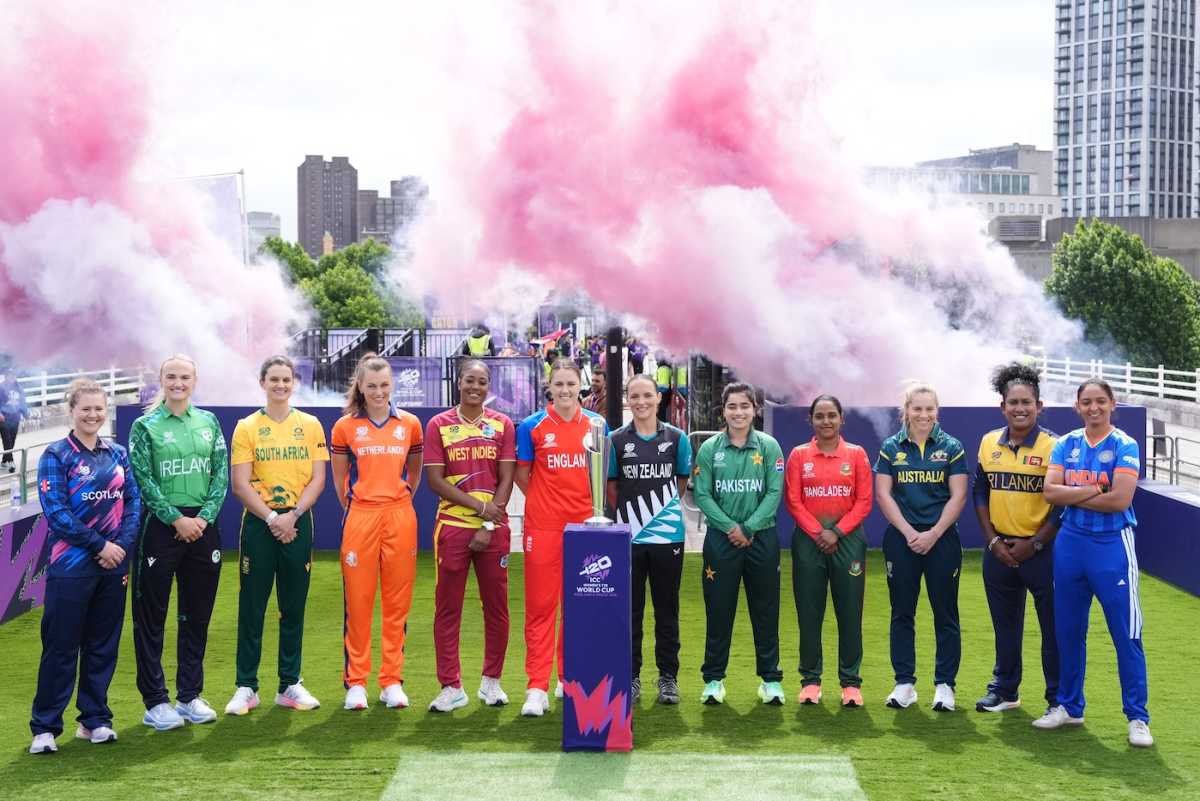
ENGLAND
Expectations are high as tournament hosts. Throw in the fact that England have underperformed at global events in recent times given the talent, depth and resources at their disposal, and the pressure is on. A 193-day drought of fixtures between the 50-over World Cup and the start of their recent series against New Zealand and India culminated in 2-1 victories over both.
That was without injured captain Nat Sciver Brunt throughout and opening batter Danni Wyatt Hodge, on parental leave for all but the last two games. All eyes will be on Sciver-Brunt, who expects to be fit for the start, playing as a batter only at least until deep into the tournament.
In their absence, Charlie Dean led the side with distinction and a number of batters stood up in various unfamiliar positions in the line-up. Linsey Smith proved virtually unplayable, to New Zealand at least, in a bowling attack stacked with left-arm spinners, including 18-year-old newcomer Tilly Corteen-Coleman.
Fielding, which led to their ouster in 2024, is improving and the key will be maintaining their rise in form under the weight of a home crowd willing them to lift the trophy at Lord’s. Given their position in the easier group, it feels like reaching that contest is a minimum standard – and that’s heavy.
Squad: Nat Sciver-Brunt (capt), Lauren Bell, Alice Capsey, Tilly Corteen-Coleman, Charlie Dean, Sophia Dunkley, Sophie Ecclestone, Lauren Filer, Dani Gibson, Amy Jones, Freya Kemp, Heather Knight, Linsey Smith, Issy Wong, Danni Wyatt-Hodge
Player to watch
Alice Capsey, has been somewhat of a revelation in the lead-up to this tournament. Since making her international debut aged just 16 nearly four years ago – and even before – the talk was of what she was capable of. But two career-best T20I scores in the space of two weeks – 74 not out against New Zealand opening for the first time and 82 against India batting at No. 4 – showed a step up in maturity as she went from fill-in to first pick. It will be intriguing to see if she can continue her rich run of form when the balance of the side changes yet again with Sciver-Brunt’s return.
Predicted finish: Semi-finalists
IRELAND
Ireland return to the T20 World Cup after missing the 2024 edition, having secured qualification in style. This will be their fifth appearance at the tournament and they arrive with a young squad that has a few experienced campaigners, including Gaby Lewis, who will captain Ireland at a T20 World Cup for the first time.
Ireland head into the tournament with confidence after a few encouraging results, including a landmark first T20I win against West Indies and a win against Pakistan in the tri-series at home. Several players stood out, notably opener Amy Hunter, fast bowler Ava Canning and allrounder Orla Prendergast.
Conditions in England are expected to be relatively similar to home, which could work in Ireland’s favour. They face a challenging group but will back themselves to spring a surprise or two. They are also yet to win a match in 17 attempts at the T20 World Cup, and they will look to turn that around. They will, however, be without the experience of injured former captain Laura Delany.
Squad: Gaby Lewis (capt), Orla Prendergast (vice-capt), Ava Canning, Christina Coulter Reilly, Alana Dalzell, Alice Tector, Georgina Dempsey, Amy Hunter, Arlene Kelly, Louise Little, Aimee Maguire, Lara McBride, Cara Murray, Leah Paul, Rebecca Stokell
Player to watch
Since making her T20I debut as a 17-year-old in 2019, Orla Prendergast has developed into the side’s premier allrounder and was named vice-captain for the T20 World Cup. Since the start of 2025, she has scored 653 runs, including six half-centuries, while also taking 20 wickets at an economy rate of 5.60 in 23 games.
She single-handedly took down West Indies during the tri-series, first returning figures of 2 for 21 before following with 71 not out off 46 balls for a historic win. She made a few crucial contributions at the 2023 T20 World Cup and, alongside captain Lewis, will carry much of Ireland’s hope of making an impact.
Predicted finish: Group stage
NEW ZEALAND
If horrible form coming to the T20 World Cup was New Zealand’s recipe for success in 2024, they might be on the wrong path this time. They lifted the trophy by reaching the UAE after four series losses on the bounce that included ten consecutive defeats, and just one T20I victory in the year. But since becoming T20 world champions, New Zealand have largely returned promising results, with back-to-back series wins against Zimbabwe and South Africa (both at home) in 2026 before their recent series loss in England.
When the T20I series in England was locked at 1-1, New Zealand were bundled for 80, crumbling against both pace and spin. Like in the ODI World Cup last year, Sophie Devine emerged as New Zealand’s top-scorer yet again in this contest, ending the series with the underlying feeling that a lot might rest on her again with the bat because losing wickets early and in clumps remains their big issue.
This tournament will also be remembered for the international farewells of Devine, Suzie Bates and Lea Tahuhu, closing in on 900 international appearances collectively, and now that they have tasted success, New Zealand would want to bid them adieu with another trophy.
Squad: Isabella Gaze (wk), Maddy Green, Polly Inglis (wk), Georgia Plimmer, Izzy Sharp, Melie Kerr (capt), Suzie Bates, Sophie Devine, Flora Devonshire, Brooke Halliday, Nensi Patel, Bree Illing, Jess Kerr, Rosemary Mair, Lea Tahuhu
Player to watch
Melie Kerr is just 25 and the joke going around is that she is already going to play her 75th World Cup. In reality, she will be at her fifth T20 World Cup (she has played another three in ODIs) and her first as captain after Devine passed on the baton – along with trophy – in 2024.
For New Zealand, this World Cup could easily be one to remember for the outgoing trio, but it must not be forgotten what a big role Kerr continues to play. After being named the Player of the Final and the Tournament in 2024, she has led her team’s run charts and has bagged the second most wickets. For a player who has earned accolades since she was 16, she could easily add more by lifting the trophy as captain.
Predicted finish: Semi-finalists
SCOTLAND
Scotland return for a second successive T20 World Cup after making their tournament debut in the UAE two years ago, with as many as ten members of the squad retained. They secured qualification through the global qualifiers in Nepal, after edging out strong competition from USA. Their build-up has been encouraging. Scotland recently topped a home tri-series involving Bangladesh and Netherlands, winning three of their four matches. Those games have formed a key part of their preparation for the tournament in England.
What they have lacked is sustained exposure against the game’s biggest sides, a challenge commonly faced by Associates. This means Scotland will need to adapt quickly and hit the ground running once the tournament begins if they are to notch their first-ever Women’s T20 World Cup win.
Squad: Kathryn Bryce (capt), Chloe Abel, Olivia Bell, Sarah Bryce, Darcey Carter, Priyanaz Chatterji, Gabriella Fontenla, Katherine Fraser, Kirstie Gordon, Ailsa Lister, Maisie Maceira, Abtaha Maqsood, Megan McColl, Rachel Slater, Pippa Sproul
Player to watch
Left-arm spinner Kristie Gordon is back with Scotland for a second stint after switching allegiances again. Her first was from 2012 to 2017, but this one, from last December, comes at a time when Scotland are on the ascendancy as far as their women’s cricket structure goes and follows her five T20Is and one Test for England in 2018-19.
Gordon’s thrifty left-arm spin played a massive role in their tri-series performance, her three-for against Netherlands laying down the marker. Gordon’s accuracy and control through the middle overs have made her a bankable bowler. Her familiarity with Kathryn Bryce, the captain – they are team-mates at The Blaze – has also gone a long way in her second wind with Scotland.
Predicted finish: Group stage
SRI LANKA
The headline is that Sri Lanka are bouncing into this World Cup on five straight T20I victories, all of them away from home (two matches in the Caribbean, and three in Bangladesh). And no, these wins were not all about Chamari Athapaththu. Sure, she claimed the Player of the Series award in both series, but Hasini Perera, Harshitha Samarawickrama, and Kavisha Dilhari had Player of the Match awards through this stretch, too. Sri Lanka also have happy memories in England, where they won a T20I series against a depleted England side in 2023.
They enter another global tournament as a team with some promise, but one that still has not broken through into the top tier of women’s cricket, having never made the semi-final of a World Cup. Although their batting seems in half-decent shape now, even when Athapaththu fails, their seam bowling is yet to seriously prove itself. Malki Madara, 25, has shown talent, but this will be her first T20 World Cup.
It is likely Sri Lanka will bank on spin again, even on tracks that might suit seamers better. When up against the batting powerhouses, Sri Lanka need to find ways to restrict oppositions to totals their own fledgling batting order can run down.
Squad: Chamari Athapaththu (capt), Hasini Perera, Vishmi Gunarathne, Harshitha Samarawickrama, Imesha Dulani, Nilakshika Silva, Kaveesha Dilhari, Hansima Karunaratne, Kaushini Nuthyangana, Sugandika Dasanayaka, Nimasha Madushani, Chethana Vimukthi, Kawya Kavindi, Malki Madara, Mithali Ayodhya
Player to watch
Thankfully, Chamari Athapaththu has indicated she is happy to play for Sri Lanka a little longer – or so at least new coach Jamie Siddons has said. For now, there are no concerns that this could be her last World Cup. But what is clear is that again, many of Sri Lanka’s hopes revolve around the greatest Sri Lanka player of her age.
She’s in half-decent nick coming into the tournament, but perhaps more importantly, she has a track record of raising her game for the big events. While the big hitting remains Athapaththu’s foremost strength, she’s also still improving as an offspinner and will be a key member of Sri Lanka’s attack in England as well.
Predicted finish: They will be in the conversation for a semi-final spot.
WEST INDIES
Up-and-down form has defined West Indies’ T20 side since their rousing run to the semi-final in 2024. Aside from a 3-0 home series victory against Bangladesh, they have secured a one-match upset against India and a 2-1 series win against South Africa but then lost both their completed games against Sri Lanka at the start of this year. They finished joint top with Ireland in the recent tri-series with Pakistan, where captain Hayley Matthews was their familiar standout.
That said, young quick Jannillea Glasgow is establishing herself as an allrounder with an unbeaten half-century against South Africa last year, and she was the fourth-highest run-scorer in the tri-series with 42 against Pakistan and 36 against Ireland batting at No. 7. In between them, Matthews and Glasgow have a wealth of experienced players to lean on in allrounders Deandra Dottin, Chinelle Henry and Stafanie Taylor, who is making inroads back into bowling after nearly five years in T20Is, as she closes in on 100 wickets.
Qiana Joseph, who blew England away with the bat at the previous edition of this tournament, impressed with her left-arm spin during the tri-series, bowling with an economy of 4.90 and finishing off Ireland with 3 for 8 in their first match. If they can deliver on the promise of their last global tournament, they can squeeze New Zealand for a place in the semi-finals. But that will require a team performance.
Squad: Hayley Matthews (capt), Chinelle Henry, Deandra Dottin, Stafanie Taylor, Afy Fletcher, Aaliyah Alleyne, Shemaine Campbelle, Ashmini Munisar, Karishma Ramharack, Jannillea Glasgow, Jahzara Claxton, Qiana Joseph, Zaida James, Mandy Mangru, Shawnisha Hector
Player to watch
Named vice-captain this year, Chinelle Henry has put herself on the radar for big franchises like the WPL, initially as an injury replacement in 2025 but then as part of Royal Challengers Bengaluru’s title-winning team this year, where she scored an unbeaten 35 off 15 and took two wickets in the final, finishing among leading wicket-takers for the tournament. Her explosive hitting, ability to take key wickets and athletic fielding make her one of the most entertaining players around.
Predicted finish: Semi-finals… unless New Zealand have all their big-name players firing.
[Cricinfo]

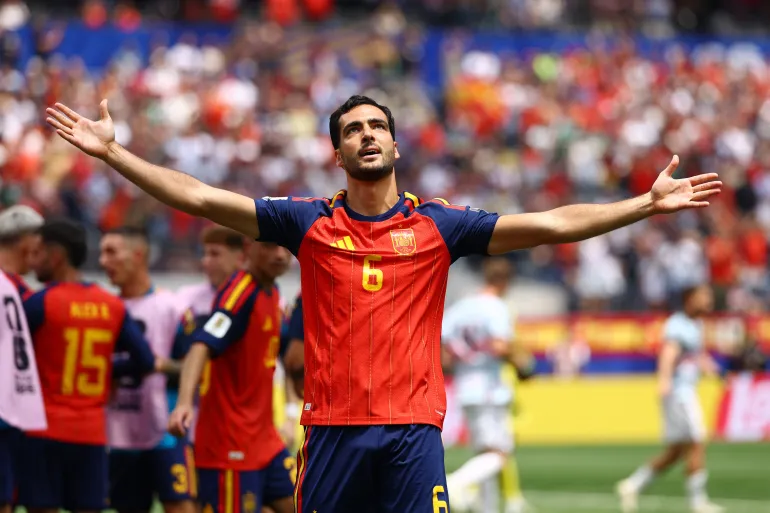
Mikel Merino scored in the 88th minute from a rebound yielded by backup Belgium goalkeeper Senne Lammens, and Spain advanced to the World Cup semifinals with a 2-1 victory.
Merino was the late hero for the second straight match for Spain, who advanced to face tournament favourite France in the semifinals on Tuesday in Dallas.
Merino came on in the 86th minute and scored from his second touch of the match, charging into the box and pouncing after Lammens spilled a Pau Cubarsi shot from outside the area.

The Arsenal forward also scored as a substitute early in injury time to secure Spain’s 1-0 victory over Portugal in the last-16.
Lammens, the Manchester United keeper, was forced into the match in the 71st minute after longtime Belgium keeper Thibaut Courtois left with an apparent thigh injury.
Belgium desperately pressed for an equaliser in the final minutes, but Aymeric Laporte volleyed their best chance out of the box.
Fabian Ruiz scored the opening goal in the 30th minute for Spain after Courtois had parried a shot from Dani Olmo from Pedro Porro’s cut-back from the right of the area, but Belgium forward Charles De Ketelaere scored the first goal allowed by Spain in the entire World Cup in the 41st minute.
His header from Timothy Castagne’s cross from the right ended a record streak of 649 minutes without conceding at the World Cup.

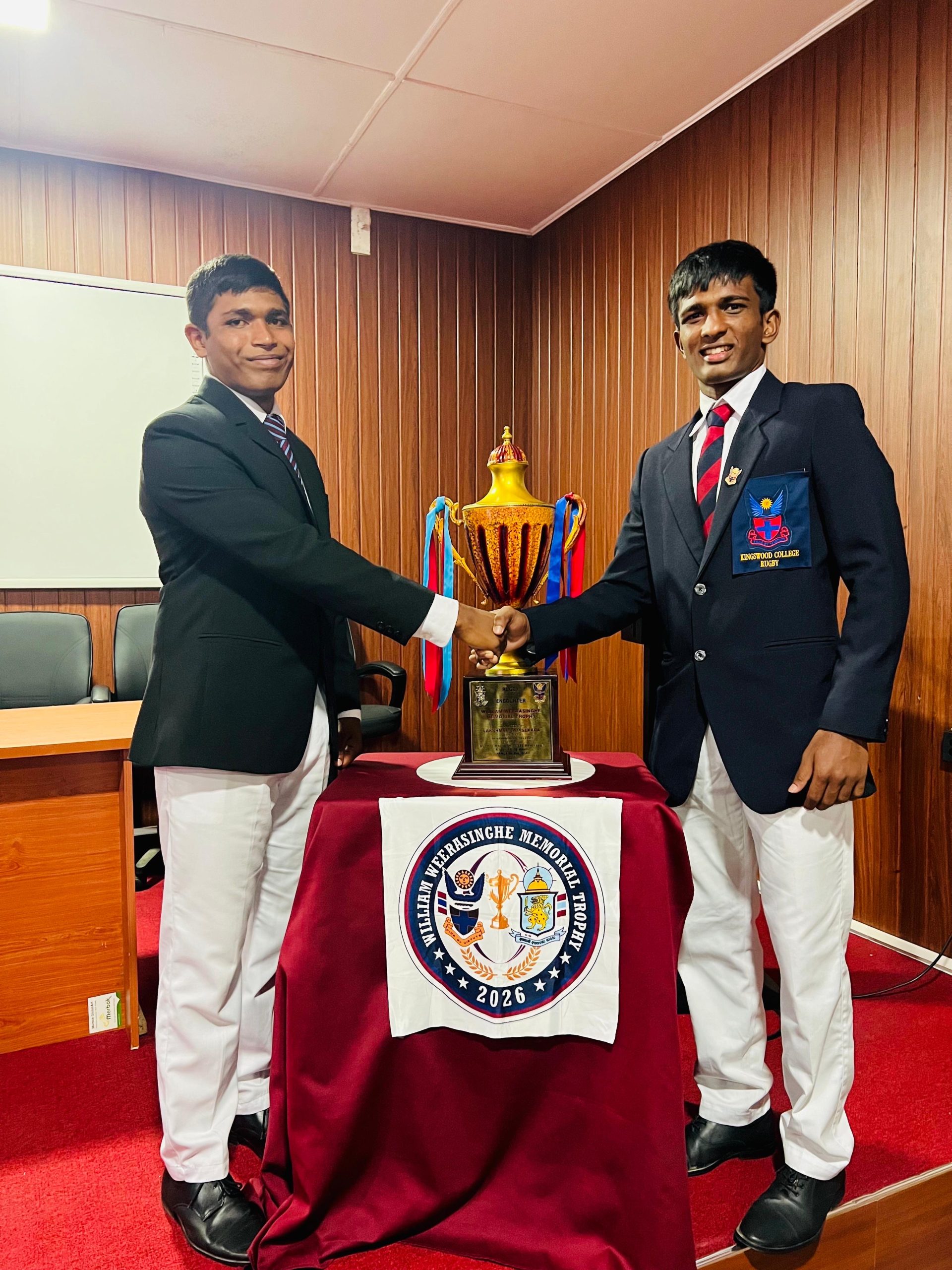
The annual rugby encounter between Dharmaraja College and Kingswood College, played for the William Weerasinghe Memorial Trophy, is set to take place tomorrow (July 11, 2026), at 4:00 PM at the Bogambara Stadium, Kandy.
The official unveiling of the trophy took place this week at the Dharmaraja College premises with the participation of the Principals of the two schools, teachers-in-charge of sports, coaches, the Rugby teams, and several distinguished guests, including Dharmaraja College Old Boys’ Association President Mahesh Wijetunga, Kingswood College Old Boys’ Association President Muditha Abeykoon,
by S K SAMARANAYAKE
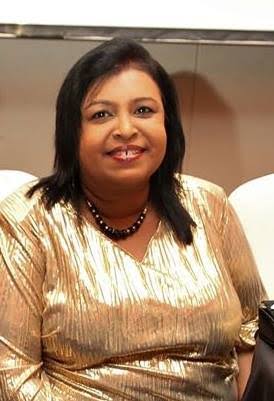
It has been reported quoting family sources that veteran singer Mariazelle Goonetilleke has passed away this morning (10) at the age of 68
She had been receiving treatment at the Kalubowila Teaching Hospital.

Spain leave it late to book semifinal date with France

Showers will occur in the Sabaragamuwa, Western and North-western provinces and in Galle, Matara, Kandy and Nuwara-Eliya districts

US$ 2.5 mn cyber heist exposes system failures

Opposition signs no-confidence motion against Justice Minister for dereliction of duty over Negombo Prison deaths

AG informs SC of e-visa agreement review

Navy, Coast Guard seize smuggled pharmaceuticals and cosmetics in Puttalam

‘Dates have the highest sugar content to fight Coronavirus’

Sunday Island 27 December – Headlines

#SundayIsland 17th December – Headlines

Sunday Island – 28th March

Sunday Island Headlines – 21 March

Sunday Island – 21st February – Headlines
-

 News6 days ago
Singapore-based Buddhist monk marks nearly four decades of humanitarian service
-
 News1 day ago
Herath warns prospective migrant workers not to get fleeced by racketeers
-

 News5 days ago
AI concerned over proposed SL military deployment in Haiti
-

 Midweek Review3 days ago
Unexpected focus on ‘pieces of tin’ worn by military men
-
 Latest News4 days ago
Nyamhuri and Ngarava stun Bangladesh by defending 141
-

 Features6 days ago
The NPP’s New Challenge: Balancing Easter Lawfare and Economic Welfare
-

 News2 days ago
Negombo Prison riot: Ensuring protection of prisoners fundamental responsibility of the state – UN
-

 Foreign News6 days ago
Iran promotes message of continuity and revenge at Khamenei commemoration