
News
Swiss help to develop skills in hospitality trade here


The Swiss government has come forward to assist Lankans to develop and sharpen their skills in the hospitality and tourism industry.Swiss Ambassador to Sri Lanka and the Maldives Dr. D. Furgler recently signed an agreement with the Swiss Hospitality & Management Academy (SHMA) of A. Baur & Co. Pvt Ltd. also known as Baurs at a ceremony held at the Swiss Embassy in Colombo to uplift the hospitality education sector in Sri Lanka.
The contract exchange for a private and public sector partnership with the Swiss Agency for Development and Cooperation (SDC) took place between Baurs MD and CEO Rolf Blaser and Ambassador Dr Furgler, said a media release.
It said: The Skills for Sustainable Growth (SSG) initiative came about during the height of the pandemic and has seen tremendous participation from both Baurs and SDC. At a time when the hospitality and tourism industry came to a standstill with increasing talent migration, Rolf Blaser discovered the Switzerland-based RIESCO program and quickly felt fervent about it being a practical and immediate solution in addressing the widening skills gap.
At the end of last year, officials from Baurs held a briefing with the Swiss Ambassador and introduced SHMA and the various solutions from an educational standpoint. With further discussions earlier this year, Baurs proposed a collaboration opportunity with SDC to localize and implement the RIESCO program in the country.
Bringing Switzerland’s distinctive reputation and quality standards in hospitality education which is one of the best in the world to Sri Lanka is a timely and ideal solution to the country’s tourism and hospitality sector, where hundreds of thousands of livelihoods depend upon, in the backdrop of various ongoing challenges, and eventually contribute immensely to the overall economy, ensuring that a quality pool of talented and employable professionals are created especially among the youth in the rural areas. This will with no doubt minimize the industry’s skills gap, take off the burden on the state, and go on to uplifting the country as a whole
Designed by Hotel & Gastro Formation, the RIESCO program is aimed at migrants entering Switzerland, who are heavily reliant on the state welfare system. The program methodology and content ensure that one completes the program in the shortest possible time and acquires the necessary skills that are highly employable, translating them into active participants in the hospitality sector and economy.
SHMA plans to sustain this program through an advanced digitalization platform, working with both the public and private sector. Coming under the SSG initiative, this will bring about immense benefits to the learners and country as a whole, in contrast to lengthy and conventional hospitality education programs in Sri Lanka.
By aligning and implementing a Swiss Vocational Skills Development (VSD) curriculum in hospitality management, SHMA will enhance local curriculums throughout the numerous learning centers island-wide. Through its train the trainer programs, SHMA will go onto further strengthen impactful teaching methodologies.
The SSG program aims to create 2,240 skilled young men and women within three years, with the first batch of student intake of 240 scheduled to take place during July 2023, followed by training 800 students in 2024 and 1,200 students in 2025, including increasing female representation to 40pct from the current industry levels exhibiting below 10pct. This will cover core hospitality operations and soft skills development including hospitality English, grooming and etiquette, and basic IT skills.
The districts will include Jaffna, Trincomalee, Ampara, Puttalam, Kurunegala, Kandy, Badulla, Nuwara Eliya, Monaragala, Rathnapura, Batticaloa, Anuradhapura, and Hambantota among others, with a drive to also identify potential learning centres within the districts.
The certificate program runs for 9 months, with the first six months consisting of 70pct practical classroom learning and 30pct theoretical knowledge, and thereafter take up a 3-month internship with possible extension to 6 months. Baurs has already partnered with many hotels in facilitating these internships, with more joining on-board. The program will pursue a hybrid teaching model where a SHMA faculty member will be placed at each learning centre for 6 months upon implementation, ensuring that it’s well absorbed and in line with the standards and frameworks of the learning curriculum.
The SSG program will play a key role in minimizing the skills gap and enhancing the quality of education through increased female participation, competent talent pool, quality standards in par with global trends, and making Sri Lanka among the best tourist destinations. The inclusion of females and returning workers is a main Sustainable Development Goals (SDGs) of this project, to increase equal employment opportunities and ensure correct and safe employment channels and migration paths.
The SSG hospitality certificate provides a steppingstone towards enrolling for Professional Diploma programs facilitated by SHMA and awarded by École hôtelière de Lausanne EHL, world’s number one hotel management school. SHMA provides world class education through its VET by EHL Professional Diploma programme, available in Culinary, Food & Beverage and Hotel Operations, with the next intake taking place in February and March 2023.


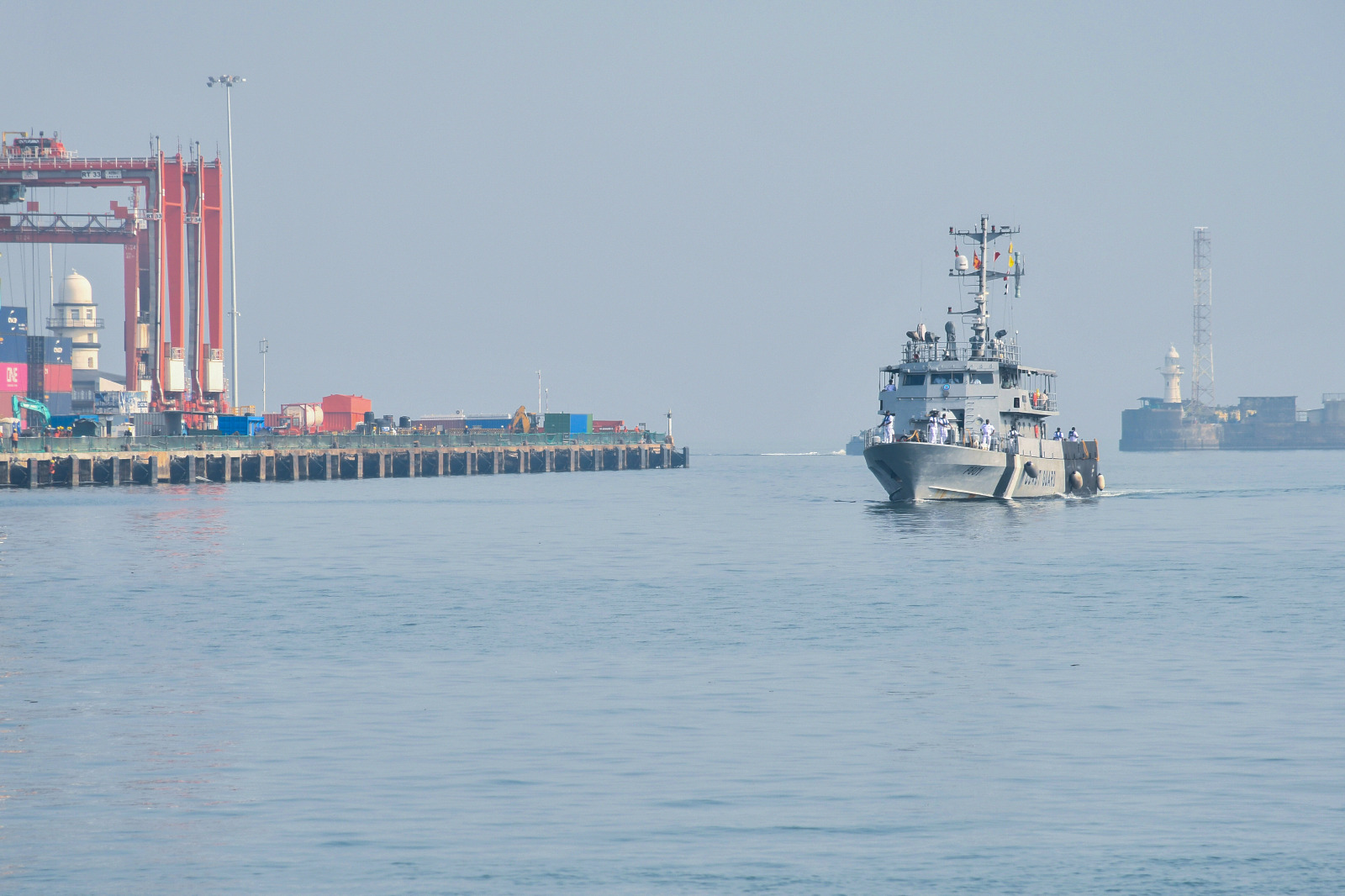
The Maldives Coast Guard Ship Huravee arrived at the Port of Colombo for replenishment purposes on 02 Mar 26. The visiting ship was welcomed by the Sri Lanka Navy (SLN) in compliance with time-honoured naval traditions.
The ship is a 48.9m long Offshore Patrol Vessel which is commanded by Lieutenant Colonel Ahmed Nafiu Mohamed.
Meanwhile, the ship’s crew is scheduled to visit several tourist attractions in the city of Colombo, during their stay in the island.

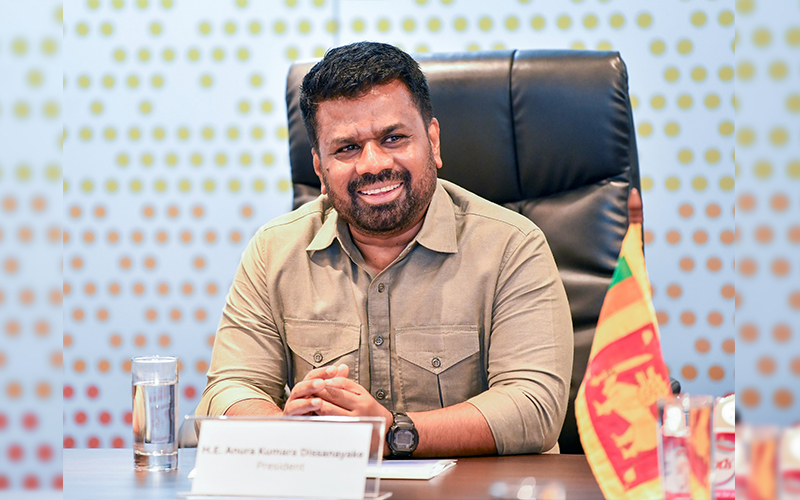
President Anura Kumara Dissanayake yesterday called for an immediate and peaceful resolution of the escalating Middle East conflict, warning that the crisis could have far-reaching repercussions on the global economy, including Sri Lanka.
Addressing Parliament, the President stressed that no military conflict benefited humanity, particularly at a time when destructive military technologies were rapidly advancing.
“Any military conflict does not create a favourable situation for any group of people,” he said, urging all parties to make urgent commitments towards peace. “As Sri Lanka, our position is that all parties involved in this war must, as soon as possible, take steps toward a peaceful world.”
He cautioned that Sri Lanka could not remain insulated from the fallout from the conflict, noting that disruptions to global oil and gas supplies, threats to migrant workers in the Middle East, and potential shocks to tourism, remittances, shipping and aviation were real concerns.
A national programme was being formulated to mitigate the impact, he said, adding that its success would hinge on broader international efforts to restore stability, the President said.
Acknowledging public anxiety shaped by past economic hardships, President Dissanayake said social stability could not be ensured through rhetoric alone but required tangible guarantees that citizens would not face another crisis.
While noting that the government had successfully navigated multiple challenges since assuming office, he described the Middle East situation as distinct due to the uncertainty surrounding its duration and outcome.
The government, he said, was closely monitoring developments. The Central Bank had conducted a review with a report on the likely economic impact expected shortly. The Ministry of Finance is also preparing an assessment of the potential effects on public life, alongside measures to ensure the uninterrupted provision of essential services locally and for Sri Lankans overseas.
“The primary responsibility for finding a path out of the crisis rests with the Government,” he said, calling on Parliament and the public to collectively confront the challenge under a unified national plan.
Providing a detailed account of the country’s energy reserves, the President said storage capacity rather than supply remained the key constraint. Excluding the Indian Oil Corporation tanks in Trincomalee, total storage capacity at Kolonnawa and Muthurajawela stands at approximately 150,000 metric tons.
Diesel stocks were currently sufficient for 33 days, with refining contributing around 1,800 metric tons daily. Petrol reserves will last 27 days, with a 35,000 metric ton shipment due on March 7 or 8 expected to extend availability to around 40 days.
Aviation fuel stocks are adequate for 49 days, supported by both daily refining and imports. Scheduled shipments include vessels from RM Parks on March 14, Sinopec on March 17, IOC on March 21 and the Ceylon Petroleum Corporation on March 28.
Crude oil supplies were sufficient to operate the refinery for 26 days, with an additional shipment expected to extend operations by a further 18 days, the President said.
“Because of this, there is no crisis regarding oil,” the President assured Parliament.
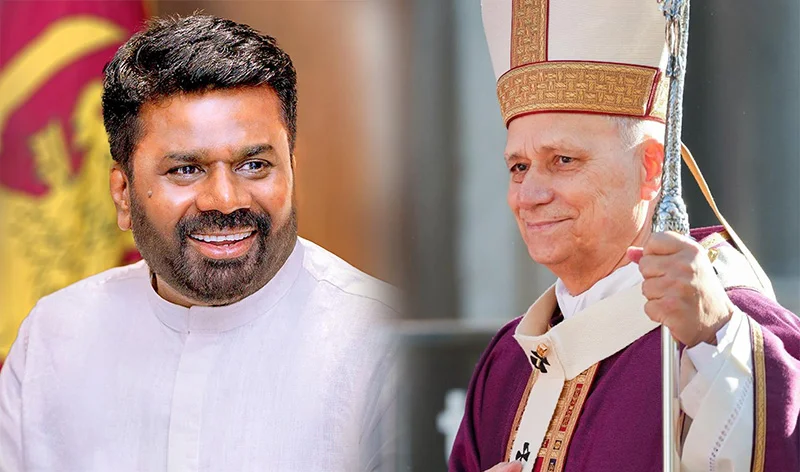
President Anura Kumara Dissanayake has invited His Holiness Pope Leo XIV to visit Sri Lanka.
The official invitation was handed over by Minister Bimal Ratnayaka to the Vatican’s Under Secretary for Relations with the States, at the Vatican, yesterday, during the Minister’s official visit to Italy, the President’s Media Division said.

Maldives Coast Guard Ship Huravee arrives in Colombo

New charges for son of Norway’s crown princess on trial for rape

US sends planes to evacuate nationals from Middle East as Iran conflict spreads

Trump threatens to halt trade with Spain over military base access

Dry weather will prevail in most parts of the island

AKD warns of far reaching economic consequences of Middle East war

‘Dates have the highest sugar content to fight Coronavirus’

Sunday Island 27 December – Headlines

#SundayIsland 17th December – Headlines

Sunday Island – 28th March

Sunday Island Headlines – 21 March

Sunday Island – 21st February – Headlines
-

 Opinion5 days ago
Jamming and re-setting the world: What is the role of Donald Trump?
-
 Features5 days ago
An innocent bystander or a passive onlooker?
-

 Features2 days ago
Brilliant Navy officer no more
-
 Features6 days ago
Ratmalana Airport: The Truth, The Whole Truth, And Nothing But The Truth
-

 Opinion2 days ago
Sri Lanka – world’s worst facilities for cricket fans
-
 Business6 days ago
IRCSL transforms Sri Lanka’s insurance industry with first-ever Centralized Insurance Data Repository
-

 Business5 days ago
An efficacious strategy to boost exports of Sri Lanka in medium term
-
 Features3 days ago
Overseas visits to drum up foreign assistance for Sri Lanka