
News
Success of vaccination drive hinges on inoculation of the elderly


Vaccine and Infectious Diseases Forum of Sri Lanka
The Council of the Vaccine and Infectious Disease Forum of Sri Lanka has appreciated the decision made by the government to buy nine million doses of Covisheild vaccine from Serum Institute of India to be given to Sri Lankan citizens. We noted that 500,000 doses gifted to us by India have been given to healthcare workers and social workers involved in the care of the COVID patients and contacts. We also have observed that the remaining vaccines have been distributed to many MOH areas to be given to adults between 30 years to 59 years of age.
Our opinion and that of WHO are entirely different. According to the WHO protocol, the first priority is given to the healthcare workers and the next priority is given to people over 65 years and people with comorbid features.
Countries such as Israel has vaccinated elderly over 65 years and people with comorbid features first before giving the vaccine to healthcare workers. The reason was to bring down the mortality rate. In fact, Israel has seen the results within three weeks with a significant reduction of deaths. New Zealand has decided to follow Israel by giving the vaccine first to the elderly before giving it to healthcare workers.
In fact, the primary purpose of this vaccination is to prevent deaths.
The vaccine efficacy ranges from 70-84%, signifying a possibility of getting COVID 19 infection despite vaccination. But with AstraZeneca vaccine (Covishield), it is observed that the mortality reduction is almost 100%. That is the primary aim of this vaccine programme. However, the Ministry decision to give the remaining vaccines to the public between 30-59 years is meaningless. It does not avert deaths among the elderly. The basis of this decision by the Ministry of Health is not clear. The number of doses left would be only 2-3 hundred thousand. With such a limited number of vaccine doses, how could a population of Sri Lankans aged between 30 -59 years be protected. In fact, this limited number of doses, should have been given to people over 65 years of age. That would have helped prevent a significant number of deaths due to COVID-19.
There is suspicion among the members of the public, and it is unavoidable and excusable. The decision to give the vaccine to the persons of 30-59 years has created the wrong impression among the public that the vaccine should not be given to elderly over 60 years, as it is unsafe. We have heard that it is already happening and people may become reluctant to give the vaccine to the elderly.
When the new consignment of vaccines is available for elderly people, it may become difficult to convince the public that the vaccine is safe for the elderly. They might ask, “Then why didn’t you give the vaccine to elderly last time. We hope that the Ministry would come out with a convincing answer.
Saving lives is of paramount importance. Therefore, if the elderly are not vaccinated, the COVID vaccination programme will be in vain.
Dr. H.T. Wickramasinghe
Consultant Paediatrician
President, Vaccine and Infectious Diseases Forum of Sri Lanka

News
Compensation for patients who lost vision after the use of Prednicylone Asitate after eye surgeries

The incidents of losing sight or further weakening eye sight of patients subject to eye surgeries at Nuwara Eliya Base Hospital due to usage of the eye liquid Prednicylone Asitate within the period from 03.03.2023 to 16.05.2023 has been reported.
Based on the result of an investigation held in the regard, compensation has been given to 17 patients who lost their eye sight after eye surgeries at the Nuwara Eliya Base Hospital. Apart from that the committee appointed to investigate and report on the patients experienced eye impairments due to usage of liquid Prednicylone Asitate after eye surgeries at the
hospitals apart from Nuwara Eliya Base Hospital recommended to compensate four (04) more patients despaired.
Accordingly, considering the particulars furnished by the Minister of Health and Mass Media the Cabinet of Ministers decided to grant their consent to compensate those four (04) patients as well with rupees one million each.
… demands resignation of Justice Minister, Secretary
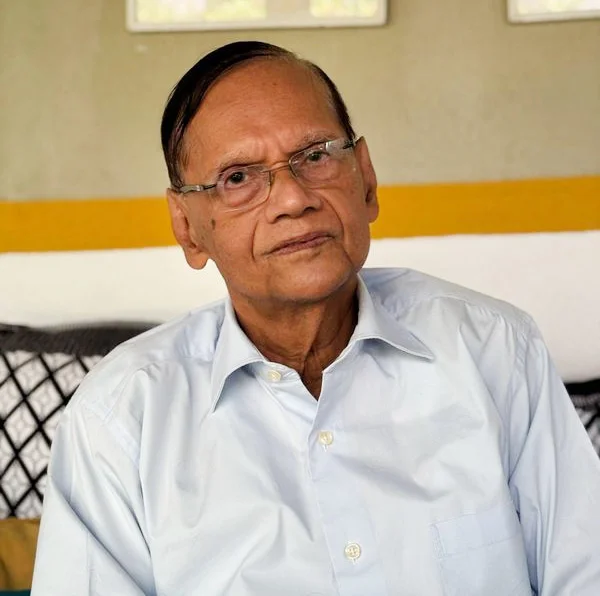
Former External Affairs Minister Prof. G.L. Peiris yesterday (7) alleged that Prisons intelligence personnel were responsible for causing Monday’s riot in the Negombo Remand Prison.
The Convenor of the opposition grouping, based at former President Ranil Wickremesinghe’s Flower Road Office, asked who had sent the intelligence personel from the Prison headquarters in Colombo to Negombo after authorities had managed to bring the previous day’s incidents under control.
Two inmates were killed and several prison staff wounded on Sunday. Prof. Peiris asked the government to reveal who had ordered the police to open fire on Monday. He emphasised the responsibility on the part of the government to identify who had done so, police or prison staff or both and whether there was a need to shoot.
Commenting on Justice and National Integration Minister Harshana Nanayakkara declaration that he accepted responsibility for the prison riots that claimed the lives of 19 inmates and seven prison officers, Prof. Peiris demanded that the minister resign forthwith. The Justice Minister couldn’t side-step the issue by merely accepting responsibility, Prof. Peiris said.
He emphasised that even if Nanayakkara resigned that wouldn’t solve the problem.
Prof. Peiris alleged that the government was not concerned about issues in prisons. It was trying to bring in a constitutional amendment to extend the retirement ages of the superior court judges.
Prof. Peiris also found fault with the government for its failure to appoint a successor for Thushara Upuldeniya, Commissioner General of Prisons, suspended on 9 June, 2025, over alleged release of prisoners taking advantage of general amnesty.
The former Minister said that Justice Ministry Secretary Ayesha Jinasena had refused to implement the Human Rights Commission recommendation to reinstate Upuldeniya. Prof. Peiris said that Jinasena, too, should be held responsible for the incident as her inaction had contributed to the overall deterioration of the setup in prisons. (SF)
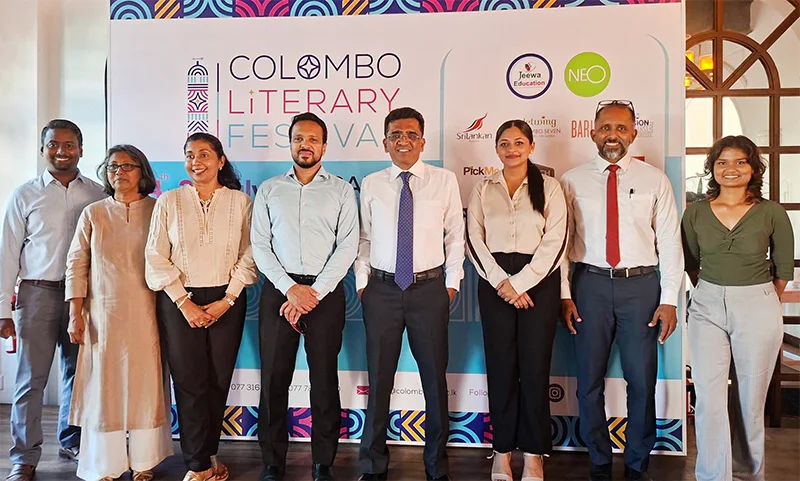
Book lovers in Sri Lanka are preparing to write a new chapter in its cultural history with the launch of the country’s first-ever Colombo Literary Festival, an ambitious six-day celebration of books, ideas, history, cinema and creative dialogue that organisers believe will, eventually, stand alongside some of the world’s most respected literary festivals.
From July 24 to 29, the historic Arcade Independence Square will transform into a vibrant meeting place for readers, writers, publishers, scholars and artists as the inaugural festival welcomes 180 authors, academics and literary personalities, 60 panel discussions, 25 new book launches, six masterclasses for writers, children’s programmes, poetry readings, cultural performances and an international film festival, inspired by classic literary works.
Addressing the media at the official launch, at the Arcade, Independence Square, in Colombo, Festival Director Pradeep Samaranayake described literature as one of humanity’s greatest instruments for preserving history, challenging conventions and connecting societies across cultural boundaries.
“Our vision, from the beginning, was to create a literary festival that truly belongs to Sri Lanka. We wanted it to be accessible, affordable and inclusive so that every reader, every aspiring writer, every student, every teacher and every lover of literature feels welcome.”
Unlike many international literary festivals where access can be expensive, organisers have deliberately designed the Colombo Literary Festival to be open to a wider audience while celebrating Sinhala, Tamil and English literature on one common platform.
“We believe these literary traditions deserve to meet each other rather than exist separately. This festival celebrates Sri Lankan literature in all its diversity, while opening our doors to distinguished voices from around the world,” Samaranayake said.
One of the biggest attractions will be the participation of internationally-acclaimed Indian parliamentarian, diplomat and bestselling author Dr. Shashi Tharoor, who will headline the opening ceremony before appearing in two exclusive public discussions during his visit to Sri Lanka.
The festival will also feature internationally recognised writers from India, Bangladesh, Türkiye and several other countries, alongside many of Sri Lanka’s leading novelists, historians, poets, journalists and academics.
Festival Chairman Janaka Inimankada said the inaugural event would be unprecedented in scale.
“We have 180 authors and writers and academics taking part in the festival in all three languages. We have 40 moderators, 60 panel discussions, 25 new book launches, activities for children and six workshops for writers.”
He noted that the festival would also host a unique international film festival, showcasing celebrated literary works adapted for the cinema.
The film programme, to be held at the Goethe-Institut, includes award-winning productions from Germany, France, Bangladesh, India, Türkiye and Sri Lanka, highlighting how literature continues to inspire filmmakers across the globe. Screenings include Transit, The Fourth Wall, Kodai Irul, Lalsalu, Dictionary, Soldadu Unnehe and Orson Welles’ classic adaptation of Franz Kafka’s The Trial.
A key objective of the organisers is to distinguish the Colombo Literary Festival from a conventional book exhibition.
Explaining the concept, Amendra Gunawardana Haputhanthri, Director of Sarasavi Publishers and Sarasavi Bookshop, said visitors would encounter a carefully curated literary experience.
“In a literary festival we only bring books written by authors participating in the panel discussions. That is the biggest difference between a literary festival and an ordinary book fair. Readers will have the opportunity to meet the writers whose books they are purchasing.”
To encourage reading, organisers have announced a 15 percent discount on imported books and a 20 percent discount on locally published titles available during the festival.
However, Haputhanthri expressed concern that taxation continues to make books increasingly expensive.
“As publishers and booksellers, we want as many people as possible to read books.
“Unfortunately, the introduction of VAT has significantly increased book prices. We have continuously appealed to the Government because our objective is to make reading affordable.”
Responding to questions from The Island, Samaranayake confirmed that discussions with the Government, regarding VAT relief, remain ongoing.
“We have approached the authorities and our concerns have even been raised in Parliament. We are still awaiting a response.”
He also observed that technological change has transformed reading patterns worldwide.
“Higher education has increasingly shifted towards digital resources and e-books, but readers continue to purchase general literature. Reading habits are changing globally, and publishers must adapt accordingly.”
Haputhanthri stressed that literature remains one of society’s strongest unifying forces.
“The most beautiful thing about this festival is that it brings together Sri Lanka’s diversity. Literature provides a common platform where people of every race, religion and language can meet, exchange ideas and celebrate creativity.”
Festival Curator Anoma Rajakaruna said the programme had been designed to appeal to every generation.
“There are 25 new book launches and programmes for children, youth and adults in all three languages. We also have a special session marking the 50th anniversary of Martin Wickramasinghe’s passing.”
She invited the media to make full use of the festival’s extensive line-up of authors.
“If you wish to interview any of the visiting writers, or participating authors, please let us know in advance. We will be happy to arrange meetings and facilitate interviews.”
The festival will also feature discussions on history, politics, archaeology, science, translation, journalism, architecture, cinema, Buddhism, women’s writing, publishing, South Asian affairs and environmental storytelling, reflecting the broad intellectual landscape of contemporary literature.
Ticket prices have been kept affordable, with daily admission costing Rs. 250 and a six-day pass priced at Rs. 1,200. Students will enjoy free access to panel discussions, while masterclasses will cost Rs. 1,000. The special sessions, featuring Dr. Shashi Tharoor, will be separately ticketed at Rs. 3,500 because of anticipated demand.
Looking beyond the inaugural edition, Samaranayake said organisers envision the festival becoming a permanent fixture on Sri Lanka’s cultural calendar.
“Our aspiration extends beyond organising a successful first festival. We want the Colombo Literary Festival to become an annual event that attracts international literary talent, supports Sri Lanka’s publishing industry and strengthens Colombo’s reputation as a regional cultural destination.”
He said the organisers also plan year-round outreach programmes in partnership with the Colombo Municipal Council and the Colombo Public Library, taking books, storytelling, writing workshops and author visits to underprivileged children across the country.
“We believe every child deserves the opportunity to discover the transformative power of books. If this festival inspires even one child to dream bigger, think more deeply or discover a voice they never knew they had, then we have achieved something truly meaningful.”
Organisers expect between 45,000 and 50,000 visitors during the six-day event, making it one of the largest literary gatherings ever staged in Sri Lanka.
By Ifham Nizam

Compensation for patients who lost vision after the use of Prednicylone Asitate after eye surgeries

Opp. blames prison intelligence for Monday’s riot in Negombo

Colombo Literary Festival to open new chapter in Sri Lanka’s cultural renaissance

Capacity building programme for 30 NAO officials in India

Sri Lanka ranked top trending wellness destination 2026

Attack on inmates suspected of revealing drugs smuggling into Negombo Prison caused riot

‘Dates have the highest sugar content to fight Coronavirus’

Sunday Island 27 December – Headlines

#SundayIsland 17th December – Headlines

Sunday Island – 28th March

Sunday Island Headlines – 21 March

Sunday Island – 21st February – Headlines
-
 News3 days ago
Singapore-based Buddhist monk marks nearly four decades of humanitarian service
-

 News4 days ago
Freedom 250: US Embassy celebrates America’s 250th Independence Day through magic of American cinema
-

 News5 days ago
CIABOC to question Harak Kata on Rs. 200 mn bribery allegation
-
 News5 days ago
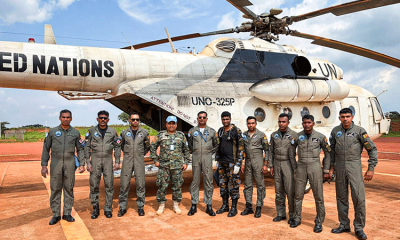
SLAF conducts successful rescue mission under UN command in Central African Republic
-

 News2 days ago
AI concerned over proposed SL military deployment in Haiti
-
 News5 days ago
UNEP support pledged to strengthen Sri Lanka’s Environmental Priorities
-

 Business5 days ago
‘Dialog Air Fibre powers a new era of Ultra Fast Home WiFi’
-

 Features3 days ago
The NPP’s New Challenge: Balancing Easter Lawfare and Economic Welfare