
News
Attack on inmates suspected of revealing drugs smuggling into Negombo Prison caused riot

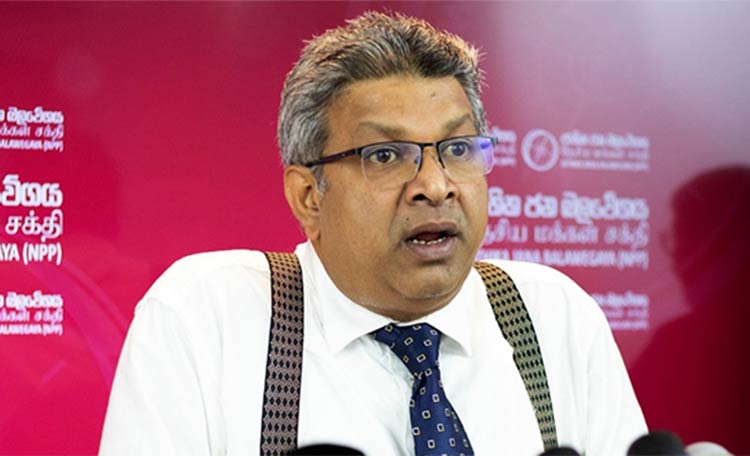
Preliminary investigations had indicated that the deadly violence at Negombo Prison was triggered by an attack on inmates suspected of providing information to prison authorities to prevent the smuggling of drugs and other contraband into the facility, Minister of Justice and National Integration Harshana Nanayakkara told Parliament yesterday (7).
Making a ministerial statement on the July 5-6 Prison unrest, the Minister stressed that investigations were still underway and that no final conclusions had been reached. However, preliminary findings suggested that the violence had originated from a clash between two rival inmate groups linked to the illegal drug trade.
The Minister said Prison authorities believed that a possible motive for the attack was that certain inmates had provided information to officials to prevent narcotics and other prohibited items from being smuggled into the Prison. Those inmates were frequently targeted by organised criminal groups, he said.
Nanayakkara said that these were only preliminary findings, based on information currently available, and that the final conclusions would depend on ongoing investigations and the report of the Committee appointed to probe the incident.
The initial clash broke out on July 5 between two groups of inmates, leaving two prisoners dead and 35 others injured. Order was restored later that evening, but violence erupted again the following morning while inmates were being prepared for court appearances, after breakfast.
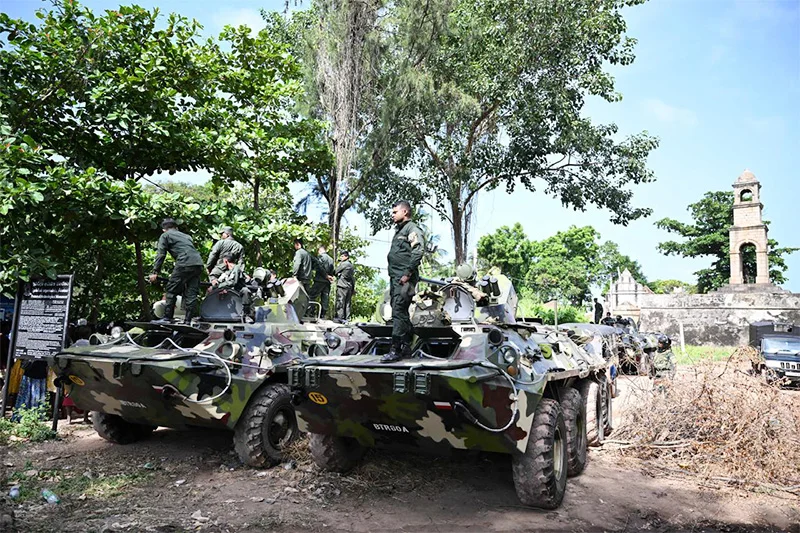
Troops atop armoured personnel carriers deployed outside the Negombo Prison (picture by Nishan S. Priyantha)
According to the Minister, a small organised group deliberately destroyed the CCTV cameras, and a body scanner, during the unrest, apparently in an attempt to disable security systems used to prevent narcotics and other contraband from entering the Prison. He said not all inmates had taken part in the violence and that many innocent prisoners were among those injured.
Nanayakkara said unarmed prison officers, who intervened to contain the violence, came under attack, with several officers being killed while attempting to protect their colleagues. Two unarmed officers were initially assaulted, prompting others to rush to their rescue. Most of the prison officers, who lost their lives, were brutally attacked with bricks and iron poles, he added.
The Minister said the rioting inmates had managed to obtain weapons and break through an iron gate before emerging from the Prison compound. Had they succeeded in escaping, they could have posed a serious threat to public safety, he warned.
Investigations were continuing to determine how the inmates obtained the weapons, including whether they had broken into the Prison armoury or seized them from prison officers during the unrest.
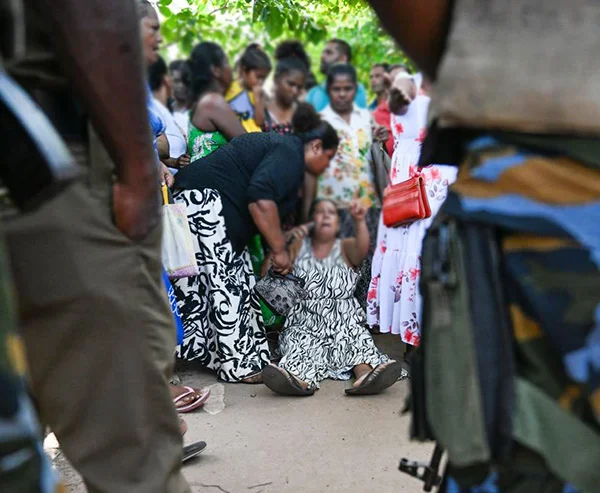 Nanayakkara said postmortem examinations were being conducted to determine whether the deaths had been caused by gunfire or assaults by fellow inmates.
He said 734 inmates involved in the unrest had been transferred to other prisons following the incident. “As of now seven prison officers and 19 inmates lost their lives and 23 prison officers and 54 inmates are being treated in hospitals for injuries,” the Minister said.
The CID has launched a separate investigation in addition to the internal inquiry being conducted by the Department of Prisons. The Minister said the government had not underestimated the gravity of the incident at any stage and that every effort was being made to establish the full circumstances surrounding the violence.
By Saman Indrajith


Bus transport is the primary mode of transport that fulfills the daily transport requirements of the country, and this service is provided by the Sri Lanka Transport Board and a large number of independent private bus operators.
Many problems have arisen, such as excessive competitiveness, poor adherence to the prescribed timetable, a large number of operators on the roads, unsafe behavior of bus operators,
inconvenience encountered by the passengers, traffic congestion, service imbalance, and inefficient use of resources due to the long-standing operational system in providing public passenger transport services.
As a successful solution to these problems, many countries in the world have introduced a ‘Bus Sector Clustering Program,’ and the bus service is operated under joint management in the same transport corridor or geographical area.
It has been acknowledged that the introduction of bus sector clustering, a methodology that involves the clustering of unified and coordinated bus services on interconnected routes under a single management, could be used to achieve the provision of an effective passenger transport service and the minimization of most operational and social issues, as opposed to the operation of a single operating unit.
Accordingly, taking into account the matters furnished by the Minister of Transport, Highways, and Urban Development, the Cabinet of Ministers has approved the implementation of the
pilot program relevant to the bus sector clustering program on the bus corridor covering routes 170, 177, and 190 initially, with the participation of related stakeholders, and to expand the project further based on the results of the pilot project.
News
Compensation for patients who lost vision after the use of Prednicylone Asitate after eye surgeries

The incidents of losing sight or further weakening eye sight of patients subject to eye surgeries at Nuwara Eliya Base Hospital due to usage of the eye liquid Prednicylone Asitate within the period from 03.03.2023 to 16.05.2023 has been reported.
Based on the result of an investigation held in the regard, compensation has been given to 17 patients who lost their eye sight after eye surgeries at the Nuwara Eliya Base Hospital. Apart from that the committee appointed to investigate and report on the patients experienced eye impairments due to usage of liquid Prednicylone Asitate after eye surgeries at the
hospitals apart from Nuwara Eliya Base Hospital recommended to compensate four (04) more patients despaired.
Accordingly, considering the particulars furnished by the Minister of Health and Mass Media the Cabinet of Ministers decided to grant their consent to compensate those four (04) patients as well with rupees one million each.
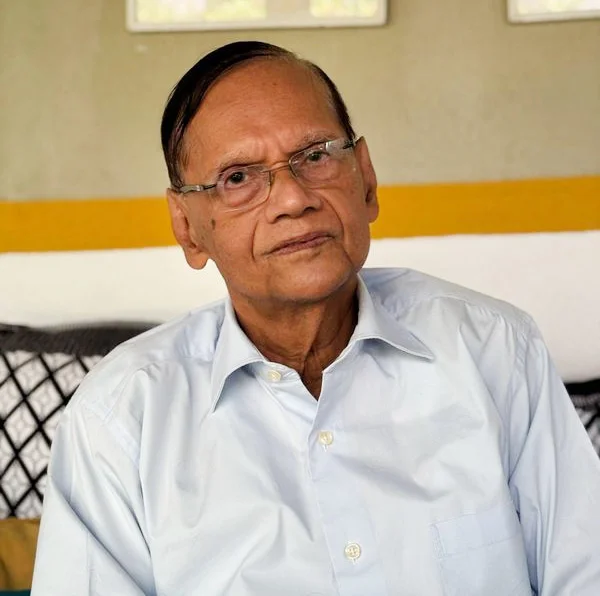
… demands resignation of Justice Minister, Secretary
Former External Affairs Minister Prof. G.L. Peiris yesterday (7) alleged that Prisons intelligence personnel were responsible for causing Monday’s riot in the Negombo Remand Prison.
The Convenor of the opposition grouping, based at former President Ranil Wickremesinghe’s Flower Road Office, asked who had sent the intelligence personel from the Prison headquarters in Colombo to Negombo after authorities had managed to bring the previous day’s incidents under control.
Two inmates were killed and several prison staff wounded on Sunday. Prof. Peiris asked the government to reveal who had ordered the police to open fire on Monday. He emphasised the responsibility on the part of the government to identify who had done so, police or prison staff or both and whether there was a need to shoot.
Commenting on Justice and National Integration Minister Harshana Nanayakkara declaration that he accepted responsibility for the prison riots that claimed the lives of 19 inmates and seven prison officers, Prof. Peiris demanded that the minister resign forthwith. The Justice Minister couldn’t side-step the issue by merely accepting responsibility, Prof. Peiris said.
He emphasised that even if Nanayakkara resigned that wouldn’t solve the problem.
Prof. Peiris alleged that the government was not concerned about issues in prisons. It was trying to bring in a constitutional amendment to extend the retirement ages of the superior court judges.
Prof. Peiris also found fault with the government for its failure to appoint a successor for Thushara Upuldeniya, Commissioner General of Prisons, suspended on 9 June, 2025, over alleged release of prisoners taking advantage of general amnesty.
The former Minister said that Justice Ministry Secretary Ayesha Jinasena had refused to implement the Human Rights Commission recommendation to reinstate Upuldeniya. Prof. Peiris said that Jinasena, too, should be held responsible for the incident as her inaction had contributed to the overall deterioration of the setup in prisons. (SF)

Bus Sector Clustering Pilot Program on route numbers 170, 177, and 190

Switzerland face Argentina in World Cup quarterfinal after beating Colombia

US bombs Sirik, Qeshm, Bandar Abbas over Hormuz attacks

Several spells of showers will occur in the Western and Sabaragamuwa provinces and in Galle, Matara, Kandy and Nuwara-Eliya districts
Compensation for patients who lost vision after the use of Prednicylone Asitate after eye surgeries

Opp. blames prison intelligence for Monday’s riot in Negombo

‘Dates have the highest sugar content to fight Coronavirus’

Sunday Island 27 December – Headlines

#SundayIsland 17th December – Headlines

Sunday Island – 28th March

Sunday Island Headlines – 21 March

Sunday Island – 21st February – Headlines
-

 News3 days ago
Singapore-based Buddhist monk marks nearly four decades of humanitarian service
-

 News4 days ago
Freedom 250: US Embassy celebrates America’s 250th Independence Day through magic of American cinema
-

 News5 days ago
CIABOC to question Harak Kata on Rs. 200 mn bribery allegation
-
 News5 days ago
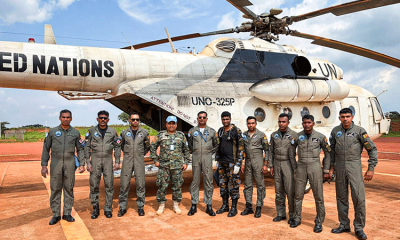
SLAF conducts successful rescue mission under UN command in Central African Republic
-

 News2 days ago
AI concerned over proposed SL military deployment in Haiti
-
 News5 days ago
UNEP support pledged to strengthen Sri Lanka’s Environmental Priorities
-

 Business5 days ago
‘Dialog Air Fibre powers a new era of Ultra Fast Home WiFi’
-

 Features3 days ago
The NPP’s New Challenge: Balancing Easter Lawfare and Economic Welfare