Sports
Stunning Chapman onslaught helps New Zealand make it 1-1
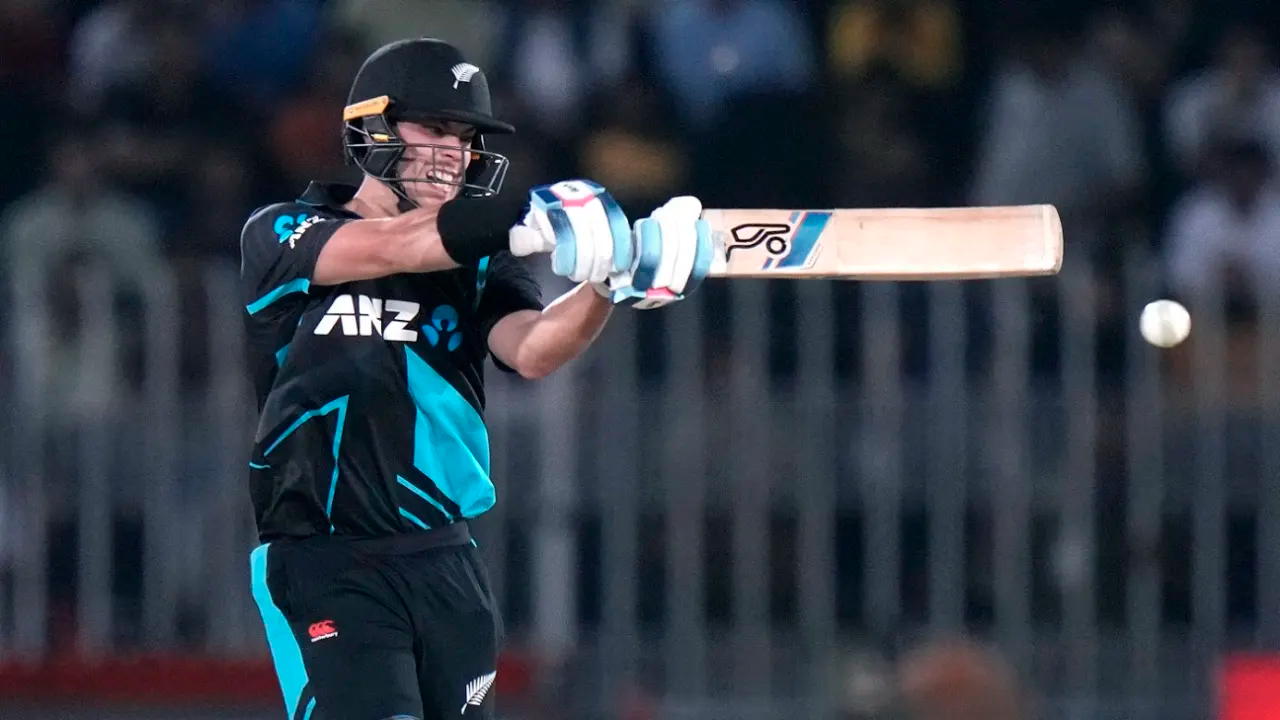
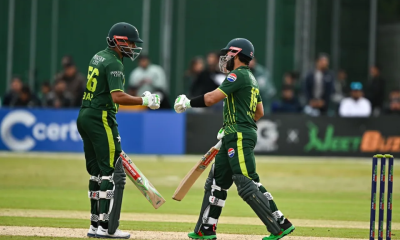
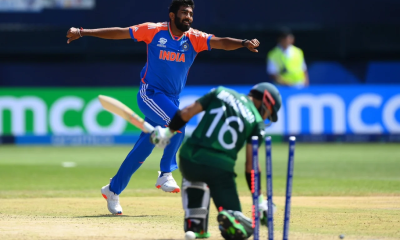
It doesn’t seem to matter who turns up for New Zealand each year; the series they play in Pakistan invariably turn out to be competitive. After a below-par performance in the second T20I, a Mark Chapman inspired New Zealand side brushed past Pakistan in the third to level the series up 1-1.
Chapman finished with a scintillating unbeaten 87 off 42 balls as he made light work of the 178 Pakistan had mustered, with the visitors getting there with ten balls and seven wickets to spare.
Chapman was New Zealand’s most impressive performer when a similarly understrength side visited in April 2023, and had little trouble picking up where he left off. New Zealand had begun brightly with the big-hitting Tim Robinson and Tim Seifert but lost both within the space of seven balls to Abbas Afridi and Naseem Shah respectively. At that point, with inexperience to follow and a battery of impressive bowling options for Babar Azam, the chase felt in severe danger of being railroaded off course.
But Chapman demonstrated that his ability extended beyond power hitting, as he set about taking apart the dangerous duo of Shadab Khan and Abrar Ahmed. He understood the target wasn’t imperious enough to require reckless slogging and manipulated the field to pick boundaries in three successive overs the two bowled. There was a fateful slice of fortune when Naseem fluffed a fairly simple chance off a miscued sweep, and it resulted in the batter going back into his shell for a stray Iftikhar Ahmed over.
The reprieve ended up costing Pakistan dearly. Iftikhar was shown no such respect when he came back on, smashed for a huge six back over his head and as Chapman steered New Zealand towards Pakistan’s total with chanceless inevitability, the flair in his game began to shine through, too. For he wouldn’t just get New Zealand to their target, but land a psychological blow by decimating their two prized fast bowlers.
Shaheen Shah Afridi was the first to bear the brunt, as two boundaries and a six in the 15th over brought the asking rate below nine. Babar brought his ace Naseem back in immediately, but a worse fate awaited him. A carved six, a carved four, a straight six, and a pulled four. That’s how his first four balls went, sealing Pakistan’s fate in a 23-run over that plunged the required rate to under a run a ball.
It’s perhaps obligatory to say at this point that Dean Foxcroft was an able understudy, but in truth, this was a one-man chase. Just two boundaries came off Foxcroft’s bat in a 117-run partnership, and while Foxcroft struggled to keep his strike rate over 100, Chapman would finish at more than double that. Pakistan will rightly reflect on the quality of their death bowling, but the fact all it took was a solo effort to hunt down what they managed raises the question about the adequacy of that first innings total.
Pakistan were put in to bat on a pitch Babar said was the typical batting-friendly strip Rawalpindi is known for, in stark contrast to Saturday’s surface. But the approach Pakistan took to setting a target befitting such a pitch was muddled, at best. Saim Ayub got the side off to his trademark flyer, but in Zak Foulkes, Ish Sodhi and Will O’Rourke, New Zealand kept finding bowlers to sneak in tight overs and stymie Pakistan’s momentum.
That was especially true once Ayub departed and Babar and Mohammad Rizwan came together two balls after the powerplay ended. Overs six to 11 saw New Zealand allow just 36 runs as the momentum Pakistan had built up faded, with Rizwan, in particular, unable to find the gaps he so cannily does in the powerplay. He would go off shortly after with a hamstring injury, while captain Michael Bracewell coaxed a false shot from the Pakistan captain to send him on his way.
Pakistan would meander for another couple of overs, but it was Shadab Khan’s introduction that injected purpose into Pakistan’s innings. By now, the run rate had slipped to 8.07, but a couple of boundaries of his first four balls set the wheels in motion for an innings where he flew to 41 off 20. Alongside Irfan Niazi, Pakistan began to blast their way back towards a competitive total. Perhaps cruelly for New Zealand, it was Bracewell, whose overs had reined Pakistan in so, who took the greatest flak during that whirlwind partnership as the pair smashed his final over for 19 runs.
Once more, though, New Zealand found a way to have the final say, with Jacob Duffy and Foulkes managing a pair of tight final overs that kept Pakistan below 180. Pakistan might have felt it was enough against an enfeebled New Zealand side, but as is often the case in T20 cricket, there are few hiding places for below par totals.
Brief scores:
New Zealand 179 for 3 in 18.2 overs (Tim Robinson 28, Tim Seifert 21, Mark Chapman 87*, Dean Foxcroft 31; Naeem Shah 1-44, Abbas Afridi 2-27) beat Pakistan 178 for 4 in 20 overs (Saim Ayub 32, Shadab Khan 41, Babar Azam 37, Mohammad Rizwan 22, Irfan Khan 30*; Jacob Duffy 1-39, Michael Bracewell 1-40, Ish Sodhi 2-25) by seven wickets
(Cricinfo)

Sports
Why are we avoiding Test matches like the plague
There’s a glut of riveting Test cricket going on around the world, the kind that warms most fans hearts. Joe Root has finally bagged his maiden hundred in Australia after a 12-year vigil – meaning Matthew Hayden no longer has to stroll around the MCG in nothing but his cowboy hat. The big man had vowed to walk naked in Melbourne if Root didn’t reach three figures this Ashes. Elsewhere, the West Indies are digging in to save a game against New Zealand, while Temba Bavuma’s South Africans have just handed India a 2-0 hiding in their own backyard.
Ordinarily, December is when cricket reporters hop from Wellington to Brisbane to Cape Town, chasing Tests like fielders patrolling the rope. Instead, this year we’re stuck at home, glued to the television, wondering why Sri Lanka are treating the longest format like a bouncer to the helmet — duck first, ask questions later.
The numbers make for grim reading. Sri Lanka have played just four Tests this year — one fewer than England and Australia will cram into seven frenetic weeks between November and December. And the plot thickens: the next Sri Lanka Test isn’t until June 2026. For specialists like Dhananjaya de Silva and Dinesh Chandimal, that’s not a gap between series — that’s an ice age. What motivation can you muster when your next red-ball assignment is two monsoons away?
Consider this: Joe Root debuted a year after Chandimal. Root has strutted out 160 times in Test cricket; Chandimal, just 90. Same era, different calendars — and Sri Lanka’s one looks very disappointing.
The World Test Championship was supposed to be a level playing field, but smaller nations often get the short end of the stick. Unless Sri Lanka are up against England, three-match series have become as rare as hat-tricks in Test cricket. With two-match rubbers becoming the norm, it’s almost impossible for teams like Sri Lanka to rack up ten Tests a year. A conscious push is needed to keep the red-ball flame alive.
To their credit, Sri Lanka Cricket have tried to plug the gaps by scheduling Tests outside the WTC — Afghanistan last year, Ireland the year before. Useful, yes, but still not nearly enough to prevent the longer format from slipping through to oblivion.
Let’s be blunt: there’s not much money in Test cricket. Unless the opposition is India or England, hosting a Test barely breaks even. But sport isn’t merely a cash register with stumps — not every moment of entertainment needs to pay for itself.
There are solutions. Each WTC cycle gives nine teams six series — three home, three away. Add just one series against a non-WTC Test nation and the tally improves. Make it mandatory that at least two of those six series must feature a minimum of three Tests, and suddenly the calendar looks healthier.
We often hear about shifting player priorities, how franchise leagues offer life-changing fortunes. Fair enough — but administrators can’t simply shrug and hope loyalty will magically return. If the suits don’t stage regular Test cricket, the players can hardly be blamed for choosing the shortest queue to a payday.
Test cricket is the game’s heartbeat. Ignore it long enough and the sport risks flatlining.
by Rex Clementine ✍️
Sports
Wolvaardt 115*, all-round Luus set up South Africa’s thumping win over Ireland
Laura Wolvaardt’s 56-ball 115 and an all-round show from Sune Luus helped South Africa beat Ireland in thefirst Women’s T20I by 105 runs, their joint third biggest win by runs, at Newlands.
Batting at No. 3, Wolvaardt scored a 52-ball century, the fastest for South Africa and the joint sixth quickest in T20Is, and was involved in a 176-run second-wicket partnership with Luus as the hosts posted their highest T20I total of 220 for 2. Having opened the batting, Luus also took the new ball and struck twice in the first over to dismiss Amy Hunter and allrounder Orla Prendergast. That effectively derailed Ireland early from what would have been an unlikely chase..
Luus and Wolvaardt got together after South Africa opted to bat and lost Faye Tunnicliffe in the second over. They started steadily before stepping on the pedal in the last two overs of the powerplay, taking 32 including a 20-run over from Lara McBride. Wolvaardt was the aggressor and she romped past fifty in just 24 balls, beating Lizelle Lee’s mark of 26 balls for the fastest T20I half century for South Africa.
Aided by plenty of misfields from Ireland, South Africa raced past 100 in the tenth over, thanks to another 20-run over, this time from Louise Little in which Wolvaardt went 6, 4, 4, 4. South Africa’s best second-wicket stand ended when Luus, on her career-best 81, tried an ungainly reverse hit against seamer Ava Canning, Ireland’s best bowler on the day, and was bowled.
That brought Dane van Niekerk, playing her first international since September 2021, to the middle. She saw Wolvaardt complete her second T20I hundred before unleashing an array of strokes to finish 21 not out of just eight balls, a strike rate of 262.50.
Only captain Gaby Lewis and Leah Paul offered a semblance of resistance for the tourists with a 42-run partnership off 39 balls. Once both of them fell in the space of 22 balls, Ireland folded quickly, losing nine wickets to spin. Luus returned as the pick of the bowlers with 4 for 22 while both left-arm spinners Nonkululeko Mlaba and Chloe Tryon took two apiece.
Brief scores:
South Africa 220 for 2 in 20 overs (Laura Wolvaardt 115*, Sune Luus 81, Dane van Niekerk 21*; Jane Maguire 1-52, Ava Canning 1-33) beat Ireland 115 in 18 overs (Leah Paul 34, Gaby Lewis 30, Laura Delany 13, Louis Little 13; Sune Luus 4-22, Nonkululeko Mlaba 2-09, Nadine de Klerk 1-13, Chloe Tryon 2-14, Nondumiso Shangase 1-13 ) by 105 runs
[Cricinfo]
Latest News
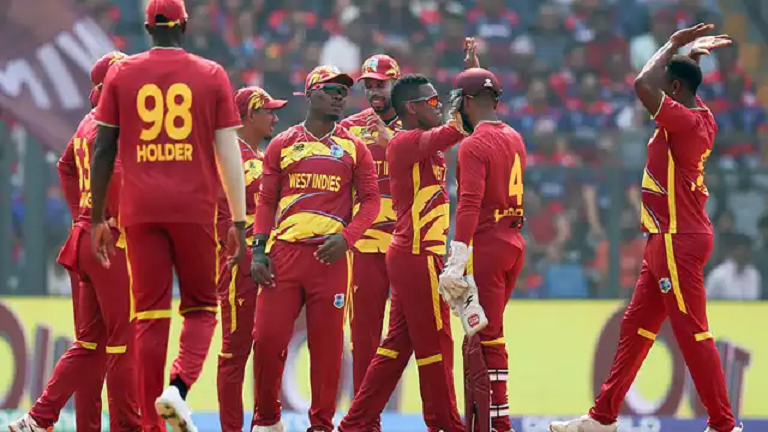
Justin Greaves 202*, Kemar Roach 58* anchor West Indies to epic draw
An epic stonewall from Justin Greaves had him face more than half the deliveries of his 12-Test career in this one innings alone, as West Indies pocketed their first points in their sixth Test of the 2025-27 World Test Championship cycle in Christchurch. The 163.3 overs they eventually faced is the longest fourth-innings in Tests for West Indies in 95 years.
Having played the supporting role to Shai Hope through their 196-run stand that rescued West Indies from 92 for 4 on Day 3, Greaves became the heartbeat of the innings once Hope (140) and Tevin Imlach fell in quick succession.
He brought up a stunning maiden Test double ton in the penultimate over when he sliced Jacob Duffy over backward point to pocket what was to be only his second boundary in all of the final session as his colleagues stood up to give him a standing ovation.
He finished 202 not out, having faced 388 deliveries, turning an innings that began with the typical artistic flair and flamboyance into a steely knock full of purpose and grit. Greaves wore more blows on the body than he could count, batted more deliveries than he had in his career, and reined in his natural instincts with single-minded purpose and determination.
His effort led to an astonishing turnaround from the first hour of the day, when West Indies stumbled to 277 for 6 in a mammoth chase of 531. A depleted New Zealand attack down to two weary frontline pacers in Zak Foulkes and Jacob Duffy, fancied their chances. But Greaves found an able ally in Kemar Roach, the 37-year-old veteran, who batted like his life depended on it in his comeback Test.
Roach made 58 not out – his highest first-class score – while facing 233 deliveries himself. Astonishingly, he made just 5 off the last 104 deliveries he faced during a dramatic final two hours of play even as the sun baked down hard on an increasingly docile Hagley Oval surface. Yet that should not take away from the epic rearguard from Hope, Greaves, and Roach.
The frustration of not being able to separate Greaves and Roach during the second and third sessions was evident, as New Zealand’s bowlers were ground into the dust. They would also have felt robbed when Roach appeared to have nicked Michael Bracewell to Tom Latham behind the stumps – though perhaps only having themselves to blame for burning all their reviews.

Even so, it was the thinnest of spikes that made it all the more challenging for Alex Wharf, the on-field umpire, who only a few minutes earlier made a cracking decision by turning down what everyone believed was an obvious inside-edge onto the pad to the slips, again off Bracewell. Replays showed Wharf had made a terrific call.
As admirably as Roach played, he also maximised his opportunities. On 30, he was put down by Foulkes at backward square leg when he attempted an expansive sweep off Bracewell. On 35, Blair Tickner, subbing for Matt Henry, missed a direct hit at the bowler’s end from a few yards away at short mid-on as Roach was misjudging a run.
Then on 47 came the most obvious chance, when Roach attempted to loft Bracewell had him nearly hole out to mid-on. Except, Glenn Phillips, the other sub, saw Tickner looking to intercept the ball from mid-off and palm it away.
With those three chances firmly behind him, Roach buckled down and offered a dead bat to anything that came his way against Bracewell. Foulkes and Duffy tried to ruffle him with the short ball from around the wicket, only for him to duck and weave.
Going into the final session, it became increasingly evident West Indies weren’t going to be enticed by the prospect of chasing down the 132 runs they needed in 31 possible overs. This clarity allowed them to approach the session with dead defence being the sole primary aim, even as Greaves began to tire and suffer cramps that needed medical attention at different times.
Not even the possibility of an impending double century enticed Greaves into attempting anything loose, even if Tom Latham gave him the open invitation to drive Bracewell against the turn through the covers. This wasn’t perhaps a risk not worth taking given how easily West Indies’ lower order collapsed in the first innings.
But long before a draw became the only possibility, even as New Zealand tried to attack with six fielders around the bat in the final session, Hope and Greaves pocketed runs at every available opportunity as the hosts rushed through their first six overs with part-time spin in a bid to take the second new ball quickly.
But even after they took it, there was hardly any assistance for the bowlers. Hope defended comfortably off a length with neither Foulkes nor Duffy consistently able to challenge the outside edge consistently. The occasional misfields, like – Rachin Ravindra letting one through his legs for four, or Will Young overrunning a throw while backing up – added to the sense of raggedness New Zealand had begun to feel.
A breakthrough lifted them shortly after drinks when Duffy dug in a short ball down leg, which Hope gloved behind, only for Latham to throw himself to his left and pluck a stunner from his webbing to end a marathon. Then came a second when Imlach was trapped by a nip-backer.
They may have thought then it was just a matter of time. It could’ve been had they not reprieved Roach, but those reprieves proved even more costly given they only had two fast bowlers and two part-timers available – all of them going full throttle to the limit – despite not getting much out of the surface.
In the end, the manner in which West Indies earned the draw may prove far more valuable. Above all, it was a day that reminded everyone of the slow-burn magic only Test cricket could deliver.
Brief scores:
West Indies 167 (Shai Hope 56, Tagenarine Chanderpaul 5; Matt Henry 3-43, Zak Foulkes 2-32, Jacob Duffy 5-34) and 457 for 6 (Justin Greaves 202*, Shai Hope 140, Kemar Roach 58*; Jacob Duffy 3-122) drew with New Zealand 231 (Kane Williamson 52, Michaell Bracewell 47, Jayden Seales 2-44, Kemar Roach 2-47, Ojay Shields 2-34, Justin Graves 2-35) and 466 for 8 dec (Ravindra 176, Tom Latham 145; Kemar Roach 5-78, Ojay Shields 2-74)
[Cricinfo]
-
News4 days ago
Lunuwila tragedy not caused by those videoing Bell 212: SLAF
-
News3 days agoLevel III landslide early warning continue to be in force in the districts of Kandy, Kegalle, Kurunegala and Matale
-
Latest News5 days agoLevel III landslide early warnings issued to the districts of Badulla, Kandy, Kegalle, Kurunegala, Matale and Nuwara-Eliya
-
Features5 days agoDitwah: An unusual cyclone
-
Latest News6 days agoUpdated Payment Instructions for Disaster Relief Contributions
-
News1 day agoA 6th Year Accolade: The Eternal Opulence of My Fair Lady
-
Latest News6 days agoLandslide Early Warnings issued to the Districts of Badulla, Colombo, Gampaha, Kalutara, Kandy, Kegalle, Kurunegala, Matale, Moneragala, Nuwara Eliya and Ratnapura
-
News1 day agoCPC delegation meets JVP for talks on disaster response