
Opinion
‘Strike pay’ has come home to roost

Critics of the government are very fond of comparing its performance with that of the once war-torn Vietnam and natural disaster-prone Bangladesh once in an impoverished state. They also often seek to compare with Singapore or Malaysia, forgetting or ignoring the basic element of controlled dictatorship or somewhat iron-fisted rule which facilitated discipline and rule of law in these countries. Neither in these two countries or Vietnam and Bangladesh was found established and organized labour as found in little Sri Lanka. There is industrial peace and continuity of essential services. That accounts for the fast developing FDIs in these places and their economic recovery. The Left Movement in Sri Lanka gradually, step by step inveigled their way into the fabric of labour control and administration very cunningly and systematically harmonizing and legalising the processes through legislation introduced by friendly
governments with a heavy political bias, putting in place Wages Boards, Commissions, Labour Tribunals, Collective Agreements, Industrial Courts and a host of ancillary measure to consolidate conditions and management of labour. The patronizing support lent by political parties, including Parliamentary backing, has made respective trade unions to be beholden to their political God-fathers so much so that over the years they have become appendages of political parties which tend to use them through union leaders who are mostly party activists for political ends. The strength of union activity has been accentuated by the network being expanded through federations and associations which, mostly unknown to the membership, are simply through animal instinct dragged into struggles which sometimes have nothing to do with their own working conditions.
Strike Pay: As a godsend, unions have graduated to the level of receiving salaries/wages during strike periods as a matter of course! Indeed, strikers do not feel the pinch of keeping away from work and their leave entitlement too is not affected at all. So, for all purposes, successive governments have asked for trouble. As long as this situation exists there could be no hope for smooth governance and its concomitant, labour peace. Remove these self-inflicted “Illegal bonuses” which serve more as an incentive to strike for prolonged periods and the dismantling of political and other strengths in trade unions could be capable of being witnessed in no time. There is no right, human or otherwise, attached to payment while on strike. Hence, there could be no complaints at Geneva or internationally. The United Nations has not given its blessings either.
The right to strike will not be taken away but employees will always think twice before they leap. The entire responsibility to sustain strikers has to fall into the lap of respective unions through special funds set up for the purpose, the current facility is damn stupid. The incongruence and absurdity of the whole exercise can be seen when one considers for instance the Health sector where the strikers are paid their wages and leave entitlements insured the cost of which is happily met by the tax-payer through direct and indirect taxation and the victims themselves complaining against the inconvenience experienced and the additional expense incurred when they are at the receiving end of the union action which the people themselves are in fact funding! Despite the backlash that can be expected on a reversal of this process, it is worth attempting to withdraw wage payment during strikes and have leave entitlements set off against the period of the strike and any balance to be on no-pay. Desperate situations need desperate remedies. The time has come for meaningful action- the only way forward.
Concerned Citizen


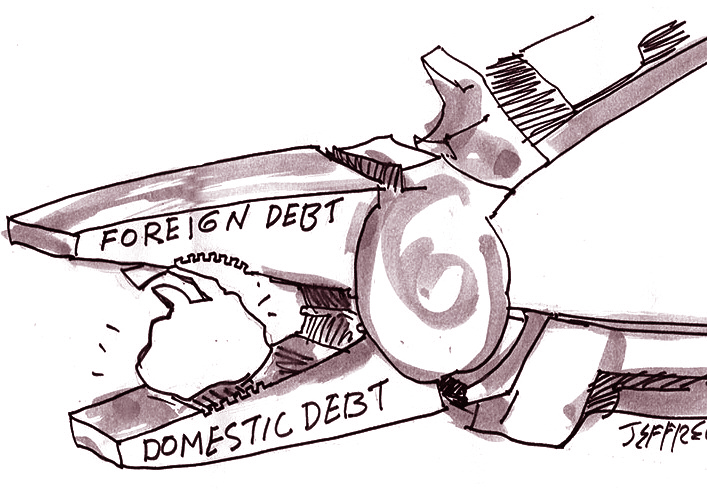
This article presents a quantitative and critical analysis of the volume, composition, and utilization of public debt in Sri Lanka during the period 2024–2026. In general discourse, attention is primarily focused on the size of debt alone. However, this article reveals a broader economic reality by examining the interconnections among debt sources, patterns of utilisation, and repayment capacity.
In particular, when factors such as high debt-to-national-income ratios, limited revenue-generating capacity, and a heavy reliance on recurrent expenditure are considered together, Sri Lanka’s debt problem appears not merely as a numerical issue, but as the outcome of a systemic imbalance. Furthermore, the article highlights that external factors—such as geopolitical instability in the Middle East—are likely to further intensify these challenges.
1. Introduction
During the period from September 2024 to March 2026, a multi-layered discourse has emerged regarding the volume of debt obtained by the Government of Sri Lanka and the manner in which it has been utilised. Within these discussions, particular attention has been given to the increase in debt levels. While this is a valid and necessary concern, it is essential not to accept the issue at face value, but rather to analyze it critically within a broader economic context.
The primary focus should not be limited to the narrow question of “how much debt has the government borrowed?” but should instead extend to a broader set of questions: “from where has this debt been obtained, for what purposes has it been used, and what is the country’s capacity to repay it?” In other words, a complete and accurate understanding of the economic picture can only be achieved by analysing the interconnections among debt volume, utilization, and revenue-generating capacity.
Within this context, it is estimated that by the end of 2023, Sri Lanka’s total public debt stood between LKR 27–30 trillion (Central Bank of Sri Lanka, 2023; IMF, 2024). At the same time, the debt-to-GDP ratio is observed to be in the range of 110%–128%, while the burden of debt servicing relative to government revenue remains at a high level of approximately 60%–70%. In addition, the revenue-to-GDP ratio stands at only around 8%–10%, which is considered a structural fiscal weakness (World Bank, 2023).
Against this backdrop, it becomes evident that during the period 2024–2026, Sri Lanka is not on a path of deleveraging, but rather in a transitional phase centered on debt restructuring and economic stabilisation. Therefore, this article seeks to provide a deeper and more comprehensive understanding by analyzing not only the size of debt, but also its utilisation, structure, and policy implications.
2. Total Public Debt as at End-2023
As at the end of 2023, Sri Lanka’s total public debt is estimated to be between LKR 27–30 trillion. The debt-to-GDP ratio exceeds the commonly accepted safe threshold of 70% and remains within the range of 110%–128% (CBSL, 2023; IMF, 2024). In addition, the burden of debt servicing relative to government revenue is at a very high level, in some instances reaching approximately 60%–70% of revenue. At the same time, government revenue as a percentage of GDP stands at only around 8%–10%, which is below the required level for emerging economies.
When these indicators are considered together, a clear imbalance emerges between the rising debt burden and the country’s limited revenue-generating capacity.
Furthermore, the composition of debt and external economic linkages intensify this vulnerability. It is estimated that approximately 40%–45% of total debt is external, making the country highly sensitive to exchange rate fluctuations. Moreover, imports account for around 25%–35% of GDP, while exports remain at only about 20%–22%, resulting in a trade deficit and increasing the demand for foreign exchange (World Bank, 2023).
Consequently, external debt repayments depend heavily on export earnings and foreign employment income. Under these conditions, new borrowing often appears to be used for servicing existing debt, thereby creating a debt cycle that does not contribute to long-term economic growth.
Therefore, Sri Lanka’s debt problem should not be understood merely as a numerical issue, but rather as a manifestation of a deep structural imbalance among revenue capacity, economic structure, and patterns of debt utilisation.
3. Debt Situation During the 2024–2026 Period
An analysis of Sri Lanka’s debt utilisation patterns during the period 2024–2026 clearly indicates that new borrowing has been used primarily not to generate economic growth, but to manage existing debt and support short-term stabilisation.
Under the International Monetary Fund program, a significant portion of the funds obtained has been directed toward debt servicing, interest payments, and requirements related to debt restructuring (IMF, 2024). In addition, based on the composition of government expenditure, a high proportion is allocated to recurrent expenditure, while capital expenditure remains relatively limited. Typically, nearly 70% of total government expenditure is directed toward recurrent expenditure, while capital expenditure accounts for around 20%–30% (CBSL, 2023).
This pattern of utilisation demonstrates that borrowing is being used to sustain existing fiscal pressures rather than to enhance revenue-generating capacity. In particular, the use of new borrowing to repay existing debt (debt rollover) further reinforces a debt cycle, thereby constraining long-term economic growth. Moreover, the import-dependent economic structure and shortages in foreign exchange further reduce the efficiency of debt utilisation.
Accordingly, during the period 2024–2026, Sri Lanka’s borrowing can be characterized not as growth-oriented borrowing, but rather as survival-oriented borrowing. This clearly represents a significant challenge to long-term economic stability.
4. Future Challenges
An analysis of Sri Lanka’s current economic condition clearly indicates that the country has not yet fully emerged from the crisis. It is not in a phase of debt reduction, but rather has entered a stage of debt restructuring and stabilisation. Total public debt remains at a high level, and a debt-to-GDP ratio exceeding 100% raises serious concerns regarding debt sustainability.
Although debt restructuring has been implemented under the International Monetary Fund program, it primarily serves as a short-term relief measure, and a comprehensive long-term solution has yet to be achieved. Furthermore, the fact that new borrowing is largely used for debt rollovers and short-term economic stabilization indicates that the country remains in a debt stabilisation stage.
Moreover, the current pattern of debt utilization and the overall economic structure further deepen future challenges. A significant portion of borrowed funds is directed toward servicing existing debt, financing recurrent government expenditure, and maintaining short-term stability, thereby limiting productive investment. At the same time, despite efforts to increase government revenue, the high burden of debt servicing and expenditure levels constrain fiscal space.
In terms of foreign exchange, reliance on export earnings and foreign employment income, combined with an import-dependent economic structure, continues to expose the country to external economic risks.
Within this context, ongoing geopolitical instability in the Middle East represents an additional source of pressure for an import-dependent economy such as Sri Lanka. In particular, volatility in fuel prices, security risks along key maritime routes, and potential impacts on foreign employment income could weaken the country’s foreign exchange position and overall economic stabilisation process.
In effect, the interaction between internal economic imbalances and external instability creates a condition of double vulnerability for Sri Lanka.
Despite positive signals such as declining inflation, exchange rate stabilization, and support from the International Monetary Fund, economic growth remains weak, private investment is low, and cost-of-living pressures persist. These conditions confirm that significant and complex policy challenges lie ahead.
The interaction of internal imbalances and external instability creates a condition of double vulnerability for Sri Lanka.
5. Conclusion Remarks
This analysis demonstrates that Sri Lanka’s current debt situation is not merely a numerical issue, but the outcome of a deep systemic imbalance among economic structure, public financial management, and policy decisions. During the period 2024–2026, the country is not on a path of debt reduction, but rather in a stabilisation phase based on debt management and restructuring.
New borrowing is largely used not to generate economic growth, but to manage existing fiscal pressures. This further intensifies the imbalance between the quality of debt utilisation and the country’s revenue-generating capacity.
However, when one reads between the lines of these figures and reports, many unspoken realities become evident. Decisions related to borrowing and its utilisation are closely linked to policy priorities, political objectives, and the quality of governance. Therefore, analysing numbers alone is insufficient; it is essential to critically examine the decisions, priorities, and responsibilities that lie behind them.
Accordingly, moving forward requires not only controlling the volume of debt, but also transforming the manner in which it is utilised and the policy decision-making framework that underpins it. Only through productive investment, revenue growth, and strong public financial management can Sri Lanka transition from a debt-dependent economy to one characterised by stable and sustainable long-term growth.
In conclusion, Sri Lanka’s debt narrative is not merely a story of numbers—it is a comprehensive reflection of the country’s economic decisions, patterns of utilisation, and often unspoken priorities.
References
Central Bank of Sri Lanka (CBSL) (2023) Annual Report 2023. Colombo: Central Bank of Sri Lanka.
International Monetary Fund (IMF) (2024) Sri Lanka: Debt Sustainability Analysis and Program Review. Washington, DC: IMF.
Ministry of Finance (2026) Sri Lanka Government Debt Report: September 2024 – March 2026. Colombo: Ministry of Finance, Sri Lanka.
World Bank (2023) Sri Lanka Development Update: Restoring Stability and Growth. Washington, DC: World Bank.
International Energy Agency (IEA) (2023) Sri Lanka Energy Profile. Paris: IEA.
by Professor Ranjith Bandara
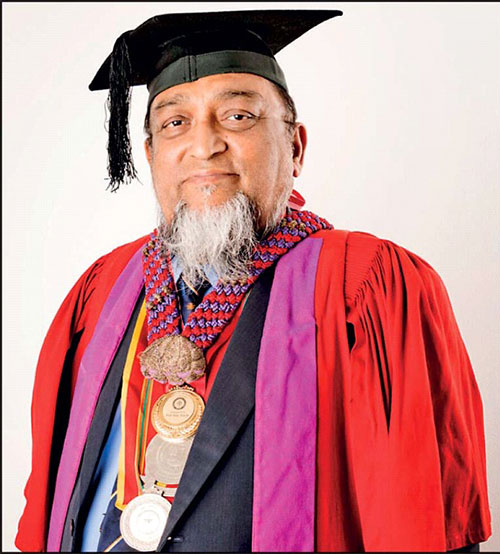
Vidya Jyothi Professor Rezvi Sheriff
We do mourn the passing away of Vidya Jothi Emeritus Professor Rezvi Sheriff on the 30th of March 2026. He was a man who was one of the finest doctors who served the health service of our beloved country and several other nations as well.
I was most fortunate to be selected to formulate and present the citation for Professor Rezvi Sheriff just last year, for the award of the coveted Fellowship of the Sri Lanka Medical Association during the Inauguration Ceremony of the Annual Congress of the Sri Lanka Medical Association on the 23rd of July 2025.
That narrative is reproduced here as the final tribute to a superlative medical scientist, a humane carer, teacher par excellence, an academic of profound scholastic stature and a very close friend.
Our Chief Guest tonight, Guest of Honour, Special Guests, the President, Council, Fellows, and Members of the Sri Lanka Medical Association, and Distinguished Invitees…….
I am delighted to present to you, Vidyajyothi Professor Rezvi Sheriff, MBBS Ceylon), MD(Ceylon), MRCP(UK), FRCP(London), FRCP(Edinburgh), FRACP, FCCP, Fellow of the National Academy of Sciences of Sri Lanka, and Emeritus Professor of Medicine for the superlative award of the Fellowship of the Sri Lanka Medical Association.
In fact, the man is so very well-known, and formulating a citation for him was a veritable Herculean task, similar only to one trying to sell ice to Eskimos. In such a context, I will attempt only to portray some strategic vantage points of a career that clearly defies an adequate description in the time allotted to me. One could write reams about the man and still leave quite a lot unsaid.
Following a spectacular school career, Rezvi entered the Faculty of Medicine, Colombo, in 1966, just one year after me, and we have been close friends ever since. The man went through his undergraduate career, securing many distinctions and gold medals, and qualified in 1971 as the first in class valedictorian, topmost performer of the batch, and the first in the combined order of merit of the two Medical Schools of Colombo and Peradeniya.
From then onwards, there was no looking back. It was a steady, persistent, and exponential climb in the academic ladder to finally reach the pinnacle of the Chair Professorship of the Department of Medicine, Faculty of Medicine, Colombo. He is a great researcher and has a monumental plethora of scientific papers published in peer-reviewed, indexed, high-impact medical journals. He has delivered several orations, many plenary lectures, guest lectures, and taken part in numerous academic symposia as a resource person. He has been internationally recognised through fellowships and memberships from prestigious colleges and academic institutions. He has lectured in many centres worldwide, inclusive of a considerable number of universities in the United States of America, Great Britain, Australia, Norway, Japan and Pakistan.
As an Educator, he has mentored thousands of undergraduate and postgraduate students and allied health professionals. He is acclaimed for his quality clinical teaching, integrity, kindness and compassion. His medical journey, culminating in the Chair Professorship of Medicine, has inspired many a generation. He retired from the University of Colombo in 2014 and then worked at the Kotelawala Defence University for another 10 years. Altogether, he has had 60 years of university service and been a professor for 41 years. He was awarded Emeritus status by the University of Colombo, following his retirement.
He is known as the Pioneer Godfather of Nephrology and Transplant Medicine in Sri Lanka. He initiated the country’s first Dialysis Unit and Kidney Transplant Programme, a vision that forever transformed renal care and paved the way for other organ transplantations in Sri Lanka as well.
He has served for six years as the only Sri Lankan Council Member in the International Society of Nephrology. Incidentally, he and I were in the UK around the same time during our postgraduate training. He was in nephrology in the South of England, and I was doing nephrology in Nottingham in the Midlands. He continued in nephrology while I changed track and went in a different direction.
Professor Sheriff’s influence extended beyond the lecture rooms, wards and clinics. He was a member of the First National Health Policy Formulation Team, the University Reforms Committee, the National Education Commission and the Sri Lanka Medical Council. He was the Director of the Postgraduate Institute of Medicine from 2006 to 2011. All these assignments were conferred directly by the Executive President of Sri Lanka.
Professor Sheriff founded major nationally important bodies such as the Sri Lanka Society of Nephrology, the Health Informatics Society of Sri Lanka and the Hypertension Society of Sri Lanka. He was also instrumental in building critical medical infrastructure, such as the CLINMARC building at NHSL, the National Institute of Nephrology Dialysis and Transplantation Centre in Maligawatta, the Ceylon College of Physicians Building in Rajagiriya, and the first Kidney Transplant Unit at NHSL. He also set up the most advanced Dialysis Unit in Sri Lanka at the General Sir John Kotelawala Defence University Hospital.
In a kind of nostalgic rumination, Rezvi and I used to be on the opposing teams in the Annual Physicians Versus the Paediatricians Cricket Match. If I remember right, and in a lighter vein, that is perhaps the only time anyone has been able to beat this great man.
Ladies and Gentlemen, legends are found not only in the movies. They are there in real life, too. Role models are remembered, not just for what they achieve, but for the lives they inspire, the opportunities they create, and the kindness they perpetually exhibit. Despite his vast achievements, Professor Rezvi Sheriff remains an extremely humble, deeply religious, superlatively kind, service-oriented person. Today, as we honour him, we celebrate not just a brilliant academic and a superb clinician, but a man who has lived a life of purpose and integrity: a life devoted to service to the community. Some years ago, in recognition of his services to our Motherland, the Government of Sri Lanka conferred on him the National Titular Award Vidya Jyothi, the highest national honour that can be bestowed on a scientist.
Mr President, I am ever so pleased to present Professor Rezvi Sheriff, a superlative clinician and a healer, a fine researcher, a brilliant teacher, a visionary, and a true servant of humanity, for the award of the legendary Fellowship of the Sri Lanka Medical Association.
Ladies and Gentlemen, please be kind enough to rise and applaud this great son of Mother Lanka.
***
With the demise of Professor Rezvi Sheriff, we have lost a superlative son of our hallowed Motherland, and I have lost a very dear friend.
Goodbye, our friend…, May the turf of our Motherland rest ever so gently on you.
May he rest in eternal bliss as we acknowledge the words in the Holy Qaran 𝗜 i𝗜𝗹𝗮i𝗵 𝗻!
(Verily to Allāh we belong, and verily to Him, we shall return)
By Dr B. J. C. Perera
Specialist Consultant Paediatrician
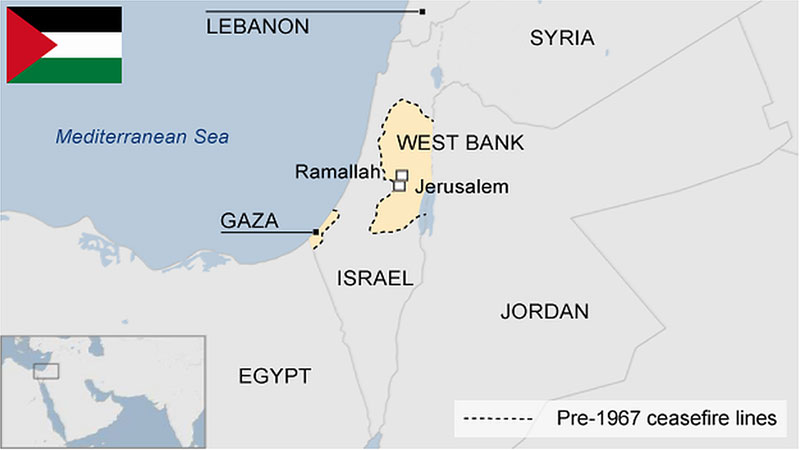
Since the creation of Israel, in 1948, Palestine has lost so much that it is a wonder that it is still a part of the world map. Since 1948, Palestinians have lost approximately 85% of the land that made up historic British Mandate Palestine. This loss occurred in several major stages, beginning with the 1948 Arab-Israeli War and continuing through the 1967 Six-Day War and ongoing settlement expansion.
It is necessary to outline the relevant historical facts about the state of Palestine. Palestine was among former Ottoman territories, placed under UK administration, by the League of Nations, in 1922. All of these territories eventually became fully independent States, except Palestine, where, in addition to “the rendering of administrative assistance and advice,” the British Mandate incorporated the “Balfour Declaration” of 1917, expressing support for “the establishment in Palestine of a national home for the Jewish people”. During the Mandate, from 1922 to 1947, large-scale Jewish immigration, mainly from Eastern Europe, took place, with the numbers swelling in the 1930s with the Nazi persecution. Arab demands for independence and resistance to immigration led to a rebellion in 1937, followed by continuing terrorism and violence from both sides. The UK considered various formulas to bring independence to a land ravaged by violence. In 1947, the UK turned the Palestine problem over to the UN.
After looking at alternatives, the UN proposed terminating the Mandate and partitioning Palestine into two independent States, one Palestinian Arab and the other Jewish, with Jerusalem internationalised (Resolution 181 (II) of 1947). Records indicate that Jewish individuals, or organisations, only owned between 5.8% and 7% of the land in Palestine, prior to the 1947 Partition Plan. The remainder was either privately owned by Palestinians (94.2% according to some fiscal records) or classified as state/public land by the British authorities. The vast majority (90%) of the population was Palestinians. The Partition Plan did not take these demographic facts into consideration and this led to the war in 1948 with Egypt, Jordan, Syria, Lebanon, Iraq and Saudi Arabia joining forces against Israel. The war was a major loss for the Arab countries as Israel was backed by the west and, following the war, Israel established control over 77% to 78% of the land. The remaining 22%—consisting of the West Bank and Gaza Strip—came under Jordanian and Egyptian administration, respectively.
The Arab countries were very much concerned about this situation and were very sympathetic towards the Palestinians. In a desperate attempt, in 1967, Egypt, Jordan and Syria attacked Israel, which by now, with huge western support, was militarily far superior to the collective strength of these countries and could capture Sinai Peninsula, Gaza strip, West Bank, East Jerusalem and Golan Heights. Again, in 1973, Egypt attacked Israel in a surprise move and inflicted much damage, though finally losing the war. This led to a peace treaty between Egypt and Israel and the return of Sinai. The outcome of all these wars was that today the Palestinians have lost administrative and sovereign control over approximately 85% of historic Palestine, since 1948, with current autonomous Palestinian areas (Gaza and parts of the West Bank) making up less than 15% of the total original territory.
Palestine gradually lost its major military allies; Egypt, Jordan, Iraq, Syria, Lebanon and Libya, due mainly to the machinations and direct invasions by western forces and Israel. There were internal disputes and betrayals, as well, with Hamas falling out with Fatah and Palestinian Authority colluding with Israel to undermine Palestinians. All this shows the pathetic tragedy that has befallen the historical inheritors of the land of Palestine. Today, they are subjected to the most inhuman harassment and genocide, with daily killings, and their land is being grabbed by Israel. And there is, apparently, no one to help them; the UN can only pay lip service and if this continues Palestine will soon be obliterated from the world map.
However, there may be a glimmer of hope for this beleaguered country if the war between Iran and Israel ends in the way people like Prof. Jeffrey Sachs, Prof. John Mearsheimer, Col. Douglas Macgregor, Prof. Richard Wolf, Miko Peled, etc., predict. These people have made comments like “Iran has the upper hand”, “The US has already lost the war”, “Iran will be the graveyard of American hegemony”, “This will be the end of Israel”.
It was Miko Peled, a Jew by birth, and a Palestinian activist by conviction, who said “This will be the end of Israel” in a recent podcast interview, and he was hoping that it would eventually solve the Palestine problem. Peled’s grandfather, Avraham Katznelson, was one of the founders of Israel who signed Israel’s Declaration of Independence. Peled’s father, Mattityahu Peled, had fought in the 1948 Arab–Israeli War and served as a general in the Six-Day War of 1967.
In 1997, Peled’s 13-year-old niece Smadar, daughter of his sister Nurit Peled-Elhanan, was murdered in a Palestinian suicide terror attack in Jerusalem. After her funeral Peled had said, “Why not tell the truth… That this, and similar tragedies, are taking place because we are occupying another nation and that, in order to save lives, the right thing to do is to end the occupation and negotiate a just peace with our Palestinian partners?” Today Miko Peled is fighting for the liberation of Palestine. He asserted that the raid by Hamas into Israel, in October, 2023, was not terrorism but a heroic act.
Col. Douglas Macgregor, a retired US Army officer, who had faught in the Iraq war, and who was nominated by President Trump as the Ambassador to Germany, and also appointed to the board of the US Military Academy, has said “Iran holds the upper hand”. He has several reasons to support his claim; Iranian missiles outnumber the interceptors of Israel and Gulf states, and already Israel is running out of weapons, the economic fallout in the US, Gulf countries and Europe would be catastrophic if the war drags on, ground forces option would be disastrous as landing them would be a suicidal process given the advance surveillance methods that Iran possess, courtesy China and Russia. Further, he says, several such US campaigns in the past have failed, pointing out that Iraq, which was ‘conqured,’ is now asking the US to leave. The Syrian leader – another country ‘conqured’ – is visiting Russia. A Minister, in Qatar, has told the US to leave her country alone.
Prof John Mearsheimer is Professor of Political Science at the University of Chicago. In his 2007 book The Israel Lobby and U.S. Foreign Policy, Mearsheimer argues that the Israel lobby wields disproportionate influence over US foreign policy in the Middle East. Mearsheimer asserts that Benjamin Netanyahu is driving the push for conflict, rather than US interests. He describes Israel as an “albatross around our neck” regarding this war. He claims the U.S. and Israel initiated this war against Iran, which he does not believe the US can win.
Mearsheimer has argued that “Iran holds all the cards” in the war of attrition, suggesting that Iran is not losing and that the US is facing a strategic defeat. He argues that Iran does not represent a threat massive enough to justify American involvement in the conflict and that the US is fighting ‘somebody else’s war’.
Prof. Jeffrey Sachs is a professor at Columbia University, where he was formerly Director of The Earth Institute, and is Director of the Centre for Sustainable Development at the University. He had been a tenured professor of Economics at Harvard. From 2002 to 2018, Sachs was special adviser to the UN Secretary-General. Regarding the war, he has said that the US and Israel had underestimated Iran and that Iran would be the Graveyard of American hegemony. Further Sachs has called Israel ” a reckless country” and a joint military campaign with it is not in the US interests. He has made a special appeal to the leaders of China, Russia and India to pressure Donald Trump to stop the war, which he says would be very effective.
Prof Richard Wolf, leading economist, says the US is at present heavily in debt and the defence budget for 2026/27 has been increased from 900 bn to 1.5 tr which could affect health, education and welfare programmes. People in the US are on the streets protesting against the war.
What could be gleaned from all these opinions and views of people, who know what they speak of, is that, whatever the outcome of the war, the world will not be the same for all of us. Beginning from Trump and the people of the US, European leaders, China, Russia and India, Iran and the Middle East, particularly the Gulf States, the Global South and finally Israel, would learn that war cannot solve problems, that hegemony is hated, imperialism has to end and, last but not least, if the world wants peace the Palestine problem must be solved.
(Some of the information in this article was derived from Wikipedia)
By N. A. de S. Amaratunga

Heat Index at Caution Level in the Western, Sabaragamuwa, Southern, Eastern, North-western, Northern and North-central provinces and in Monaragala district

Kuwait desalination plant, oil refinery hit by missile and drone strikes

Chamodi Prabodha to lead Sri Lanka women’s U19 National Team for the tour of Australia

Sri Lanka Cricket Appoint National coaches for Bowling, Fielding and Spin Bowling

Trump fires Pam Bondi as US attorney general, elevates Todd Blanche

Klaasen fifty, Travishek onslaught hand Sunrisers Hyderabad first points of the season

‘Dates have the highest sugar content to fight Coronavirus’

Sunday Island 27 December – Headlines

#SundayIsland 17th December – Headlines

Sunday Island – 28th March

Sunday Island Headlines – 21 March

Sunday Island – 21st February – Headlines
-

 Features7 days ago
A World Order in Crisis: War, Power, and Resistance
-
 News4 days ago
Tariff shock from 01 April as power costs climb across the board
-
 News7 days ago
Minister Jayakody indicted in Colombo High Court over alleged corruption
-
 News5 days ago
Inquiry into female employee’s complaint: Retired HC Judge’s recommendations ignored
-

 News7 days ago
Police look for male partner of Chinese woman found stabbed to death at an apartment in Kohuwala
-

 News2 days ago
2025 GCE AL: 62% qualify for Uni entrance; results of 111 suspended
-
 Features5 days ago
New arithmetic of conflict: How the drone revolution is inverting economics of war
-
 Features6 days ago
When seabed goes dark: The Persian Gulf, cable sabotage, and race for space-based monopoly