
Business
‘Strict health protocols vital for safety of travellers when airport reopens’

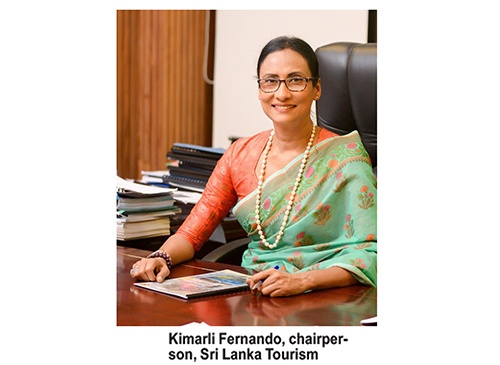
As COVID-19 is a health pandemic affecting most nations and Sri Lanka, there need to be strict health protocols to ensure the safety of not only our citizens but also international travellers.
For this purpose, Sri Lanka Tourism published the Health Protocol for the Tourism Sector in June 2020 based on global best practices, giving ample time for the industry to be familiar with the guidelines.
Tourism entry protocols and preparedness
Sri Lanka Tourism was one of the first in the Asian region to prepare and issue a comprehensive COVID-19 Health Protocol for the industry which was developed and issued with the support of the Ministry of Health, the UN World Health Organization and the input of the industry.
Currently, over 92 establishments; accommodation providers & tour operators have been awarded the Safe & Secure Certification to service & accommodate international tourists for the first 14 days. We continue to audit and award certifications.
Global recognition
Sri Lanka received the Safe Travel Stamp from World Travel & Tourism Council, reflective of the sound protocol implemented by Sri Lanka Tourism. This includes the independent auditing firm KPMG inspecting the ‘Safe and Secure Certification’ that provides global travellers with the comfort and confidence that Sri Lanka has taken all necessary steps to ensure safety.
The audits are conducted free of charge for first-time certification where the costs are being borne by SLTDA. Auditing and certification are stringent as they should be to ensure high health and safety standards, in line with other countries in the region. Considering the nature of the virus as compromises can be dangerous.
Certification includes a QR code that will permit guests to provide feedback on the health & safety protocols followed by their hotel & service provider, which will enable continuous assessment, besides inspection by the PHIs and regional health officers.
Awareness and training
Several training sessions were conducted on Pandemic Preparedness for SMEs, designed and rolled out together with S4IG Australia and Asian Development Bank. COVID-19 guideline training was conducted partnering with Market Development Facility (MDF) of Australia and the Hotels Association of Sri Lanka (THASL).
To all the stakeholder associations, Sri Lanka Tourism kindly suggests you arrange similar training programmes for your members and we will support by providing trainers who are familiar with the guideline.
Airport opening protocol
A detailed Airport Opening Protocol has been developed in the last several months and presented to the Minister of Health. Another Committee has been appointed to again review the protocol, which we are made to understand will further delay the airport opening.
“This is a global health pandemic and we are guided by the health officials. Diluting the health protocols would compromise the safety of international travellers and citizens when the airport reopens. Unless the Ministry of Health gives us the approval to relax the health and safety protocols, we are unable to do so.
‘Meanwhile, we will continue to support our stakeholders to ensure the safety of all and reach out to support you to thrive in the new normal that we face at this time” Sri Lanka Tourism chairperson Kimarli Fernando shared.
‘Safe & Secure’ certification
This guideline is available on the SLTDA official website and can be accessed through https://sltda.gov.lk/storage/documents/SLTourism-OperationalGuidelines.pdf.
The guideline provides direction to all tourism service providers on how to carry out their operations in a responsible manner adhering to the health protocols. While every tourism service provider is expected to familiarize with the overall guideline contents, chapter 4 is specifically dedicated to the accommodation service sector and chapters 3 & 6 provide guidance to travel agents, tour operators and tour crews. Chapter 5 is for other tourist facilities and services including stand-alone restaurants, cafes, theatres, supermarkets, shopping malls etc., while chapter 7 is for attraction sites and activity places.
Any SLTDA registered tourism service provider from accommodations, travel agents, tour operators, tours crews (tour guides and chauffeurs) or other services can apply for ‘Safe & Secure’ certification, if they are ready to be audited by the KPMG. The cost of the first audit as mentioned earlier will be borne by SLTDA and to apply for certification, SLTDA registration with license renewal is a mandatory requirement.
The application is available online and can be accessed through https://sltda.gov.lk/safe-certification. Based on the applied date, the audit schedules will be prepared by SLTDA and forwarded to KPMG for implementation.
For the accommodation sector, travel agents/tour operators and stand-alone facilities, the assessments will include completing of KPMG’s initial checklist/questionnaire by the relevant service provider, which will be followed by the physical on-site audit at a pre-arranged date.
Assessment of the tour crews including tour guides and chauffeurs are based on an examination conducted by KPMG to check the level of overall knowledge and awareness on the guideline contents with special attention to details in chapters 3 & 6 of the guideline.
(SLTDA)




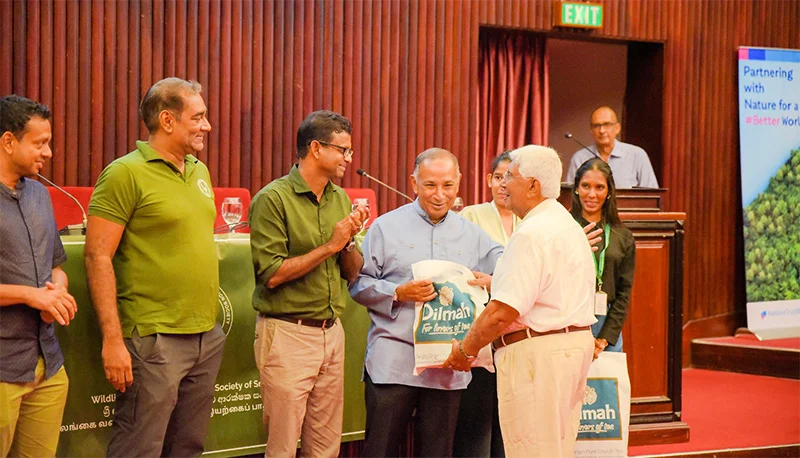
Environmental crises in Sri Lanka are no longer merely conservation issues but constitute an economic and corporate survival challenge that directly threatens the country’s water security, agriculture, exports and long-term business sustainability, speakers at the latest monthly lecture of the Wildlife and Nature Protection Society of Sri Lanka (WNPS) warned on Thursday.
At a time when climate shocks, biodiversity collapse and environmental degradation are beginning to impact supply chains, tourism, food production and investor confidence, the lecture titled “Conservation in Action: Driving Impact – Hill Country to Courtrooms: Science, Community and the Next Generation in Action” highlighted how conservation is increasingly becoming intertwined with economics, corporate governance and national resilience.
Held at the Bandaranaike Memorial International Conference Hall with support from Nations Trust Bank, the event drew leading corporate executives, conservationists, lawyers, architects, researchers and youth leaders.
Corporate leader and conservation advocate Sriyan de Silva Wijeyeratne delivered one of the strongest messages of the evening, stressing that Sri Lanka’s montane ecosystems were effectively the economic backbone of the nation.
“You block up the montane region, we lose our water, our agriculture and our exports, he said.
His remarks reflected a growing global shift where environmental protection is increasingly viewed not as philanthropy, but as a strategic investment linked directly to economic continuity and climate resilience.
Wijeyeratne explained how the WNPS-led “Plant” initiative has rapidly evolved into one of Sri Lanka’s most ambitious privately supported ecological restoration programmes, demonstrating how businesses can move beyond traditional corporate social responsibility into measurable environmental investment.
Within just five years, the initiative has begun restoring around 200 acres of degraded landscapes while establishing approximately 30 kilometres of ecological corridors in the central highlands.
Importantly, he said, the programme was designed not to centralise conservation under a single organisation but to create a scalable model for wider private-sector adoption.
“We are not trying to become the answer. Plant is meant to prove that private-sector-led restoration is possible and that businesses can actively participate in rebuilding ecosystems, he said.
The initiative already involves partnerships with multiple private-sector stakeholders investing in ecological restoration in the hill country — an area critical to tea, hydropower, water resources and downstream agriculture.
One of the clearest examples discussed during the lecture was the growing collaboration between conservationists and Sri Lanka’s architectural and urban planning sectors.
Following discussions initiated at the Geoffrey Bawa Trust, the prestigious Geoffrey Bawa architectural awards were restructured into the “Monamal Award,” recognising projects that integrate biodiversity, ecosystem restoration and environmentally sensitive design.
“This is about redefining what good development means, Wijeyeratne said.
“The future gold standard of architecture must be buildings and landscapes that embrace ecosystems rather than destroy them.”
The lecture also explored how climate change is reshaping social vulnerability and labour resilience — key concerns for businesses operating in agriculture, plantations and rural economies.
Wildlife photographer and conservationist Riaz Cader highlighted another emerging business concern — the growing interaction between wildlife and human-dominated production landscapes.
Supported by LOLC Holdings, the WNPS leopard conservation initiative has established research stations in Belihuloya and Kotagala to study leopards living within tea plantation regions.
Using community-based data collection, camera trap technology and local informer networks, researchers are mapping leopard movement, conflict zones and habitat fragmentation across estate landscapes.
Cader noted that increasing human pressure had altered leopard behaviour significantly.
“We have effectively pushed many of these leopards into nocturnal behaviour because of constant human activity, he said.
The research has major implications for plantation management, land-use planning and biodiversity compliance standards increasingly demanded by global markets and sustainability certification bodies.
Cader also pointed to encouraging signs emerging from restored habitats such as Budunwala, where camera traps recorded a mother leopard and cub moving freely during daylight hours — behaviour rarely observed in heavily disturbed environments.
Researchers have additionally documented elusive rusty-spotted cats and pangolins at restoration sites, reinforcing the ecological value of reconnecting fragmented landscapes.
Beyond biodiversity outcomes, the restoration programmes are generating direct socio-economic benefits.
The lecture further revealed how conservation organisations are increasingly engaging with law enforcement and governance systems to combat environmental crime — another growing risk area with economic implications.
WNPS recently launched a specialised police training programme at the Rodella Hill Club aimed at strengthening enforcement against illegal wildlife trade, snaring and poaching in the hill country.
Speakers warned that organised wildlife crime, habitat destruction and illegal exploitation of natural resources continue to undermine both biodiversity and sustainable economic development.
Questions from the audience also broadened the discussion into marine ecosystems and blue economy concerns, including the lingering environmental and economic fallout from the X-Press Pearl Disaster.
WNPS officials said their marine subcommittee was actively engaged in mangrove restoration, blue carbon ecosystem protection and marine conservation initiatives.
They noted that Sri Lanka’s mangrove restoration efforts had already received international recognition through UN-backed environmental awards.
Throughout the evening, speakers repeatedly stressed that conservation is no longer the exclusive responsibility of scientists or environmental activists.
By Ifham Nizam
Sri Lanka’s apparel exports recorded a softer performance in April 2026, with total exports declining by 4.72% to US$ 328.15 million, compared to US$ 344.40 million in April 2025. The decline was mainly seen across key traditional markets, with exports to the UK down 16.91%, the EU down 8.78%, and the USA down 3.46%. However, the 12.61% growth in other markets during April shows that there is still room to build momentum through greater market diversification.
For the period from January to April 2026, total apparel exports declined by 7.47% to US$ 1.53 billion, reflecting continued pressure across major export destinations. While this performance reflects challenging global demand conditions, it also reinforces the need for Sri Lanka to sharpen its competitiveness, improve cost structures, strengthen market access, and move faster into higher-value opportunities.
JAAF believes the industry’s long-term strength remains intact, but the path forward requires a more focused national effort. To move beyond current export levels and work towards breaking the US$ 5 billion barrier, Sri Lanka must support the sector with policy consistency, energy cost reforms, trade facilitation, skills development, and stronger positioning in both traditional and emerging markets. The apparel industry continues to be one of Sri Lanka’s most important foreign exchange earners, and its ability to recover and grow will be critical to the country’s broader export economy.
Recurring revenues reach 74% of total; Normalized EBITDA margin expands 17 percentage points
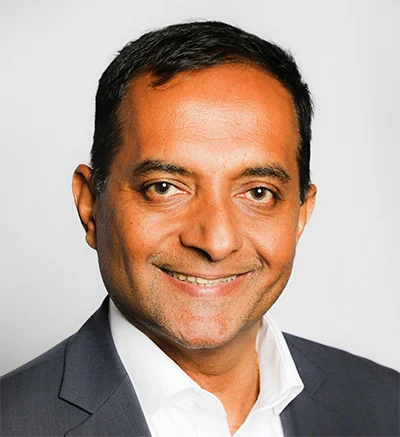
hSenid Business Solutions PLC (hSenidBiz) announced its financial results for the fourth quarter and full year ended 31 March 2026, delivering a significant turnaround in operational profitability, materially improving earnings quality, and achieving a key strategic milestone.
In the fourth quarter, total revenue reached LKR 522.2 million, up 5 percent year-on-year (YoY). The PeoplesHR Cloud segment delivered LKR 380 million, representing 20 percent YoY growth in LKR terms and 12 percent growth in USD constant currency terms, with subscription revenues comprising 87 percent of segment revenue. New deal closures recovered strongly to USD 843,395. The Company sustained profitability at the Profit Before Tax (PBT) level with LKR 7 million and a normalized EBITDA margin of 11 percent, while continuing to generate positive free cash flow.
For the full year, the Company delivered a substantial financial turnaround. Revenue grew 13 percent YoY to LKR 2.1 billion. Normalized EBITDA turned positive at LKR 200 million, with the margin expanding 17 percentage points to 10 percent. Profit Before Tax improved by LKR 313 million year-on-year, significantly reducing the loss from LKR 321 million in FY2025 to LKR 8 million. The Company also generated positive free cash flow for the year, a sharp reversal from negative free cash flow in the prior year and an annual improvement of over LKR 350 million. Exit Annualized Recurring Revenue (ARR) reached USD 5.5 million, growing 32 percent YoY, while recurring revenues strengthened to 77 percent of total revenue in the fourth quarter, underscoring the quality and resilience of the Company’s SaaS-led business model.
Dinesh Saparamadu, Founder and Chairman of hSenidBiz, commented: “FY2026 marks a clear inflection point for hSenidBiz. We have materially strengthened the quality and predictability of our revenue base while delivering meaningful operating leverage. These outcomes validate the scalability of our SaaS-led model and position the Company well for the next phase of disciplined, high-quality growth.”
Sampath Jayasundara, Chief Executive Officer, added: “The operational momentum achieved in FY2026 provides a strong foundation as we enter the next phase of growth. Our priorities for FY2027 are to accelerate customer acquisition in key markets, drive execution excellence across the sales organisation, and rapidly advance our AI-driven capabilities, particularly through Lexi Insights to deliver even greater value to enterprise customers across our markets.”

US military launches strikes on southern Iran amid talks in Qatar

Pope says AI must be ‘disarmed’ to prevent domination, exclusion, and death

Showers will occur at times in the Western, Sabaragamuwa and North-western provinces and in Galle, Matara, Kandy and Nuwara-Eliya districts.

Election monitors flay JVP for postponing PC polls

SL exports exceed USD 5.7 bn in first four months of 2026

Easter Sunday carnage: Court told Maulana’s statement cannot be accepted without cross-examination

‘Dates have the highest sugar content to fight Coronavirus’

Sunday Island 27 December – Headlines

#SundayIsland 17th December – Headlines

Sunday Island – 28th March

Sunday Island Headlines – 21 March

Sunday Island – 21st February – Headlines
-

 Features6 days ago
Octopus, Leech, and Snake: How Sri Lanka’s banks feast while the nation starves
-
 Sports6 days ago
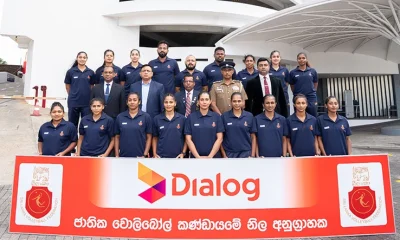
Sri Lanka women’s volleyball team ready for Central Asian challenge
-
 Opinion5 days ago
Murder of Ehelepola family, Bogambara Wewa and Sightings of Wangediya
-
 News5 days ago
Steps underway to safeguard Sri Lanka’s maritime heritage
-

 Business4 days ago
Historic launch of CCWE Fashion Week & International Summit 2026
-

 Features2 days ago
The NPP’s pivot to the past
-
 News1 day ago
Police probe underway to ascertain links between criminals deported from UAE and local politicians
-

 Editorial5 days ago
A play without its protagonist