
Business
‘State sector red tape stifling SMEs’

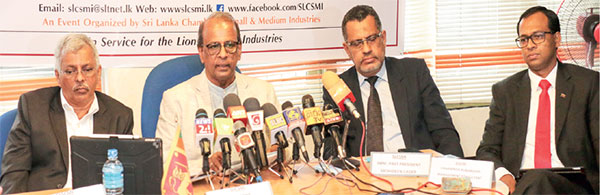
(L to R) Colin Fernando, Prof. Rohan de Silva, Mohideen Cader and Chaminda Kumarasiri Pic by Kamal Bogoda
By Steve A. Morrell
The SME sector, contributing $ 48 billion to the GDP, is stifled by government red tape. SME entrepreneurs and industrialists who wish to commence ventures have to often be in waiting for years before such projects are approved by relevant government bodies.
Some give up in disgust after suffering irretrievable losses because of being shunted from one desk to the other, to have their projects approved. Additionally, rampant corruption compounds the frustration such entrepreneurs have to endure if and when their projects are approved for implementation.
The above disquieting findings were revealed recently at a press conference convened by the Sri Lanka Chamber of Small and Medium Industries.
The head table included president of the Chamber, Prof. Rohan de Silva, Immediate Past President Mohideen Cader, Management Consultant, Chaminda Kumarasiri and Senior Vice President Colin Fernando.
Prof. de Silva introducing the subject to be discussed said the Chamber was 57 years in existence, having commenced in1953. He said the SME sector contributes 60 percent to the revenue of the country. The Chamber works with any government and cooperates with the state to promote the interests of the SME sector.
De Silva said the Chamber was a non profit organization and adhered to its motto, ‘Be Sri Lankan, Buy Sri Lankan’. He expressed his thanks to Minister Wimal Weerawansa who granted the Chamber an interview within two days of assuming office to discuss matters that require the minister’s intervention.
Management Consultant Chaminda Kumarasiri said there were three serious matters that require official attention. Red tape, cash flow and collateral. Red tape was the most frustrating factor when seeking sanction for a project.
Quite often, because of these frustrations an entrepreneur would abandon a project, often ending in penury. His jeopardized cash flow also obstructed an entrepreneur’s progress. Banks were reluctant to lend, considering the interminable papers that had to be completed before such projects even got started.
Of importance was also the fact that when state personnel changed, policies also changed, resulting in lack of continuity. Such changes caused confusion to small holders who were usually of rural origin.
Vice President Colin Fernando said although the corona pandemic caused restrictions to entrepreneurs, official support was imperative if the sector was to contribute to the economy. He said China’s progress from a backward country to that of a world economic power was instructive. Chinese policies if applied in the Sri Lankan context could prove effective.
Immediate Past President Mohideen Cader confirmed government support was an immediate necessity and said the Chamber was now a fully contributory entity to the government’s export business. The Chamber was responsible for continuous progress of the SME sector and cannot be ignored.
He added that entrepreneurs of the North of the country who were saddled with serious odds also required official support.






As Asia continues to account for a growing share of global economic activity, Sri Lanka faces an important opportunity to strengthen its links with regional trade networks, supply chains and economic corridors. How the country can make better use of these connections to attract investment, expand trade and strengthen its position in regional value chains will be among the key questions at the Sri Lanka Economic & Investment Summit 2026, organised by The Ceylon Chamber of Commerce on 12-13 October 2026.
Titled “Linking Sri Lanka to Asia’s Growth Networks: Trade, Corridors, and Value Chains,” the session will examine the opportunities for Sri Lanka to deepen its integration with the wider Asian economy and build stronger connections with regional and global markets.
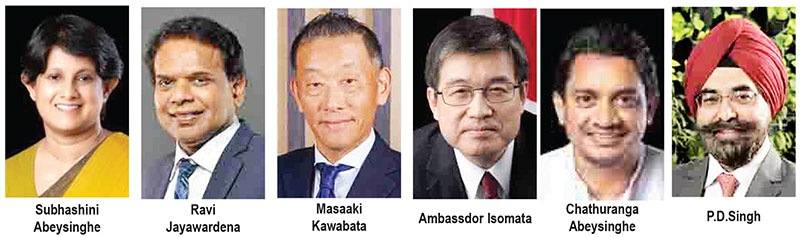
The session keynote will be delivered by P.D Singh – Chief Executive Officer, India and South Asia, Standard Chartered Bank. He will be joined for a panel discussion by Chathuranga Abeysinghe – Deputy Minister of Industry and Entrepreneurship Development, Akio Isomata – Ambassador of Japan to Sri Lanka, Masaaki Kawabata – Chairman – Toyota Lanka (Private) Limited, and Ravi Jayawardena – Group Chief Executive Officer-Maliban Biscuits (Private) Limited. The session will be moderated by Subhashini Abeysinghe – Research Director- Verité Research.
For Sri Lanka, stronger regional integration can open opportunities beyond traditional export markets. Greater participation in regional supply chains, improved trade connectivity and closer links to economic corridors can support investment in areas such as logistics, manufacturing, export services and other sectors connected to international production networks.
The discussion will consider what Sri Lanka needs to do to strengthen its position within these networks, including improving trade connectivity, attracting investment and creating a business environment that enables companies to participate more effectively in regional and global value chains.
It will also look at the experience of businesses and international institutions operating across the region, providing perspectives on how companies assess markets, build supply chains and identify locations for investment. With supply chains and investment flows increasingly shaped by regional connectivity, the session will also consider the partnerships and strategies needed to position Sri Lanka as a more competitive participant in Asia’s growth networks, while creating opportunities for trade, investment, innovation and economic growth.
The session will form part of the second day of SLEIS 2026, held under the theme “Positioning Sri Lanka in a Changing Global Economy: Resilience, Reform, and the Future of Economic Policy.”
The Sri Lanka Economic & Investment Summit 2026 is supported by its valued sponsors and partners. Platinum Sponsor – Standard Chartered Bank Sri Lanka, Gold Sponsor – VISA Worldwide (Pvt) Ltd., Bronze Sponsor – South Asia Gateway Terminals (Pvt) Ltd., Strategic Development Partner – Asian Development Bank, Telecommunication Partner – Dialog Telecommunication, Television Partner – Dialog Television, Session Sponsors – David Pieris Motor Company (Pvt) Ltd., Hemas Holdings PLC, Sunshine Holdings PLC, International Construction Consortium (Pvt) Ltd., Official Logistics Partner – Hayleys Advantis Limited, Official Airline – SriLankan Airlines Ltd., Official Hospitality Partner – Shangri-La Colombo, Airline Partner – China Eastern Air Holding Co. Ltd.
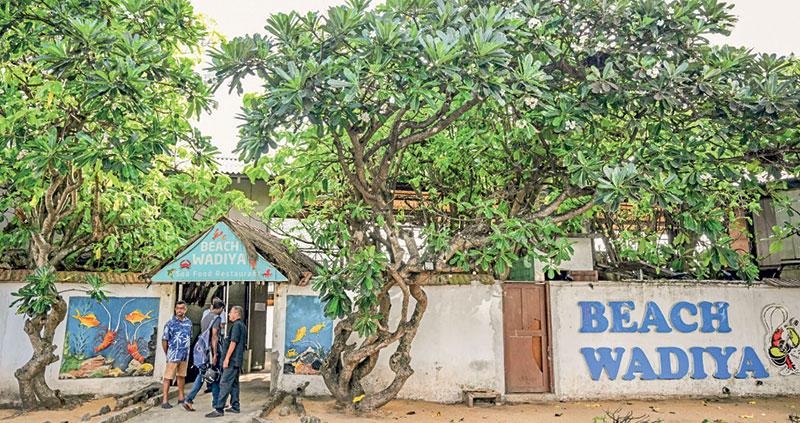
The government gave Colombo beach restaurant Wadiya 10 days to pack up and leave — or face demolition
by Amal Jayasinghe
Pix by Ishara Kodikara
(AFP)Sri Lanka’s famed seafood shack Beach Wadiya has hosted royalty including Britain’s Princess Anne and sporting legends such as cricketer Sachin Tendulkar, but now faces demolition under a government-ordered coastal clean-up.
The simple Colombo beach restaurant has welcomed a string of celebrities, featured in Madhur Jaffrey’s culinary travels and received rave reviews in international publications, including London’s Financial Times.
“Beach Wadiya comes with a lot of history,” said Suhara Chandrasekera, the founder’s granddaughter, now a director of the restaurant.
But more than half a century after it opened, the glamour is giving way to grief at Wadiya — which means “shack” in the island’s Sinhala language.
The government’s Coast Conservation and Coastal Resource Management Department gave Wadiya 10 days to pack up and leave — or face demolition.
That deadline expired on September 10, but the restaurant is resisting the order to leave.
Seven other beach properties were given extensions of about four days to salvage furniture and fittings.
-
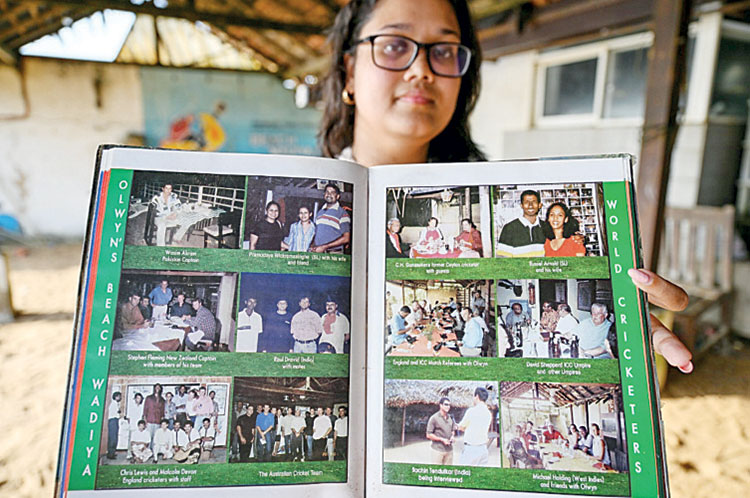
- Co-owner Suhara Chandrasekera displaying a photo album of celebrities who visited Beach Wadiya shack in Colombo
-
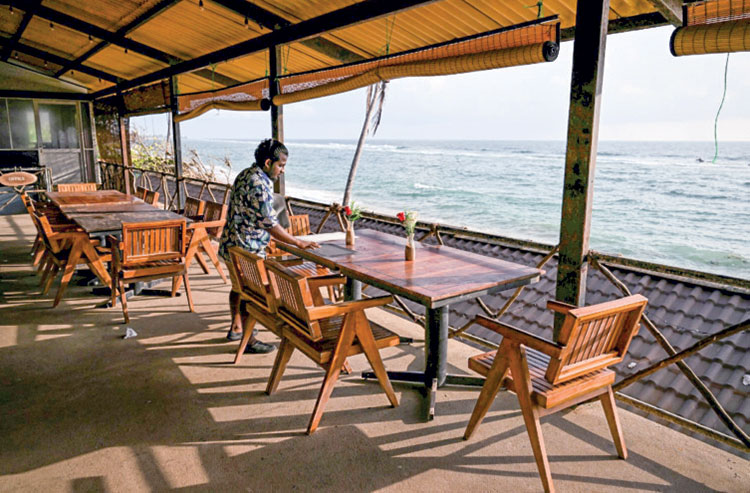
- A busser setting a table at Beach Wadiya shack.
-
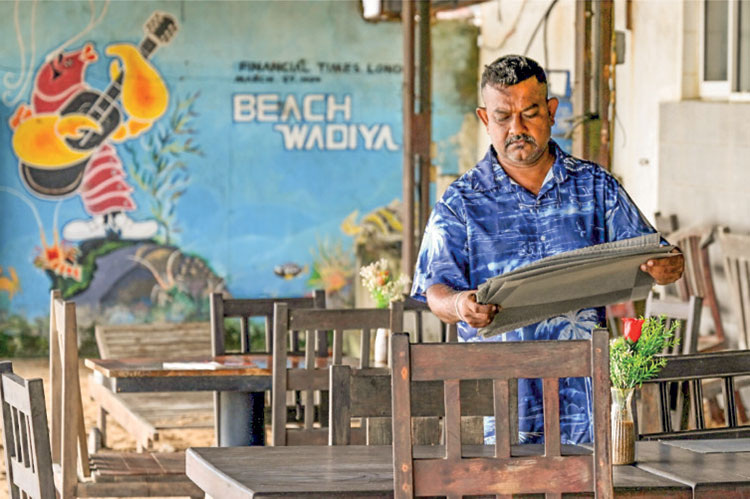
- This photograph taken on September 10, 2026 shows a busser setting a table at Beach Wadiya shack in Colombo
A few shops near Wadiya were demolished last month as part of a broader government plan to remove businesses within 10 metres (33 feet) of the shoreline.
“There shouldn’t be any buildings within the 10-metre coastal reservation from the shoreline,” Environment Minister Dammika Patabendi told AFP.
“We have identified 82 such premises and we are taking steps to remove them.”
Beach Wadiya is the only establishment resisting the order and has taken the matter to court.
-
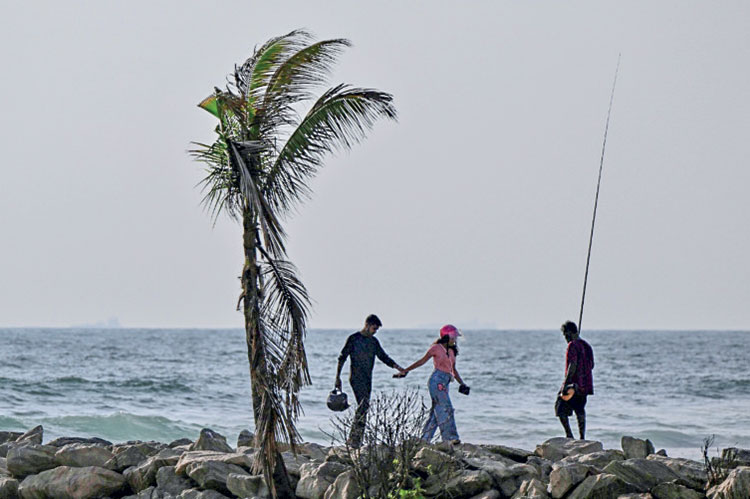
- People walk along Wellawatte Beach
-
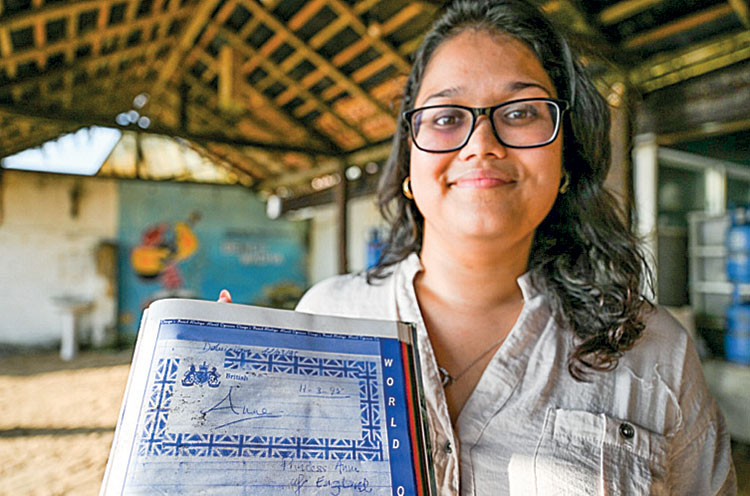
- This photograph taken on September 10, 2026 shows co-owner Suhara Chandrasekera displaying the signature of Britain’s Princess Anne in a guest book at Beach Wadiya shack in Colombo.
The family of its late founder, Olwyn Weerasekera, argues that the restaurant existed before the 1981 Coast Conservation Act being used to evict them.
“We built in 1974, which predates the law that they were talking about… We have permits dating all the way back to 1974,” 26-year-old Chandrasekera said.
“In addition to the appeal to the Coast Conservation Department, we also took the decision to file a writ,” she told AFP, referring to a case filed in the Court of Appeal.
The family has won a temporary reprieve, with the court ordering the department not to demolish the restaurant for two weeks pending a hearing.
When Wadiya was established, the beach was wider and cleaner, with rows of coconut trees, most of which have since been lost to sea erosion.
“Right now we have lost two of our huts… We’ve lost parts of our bathroom due to sea erosion,” Chandrasekera said.
She said Wadiya was the only restaurant on the beach before Sri Lanka’s tourism boom in the late 1970s.
Princess Anne had dinner at Wadiya in 1995. Nepali royals have also dined there.
British tycoon Richard Branson visited the restaurant during a family holiday in Sri Lanka in 1992, although the guestbook he signed was washed away in the December 2004 tsunami, according to the family.
Indian singing sensation Asha Bhosle, and cricket stars including India’s Rahul Dravid and former Pakistan skipper Wasim Akram, have also dined there.
One of the restaurant’s walls has a reproduction of a Financial Times cartoon of a guitar-playing lobster that accompanied a March 1994 food review headlined: “Cook me tender.”
The restaurant is best known for offering diners a platter of fresh seafood from which they can choose how it should be cooked.
There is no air conditioning and small tables are set up on the beach. An upper floor was added as the beachfront shrank over the years.
Experts blame worsening erosion on large-scale land reclamation farther north near Colombo port.
If the courts allow the restaurant to survive the government’s coastal clean-up, Chandrasekera says Wadiya will return to its roots.
“The only restaurant on the strip,” she said.
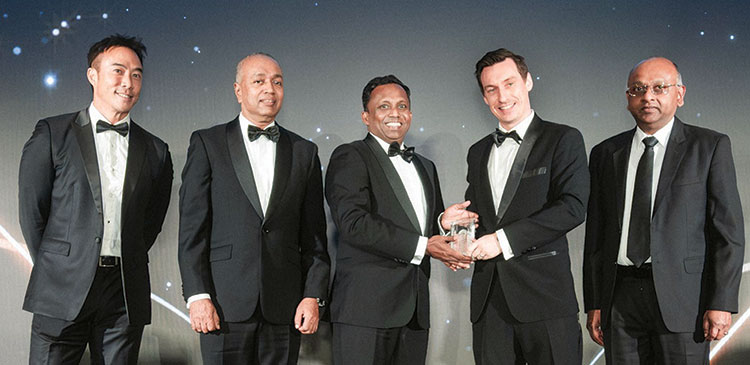
Sampath Bank PLC has been named Sri Lanka’s Best Bank for Corporate Responsibility at the Euromoney Awards for Excellence 2026, marking its third win in the category.
The award was presented at the Asia-Pacific regional awards ceremony in Singapore recently. Euromoney’s Awards for Excellence recognise performance, leadership and innovation in the global banking and financial services sector.
Sampath Bank said its flagship ‘Wewata Jeewayak’ programme was central to its corporate responsibility strategy. In 2025, the programme invested Rs. 63.7 million in 11 tank restoration projects, benefiting 14,780 people and rejuvenating 3,370 acres of paddy land.
The initiative focuses on restoring neglected irrigation tanks while improving water management, agricultural practices and climate resilience through collaboration with farmers, government authorities and farmers’ associations. Water-efficiency measures introduced under the programme can reduce wastage by 20% to 30%.
Sampath Bank Managing Director and Chief Executive Officer Sanjaya Gunawardana said the recognition reflected the bank’s commitment to creating meaningful and lasting value for communities while strengthening national resilience.
The bank’s wider corporate responsibility initiatives include coral reef, turtle and mangrove conservation, ocean plastic reduction, entrepreneurship support, financial literacy, education, healthcare and financial inclusion.
Sampath Bank previously won the Sri Lanka award in 2022 and 2024 and was named Asia’s Best Bank for Corporate Responsibility by Euromoney in 2024.

Flood warning issued to the Divisional Secretariat Divisions of Ganga Ihala Korale, Udapalatha, Doluwa, Udunuwara, Yatinuwara, Gangawata Korale, Harispattuwa, and Pathadumbara

Landslide Red Alerts issued to the districts of Kandy, Kegalle and Nuwara Eliya

Shafali dazzles with 49-ball unbeaten 100 and India march into Asian Games final

Development projects can deliver results to the people more quickly when the political authority and the public service work together towards a common goal – PM

Landslide Early Warnings issued to the Districts of Colombo, Galle, Kalutara, Kandy, Kegalle, Matara, Nuwara Eliya and Ratnapura

Chamari Athapaththu’s unbeaten 83 leads Sri Lanka into final

‘Dates have the highest sugar content to fight Coronavirus’

Sunday Island 27 December – Headlines

#SundayIsland 17th December – Headlines

Sunday Island – 28th March

Sunday Island Headlines – 21 March

Sunday Island – 21st February – Headlines
-

 Opinion7 days ago
From Galkissa (Mount Lavinia) to Tambuttegama
-

 News4 days ago
US embassy won’t comment on IGP’s probe into joint drug raid
-

 Features6 days ago
The emptying university: why are academics leaving?
-

 Features7 days ago
Sri Lanka’s university crisis: Brain drain and union action demand urgent reform
-

 News3 days ago
Bid for Basil’s extradition nears final stage: Police
-

 Business4 days ago
All-new Bolero MaXX unveiled in Sri Lanka
-

 Opinion7 days ago
Ashraff: From the SLMC towards the National Unity Alliance
-

 Editorial7 days ago
Muscle flexing, astroturfing and dog-and-pony shows