
News
State Minister fires broadside at SLPP


‘Yugadanavi is one among many contentious issues’
By Shamindra Ferdinando
State Minister Jayantha Samaraweera says the country wouldn’t have been in such turmoil today if the top political leadership consulted constituents of the ruling coalition.
Kalutara District National Freedom Front (NFF) lawmaker Samaraweera said that a simmering dispute over Yugadanavi deal that ended up in the apex court was one among many contentious and questionable issues.
NFF is a breakaway group from the JVP and has six members in Parliament as opposed to three seats held by the latter.
MP Samaraweera said that the SLPP had conveniently turned a blind eye to concerns expressed by constituents not only in respect of Yugadanavi betrayal, but a number of other issues as well. The MP said that the SLPP couldn’t act in an arrogant manner on the basis of superiority in numbers. Of the 145-member government parliamentary group, 117 represents the SLPP.
Asked to elaborate, lawmaker Samaraweera pointed out how the government had allowed importers to fleece those struggling to make ends meet by doing away with price controls.
“What is the point in granting duty concessions to various importers unless the government ensures the consumers benefit by them,” the former JVPer asked.
Referring to the reduction of duty on white sugar by issuing a gazette dated Oct 13, 2020, MP Samaraweera alleged that the whole exercise was meant to give sugar importers an opportunity to make a killing.
The garlic scam, massive fraud in liquid fertilizer imports from India, controversy surrounding opening of Letter of Credit for import of Chinese carbonic fertiliser before receiving approval from the National Quarantine Centre and the pathetic failure to prevent gas-related explosions much to the embarrassment of the entire government caused a debilitating setback. “We begin the new year on the back foot,” the State Minister said.
State Minister Samaraweera admitted that they hadn’t been successful in convincing the SLPP to review its policies. The parliamentarian said that the NFF recently called a special media briefing to pressure the government to re-impose price controls immediately or face the consequences. Alleging that the government ignored their request made on behalf of the people, MP Samaraweera said that the ruinous move that did away with agro-chemicals overnight without a proper study of ground realities was perhaps the single worst decision taken by the current dispensation since the last presidential election.
The bankrupt Opposition exploited the situation to the hilt, the MP said, urging the government to address the grievances of the public and rectify mistakes. There was no point in denying the fact the country never experienced such turmoil even during the war against the LTTE, the State Minister said.
The MP also questioned the prorogation of Parliament under controversial circumstances. The State Minister said that some speculated the government wanted to reconstitute parliamentary watchdog committees, the COPE (Committee on Public Enterprises), COPA (Committee on Public Accounts) and COPF (Committee on Public Finance) as some sections of the government felt the revelations made therein caused difficulties.
Responding to another query, MP Samaraweera said that as a member of the dissolved COPE chaired by Prof. Charitha Herath he was aware of the importance of the work undertaken by the watchdog committee.
Perhaps the government couldn’t stomach what was taking place there, the NFF senior said, pointing out it was COPF Chairman Anura Priyadarshana Yapa who fired the first salvo against the fraud in sugar duty. The MP pointed out that if none of the heads of three committees received the top position again the public would realize what was going on.
The Kalutara District MP recalled how the COPE pulled up Litro for blocking a government audit. For two years, Litro, in spite of being owned by Sri Lanka Insurance Corporation (SLIC) , managed to deprive the Auditor General, the MP said, adding that the government suffered due to the actions of those who believed they could manipulate everything. The Yugadanavi fiasco was a case in point, he said.
State Minister Samaraweera pointed out the absurdity in faulting Ministers Vasudeva Nanayakkara, Wimal Weerawansa and Udaya Gammanpila over so-called collective responsibility of the cabinet in respect of the decision on agreement with US-based New Fortress Energy when the cabinet of ministers never took that decision.
MP Samaraweera said that they had faith in the judiciary. The MP noted the Supreme Court would resume the hearing on January 10, a week before new parliamentary sessions begin.


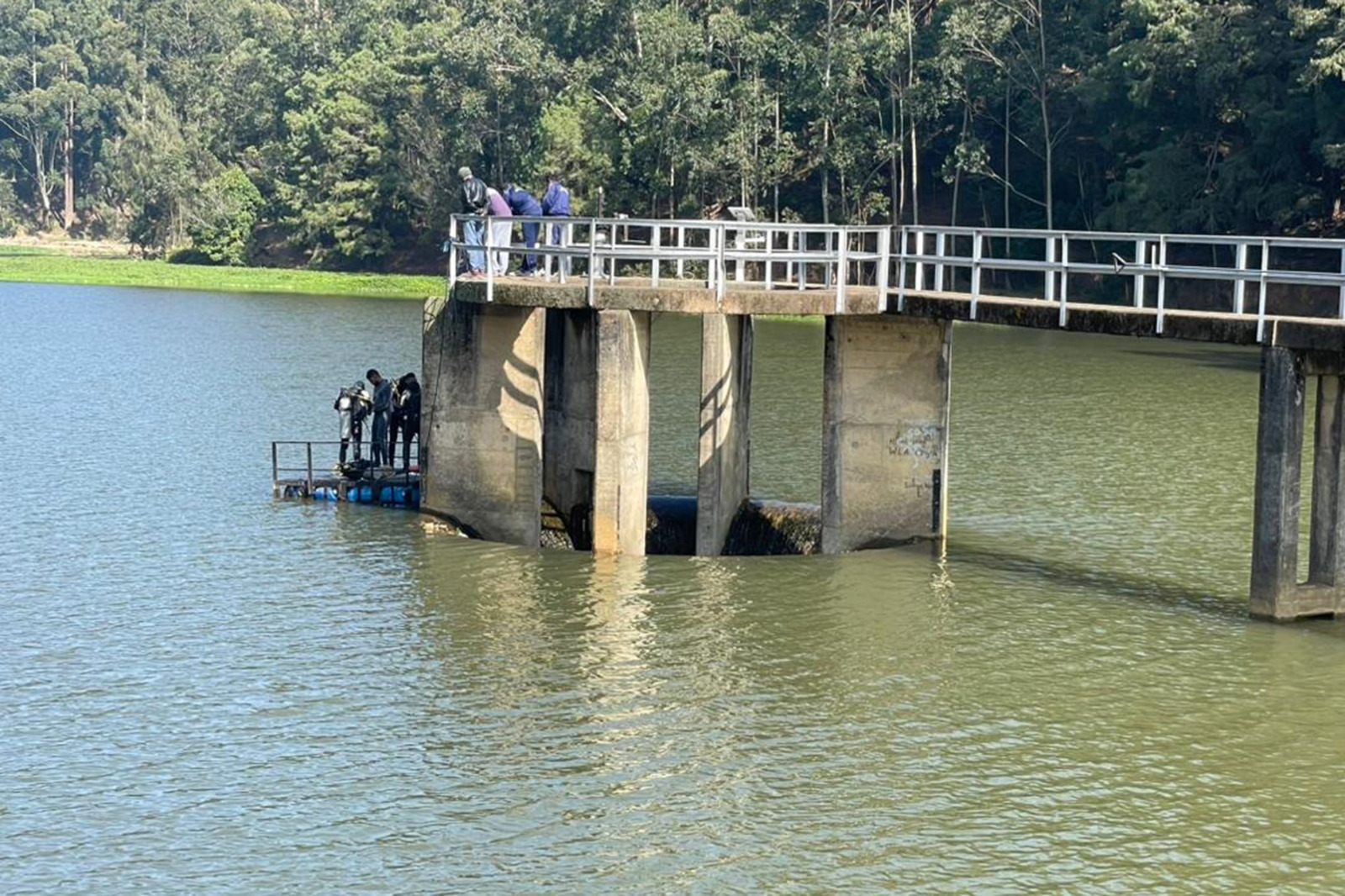
The Sri Lanka Navy successfully conducted a diving operation on 19 Jan 26 to inspect and restore the sluice gate of the Bomburuella Reservoir.
Acting on a request from the Department of Irrigation, the Sri Lanka Navy deployed a specialized diving team from the Western Naval Command, for the urgent requirement.
Through concerted effort, the Navy divers successfully cleared accumulated debris, including a significant quantity of wooden fragments, which had impeded the sluice gate mechanism.
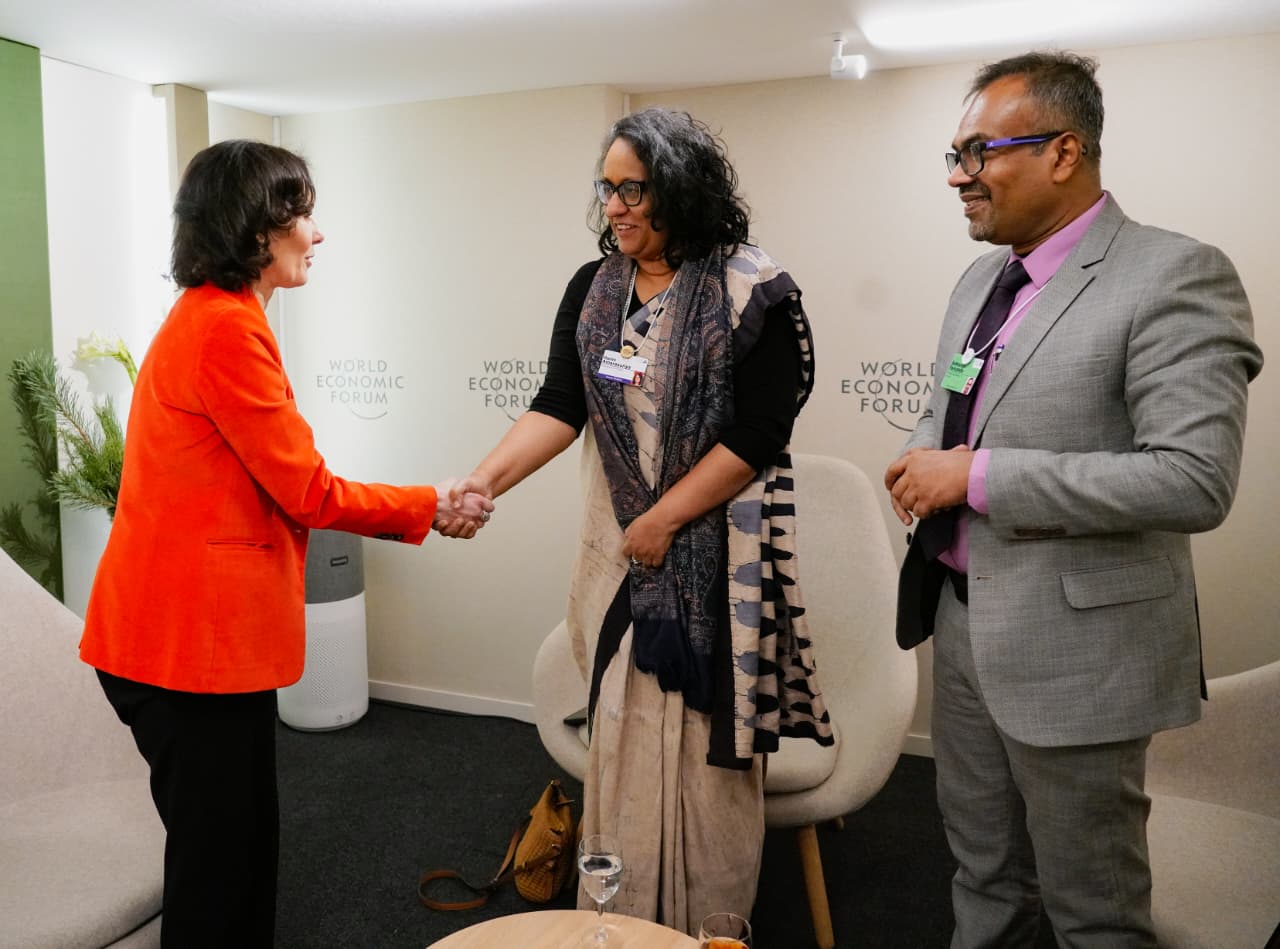
Prime Minister Dr. Harini Amarasuriya held a series of high-level bilateral meetings on Wednesday [January 21] on the sidelines of the World Economic Forum in Davos, Switzerland, engaging with representatives of the European Union, the United Nations Development Programme, and the global private sector.
The Prime Minister met with Hadja Lahbib, European Commissioner for Preparedness and Crisis Management. During the meeting, she expressed Sri Lanka’s appreciation for the support extended by the European Union and its member states following Cyclone Ditwa. The Prime Minister also briefed the Commissioner on the key findings of the World Bank’s GRADE report and requested continued EU support for Sri Lanka’s development and recovery efforts.
Prime Minister Amarasuriya also met with Alexander De Croo, representing the United Nations Development Programme. She expressed appreciation for the longstanding partnership between Sri Lanka and the United Nations and acknowledged the UN’s support in flood relief and livelihood assistance. The Prime Minister noted that, following the mandate received at the parliamentary election, the government is focused on meeting public expectations through national rebuilding grounded in public trust and good governance. She further reaffirmed the Government of Sri Lanka’s commitment to strengthening social protection systems and safeguarding vulnerable communities.
In addition, the Prime Minister met with Robert M. Uggla, Chairman of A.P. Moller Holding. The discussion focused on engagement with the private sector and potential areas of collaboration.
These meetings reflected Sri Lanka’s continued engagement with international partners and global stakeholders to support recovery, development, and long-term economic stability.
[Prime Minister’s Media Division]

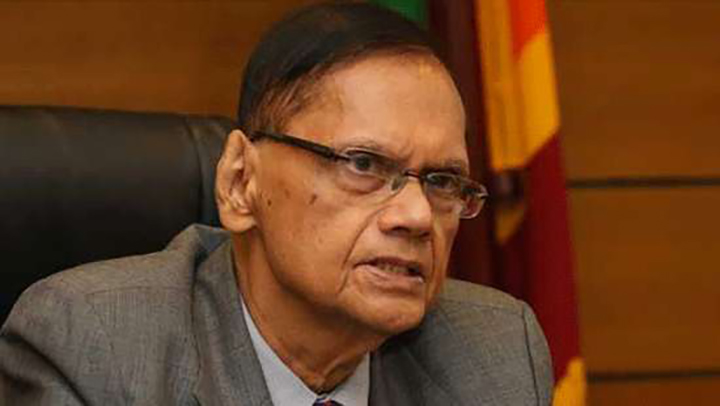
… alleges Prez trying to control judiciary
Opposition grouping ‘Mahajana Handa’ has accused President Anura Kumara Dissanayake of trying to exercise control over the judiciary by appointing a sitting High Court judge as Additional Secretary to the Justice and National Integration Ministry.
Addressing the media at Dr. N. M. Perera Centre, Punchi Borella, on Tuesday (20) top Opposition spokesman and former External Affairs Minister Prof. G. L. Peiris warned the High Court judge D.M.D.C. Bandara’s appointment was nothing but a direct executive intervention in the judiciary.
Responding to The Island queries, Prof Peiris asked how the government could compel courts to deal with a sitting judge who functioned as Secretary to the Justice and National Integration Ministry.
Prof. Peiris explained that the latest move by the Executive should be examined taking into consideration the attacks on Attorney General Parinda Ranasinghe Jr, PC., the deliberate delaying of the appointment of Auditor General and the controversy over the process of promotions of Judicial Officers, Judges of the High Court and the Court of Appeal in Sri Lanka. Prof. Peiris pointed out that the Bar Association of Sri Lanka (BASL) had raised those controversial promotions with President Anura Kumara Dissanayake.
D.M.D.C. Bandara, Senior Assistant Secretary, Judicial Service Commission, was among altogether 18 High Court judges appointed by President Dissanayake in early Sept this year. The group consisted of 17 Special Class Judicial Officers and a Senior State Counsel serving in the Attorney General’s Department.
Referring to a recent meeting ‘Mahajana Handa’ representatives, including him had with the Mahanayake theras of the Asgiriya and Malwatta Chapters in Kandy, Prof. Peiris said that they had received the blessings of the Mahanayakes to go ahead with what he called a programme of action meant to address major issues.
Prof. Peiris said they would initiate talks with other like-minded political parties and groups in this regard soon. Referring a protest held at the Hulftsdorp on Wednesday (21) demanding the removal of the AG Ranasinghe, Prof. Peiris emphasized that the government’s hand in that demonstration was very clear. President Ranil Wickremesinghe appointed him as the AG in July 2024 with the unanimous backing of the Constitutional Council.
Prof. Peiris said that action was yet to be initiated to appoint new civil society representatives to the Constitutional Council. That issue hadn’t received sufficient public attention, Prof. Peiris said, urging President Dissanayake to come down from his high horse.
Asked whether the President could appoint a sitting judge as an Additional Secretary to a Ministry without consulting the Chief Justice and President of the High Court Judges Association, sources familiar with the issues at hand said that certain appointments could be made on secondment. However, that has to follow the proper procedure, sources said.
The Island sought a response from the Justice and National Integration Ministry to the accusations made by Prof. Peiris on behalf of ‘Mahajana Handa,’ but did not receive one until this edition went to press.
By Shamindra Ferdinando ✍️

Navy divers restore sluice gate of Bomburuella Reservoir

Gujarat Giants comfortably overcome sloppy UP Warriorz

After fall from grace, Asalanka aims to bat on for Sri Lanka

PM holds High-Level meetings with EU, UNDP, and corporate leadership at World Economic Forum

Trump withdraws Canada’s invite to join Board of Peace

Vampire film Sinners breaks Oscar nominations record

‘Dates have the highest sugar content to fight Coronavirus’

Sunday Island 27 December – Headlines

#SundayIsland 17th December – Headlines

Sunday Island – 28th March

Sunday Island Headlines – 21 March

Sunday Island – 21st February – Headlines
-

 Editorial6 days ago
Illusory rule of law
-
 News7 days ago
UNDP’s assessment confirms widespread economic fallout from Cyclone Ditwah
-

 Editorial7 days ago
Crime and cops
-
 Features6 days ago
Daydreams on a winter’s day
-
 Features6 days ago
Surprise move of both the Minister and myself from Agriculture to Education
-

 Features5 days ago
Extended mind thesis:A Buddhist perspective
-
 Features6 days ago
The Story of Furniture in Sri Lanka
-

 Opinion4 days ago
American rulers’ hatred for Venezuela and its leaders