
Business
Staff level agreement with IMF takes CSE to positive territory

By Hiran H.Senewiratne
The CSE remained positive yesterday and all blue chip counters, along with those of the LOLC Group, were very active in the market due to positive external factors, such as the signing of the staff level agreement by the Sri Lanka government with the IMF, to obtain a bailout package to take the economy out of the current crisis, stock market analysts said.
Further, some rating agencies also looked at Sri Lanka positively, thus creating an impetus to CSE trading, market analysts said.
Amid those developments the market to traversed to green territory. The market mainly rallied around the LOLC Group of companies. LOLC Finance shares gained by 19.1 per cent or Rs 1.70. Its share price moved to Rs 10.60 from Rs 8.90. These positive developments attracted foreign investors as well. Over the last five days net foreign outflow reached more than Rs 1.6 billion. Expolanka stocks have become most sought after stocks in the market; its main shareholder H.G Holdings, being a foreign entity, is now looking at buying its shares from the local market, analysts said.
Both indices moved upwards. The All- Share Price Index gained 49.94 -points (0.54 per cent) to end the day at 9366.39 and S and P SL20 gained19.97 points (0.66 per cent) to end the day at 3039.38. Turnover stood at Rs 4. 136 billion with two crossings. Those two crossings were reported in Expolanka Holdings, which crossed 2.5 million shares to the tune of Rs 562 million; its shares traded at Rs 225 and Melstacorp 400,000 shares crossed to the tune of Rs 23 million, its shares traded at Rs 57.50.
In the retail market top seven companies that mainly contributed to the turnover were; LOLC Finance Rs 646 million (61.7 million shares traded), Lanka IOC Rs 573 million (2.8 million shares traded), Expolanka Holdings Rs 284 million (1.2 million shares traded), Browns Investments Rs 257 million (30.9 million shares traded), Agsta PLC Rs 116.7 million (7.2 million shares traded), CIC Holdings Rs 114 million (1.5 million shares traded) and LOLC General Insurance Rs 91.5 million (9.1 million shares traded). During the day 203 million share volumes changed hands in 37000 share transactions.
Yesterday the Central Bank announced the US buying rate as Rs 358.05 and the selling rate as Rs 369.02. The Central Bank’s prudential monetary policies have stabilized the rupee rate, financial observers said.


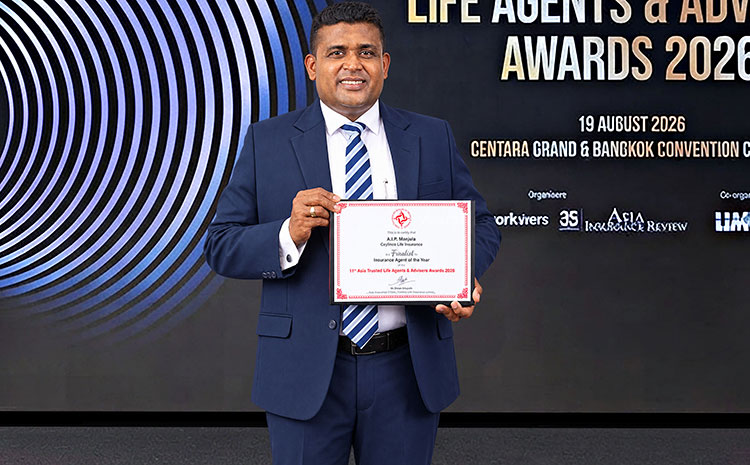
Ceylinco Life’s Ambalantota branch agent AIP Manjula has been named one of three global finalists for the prestigious Insurance Agent of the Year award at the 11th Asia Trusted Life Agents & Advisers Awards (ATLAA) 2026.
The recognition places a Sri Lankan insurance professional among the finalists in a regional field spanning South Asia, Southeast Asia, East Asia and the wider Asia-Pacific region.
Ceylinco Life said the achievement reflected the calibre and customer-focused approach of its agency force, while recognising Manjula’s professionalism and commitment to policyholders.
The award evaluates insurance agents on criteria extending beyond sales performance, including ethical conduct, client service, policy persistency, digital adoption, innovative practices and contributions to the insurance industry and community.
The awards are organised by Asia Advisers Network and Asia Insurance Review, with LIMRA as co-organiser. An independent judging and balloting process is monitored by KPMG as the official scrutineer. The judging panel comprises senior insurance executives, association presidents and industry experts from across the Asia-Pacific region.
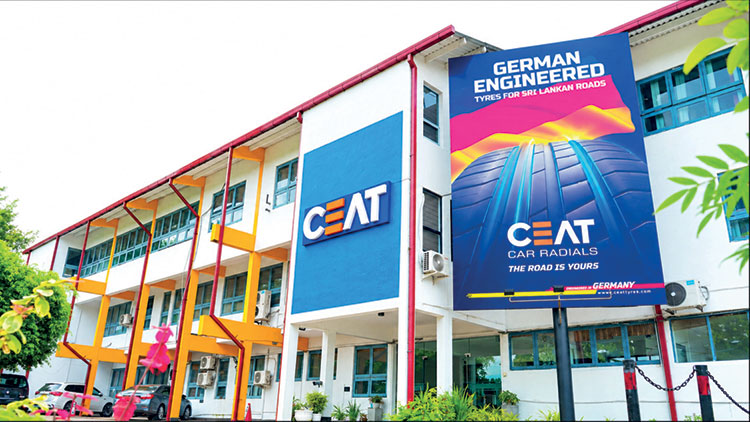
CEAT Kelani Holdings (CKH) has retained its National Long-Term Rating of ‘AA+(lka)’ with a Stable Outlook from Fitch Ratings for the sixth consecutive year, reflecting the company’s financial resilience and leading position in Sri Lanka’s pneumatic tyre market.
The ‘AA+(lka)’ rating, the second-highest on Fitch’s national scale, indicates a very strong capacity to meet financial commitments.
Fitch said CKH’s established market leadership and resilient financial profile remained key strengths, while noting its exposure to price-sensitive, cyclical and highly competitive markets.
The Stable Outlook reflects expectations that the company will maintain its market position despite rising input costs and increasing competition from imported tyres, while preserving adequate credit metrics during periods of weaker earnings and higher investment.
Fitch expects CKH’s established brand, extensive dealer network and adaptive pricing strategies to support its market position. Planned production facility upgrades are also expected to improve product quality, particularly in the radial tyre segment.
The rating agency expects near-term pressure on margins from higher raw material and energy costs but said the company’s low leverage and sound liquidity would provide a cushion.
CKH Chairman Chanaka De Silva said the rating reinforced the company’s focus on disciplined financial management, operational adaptability and long-term investment.
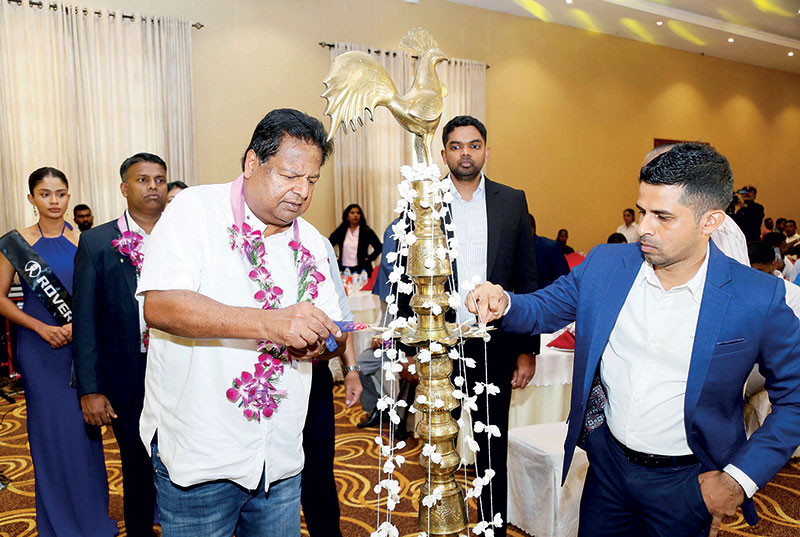
Rivon Agriglobe and Rivon Lanka, affiliated with Celogen Lanka, Assidua Technologies and Kelun Lifesciences, have introduced ZETOR and Agriglobe tractors, the Z-Tukoba power tiller and Rover electric motorcycles to the Sri Lankan market.
The new range was launched at a special event held on September 4 at the Sannasa Hotel in Dambulla, attended by more than 120 dealers from across the country.
The event was graced by Nalin Welgama as Chief Guest, together with Rishi Kumar, Managing Director; WH Roshan, Finance Director; Sadish Kumar, Director; Sumith Nandana, General Manager; Suresh Dhammika, Head of Sales; and Jayasuriya, Operations Manager.
The agricultural machinery range includes the 50-horsepower ZETOR HORTUS 50 and Agriglobe 50 tractors and the Z-Tukoba power tiller, offering what the company described as European-engineered technology for Sri Lankan farmers.
The launch also featured the recognition of Rover E-Bike dealers, highlighting the company’s efforts to expand its island-wide dealer network and promote electric mobility.
The companies said the new models would be available through their growing dealer network across Sri Lanka, providing customers with access to agricultural machinery and electric motorcycles.

Buttler out of Oval decider as Lawrence earns ODI call-up

Showers will occur in the Western, Eastern, Uva and Sabaragamuwa provinces and in Galle, Matara, Kandy and Nuwara-Eliya districts.

Nor’easter brings flooding as New York and New Jersey declare emergency 2 hours ago

Trump rejects Iran deal to reopen Strait of Hormuz in seven days

Govt plans to hire 121,000 state workers, redistribute tax revenue

Parliament clears 22A amid protests

‘Dates have the highest sugar content to fight Coronavirus’

Sunday Island 27 December – Headlines

#SundayIsland 17th December – Headlines

Sunday Island – 28th March

Sunday Island Headlines – 21 March

Sunday Island – 21st February – Headlines
-

 News4 days ago
Mastermind Naufer Moulavi among 15 found guilty
-

 News6 days ago
Hatton youth protest against reported death sentence for Lankan in Saudi Arabia
-
 News6 days ago
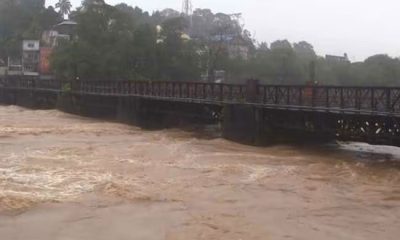
Mahaweli rises as heavy rain triggers flood, landslide fears
-
 News5 days ago
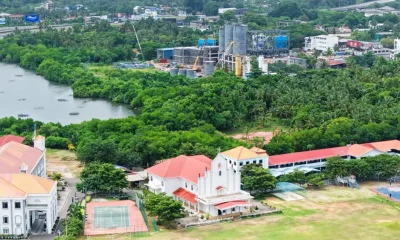
Protest against setting up of cement factory in highly populated area near BIA
-
 Midweek Review4 days ago
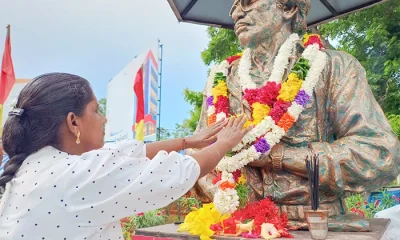
Thileepan’s fast unto death: An authentic narrative that many missed
-
 Latest News3 days ago
Showers above 100 mm are likely at some places in the Western, Sabaragamuwa, Central and North-western provinces and in Galle and Matara Districts
-

 Editorial4 days ago
Big Bad Bills
-
Editorial5 days ago
Trouble beginning in earnest