
News
Govt plans to hire 121,000 state workers, redistribute tax revenue

MONETABRIEF –Sri Lanka plans to hire 121,000 state workers to fill identified vacancies over the next year as part of plans to return tax money to the economy President Anura Kumara Dissanayake has said.
For many years employment was restricted to the state service.
“We will not hire in a ad hoc manner (hithoo hithoo vidiyater),” President Dissanayake told a public rally in Akuressa.
“A committee under the Prime Minister and asked each agency what the vacancies were. Was it essential? Will these people stay with no work? We will hire 121,000 to the state service in that manner. This year. We have not hired all.”
“10,000 for the Police. 23,000 teachers. Then a young person in the village will get a job. A teacher will be there. They will get an economic strength. They will join the police.
“Next year we will give a special allowance to police in the budget. They work 18 hours. They will get a uniform with a batton and kid. When the jobs are created, economic opportunities will be created.
“Then the benefits that the economy got will to the people.”
When Sri Lanka defaulted around 80 percent of the tax revenues went to pay state worker salaries and pensions after rising to 50 percent when the stimulus for economic growth (potential output targeting) initially started.
With more money in the Treasury capital expenditure will also be increased to 2,000 billion rupees in the 2027 budget.
Sri Lanka is planning to build some expressways with domestic financing which may trigger more imports and require higher interest rates to maintain external stability.
Opposition leader Sajith Premadasa also pushed to hire more unemployment graduate in parliament transferring more taxes collected from the people to able bodied population.
Analysts had warned that ‘revenue based fiscal consolidation’ was a spurious doctrine as spending will catch up to match revenue.
Generally called Parkinson’s Second Law, the phenomenon was articulated by Nortcote C Parkinson in an article in the Economist magazine in 1955 when he was working at the Raffles University campus in Singapore (now NUS).
Sri Lanka went on a revenue based fiscal consolidation drive from 2015 and eventually defaulted as ‘policy support’ intensified with aggressive central bank activism under a 5 percent inflation target after the agency was taught by the IMF to calculate potential output targeting.
In Sri Lanka politicians are against printing money but macro-economists support high inflation and monetary depreciation. When people are impoverished by depreciation and the high inflation target of the central bank, Aswesuma (income support) benefits are increased.
In 2026 the rupee collapsed to 330 to the US dollar from 300 a year earlier as the government ran a budget surplus.
Macro-economists who cut rates had blamed budget deficits for external trouble since money printing to suppress interest rates started in 1952. What is now called ‘rate cuts’ were not invented at the time.
Meanwhile another method of spending money in the Treasury was to give subsidies, President Dissanayake said. The subsidies will however be targeted to the deserving.
These included persons affected by kidney disease, orphans in care who will get 5,000 rupee a month deposited into their accounts and 2 million rupee when they leave the home to build a house.
The time in the care home had been extended from 18 to 21 years, he said.
It was not a good idea to give subsidies to all, President Disssanayake said.
However, even in rich countries there were a section of the population that had to be supported and others who faced sudden crises in their lives.
Politicians in Sri Lanka are against money printing and pushing up the cost of living, but are unable to do anything as the central bank is independent and has a 5-7 percent.
The International Monetary Fund has supported Sri Lanka’s controversial 5-7 inflation target which was to have been revised in October, delivering a blow to advocates who want monetary stability, free trade and democratic rule for the country.
The central bank exceeded its target and pushed up inflation to 8 percent in 2026.
Though opposed inflation and being prepared to raised taxes, politicians in a democratic set up dominated by are they are under pressure to spend, whenever tax revenues increase.
Macro-economists also push politicians to engage in capital spending not for benefits that come after a project is completed, as in the classical period, but for the instant gratification of the ‘multiplier effect’ of Keynesian stimulus or what is called ‘policy support’ by the IMF.
The thinking of macro-economists well-articulated in ‘revenue based fiscal consolidation’ which was rejects the classical ‘spending based consolidation’ match political needs.
Many western nations including the US, which has been in the grip of stimulus advocates over over 20 years are now drifting towards debt crises with uncontrollable inflation under so-called ample reserve regimes operated by central banks.
Sri Lanka first started to go to the IMF in the 1960s as US macro-economists in particular started to push ‘full employment’ policies leading to the collapse of the Bretton Woods a few year later.
“Past experience in Ceylon, which is in line with experience in virtually all parts of the world, is that in a democratic set up political and other pressures are heavily on the side of more and more spending by the government,” B R Shenoy, a classical economist told the then Ceylon government in a policy document in 1966.
“When Revenues increase, under the weight of these pressures, expenditures too increase to meet, or even exceed, Revenue collections. In Ceylon during the past seven years Revenues rose by 45 per cent and Expenditures charged to Revenues by 48 per cent.
“There is a real danger that any programme for increased Revenue collections may be attended by a corresponding increase in the consumption expenditures of the government, and little may be left of the additional Revenues to cover Budget deficits.”






Executive Director of People’s Action for Free and Fair Elections (PAFFREL) Rohana Hettiarachchi yesterday (28) said that there were three major concerns regarding the Anti-Corruption (Amendment) Bill 2026. Acknowledging the recent Supreme Court determination, in respect of the above-mentioned Bill, that three of the provisions were not consistent with the Constitution, requiring a special majority in Parliament, with one clause requiring approval by the people at a Referendum, Hettiarachchi said nonetheless PAFFREL had decided to bring their concerns to the notice of President Anura Kumara Dissanayake.
Responding to The Island queries, Hettiarachchci said that PAFFREL sent a letter, dated 24 Sept., to President Dissanayake, regarding the issue at hand.
Petitions against the Bill was heard before a three-judge Bench of the Supreme Court, comprising Justices Shiran Gooneratne, Mahinda Samayawardena and Sampath Wijeratne.
PAFFREL and Transparency International Sri Lanka (TISL) were among the petitioners who challenged the proposed amendments to the Anti-Corruption Act No. 9 of 2023. “We did so in public interest,” Hettiarachchchi said, adding that three major concerns were (i) the breadth of the proposed redaction power and the proposed criminalisation of certain uses of publicly accessible redacted asset declarations, particularly in relation to freedom of expression, and the public’s right to meaningfully receive and impart information (ii) raising of the State or public-corporation shareholding threshold for certain asset declaration obligations from 25% to 50%, as this could exclude officers of State-linked entities in which the State holds less than 50%, in spite of such entities exercising public functions and managing public resources and (iii)role of the Director General Ranga Dissanayake.
Hettiarachchchi emphasised that though the PARREL appreciated the way CIABOC DG handled his responsibilities, centreing of power on one person was not acceptable.
Hettiarachchi urged President Dissanayake and the 159-member government parliamentary group to pay attention to concerns raised by those who moved court against the controversial Bill and address their concerns though the Parliament received the SC determination.
An International Monetary Fund mission that visited Colombo recently warned that the proposed amendments could weaken the country’s anti-corruption framework.
The mission, led by Evan Papageorgiou, was in the country from 10 to 23 September for discussions on the seventh review of the Extended Fund Facility and the 2026 Article IV consultation. (SF)
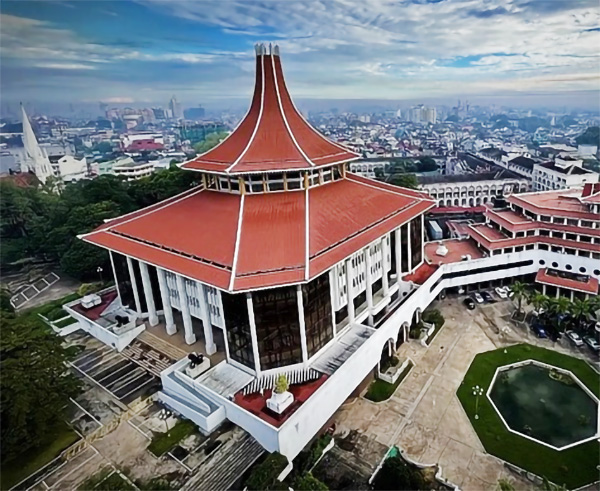
The Supreme Court yesterday (28) dismissed two petitions filed by retired Flight Lieutenant Shantha Jayathilake against Deputy Inspector General of Police of the Criminal Investigation Department (CID) Shani Abeysekara and Secretary to the Ministry of Public Security Ravi Seneviratne, and Rev. Father Cyril Gamini, alleging them of committing contempt of court.
They were the first cases dealt by the Supreme Court after the enactment of the 22nd Amendment to the Constitution.
The recipient of gallantry medal alleged that contempt of court had been committed through an affidavit previously submitted to the Supreme Court by Shani Abeysekara and Ravi Seneviratne.
The other petition alleged that contempt of court had been committed through the contents of a complaint submitted to the Criminal Investigation Department by Rev. Father Cyril Gamini.
The Supreme Court ordered that both petitions be dismissed without being taken up for hearing.
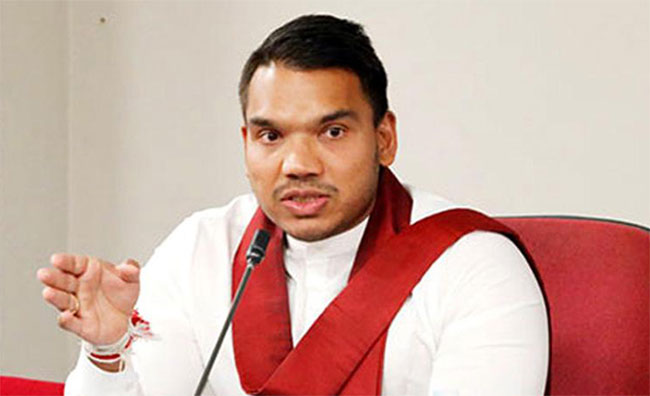
The Commission to Investigate Allegations of Bribery or Corruption (CIABOC) yesterday (28) named former Minister and leader of the SLPP parliamentary group Namal Rajapaksa as the fourth suspect in the Krrish case before the Colombo Chief Magistrate’s Court.
The MP was named as the fourth suspect in the wake of the arrest and remanding of former Executive Officer and Director of the Krrish Group, Janaki Siriwardena, regarding the payment of Rs. 70 mn to Namal Rajapaksa to facilitate the land transaction. Police arrested Ms. Siriwardena on 24 September and she was remanded till 6 Oct. pending investigations.
The investigation focuses on 4.3 acre land development in the Fort area that began in the 2013-2014 period. Investigations were launched in 2016 by the Yahapalana government, following a complaint lodged by Wasantha Samarasinghe, now a Minister in the current Cabinet.
The Indian company in this controversy is Krrish Transworks Colombo (Pvt.) Ltd .
The CIABOC named Namal Rajapaksa as a suspect in the Krrish case while he was remanded over two cases in respect of Airbus bribery probe. (SF)

PAFFREL raises concerns over Anti-Corruption (Amendment) Bill

First cases taken up by SC after enactment of 22A dismissed

Now NR named 4th suspect in Krrish case

Sri Lanka Red Cross Society honoured with Friend of Singapore Red Cross Award

Eastern University and the making of a culture of peace

Tharanga seals remarkable season with Asian Games gold

‘Dates have the highest sugar content to fight Coronavirus’

Sunday Island 27 December – Headlines

#SundayIsland 17th December – Headlines

Sunday Island – 28th March

Sunday Island Headlines – 21 March

Sunday Island – 21st February – Headlines
-

 News6 days ago
Mastermind Naufer Moulavi among 15 found guilty
-

 Midweek Review6 days ago
Thileepan’s fast unto death: An authentic narrative that many missed
-

 Latest News5 days ago
Showers above 100 mm are likely at some places in the Western, Sabaragamuwa, Central and North-western provinces and in Galle and Matara Districts
-

 Editorial6 days ago
Big Bad Bills
-
Editorial5 days ago
Crimes punished and unpunished
-

 Features4 days ago
Beyond traditional jobs: Why Sri Lanka needs to facilitate the gig economy
-

 News6 days ago
No referendum needed for passage of 22 A: SC
-
 Latest News6 days ago
Ms. P. M. Jayadeera (Engineer) appointed Director General of Irrigation