
Business
Sri Lanka’s startup ecosystem scales new heights with global validation

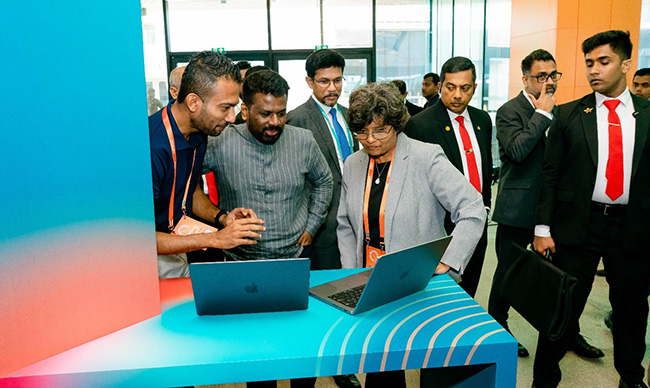
The recent GSER 2025 shows Asia is leading the global innovation shift, with cities such as Bengaluru, Tokyo, and Hong Kong climbing the ranks. Importantly, Sri Lanka is part of this wave.
Sri Lanka’s entrepreneurial landscape is undergoing a transformation, one that is being recognized globally. The 2025 Global Startup Ecosystem Report (GSER), produced annually by Startup Genome, places Sri Lanka firmly on the map as a rising innovation hub in Asia.
Between July 2022 and December 2024, Sri Lanka’s startup ecosystem generated $821 million in ecosystem value, indicating a threefold increase since 2021. The country has consistently maintained a Top 5 global position for Affordable Talent, and currently ranks #4 in Asia, reflecting the ability to attract and retain high-quality technical talent at competitive costs. It also ranks in the Top 25 in Asia for Funding and Top 35 for Talent & Experience, signaling growing investor confidence and long-term sustainability.
The recognition is not accidental, as it is the result of deliberate, strategic action and Sri Lanka’s startup ecosystem is expanding its global footprint.
Among the many frameworks was the recent Disrupt Asia 2025, Sri Lanka’s premier startup conference and innovation festival. The event played a crucial role in catalyzing this momentum. Held over four days in September, the event convened over 5,000 participants, including 100+ investors and 43 venture capital and accelerator networks. In addition, 90+ participants from 25 countries participated in DisuptAsia. It also showcased 50 startups, facilitated live pitching, and launched a $50 million Fund of Funds to support mission-driven entrepreneurs.
The work done through Disrupt Asia is causing ripple effects already visible. The Board of Investment (BOI) has approved a flagship scheme allowing high-potential digital startups to reinvest a significant percentage of FDI capital in global subsidiaries while retaining their IP in Sri Lanka. The Securities and Exchange Commission (SEC) is working towards a new venture capital fund structure to attract foreign VC funds to Sri Lanka.
Moreover, the Government of Sri Lanka has committed $5 million in seed capital to the Digital Fund of Funds, with $45 million to be mobilized from private sources.
Scaling to new heights, Sri Lanka launched its National AI Policy in 2025, setting the foundation for an AI-driven digital economy. The strategy aims to build infrastructure, talent, awareness, and support, integrating AI to enhance public services and applications.
Sri Lanka also established a strategic AI partnership with AI Singapore in July 2025 to upskill local professionals, establish advisory support in AI governance, and share knowledge via joint research and development projects.
In September, the country hosted its first AI Expo 2025, bringing global tech leaders to Sri Lanka. The event featured live AI demonstrations in healthcare, education, and agriculture.
Currently, sectoral strengths in Agtech, Fintech, and AI are driving growth, supported by government-backed accelerators. Initiatives such as the GoviLab Agritech Accelerator is already in operation, while the Unique Digital ID rollout is underway.
These reforms are more than policy shifts. They are foundational steps toward building a more robust investment ecosystem. With GSER 2025 highlighting Sri Lanka’s strengths, it also highlighted the need for deeper funding flows. The relatively low volume of early-stage investment compared to global averages is a call to action, and Disrupt Asia has responded by creating the infrastructure, visibility, and investor engagement needed to change that trajectory.
Expanding the country’s global startup footprint, delegations have participated in the StartupTN Global Summit 2025, and are preparing for the Asia Berlin Summit 2025, WebSummit Qatar, LEAP Saudi , and Echelon Singapore in 2026. The main objective of these engagements is to ensure strong ecosystem branding for Sri Lanka.
Sri Lanka is working towards building structural advantages, such as faster incorporation, stronger IP protection, VC‑friendly regulations, and a Virtual Special Economic Zone, to become an attractive destination for globally oriented startups
With over 12,000 ICT graduates annually and a vibrant culture, the country is also becoming a magnet for knowledge-based services and global talent.
The reforms now underway are strong launchpads. With investor follow-ups in progress and startups being nurtured for scale, 2026 promises to be a year of accelerated growth. Sri Lanka’s startup ecosystem is far from evolving, it is ascending, showcasing resilience, ambition, primed to scale, truly reflecting ‘An Island Rising’.
Marc Penzel, Founder and President, Startup Genome said, “Sri Lanka is solidifying its position as a rising innovation hub powered by exceptional technical talent, business-friendly policies and innovative government support. Its strategic location coupled with emerging focus on AI bolstered by new digital infrastructure and regulatory sandboxes, enable founders to innovate and scale. We are honored to continue our long-term partnership with ICTA to spotlight Sri Lanka’s momentum in this year’s Global Startup Ecosystem Report and to support the ecosystem as it continues to scale globally.”



Govt. in ‘Consideration Mode’ over next IMF programme:
By Sanath Nanayakkare
President Anura Kumara Dissanayake revealed that the government remains in “consideration mode” regarding whether Sri Lanka will enter into a follow-up Extended Fund Facility (EFF) programme with the International Monetary Fund (IMF) once the active facility concludes in March 2027.
Participating in an engaging Fireside Chat at the inauguration of the Sri Lanka Economic and Investment Summit 2026, organised by the Ceylon Chamber of Commerce at the Shangri-La Colombo on October 12, the President emphasised that any future engagement with the IMF must afford adequate policy space for his administration to execute its own sovereign economic vision.
The session, moderated by Bingumal Thewarathanthri, Vice Chairperson of the Ceylon Chamber of Commerce and CEO of Standard Chartered Bank Sri Lanka, saw the Head of State outline a comprehensive roadmap spanning macro-fiscal discipline, port infrastructure expansion, energy sector restructuring, fuel pricing dynamics, and technology training.
Addressing a packed hall of top-tier business leaders, diplomats, and international investors, President Dissanayake noted that while the current IMF arrangement has proceeded without impeding the government’s core economic strategy, a prospective post-March program will undergo rigorous evaluation.
“Our foreign reserve levels are satisfactory for paying our way through the world. However, there is global uncertainty amid the current geopolitical situation. No indicators can say when the war will end or what weather-related disasters could happen,” the President remarked, referencing external vulnerabilities such as Middle Eastern tensions and local climate disruptions like Cyclone Ditwah.
He stressed that while macro-fiscal parameters – including progressive revenue targets and debt-ceiling management – remain fundamental to national stability, the government is acutely conscious of the tax burdens and social costs borne by citizens. Therefore, any future framework proposed by the IMF will be examined through the lens of domestic policy autonomy and social protection.
Turning to critical national assets, President Dissanayake announced bold restructuring plans for the Port of Colombo aimed at elevating Sri Lanka’s position as a dominant regional maritime hub.
East Container Terminal (ECT): The government intends to grant management and operating rights of the ECT to a private sector partner while retaining 100% state ownership. Operating under the Sri Lanka Ports Authority (SLPA), the terminal currently handles approximately 500,000 TEUs against a potential capacity of 3.2 million TEUs. Five to six major global shipping lines have already expressed preliminary interest.
West Container Terminal II (WCT II): A funding requirement of approximately $1.4 billion for breakwater infrastructure is being sought from multilateral development institutions. Preliminary design work, assisted by the Asian Development Bank (ADB), is slated for completion by April 2027, adding another 3.2 million TEUs in annual throughput capacity upon full buildout.
Logistics Hub & Custom Clearance: The SLPA will call fresh tenders for a dedicated logistics center within the Port of Colombo following the resolution of land disputes. Additionally, Cabinet approval has been granted for a Public-Private Partnership (PPP) to establish a 150-container examination facility in Kerawalapitiya to streamline Customs clearance.
Addressing energy security and domestic distribution, the President indicated that existing petroleum agreements with private market participants – including Lanka IOC and Sinopec – would undergo formal review involving the Attorney General.
Expressing concern over distribution bottlenecks in outstation areas where private outlets dominate, President Dissanayake called on private players to balance profit margins with social responsibility during times of price volatility. To guarantee uninterrupted national supply, the Ceylon Petroleum Corporation (CPC) plans to add 75 new filling stations across the island.
Furthermore, to enhance maritime competitiveness, the government is considering lowering the 2.5% tax/levy on bunkering services in Budget 2027 and exploring CPC-private partnerships for bunker fuel storage expansion at the JCT Oil Bank.
In renewable energy, the government will open four major grid transmission lines for private-sector participation and transition away from fixed feed-in tariffs set by the Public Utilities Commission of Sri Lanka (PUCSL) toward competitive bidding to drive down generation costs. Floating solar projects, such as the Ibbankatuwa model, will be prioritised to overcome land availability constraints.
In a bid to address structural workforce shortages in high-tech sectors, the President revealed that Sri Lanka will sign an agreement with Singapore next week to establish a specialized training institute on Wijerama Mawatha in Colombo. The center will focus on rapidly expanding local capacity in Information Communications Technology (ICT) and Artificial Intelligence (AI).
He also highlighted plans to restructure public sector remuneration for highly skilled professionals and proposed an outcome-based procurement model for international promotional campaigns, such as global tourism marketing, where agencies are compensated based on verified growth in tourist arrivals.
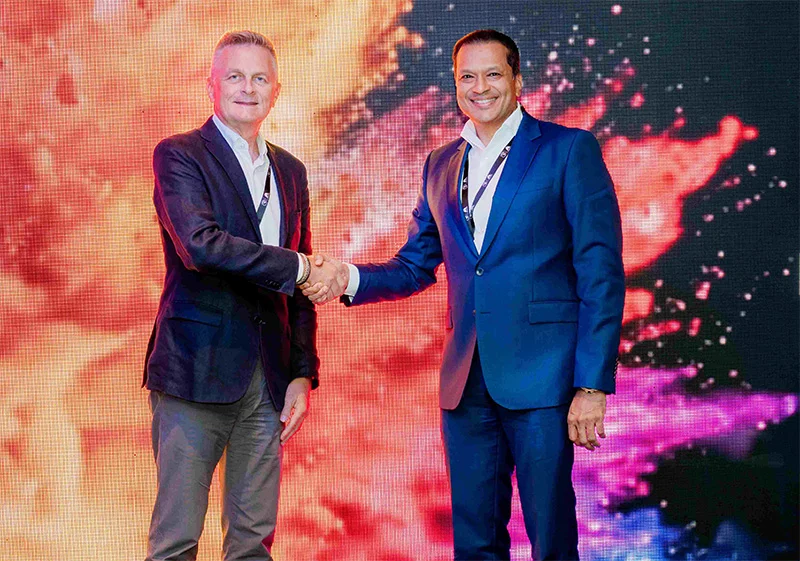
By Hiran H. Senewiratne
‘Sri Lanka is a top market in the South Asian region for quality powder coatings, Franck Derouen, Business Director, Industrial MEA – West & Central Asia, Axalta Coating Systems (ME) LLC, said.
‘We see significant long-term potential for powder coatings in Sri Lanka and look forward to working closely with Richardson Holdings to offer Axalta’s technology, expertise and global standards for all customers, Derouen said at a launch of the products in Sri Lanka together with Richardson Holdings recently. The event was held at the ITC Ratnadipa, Colombo.
Derouen added: ‘More than a brand transition, this appointment comes as project volumes and material demand continue to rise across Sri Lanka’s construction and property development sectors, giving developers and specifiers greater access to premium performance powder coatings at a time of renewed industry activity.
‘For architects, engineers, extruders and applicators, Axalta’s powder coatings combine UV resistance, gloss retention and corrosion protection with the technical performance expected for long-term architectural projects.’
Group Managing Director, Richardson Holdings, Nazri Nizar said, ‘A strong global brand might open the door. However long-term customer trust is built locally through dedicated support and reliable delivery. The true measure of a distributor lies in the service, care, and operational execution which follows after the product arrives.
‘Combining Axalta’s 150 years of global coating expertise with Richardson’s two decades of deep local relationships and technical know-how, we are bringing customers the best of both worlds.
‘Bridging global standards with local expertise, Richardson Projects will serve as Axalta’s trusted local powder coatings partner, combining global technology with two decades of on-the-ground experience serving Sri Lanka’s construction ecosystem.’
Pradeep Kahawalage, Chief Executive Officer, Richardson Projects, said, ‘After two decades building trust in Sri Lanka’s powder coatings industry, this marks an important new chapter for Richardson. Axalta gives us a global technology partner that matches the standards we have already built our reputation on. We are excited to bring that expertise to Sri Lanka’s construction and aluminium industries in the years ahead.
‘With a focus on sustainability, technical excellence and long-term partnership, Richardson looks forward to supporting architects, developers, fabricators and applicators throughout Sri Lanka with Axalta powder coating as the industry continues to grow.’
By Steve A. Morrell
Headquartered in Norway, Sri Lanka’s 99x office is emerging as a global leader in digital product engineering and tech solutions.
The above products and their development are prioritized in even local university level digital technology centered courses of study. Priority is increasingly attached to them in the context of career development.
Shehani Seneviratne, Chief Operating Officer of 99x Product Engineering, while reiterating the importance of these subject areas at a recent event stressed their continued centrality in degree level courses of study.
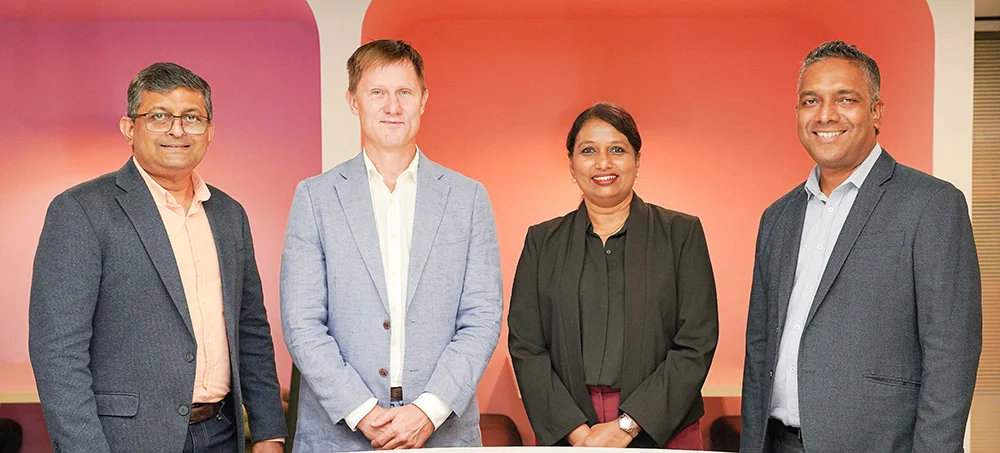
The event brought together members of the 99x leadership team including Odd-Sverre Østlie, Group CEO of 99x, Kalana Wijesekara, Chief Developer Experience Officer, Shehani Seneviratne, Chief Operating Officer, 99x Product Engineering, and Chrishan de Mel, ChiefMarketing and Corporate Affairs Officer of 99x Product Engineering.
Opening the event, Chrishan de Mel shared how 99x’s Agent Control Plane xians.ai was awarded the “Best Agentic AI Solution” at the recently concluded National AI Awards. The platform was also awarded national recognition at the SLASSCOM National Ingenuity Awards as the “Best Innovation in Internal Processes, Technology or Framework” category. Earlier this year, the 99x AI-first initiatives won the overall gold award at the Best Management Practices awards.
As 99x expands its use of AI tools and agents across engineering, support and other functions, the company recognised the need for greater visibility into how these AI-assisted workflows perform. As AI continues to reshape traditional engineering workflows, it also creates new opportunities to improve productivity, quality and speed. This need led to the development of AI Hub, 99x’s new platform for observing and measuring AI assisted workflows.
Speaking at the AI Hub launch, Kalana Wijesekere said, AI adoption is happening at a remarkable pace but adopting more tools does not automatically mean achieving better outcomes. AI Hub gives teams the visibility to understand what is happening within their AI assisted workflows and enables them to make informed decisions about how these workflows should evolve.
Sharing an update on the 99x group’s global journey and market outlook, Odd-Sverre Østlie highlighted the company’s continued expansion across Europe, the Americas and Asia, alongside growing demand from customers seeking to integrate AI into their products and operations. He stated, ‘AI is fundamentally changing the expectations our customers have from their technology partners. They want to move faster, experiment more quickly and increasingly understand how AI can create measurable business value. Our ambition is to be a long-term engineering partner that can help customers navigate this transformation. The launch of AI hub advances 99x’s AI-first strategy moving beyond the adoption of AI tools.’

Heavy showers above 100 mm are likely at some places in the Western, Sabaragamuwa, Southern, Central, and North-western provinces and in Anuradhapura district.

Sri Lanka, India caught in US-Iran ship crisis

Namal further remanded

IMF projects Lankan economic growth to moderate amidst mounting global uncertainties

Major Gen Pushpakumara assumes command of 56 Infantry Division

Dickwella axed, Bandara earns maiden Test call up

‘Dates have the highest sugar content to fight Coronavirus’

Sunday Island 27 December – Headlines

#SundayIsland 17th December – Headlines

Sunday Island – 28th March

Sunday Island Headlines – 21 March

Sunday Island – 21st February – Headlines
-

 Features6 days ago
The Sri Lankan who made Scottish history
-

 Sports6 days ago
Nissanka absence opens door for Sri Lanka’s young guns
-

 News5 days ago
NDB fraud Rs 60mn more than reported
-

 News5 days ago
Removing monk’s robes matter for Sangha to decide: Mahanayake Theras
-

 News6 days ago
Shiranthi R remanded until 13 Oct.
-

 Features6 days ago
Future of Sri Lanka’s state university system: Should it be shut down and reopened?
-

 News3 days ago
Sri Lanka escalates anti-graft drive with Shiranthi’s jailing
-

 News4 days ago
NPP govt. reminded of its responsibilities as US warship leaves Colombo