
Sports
Sri Lanka’s players can draw inspiration from their rugby sevens history


Asian Sevens Series
By A Special Sports Correspondent
Sri Lanka’s men’s players would have to find inspiration from their past glories as they step into contest the first leg of the Asian Sevens Rugby circuit in Dubai (On November 19 and 20) sans much training.
As much as the islanders are proud of their achievements in cricket the same can be said about the country’s rugby players.
History has great power to motivate and its memories can fuel the human spirit when the chips are down. Rugby training in Sri Lanka was hampered to a great extent because of health regulations delaying the players from getting on to the field and having real sessions. What could be described as a burst of rain during the rugby drought in the island came in the form of the arrival of rugby sevens star Ben Gollings as Sri Lanka’s Rugby Sevens Director.
Sri Lanka’s rugby hierarchy has acknowledged the fact that the islanders will be represented by a new-look side where as many as four players are set to make their national sevens debut. These players are Nuwan Perera, Samuel Ogbebor, Kushan Indunil and Ishara Madushan. The Sri Lanka men’s team is led by Adeesha Weratunga who is a reputed third row forward in 15-a-side rugby in the country. Sri Lanka is pooled alongside Japan, China, and UAE in Group B. Sri Lanka is coached by Nilfer Ibrahim.
In a way, it is good that Sri Lanka has to field a young side because the cream of the country’s players from Kandy SC are unavailable because they didn’t participate in a selection trial; participation at the recent ‘Warriors Cup’ invitation club rugby sevens was mandatory for selections.
In the past there were under 21 and under 24 tournaments conducted by the SLR to keep the players in the game; hence there being a well-groomed youth line-up that could chip in if the need arose.
Our very own beast of a man Radeeka Hettiarachchi was spotted by the national selectors at an under 21 rugby game between Sri Lanka and China in Colombo and played in the late 1990s. A little-known fact is that Chinese officials were much impressed by Hettiarachchi’s performance that day and invited him to take wing to China and be part of their rugby team. Hettiarachchi hadn’t represented the senior Sri Lanka team by then and IRB rules allow a player to crossover from one nation to another if he or she has only played age-group rugby for the country of birth. This story was related to this writer by Hettiarachchi himself at a time when happenings in the sport of rugby were rocking his boat. This was largely because he was having issues with the club that he loved most to represent. For the record, he turned down the offer from China because his heart was with Sri Lanka rugby. Hettiarachchi was perhaps the best utility sevens player we have seen and we do have fond memories of those two ‘cracker’ tries he scored against Australia at the Hong Kong Sevens in 2009 where the islanders went down fighting to the Wallabies 56-12.
Some of Sri Lanka’s best performances in the sevens rugby came between 2001 and 2014 and that was thanks to the island concentrating on the abbreviated form of rugby in tournaments played overseas. And a point to ponder is that these performances were produced under homegrown coaches like Asanga Senewiratne, Hisham Abdeen, and Sudath Sampath. Sri Lanka produced one of its best performances in rugby sevens under coach Senewiratne when he guided the team to a memorable 24-14 win over Kenya at the Dubai Sevens. Sri Lanka also produced its only try against the All Blacks in any form of the game in that tournament when Sanjeewa Jayasinghe scored in a game where New Zealand walked away as winners with a 77-5 score.
One notable performance by Sri Lanka came at the 2006 Hong Kong Sevens where the islanders ran out as the winners with a score of 21-7 against the USA. The Commonwealth Games in 2014 was remarkable for Fazil Marija’s team when it beat Trinidad and Tobago 43-7 to win the Shield Competition. That’s a little bit from Sri Lanka’s rugby sevens history in the case readers are a bit jaded reading and rereading about two very old performances at rugby sevens which came in the form of winning the Bowl Competition at both the 1984 Hong Kong Sevens and the 1994 Fiji Invitation Sevens.
Sri Lanka has always performed well when the sevens set-up is structured, but not necessarily under a foreign coach though. Sri Lanka needs time and space (International events must not clash with domestic tournaments because the clubs own the players and not the SLR). We also remember small inputs made to the side when managers like Chaminda Rupasinghe organised sessions for the team overseas before the Sevens Tournament with coaches like Gordon Tietjens and his players.
So Sri Lanka’s present national players have a rich rugby history to draw inspiration from. The players must take note that rugby as a sport has evolved but the foundation for the sport was laid by past players who had half the support and technology the present athletes are enjoying.
Some years ago there was no Asian Sevens series and Sri Lanka when invited had to lock horns with the giants of world rugby. At present Sri Lanka can play with pride, respect and hope because the Asian Sevens Series offers them a level playing field and a chance to qualify for the IRB 11-leg World Sevens Series.
The sport of rugby sevens is also a discipline at the Olympic Games and that too offers great inspiration for the players to train hard, perform well, and be counted. Sri Lanka is also planning to send a women’s team for the Asian Sevens Series in Dubai.
The men’s squad:
Adeesha Weeratunga (Captain), Kanchana Ramanayake, Nishon Perera, Sachith Silva, Iroshan Silva, Sudaraka Dikkubura, Janidu Dilshan, Samuel Ogbebor, Kushan Indunil, Anjula Hettiarahchi, Ishara Madshan, Nuwan Perera.


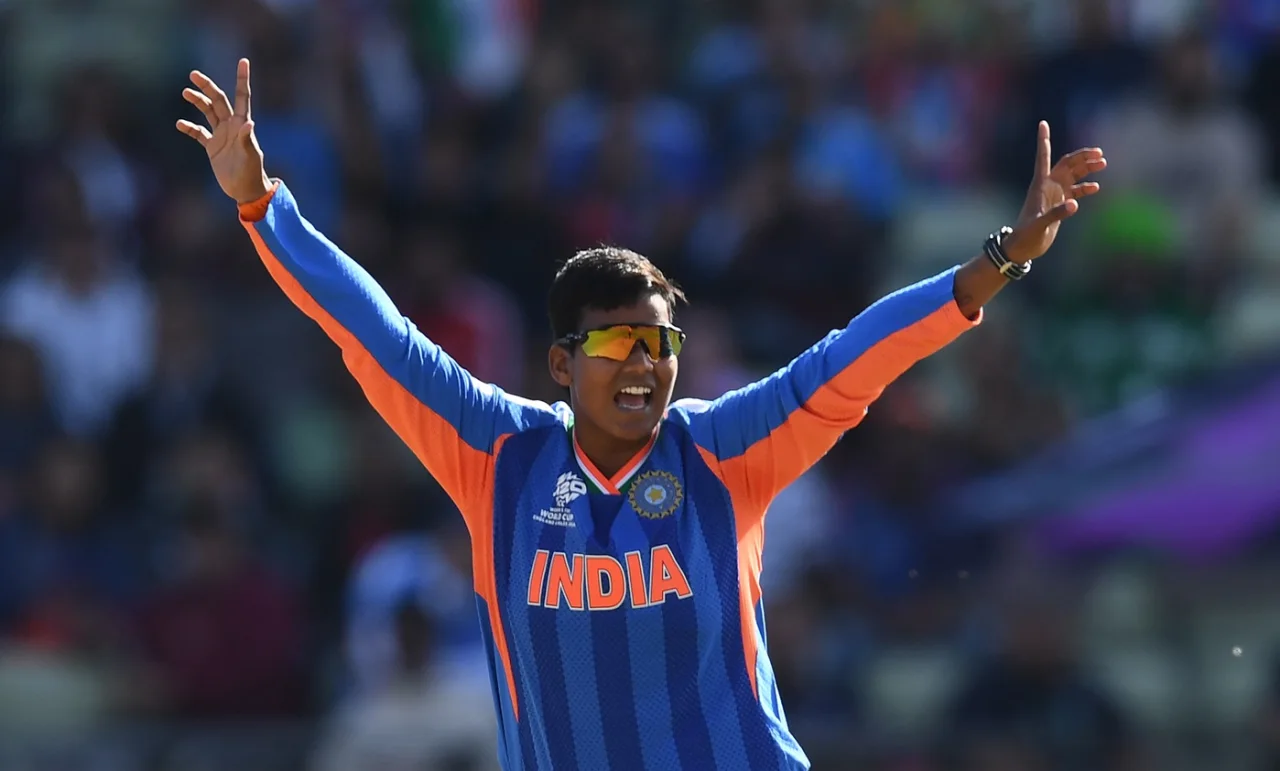
Smriti Mandhana and Deepti Sharma bailed India out with bat and ball respectively to fire them to an emphatic opening win over Pakistan in front of a sellout crowd in Birmingham on Sunday.
Mandhana top-scored with 68 to lift India from 18 for 2 to 170, their highest in a T20 World Cup against Pakistan. Then, Deepti struck twice in two overs after Pakistan’s openers rattled 38 in quick time.
Deepti’s blockbuster act, though, was a direct hit from short third to run out the dangerous Muneeba Ali for 41, triggering a collapse Pakistan didn’t quite recover from. They lost 5 for 26 through the middle phase as India’s spinners tightened their grip. They were eventually bowled out for 106, with Deepti finishing with 5 for 10 to become the highest wicket-taker in women’s T20Is.
In a match where both teams missed a number of opportunities on the field, the eventual difference was India’s death-overs lift. Richa Ghosh, who allayed fears of a form slump during the warm-ups last week, smashed 34 off 17. This included a sequence of four fours and a six off her last eight legal deliveries to help India muscle 60 off the last six overs when it seemed like they’d finish around 150.
That not only helped India finish on a high, but also gave them a massive net run rate cushion in what is being dubbed the group of death.
India looked to go hard early. Shafali Verma launched her first ball for six, but was caught behind four balls later off left-arm spinner Sadia Iqbal in trying to manufacture a boundary opportunity. Jemimah Rodrigues then played an uncharacteristic swipe to be taken at cover in the fourth over, giving left-arm seamer Tasmia Rubab a wicket off her second ball on World Cup debut. At 18 for 2, India needed to stem early damage.
Mandhana offset some of that early pressure by hitting two boundaries off spinner Rameem Shamim in the fifth over. Mandhana was on 27 when Aliya Riyaz dropped her running back from mid-off to deny Rubab a second wicket. At that stage, India were struggling for momentum at 44 for 2 in the 8th over.
Fatima Sana rustled through the middle overs with spin as Harmanpreet Kaur also took her time to settle in, scoring 5 off 10 at one stage. But the introduction of left-arm spinner Nashra Sandhu forced a slight change in approach as Harmanpreet hit her for two boundaries in her first over, and India scored 24 between overs 7-10.
Mandhana was particularly superb in stepping out and hitting inside-out over cover, one such boundary helped her raise a 34-ball half-century. Soon after, Saira Jabeen reprieved her for a second time at deep midwicket off Iqbal. You got the sense the floodgates had truly opened.
Mandhana holed out to long-on for 68 to give Pakistan a reprieve. That turned into double-delight three balls later when Bharti Fulmali was stumped, giving Iqbal the charge. When Harmanpreet flicked Fatima Sana to deep square, India had lost 3 for 14. India then went through a 21-ball period without a boundary before the runs came in a torrent in the last two overs.
Rubab, who came into her final overs with figures of 3-0-17-1, was then taken to the cleaners with Ghosh hitting her for a sequence of 4, 6, 4, 4 in a 23-run over. After displaying her brute force in the leg-side arc between mid-on and deep midwicket in the penultimate over, Ghosh’s deft touches helped pocket 15 off the final over to help India sign off with momentum on their side.
Muneeba should’ve been out in the second over when she jabbed at a sharp-turner from offie Shreyanka Patil, only for Ghosh to fluff an opportunity. Then in the fourth over, Shreyanka deceived her in flight to slice a drive to point where Arundhati Reddy put down a straightforward chance. In between that, Muneeba threw Kranti Gaud off her lengths by walking across to scoop. She was also quick to pick length and cut well as Pakistan raced to 37 for 0 in four overs.
Across the next six overs, Pakistan lost the cream of their middle order as India’s spinners tightened their grip, picking up 4 for 21. Deepti aside, Shree Charani, on T20 World Cup debut, gave an excellent account of herself, picking up 3 for 21 in the middle overs. Deepti then picked up three wickets in her fourth over to wrap up the game in the 17th, giving India a massive win and walking away with the Player of the Match award.
SCORES:
India Women 170 for 6 in 20 overs (Smriti Mandhana 68, Harmanpreet Kaur 36, Richa Ghosh 34, Deepti Sharma 12*; Sadia Iqbal 2-41, Fatima Sana 2-33, Tasmia Rubab 1-41, Rameem Shamim 1-30) beat Pakistan Women 106 in 17 overs (Muneeba Ali 41, Gull Feroza 12, Ayesha Zafar 12, Aliya Riyaz 18; Deepti Sharma 5-10, Shree Charani 3-21, Shafali Verma 1-22) by 64 runs
[Cricinfo]


Fresh from his historic record-breaking performance in Rome, Rumesh Tharanga will be one of the headline attractions in the men’s javelin event at the Ostrava Golden Spike meeting which will be held today.
Tharanga produced a sensational throw of 92.62 metres at the Diamond League meeting in Rome earlier this month, setting a new Sri Lankan record and achieving a world-leading mark for the season. His remarkable effort not only shattered the meeting record but also propelled him to eighth place on the world all-time list.
The achievement elevated the Sri Lankan star to the status of the second-best Asian javelin thrower in history and further strengthened his credentials as one of the leading contenders on the international circuit.
In Ostrava, Tharanga will extend the newly commenced rivalry with two-time world champion Anderson Peters of Grenada. Peters finished second behind the 23-year-old in Rome, setting the stage for another highly anticipated contest between the two elite throwers.
However, Tharanga is not aiming for a big throw. “I am not prepared for a big throw in Ostrave. We are still not set for peak performances,” Tharanga told in an online interview conducted by Chathura Ranasinghe.
The women’s javelin competition is also expected to be of a high standard, featuring an impressive field led by two-time World Under-20 champion Adriana Vilagoš. She will be joined by Poland’s Maria Andrejczyk, the silver medallist at the Tokyo Olympics in 2021, and Croatia’s Sara Kolak, the Olympic champion from Rio 2016.
With several of the world’s top javelin athletes in action, the Ostrava meeting promises an exciting showcase of throwing talent, with Tharanga aiming to build on the momentum generated by his career-defining performance in Rome.

Sri Lanka bounced back from the first T20I defeat by putting on an all-round show that earned them series parity in Kingston. Kamil Mishara’s unbeaten 61 at the top and Dasun Shanaka’s middle-order assault (58 off 24) powered Sri Lanka to a big total that the bowlers comfortably defended. Dushmantha Chameera and Wanindu Hasaranga picked three wickets each as West Indies fell well short in chase.
Sri Lanka flew off the blocks via Kusal Mendis in the Powerplay, before he and Pathum Nissanka were dismissed in the space of four deliveries. Mendis’s 19-ball 31 did enough to give the visitors a strong start. Pavan Rathnayake fell on the otherside of the Powerplay, but from 43/3, Mishara and Kamindu Mendis began repair work. They stitched a fairly conservative stand – worth 45 off 35 balls, before all hell broke loose with the arrival of Shanaka.
The all-rounder launched his offensive against Roston Chase, starting with a six over the roof. He hit another six and a four in a 19-run 14th over. He took boundaries off Shamar Springer too, even as Mishara continued his circumspect essay. That turned too, in the death overs as he went from 22 off 23 to 61 off 40, taking on Matthew Forde with a couple of sixes and getting to his fifty with one off Romario Shepherd. The West Indies all-rounder conceded 19 runs in that over. In the following over, Shanaka reached his 19-ball fifty with a six off Springer as fours and sixes came easily in this period of play. The only reason Sri Lanka didn’t go comfortably past the 200-run mark was because Joseph pulled back with a stunning final over where he conceded only three runs and picked two wickets. Shanaka was one of the two, not before smashing 58 off just 24 deliveries – an innings laced with five fours and four sixes.
West Indies received an early jolt in chase as they were reduced to 9 for 2 in the second over, with both openers Shai Hope and Brandon King departing, to Dunith Wellalage and Chameera respectively. Shimron Hetmyer and Powell made a real attempt at turning it around as they put West Indies on par with the asking rate nearly till the halfway stage. They took 28 off two Eshan Malinga overs on either side of the Powerplay and picked 18 off a Maheesh Theekshana over. Hetmyer even survived a tricky stumping call, only to be run out just four deliveries later in a double-wicket 10th over that derailed West Indies.
Powell, who’d thrown his bat around until then, also perished – for a 26-ball 43. From 91/4, West Indies suffered a nosedive. The next six wickets came for just 66 runs as the middle and lower-order couldn’t consolidate the efforts of those before them. In the 19th over, West Indies folded for 157.
Brief Scores:
Sri Lanka
194/6 in 20 overs (Kamil Mishara 61n.o., Dasun Shanaka 58; Shamar Joseph 3-32)
West Indies 157 in 18.1 overs (Rovman Powell 43; Dushmantha Chameera 3/09, Wanindu Hasaranga 3/38) (cricbuzz)

Mandhana, Deepti, Ghosh star as India breeze past Pakistan

Showers will occur in the Western, Sabaragamuwa and North-western provinces and in Galle, Matara, Kandy and Nuwara-Eliya districts

Theft of USD 2.5 mn from Treasury: CoPF accused of complicity in NPP cover-up

Viral diseases on the rise

Ranil warns of another economic crisis, calls for Opposition unity

Govt. eyes multi-billion dollar green hydrogen future

‘Dates have the highest sugar content to fight Coronavirus’

Sunday Island 27 December – Headlines

#SundayIsland 17th December – Headlines

Sunday Island – 28th March

Sunday Island Headlines – 21 March

Sunday Island – 21st February – Headlines
-
 News4 days ago
CIABOC summons Yoshitha over his participation in British Navy training programme
-
 News6 days ago
Local firms move millions of dollars overseas for phantom imports: Govt.
-
 Midweek Review6 days ago
July 09: An inexcusable overall security failure and exceptional contingency plan
-

 Opinion7 days ago
Could Sri Lanka once again face an economic crisis similar to 2022?
-

 News6 days ago
AI raises concerns over arrest of Sallay and rapper under PTA
-

 News3 days ago
Commonwealth lawyers urge Lanka to uphold rule of law
-
 News7 days ago
Sallay refuses to end hunger strike unless probe is taken out of CID led by Shani
-

 Features2 days ago
Politics of protected species