
News
Govt. eyes multi-billion dollar green hydrogen future


The government has launched an ambitious drive to attract global investment into green hydrogen and green ammonia production, a move expected to reshape the country’s energy landscape, generate billions of dollars in foreign direct investment and establish the island as a strategic clean energy hub in the Indian Ocean.
In a significant development, the Government has extended the deadline for investors to submit Expressions of Interest under its Request for Information (RFI) process until June 19, 2026, reflecting growing international interest in Sri Lanka’s emerging green energy sector.
The initiative, spearheaded through the Board of Investment (BOI), in collaboration with key energy sector institutions, covers large-scale green hydrogen and ammonia production facilities, export terminals, storage infrastructure and the manufacture of hydrogen-related equipment.
Senior Government officials said the programme is closely aligned with Sri Lanka’s long-term economic transformation agenda and global commitments to low-carbon development.
“The world is undergoing a historic energy transition. Countries that position themselves early in the green hydrogen value chain will become major beneficiaries of future energy trade. Sri Lanka possesses exceptional renewable energy resources and a strategic maritime location that provides a strong foundation for such investments,” an energy sector official said.
Industry experts note that global demand for green hydrogen and ammonia is expected to increase dramatically over the next two decades as nations seek alternatives to fossil fuels in power generation, heavy industry, shipping and aviation.
Sri Lanka’s extensive wind resources, particularly in the Northern and North-Western regions, combined with abundant solar potential, place the country among the promising destinations for renewable-energy-based hydrogen production in Asia.
Officials said the projects could unlock substantial investments in solar and wind power generation, resulting in thousands of megawatts of new renewable energy capacity, while supporting national energy security objectives.
The proposed developments are expected to generate thousands of direct and indirect employment opportunities in engineering, information technology, logistics, construction, manufacturing and research sectors.
Economic analysts believe the initiative could provide Sri Lanka with a new export industry capable of earning significant foreign exchange revenues at a time when countries around the world are actively seeking reliable suppliers of green fuels.
“The global hydrogen economy is projected to become a multi-trillion-dollar industry. Even securing a small share of this market could bring transformative economic benefits to Sri Lanka,” a senior industry source observed.
Another major advantage lies in reducing the country’s dependence on imported fossil fuels and fertiliser-related inputs.
Experts say green ammonia, produced locally, could eventually support agricultural and industrial applications while helping reduce expenditure on imported products. Likewise, green hydrogen could emerge as an important energy carrier for future transport, industrial and power generation needs.
Officials further stressed that Sri Lanka’s strategic location, along one of the world’s busiest east-west shipping routes, offers an unparalleled opportunity to develop green fuel bunkering facilities for international vessels.
As the global maritime industry moves towards decarbonisation, ports capable of supplying low-carbon fuels are expected to gain considerable competitive advantages.
The BOI has assured prospective investors of investment facilitation services, infrastructure support, fiscal incentives and assistance with regulatory processes to accelerate project implementation.
Energy policymakers view the initiative as more than an investment promotion exercise. They see it as a pathway to modernising Sri Lanka’s industrial base, attracting advanced technologies, enhancing energy independence and strengthening long-term economic resilience.
Observers note that successful implementation could position Sri Lanka among the early movers in South Asia’s green hydrogen revolution, transforming the country from a net energy importer into a future exporter of clean energy products.
With global investors increasingly searching for stable locations to establish green energy projects, Sri Lanka is seeking to leverage its geographical advantages and renewable energy resources to secure a place in the rapidly evolving clean energy economy.
The coming months are expected to reveal the scale of investor interest in what could become one of the largest and most consequential energy developments in the nation’s history.
By Ifham Nizam




Latest News
Landslide Early Warnings issued to the districts of Colombo, Galle, Gampaha, Hambanthota, Kalutara, Kandy, Kegalle, Kurunegala, Matara, Nuwara Eliya and Ratnapura


The National Building Research Institute has issued landslide early warnings to the districts of Colombo, Galle, Gampaha, Hambanthota, Kalutara, Kandy, Kegalle, Kurunegala, Matara, Nuwara Eliya and Ratnapura from 16:00 hrs on 25.09.2026 To 16:00 hrs on 26.09.2026
Accordingly,
LEVEL III [RED] landslide early warnings have been issued to the Divisional Secretaries Divisions and surrounding areas of Neluwa, Nagoda, Niyagama and Thawalama inthe Galle district, Ganga Ihala Korale, Udapalatha, Doluwa and Pasbage Korale in the Kandy district, and Kothmale West, Ambagamuwa, Kotmale East and Norwood in the Nuwara Eliya district.
LEVEL II [AMBER] landslide early warnings have been issued to the Divisional Secretaries Divisions and surrounding areas of Elpitiya, Baddegama and Karandeniya in the Galle district, Walallawita in the Kalutara district, Deltota, Udunuwara, Gangawata Korale, Yatinuwara and Panvila in the Kandy district, Aranayake, Dehiowita, Mawanella, Deraniyagala and Yatiyanthota in the Kegalle district, Thalawakelle in the Nuwara Eliya district and Ratnapura and Pelmadulla in the Ratnapura district.
LEVEL I [YELLOW] landslide early warnings have been issued to the Divisional Secretaries Divisions and surrounding areas of Seethawaka and Padukka in the Colombo district, Attanagalla and Mirigama in the Gampaha district, Katuwana and Walasmulla in the Hambanthota district, Ingiriya and Bulathsinhala in the Kalutara district, Hatharaliyadda, Poojapitiya, Medadumbara, Kundasale, Ududumbara, Thumpane, Akurana, Pathadumbara, Harispattuwa and Pathahewaheta in the Kandy district, Warakapola, Bulathkohupitiya, Galigamuwa, Kegalle and Ruwanwella in the Kegalle district, Mallawapitiya, Alawwa, Polgahawela and Mawathagama in the Kegalle district, Pitabeddara, Kotapola and Pasgoda in the Matara district, Nuwara Eliya in the Nuwara Eliya district and Elapatha, Ayagama, Nivithigala, Kuruwita and Kalawana in the Ratnapura district
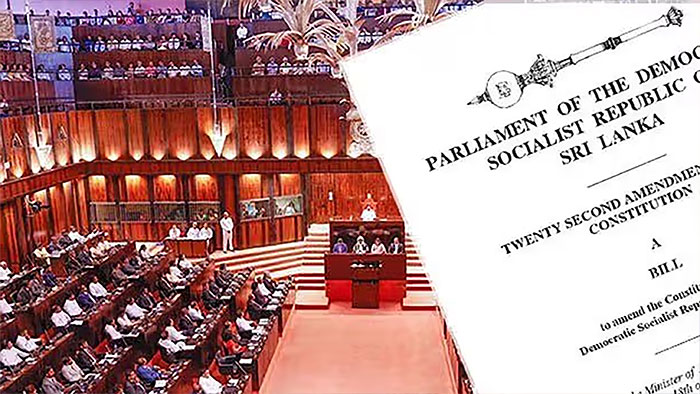
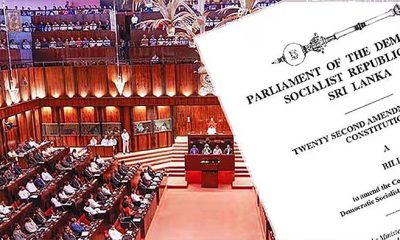
Parliament yesterday passed the Twenty-Second Amendment to the Constitution Bill and the Judicature (Amendment) Bill with two-thirds majorities, with 158 MPs voting in favour and 63 against each Bill.
The Illankai Tamil Arasu Kadchi (ITAK) and Sri Lanka Muslim Congress (SLMC) voted with the SJB against the Bills.
NDF MPs Ravi Karunanayake and Faizer Musthapha and SJB Badulla District MP Nayana Wasalathilaka were not present when the votes were taken.
The final vote on the Judicature (Amendment) Bill was announced at around 8.08 p.m. after Opposition MPs called for divisions on its clauses during the Committee Stage.
The votes followed a two-day debate which commenced on Thursday (24), after Justice and National Integration Minister Harshana Nanayakkara presented the Bills for their Second Reading.
The Supreme Court’s determination on the Bills was presented to Parliament on Tuesday (22) by Speaker Dr Jagath Wickramaratne. The Court determined that the 22nd Amendment Bill did not require approval at a referendum and could be passed by a special two-thirds majority in Parliament.
The amendment provides for raising the mandatory retirement age of Supreme Court judges from 65 to 67 and that of Court of Appeal judges from 63 to 65. It also provides for the Chief Justice to retire at 67 or after completing six years in office, whichever comes earlier.
The Speaker informed Parliament that the Judicature (Amendment) Bill could be passed by a simple majority.
The SJB opposed the legislation and its MPs attended Parliament dressed in black yesterday. The party also staged a protest at Polduwa Junction, Battaramulla, under the theme “No to 22, which destroys democracy”, with Opposition Leader Sajith Premadasa and several SJB politicians participating.
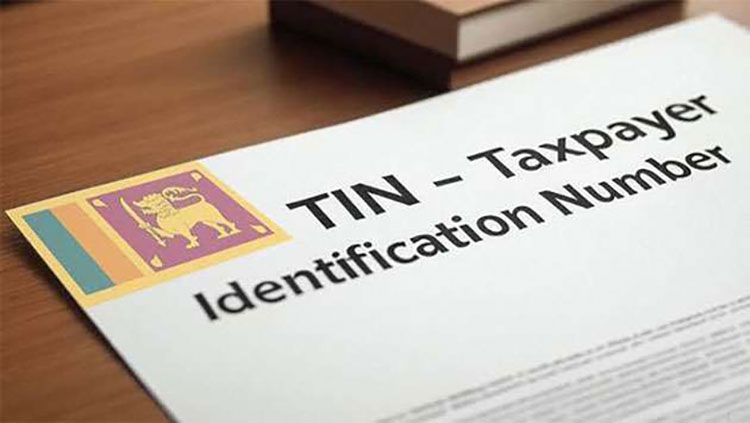
A valid Taxpayer Identification Number (TIN) Certificate will be required for a range of key transactions in Sri Lanka from November 1, 2026, the Inland Revenue Department (IRD) has announced.
The requirement, introduced under the Inland Revenue (Amendment) Act, No. 11 of 2026, applies to transactions specified under Section 102(3) of the Inland Revenue Act.
Accordingly, individuals will be required to produce a valid TIN Certificate when opening an account at a bank or financial institution, obtaining approval for a building plan, registering or renewing the licence of a motor vehicle, registering land or title to land, registering a business, transferring shares in a company incorporated in Sri Lanka or obtaining a credit card.
In the case of share transfers, both the transferor and transferee will be required to provide TIN certificates.
The IRD said officials handling such transactions had been instructed to ensure that a valid TIN Certificate was submitted before processing or completing the relevant transaction.
The Department advised those who do not already have a TIN to obtain one in advance through its e-Services platform.
It said a printout of the TIN verification result showing the applicant’s National Identity Card number and TIN could also be accepted instead of the certificate.The IRD also reiterated that obtaining a TIN is mandatory for resident individuals aged 18 and above under the applicable provisions.

Landslide Early Warnings issued to the districts of Colombo, Galle, Gampaha, Hambanthota, Kalutara, Kandy, Kegalle, Kurunegala, Matara, Nuwara Eliya and Ratnapura

Showers in the Western, Uva and Sabaragamuwa provinces and in Galle, Matara, Kandy, Nuwara-Eliya, Batticaloa and Ampara districts.

22A, Judicature Amendment Bills passed with 2/3 majority

TIN mandatory for key transactions from Nov. 1

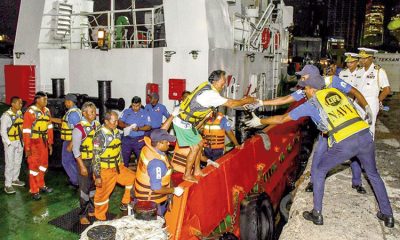
Navy brings 25 Indonesian fishermen ashore after trawler capsizes

Former Mineral Sands Chairman arrested over recruitment irregularities

‘Dates have the highest sugar content to fight Coronavirus’

Sunday Island 27 December – Headlines

#SundayIsland 17th December – Headlines

Sunday Island – 28th March

Sunday Island Headlines – 21 March

Sunday Island – 21st February – Headlines
-

 News6 days ago
Namal Rajapaksa Buddhist gambit fails, bail denied
-

 Features6 days ago
Why the spelling Sri Lankan names in English vary
-

 Features6 days ago
Three bands, a new identity: Sri Lankan wolf snake recognised as distinct species
-

 Business6 days ago
SLIIT holds largest-ever convocation
-

 News6 days ago
Vehicle prices drop by up to Rs. 1 mn, says importers’ body
-

 News6 days ago
Govt monitors reported Saudi death sentence – Foreign Ministry
-

 Business6 days ago
All-new Bolero MaXX Pik-Up unveiled in Lanka
-
 Business6 days ago
Lanka’s famed beach shack battles demolition