
Life style
Sri Lanka’s Great Opportunity. Gotukola

by Emme Haddon
Almost every culture from the ancient Egyptians to the native Americans possess a wealth of herbal medicinal knowledge which has been passed down from generation to generation. According to the World Health Organisation, 80% of the world’s population rely on traditional herbal medicines as their primary source of health care. 74% of the modern medicines were discovered as a result of the study of plants used in traditional medicine. The current global boom in sales of alternate  herbal remedies and supplements is driven by a growing awareness for preventative healthcare methods and consumer demand for healthier and more natural products. People no longer blindly accept something as being safe just because a doctor says so.
The number of information-hungry patients has increased dramatically, around 66% of US adults go online to research their conditions, as do more than half of all Europeans. According to Nutrition Business Journal, the Covid-19 pandemic alone has fuelled an estimated 25% increase in immunity boosting supplements in 2020, up from 8.5% growth to $3.3 billion overall. The global size of the herbal remedies and supplement market was projected to reach USD 86.74 billion by 2022.
The latest reports suggest that this figure may double as a result of the Covid-19 pandemic. In the face of increasing strains of microorganisms developing resistance to drugs, as patents on existing drugs expire and the promise of huge profits from potential prescription drugs and herbal supplements, both Big Pharma and Big Herba are ramping up their search of the natural world for molecules they can extract and patent as new prescription drugs or market as the next best-selling ‘superfood’ supplement. This kind of bioprospecting is by no means new. Willow bark has been used as a traditional medicine for more than 3500 years.
The ancient Sumerians and Egyptians used it as a remedy for aches and pains. Detailed references are made to it in the Vedas and later by Hippocrates for its efficacy in relieving fever and pain. However, the active agent in willow bark, salicin, which would later form the basis of the discovery of aspirin, remained unknown. It was several thousands of years later, in the late 1800s, that researchers in Europe identified salicin (after Salix, the genus of the willow tree). This led to the creation of aspirin the world’s
best-selling drug, by German chemist Felix Hoffmann. Shortly afterwards Hoffmann produced a second famous drug: diacetylmorphine, also known as heroin! Ayurveda, “the Mother of all Healing”, considered by many scholars to be the oldest healing science, originated in India more than 5,000 years ago. It stems from the ancient Vedic culture and for many thousands of years was taught in an oral tradition by accomplished masters to their disciples. Some of this knowledge was later set to print in ancient Ayurvedic texts. In Sanskrit, Ayurveda means “The Science of Life’ wherein the body, mind and consciousness work together in maintaining balance. Great emphasis is placed on prevention and encouraging the maintenance of good health through close attention to balance in one’s life, right thinking, diet and the treatment of illness through lifestyle practices and the use of herbal remedies.
The cause of disease is viewed as a lack of proper cellular function due to an excess or deficiency of an individual’s vata, pitta or kapha dosha and the presence of toxins. In Sri Lanka, Ayurveda, the official term used to denote collectively all the traditional medical systems, encompasses Ayurveda, the predominant system which came to the island from India with Buddhism 2,500 years ago, Siddha, Unani, and Deshiya Chikithsa. Deshiya Chikithsa is the earliest system of medicine Sri Lanka and has existed before the advent of Ayurveda. The term “traditional medicine” thus largely overlaps with the term “Ayurveda.”
 Sri Lanka has a continuous written history. Stone scripts as early as 250 BCE, ancient texts together with remaining ola palm leaf texts, offer an insight into the intricacies of traditional food preparation which are based on ancient Ayurvedic principles of health. The nutritional basis of ingredients, methods of preparation, and their suitability for consumption depend on the patient’s physiological condition, as well as the environment and climate, are intricately interwoven.
For most people in Sri Lanka, a sambol or mallum, green leafy accompaniments to rich, spicy dishes, is a must have. They may not be aware of the exact nutritional value of these healthy and delicious greens but as children they will have been told to eat them up because they are good for them!
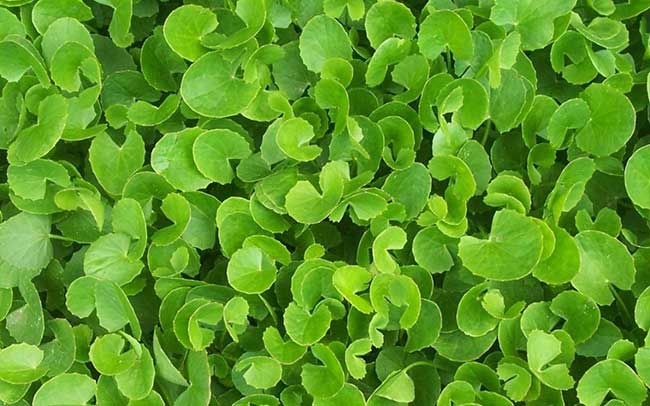
Centellia Asiatica, is a small perennial herb native to Asia and naturalized in many parts of the world including the US and Africa. It is mentioned in ‘Sushruta Samhita’, one of the earliest Ayurvedic medical texts, and for thousands of years has been famed for its Ayurvedic medicinal properties. In traditional Chinese herbal medicine, it is known as one of the “miracle elixirs of life” and in India, Centellia Asiatica is sometimes referred to as “Tiger Grass” due to the fact that wounded tigers would roll themselves in it. However, it is most often referred to by its Sinhalese name “Gotu Kola.”
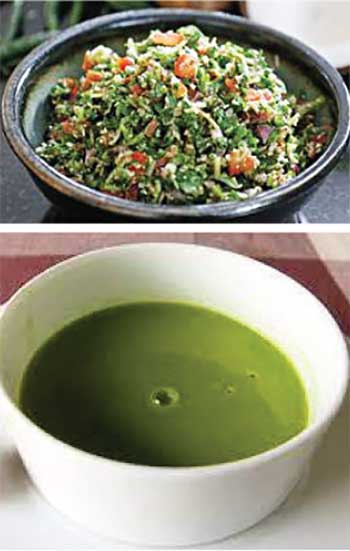
In Sri Lanka gotu kola thrives in the marshy, shaded areas of the wet and intermediate zones but has established itself as an integral part of home gardens. An invaluable herb, having little taste or smell, with white or light purple-to-pink flowers and small oval fruit, it has throughout history been an integral part of traditional Sri Lankan cuisine and traditional medicine. It is commonly used as a juice, tea, or green leafy vegetable in dishes such as gotu sambol and gotu kanda, a nutritious herbal porridge based on ancient indigenous and Ayurvedic principles of well-being. Highly valued for it nutritional components of vitamins A, B2, C and iron, potassium and calcium, it is so popular that supermarket shelves now offer it in chopped, ready-to eat packets along with instant gotu kola kanda.
Long before the term “superfood” was coined, gotu kola was referred to in Ayurveda as the “herb of longevity”, standing out as having no equal in the treatment of general debility and decline. With its distinctive fan-shaped leaves, often described as being brain-like, it conforms to the “doctrine of signatures”, an ancient belief that herbs resemble the part of the body that they provide nutrients for and are used to treat.
In Ayurvedic medicine it is famed as a “medhya rasayana” with a rejuvenative effect on nerves and brain cells, that improves brain function, boosts memory and prevents cognitive deficits. It is also known as a powerful wound and skin disease healer and a blood purifier with gastroprotective qualities.
Studies continue to demonstrate the science behind gotu kola’s efficacy in traditional medicine. A nootropic which supports circulation to the brain whilst nourishing the nervous system, it is also a powerful adaptogen and antioxidant. It has also demonstrated anxiolytic, anti-convulsant, neuritogenic, antispasmodic, astringent, cardiotonic, diuretic, anti-inflammatory, analgesic and antipyretic qualities. It is easy to understand why in Ayurvedic medicine it is considered “a pharmacy in one herb”.
Its remarkable cognitive, neurotropic and neuroprotective effects highlight its potential to modulate disease processes involved in neurodegenerative disorders such as Alzheimer’s, Parkinson’s and Huntington’s disease in addition to treating conditions such as schizophrenia, epilepsy and strokes.
In today’s highly competitive society, nootropics, from the Greek nous (“mind“) and trepein (“to bend” or “turn“), literally meaning “mind turning’, often used to treat attention deficit hyperactivity disorder (ADHD), have gained popularity with students seeking to improve cognitive function, boost memory, focus, creativity, and motivation. Statistics from the Alzheimer’s Association suggest that someone develops Alzheimer’s every 65 seconds. In 2019 Google searches for “nootropic” reportedly averaged 110,000 per month, reinforcing the fact that cognitive health is a cause for real concern across age demographics.
According to the current analysis of Reports and Data, the global nootropics market was valued at USD 1.96 billion in 2018 and is expected to reach USD 5.32 billion by the year 2026, at a CAGR of 13.2%
Whilst extracts of gotu kola phytochemical compounds may one day be the next miracle drug in the fight against neurodegenerative conditions, creating a new medicine is a long and rigorous process that takes 10 or more years from discovery to market at an estimated cost of around $2.6 billion. In contrast, herbal medicines and food supplements aren’t generally subjected to the same stringent testing requirements.
Alone or in combination with other nootropics, of which Sri Lanka has several, a simple decoction of fresh or dried gotu kola leaves, leaf-based juices, extracts in the form of tinctures and capsules of dried powdered leaf, offer an array of proven health benefits:
* boost cognitive function, enhances
memory and enhance performance
* provides protection of brain cells from toxicity and may protect the cells from forming the plaque associated with Alzheimer’s
*helps reduce anxiety and stress and helps with insomnia
*acts as an antidepressant
* supports vascular health reducing problems with fluid retention, ankle swelling and circulation
* is anti-ageing, promotes collagen production and rejuvenates skin, hair and nails
* reduces scarring and the appearance of stretch marks
* its anti-inflammatory properties may be useful in treating joint inflammation, cartilage and bone erosion
* Its antioxidant effects are immune
boosting
* suppresses the toxic side effects of drugs on liver and kidneys
Modern-day scientific research has yet to catch up with what has been known to sages and vaidyas, whose focus has been on the healing benefits of nature, for thousands of years but this is changing. Advances in science and information technology are making it easier for the pharmaceutical industry to uncover new insights into diseases, to identify and isolate specific phytochemical compounds, and to review the explosion of biological data that has already been published in peer-reviewed biomedical journals.
The World Health Organisation has recommended that medicinal plants be used more effectively in healthcare. Sri Lanka is uniquely positioned to exploit and market its own natural resources in the pursuit of global public health. There is very real global demand and there is a very real opportunity.
Emme Haddon has lived in the West Indies, France, Malaysia, Hong Kong and the UK. She has lived in Sri Lanka for 7 years. She has run various businesses and has set up a successful on-line clothing operation. She has a great interest in Sri Lanka’s plants and herbal medicines.



By Ifham Nizam
Sri Lanka’s wildlife story has long been told through its giants — the stealth of the Sri Lankan leopard, the quiet power of the Asian elephant, and the ocean drama of the blue whale.
These icons have shaped the island’s global image, drawing travellers from across the world.
But as the sun slips below the horizon and the last safari jeeps return to camp, another Sri Lanka awakens — one that is far less known, yet just as extraordinary.
In the half-light of wetlands, along bunds of ancient irrigation tanks, and at the edges of village paddy fields, three elusive felines begin their nightly rounds. The Fishing Cat, the Jungle Cat, and the Rusty-spotted Cat — small, secretive, and largely overlooked — are now emerging as the island’s most intriguing untold wildlife story.
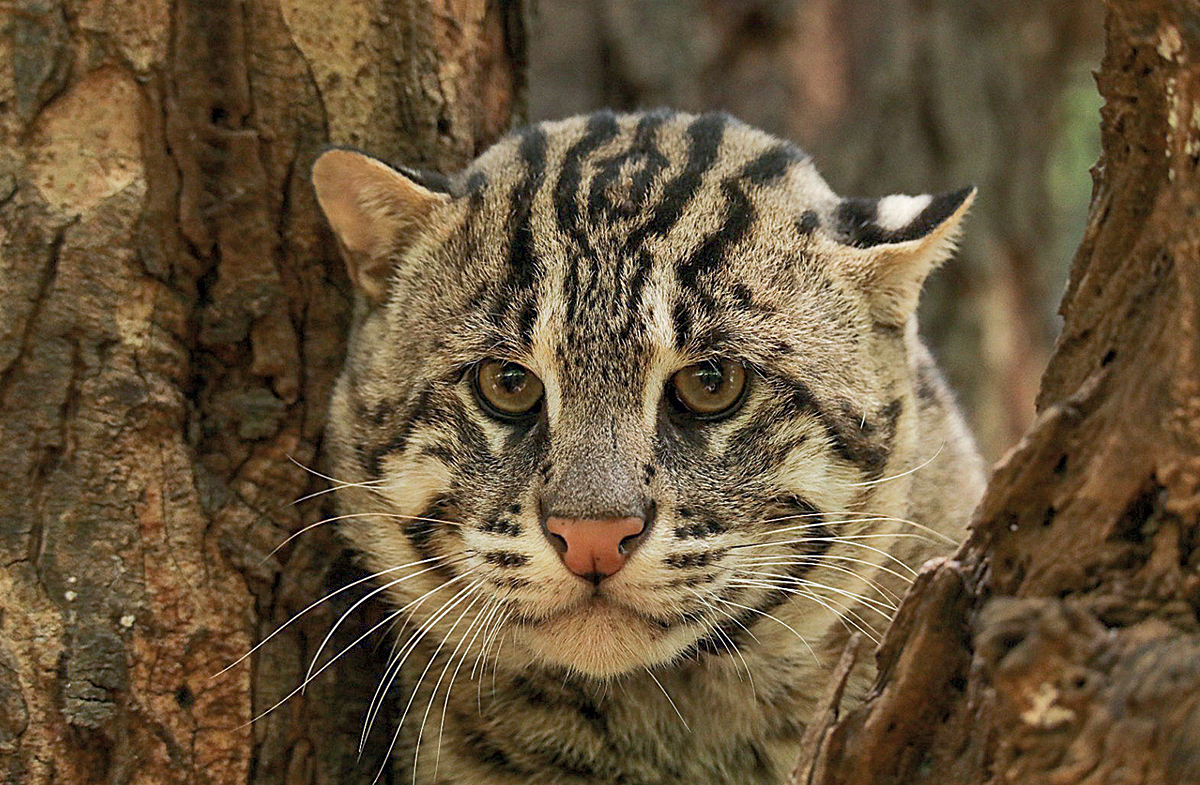
Fishing Cat
And according to researchers, their time in the spotlight may have finally come.
A Hidden World, Ready to Be Seen
“These cats have always been here — living quietly alongside us,” says Chaminda Jayasekara, a researcher and conservationist who has spent years studying Sri Lanka’s lesser-known carnivores.
“What is changing now is not the cats, but our awareness. We are beginning to understand that these species are not rare in the sense of being absent — they are rare because we have not been looking for them in the right way,” he said.
Jayasekara notes that all three species are distributed across wide swathes of the island — from the dry zone landscapes of the Cultural Triangle to the wetter lowlands and even human-dominated environments.
“The remarkable thing about the Fishing Cat and the Jungle Cat in particular is their adaptability. They are not confined to deep water. They use wetlands, paddy fields, scrublands — habitats that exist right next to where people live,” he explained.
-

- Jungle cat

-
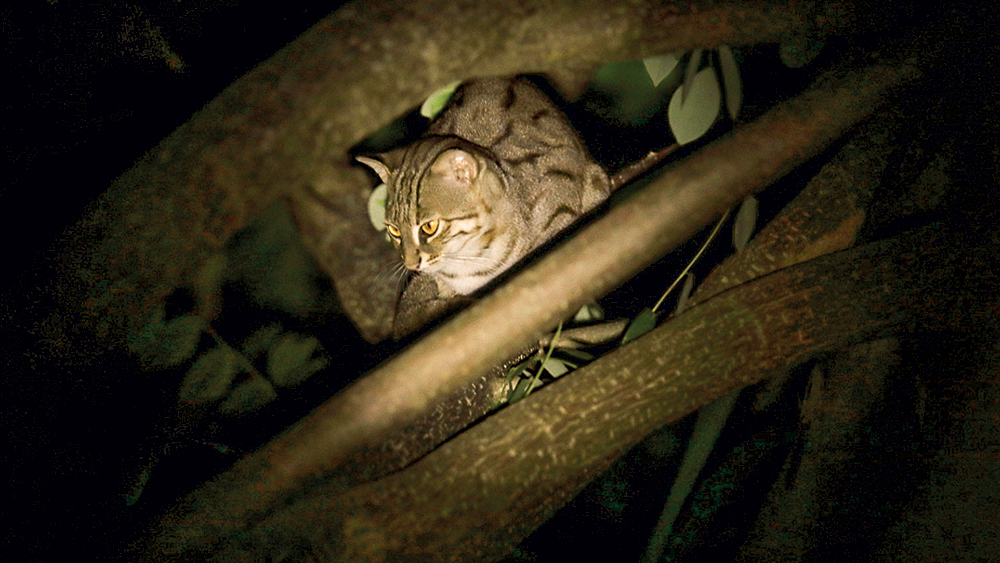
- Rusty-spotted cat

-

- Chaminda with wife Thilini Sandamali
Three Cats, Three Remarkable Stories
The largest of the trio, the Fishing Cat, is a wetland specialist — a muscular, spotted predator with partially webbed paws built for hunting in water. Across Sri Lanka’s vast network of tanks, marshes, and mangroves, it stalks fish with silent precision.
Globally listed as Vulnerable and considered endangered nationally, the species faces mounting pressure from wetland loss and pollution. Yet paradoxically, it is often found within sight of human settlements.
“Seeing a Fishing Cat hunting along a village tank is one of the most powerful wildlife experiences Sri Lanka can offer,” Jayasekara said. “It challenges everything people think they know about where wildlife belongs.”
The Jungle Cat, by contrast, is a creature of grass and scrub — long-legged, alert, and often active at dusk. It thrives in the margins where farmland meets wilderness, preying on rodents, birds, and reptiles.
Though not currently endangered, its habitat is steadily shrinking.
“These are landscapes we often dismiss as ‘empty’ or ‘degraded,’” Jayasekara noted. “But for the Jungle Cat, they are essential. Losing them means losing an entire ecological story.”
And then there is the smallest of them all — the
Rusty-spotted Cat.
Weighing little more than a kilogram, this tiny feline — found only in Sri Lanka, India, and Nepal — holds the distinction of being the world’s smallest wild cat. With its soft, rust-coloured coat and disproportionately large eyes adapted for night vision, it appears almost unreal in the wild.
“To encounter a Rusty-spotted Cat is something very few people in the world have experienced,” Jayasekara said. “It is not just a sighting — it is a moment of disbelief.”
A Tourism Opportunity After Dark
What makes these cats especially compelling is not just their rarity, but their accessibility.
Unlike the island’s larger, more famous wildlife, sightings do not always require long hours inside national parks. Instead, they can occur in carefully managed landscapes — wetlands, forest edges, and even within the grounds of eco-sensitive hotels.
One such example is Jetwing Vil Uyana, a property that has quietly demonstrated what is possible.
Located in the heart of the Cultural Triangle, the hotel sits within a restored wetland ecosystem where all three cat species have been recorded. Over more than a decade, guided night walks conducted by trained naturalists have offered guests rare glimpses into this hidden world.
“These experiences must be done with extreme care,” Jayasekara emphasised. “Low-impact lighting, small groups, and knowledgeable guides are critical. If done incorrectly, we risk disturbing the very species we are trying to protect.”
A Changing Global Audience
Sri Lanka’s tourism narrative has long revolved around its “big five” — elephants, leopards, sloth bears, blue whales and sperm whales. But global travel trends are shifting.
Today’s wildlife traveller is increasingly seeking intimate, lesser-known experiences — encounters that feel personal, rare, and authentic.
“For a visitor from Europe, where wild cats are virtually absent, the idea of seeing even one species is exciting,” Jayasekara said. “To potentially see three — in one country, in one journey — is extraordinary.”
He believes Sri Lanka is uniquely positioned to capitalise on this niche.
“This is not about replacing what we already have. It is about expanding the story — showing that Sri Lanka is not just about large animals, but also about the small, the secretive, and the scientifically fascinating.”
Conservation Through Experience
Beyond tourism, the implications are deeper.
The Fishing Cat continues to decline due to habitat destruction and human conflict. The Rusty-spotted Cat remains poorly studied, with significant gaps in scientific knowledge. Even the adaptable Jungle Cat is losing ground as grasslands disappear.
Jayasekara argues that responsible tourism can play a vital role in reversing these trends.
“When communities begin to see value in these animals — not as threats, but as assets — attitudes change,” he said. “A Fishing Cat alive in a wetland can generate far more long-term benefit than a wetland converted for short-term gain.”
Tourists, too, become part of the conservation chain.
“A single meaningful encounter can transform how a person sees the natural world. They go back, they share the story, and suddenly these small cats are no longer invisible.”
The Night Belongs to Sri Lanka
Across the island, as darkness settles over ancient reservoirs and forest edges, this quiet transformation is already underway.
A ripple disturbs the surface of a tank — a Fishing Cat at work. In the tall grass, a Jungle Cat pauses, ears alert. And somewhere in the shadows, almost impossibly small, a Rusty-spotted Cat watches with luminous eyes.
These are not distant, unreachable moments. They are unfolding now — in landscapes that millions pass every day.
Sri Lanka has long been celebrated for what it shows the world in daylight. But, as researchers and conservationists now suggest, its future may also lie in what it chooses to reveal after dark.
“The story is already here,” Jayasekara said. “We just need to tell it — carefully, responsibly, and with the respect these animals deserve.”

A destination wedding in Sri Lanka is not just an event,it is an experience that unfolds over days, sometimes even a week. From the golden shores of Bentota to the colonial charm of Galle Fort, and the cool romantic highlands of Nuwara Eliya, Sri Lanka offers a stunning diversity of settings for exotic weddings. Destination weddings are more than romantic celebrations, they are a dynamic driver of tourism, drawing high spending travellers, global attention, and long stay visitors. In Sri Lanka, these weddings seamlessly blend scenic beauty, culture and luxury promoting Sri Lanka on the world stage.
Sri Lanka is one of the most diverse destination wedding hubs in Asia – drawing couples from India, Europe and even Pakistan who are looking for something beyond the ordinary.
What makes Sri Lanka irrestible is its rare ability to offer multiple wedding backdrops within a few hours – from sun kissed beaches, misty mountains, colonial charm, and lush tropical landscapes, all seamlessly woven into one unforgettable celebration.
For many couples the dream begins by the sea. Along the southern and western coastlines, Sri Lanka offers a perfect beach wedding, with golden sunsets, and endless horizons.

Celebration of love in an elegant setting
For many Indian couples, in particular, Sri Lanka presents the perfect blend of proximity and exotic appeal. While the couples seeking cooler climes and a dramatic scenery, Sri Lanka’s hill country offers a dreamlike alternative. Nuwara Eliya, often called Little England, is loved by European couples. With its colonial bungalows, rose gardens and cool climate, it lends itself perfectly to elegant garden weddings, reminiscent of an English country affair.
What sets Sri Lanka apart is not just the beauty of these locations but how seamlessly everything comes together – food, culture and locations.
From décor and catering to cultural performances and legal formalities – ensure couples and their families to focus solely on the celebration itself without hassles.
-

- An ancient symbol of grace at a modern wedding
It is also the versatility that attracts a global clientale, Indian weddings find space for grandeur and tradition while European couples discover intimacy and charm. Some European couples are drawn to Sri Lanka’s tropical allure, heritage architecture, and a promise of a wedding that feels both intimate and extraordinary. Hotels and resorts across the island have elevated destination weddings into an art form.
Some of the hotels, such as Shangri-La Hambantota, Cinnamon Bentota Beach, Sheraton Kosgoda and Weligama offer bespoke wedding packages that go for beyond décor and dining.
Wedding planners curate menus, from floral themes, cultural performance to dining, ensuring each celebration reflects the couples story. Guests, too, are not left out, they find themselves embarking on wildlife safaris or indulge in Ayurvedic wellness retreats along the southern coast. Weddings becomes rich with memory making moments. Unlike Bali or Phuket, Sri Lanka offers five star venues, world class cuisine to the island’s ability to offer something deeply personal yet effortlessly luxurious.
In Sri Lanka, couples will never confined to a single venue. A beach ceremony can be followed by a hill country honeymoon or a cultural
celebration near Sigiriya can transition into a coastal after party and personalised service at a fraction of the cost, allowing couples to enjoy their ceremonies at a low cost. Culturally the island offers depths and colour. Kandyan dancers, traditional drummers, Poruwa ceremonies and vibrant local rituals add authencity and character.
The island’s year round tropical climate further enhances its appeal. Couples can host outdoor ceremonies under open skies. The exotic landscapes lend themselves beautifully to photography. Above all this, Sri Lanka offers warmth and the hospitality is genuine and deeply personal.
Sri Lanka stands out in a world where destination weddings are becoming increasingly extravagant.
Sri Lanka is a place where love is celebrated against a backdrop of nature, culture and timeless beauty. And perhaps that is why so many couples choose Sri Lanka to say ‘I do’ and to began their journey in a place that feels like home.
By Zanita Careem

at Cinnamon Grand
This Avurudu season, Cinnamon Grand Colombo invited guests to embrace the warmth, joy, and timeless traditions of the Sinhala and Tamil New Year with a thoughtfully curated series of festive experiences for the whole family.
Blending authentic Sri Lankan heritage with the hotel’s signature hospitality, the celebrations promise a memorable April filled with traditional flavours, lively entertainment, and meaningful moments of togetherness.
The festivities began with the Avurudu themed tea buffet, at the tea lounge, where guests savoured a delightful spread of seasonal sweets, festive treats, and local favourites inspired by Avurudu traditions.
During the season, Nuga Gama came alive with Happy Avurudu, featuring a charming traditional sweet table followed by an authentic Sri Lankan lunch buffet. Guests immersed themselves in the festive spirit with traditional Avurudu games, cultural celebrations, and special seasonal activities, recreating the joy of a classic Sri Lankan New Year gathering.
-

- Behind every celebration is a team of culinary artists

Swinging into elegance and unforgettable memories
As the celebrations continued into the evening, Nuga Gama presented the Sri Lankan New Year Dinner on 14th April, an indulgent dinner buffet showcasing cherished festive recipes and beloved Sri Lankan flavours.
The guests enjoyed a host of seasonal experiences across the hotel. Coffee Stop featured the Avurudu Kavili Pop up, offering an irresistible selection of traditional New Year sweets, while palms of beautifully curated festive hampers perfect for gifting family, friends, and colleagues.
Adding to the vibrant atmosphere, the Avurudu feast at the lobby brought the traditions of the season to life with live raban performances by traditional Sri Lankan ladies and live cooking stations serving freshly prepared local sweet treats, creating an immersive festive experience for guests and visitors alike.
For those looking to extend the celebrations, Cinnamon Grand Colombo also introduced a festive Avurudu stay, inviting guests to enjoy the season with an exclusive city escape. Guests booking with the promo code CGA26 enjoyed special benefits, including 15% off on all food and beverage, 10% off spa treatments, and a complimentary stay for one child, valid for stays until 30th April 2026. Reservations can be made via cinnamonhotels.com.
The celebrations continue later in the month with Baila Night at Nuga Gama on 24th April, featuring a lively performance by Sri Band SL, followed by a delicious dinner buffet in a festive village style setting.
Celebrate Avurudu season with unforgettable flavours, cherished traditions, and heartfelt hospitality at Cinnamon Grand Colombo, where every experience is designed to capture the true spirit of the season.

Compensation payments and reconstruction activities related to the Ditwah relief measures must be expedited with special attention at the district level – PM

South Korean fighter jets collided due to pilots taking pictures, report finds

Showers above 75 mm are likely at some places in the Western, Sabaragamuwa, Central, Uva and Southern provinces and in Ampara and Batticaloa districts

Parliament urged to probe questionable payment of USD 2.5 mn from Treasury

USD 2 mn bribe: CID ordered to arrest Shasheendra R, warrant issued against ex-SriLankan CEO’s wife

Lanka faces crisis of conscience over fate of animals: Call for compassion, law reform, and ethical responsibility

‘Dates have the highest sugar content to fight Coronavirus’

Sunday Island 27 December – Headlines

#SundayIsland 17th December – Headlines

Sunday Island – 28th March

Sunday Island Headlines – 21 March

Sunday Island – 21st February – Headlines
-

 News2 days ago
Rs 13 bn NDB fraud: Int’l forensic audit ordered
-

 Business5 days ago
Harnessing nature’s wisdom: Experts highlight “Resist–Align” path to resilience
-

 Opinion3 days ago
Shutting roof top solar panels – a crime
-

 News5 days ago
Gratiaen Trust announces longlist for the 33rd Annual Gratiaen Prize
-

 News4 days ago
From Nuwara Eliya to Dubai: Isha Holdings markets Agri products abroad
-
 Latest News7 days ago
Singapore Zoo’s first Sri Lankan leopard cubs make their public debut
-
 News5 days ago
Heroin haul transported on 50-million-rupee contract
-

 News3 days ago
Church calls for Deputy Defence Minister’s removal, establishment of Independent Prosecutor’s Office