
Life style
Sri Lanka’s Great Opportunity. Gotukola


by Emme Haddon
Almost every culture from the ancient Egyptians to the native Americans possess a wealth of herbal medicinal knowledge which has been passed down from generation to generation. According to the World Health Organisation, 80% of the world’s population rely on traditional herbal medicines as their primary source of health care. 74% of the modern medicines were discovered as a result of the study of plants used in traditional medicine. The current global boom in sales of alternate 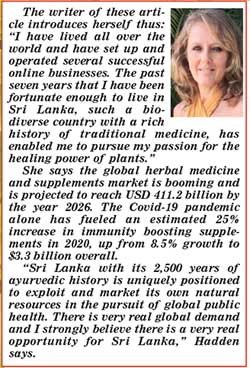 herbal remedies and supplements is driven by a growing awareness for preventative healthcare methods and consumer demand for healthier and more natural products. People no longer blindly accept something as being safe just because a doctor says so.
The number of information-hungry patients has increased dramatically, around 66% of US adults go online to research their conditions, as do more than half of all Europeans. According to Nutrition Business Journal, the Covid-19 pandemic alone has fuelled an estimated 25% increase in immunity boosting supplements in 2020, up from 8.5% growth to $3.3 billion overall. The global size of the herbal remedies and supplement market was projected to reach USD 86.74 billion by 2022.
The latest reports suggest that this figure may double as a result of the Covid-19 pandemic. In the face of increasing strains of microorganisms developing resistance to drugs, as patents on existing drugs expire and the promise of huge profits from potential prescription drugs and herbal supplements, both Big Pharma and Big Herba are ramping up their search of the natural world for molecules they can extract and patent as new prescription drugs or market as the next best-selling ‘superfood’ supplement. This kind of bioprospecting is by no means new. Willow bark has been used as a traditional medicine for more than 3500 years.
The ancient Sumerians and Egyptians used it as a remedy for aches and pains. Detailed references are made to it in the Vedas and later by Hippocrates for its efficacy in relieving fever and pain. However, the active agent in willow bark, salicin, which would later form the basis of the discovery of aspirin, remained unknown. It was several thousands of years later, in the late 1800s, that researchers in Europe identified salicin (after Salix, the genus of the willow tree). This led to the creation of aspirin the world’s
best-selling drug, by German chemist Felix Hoffmann. Shortly afterwards Hoffmann produced a second famous drug: diacetylmorphine, also known as heroin! Ayurveda, “the Mother of all Healing”, considered by many scholars to be the oldest healing science, originated in India more than 5,000 years ago. It stems from the ancient Vedic culture and for many thousands of years was taught in an oral tradition by accomplished masters to their disciples. Some of this knowledge was later set to print in ancient Ayurvedic texts. In Sanskrit, Ayurveda means “The Science of Life’ wherein the body, mind and consciousness work together in maintaining balance. Great emphasis is placed on prevention and encouraging the maintenance of good health through close attention to balance in one’s life, right thinking, diet and the treatment of illness through lifestyle practices and the use of herbal remedies.
The cause of disease is viewed as a lack of proper cellular function due to an excess or deficiency of an individual’s vata, pitta or kapha dosha and the presence of toxins. In Sri Lanka, Ayurveda, the official term used to denote collectively all the traditional medical systems, encompasses Ayurveda, the predominant system which came to the island from India with Buddhism 2,500 years ago, Siddha, Unani, and Deshiya Chikithsa. Deshiya Chikithsa is the earliest system of medicine Sri Lanka and has existed before the advent of Ayurveda. The term “traditional medicine” thus largely overlaps with the term “Ayurveda.”
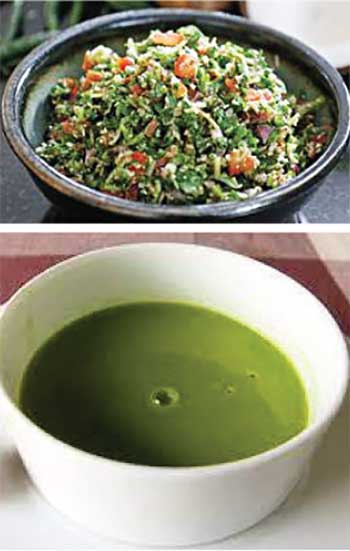 Sri Lanka has a continuous written history. Stone scripts as early as 250 BCE, ancient texts together with remaining ola palm leaf texts, offer an insight into the intricacies of traditional food preparation which are based on ancient Ayurvedic principles of health. The nutritional basis of ingredients, methods of preparation, and their suitability for consumption depend on the patient’s physiological condition, as well as the environment and climate, are intricately interwoven.
For most people in Sri Lanka, a sambol or mallum, green leafy accompaniments to rich, spicy dishes, is a must have. They may not be aware of the exact nutritional value of these healthy and delicious greens but as children they will have been told to eat them up because they are good for them!
Centellia Asiatica, is a small perennial herb native to Asia and naturalized in many parts of the world including the US and Africa. It is mentioned in ‘Sushruta Samhita’, one of the earliest Ayurvedic medical texts, and for thousands of years has been famed for its Ayurvedic medicinal properties. In traditional Chinese herbal medicine, it is known as one of the “miracle elixirs of life” and in India, Centellia Asiatica is sometimes referred to as “Tiger Grass” due to the fact that wounded tigers would roll themselves in it. However, it is most often referred to by its Sinhalese name “Gotu Kola.”
In Sri Lanka gotu kola thrives in the marshy, shaded areas of the wet and intermediate zones but has established itself as an integral part of home gardens. An invaluable herb, having little taste or smell, with white or light purple-to-pink flowers and small oval fruit, it has throughout history been an integral part of traditional Sri Lankan cuisine and traditional medicine. It is commonly used as a juice, tea, or green leafy vegetable in dishes such as gotu sambol and gotu kanda, a nutritious herbal porridge based on ancient indigenous and Ayurvedic principles of well-being. Highly valued for it nutritional components of vitamins A, B2, C and iron, potassium and calcium, it is so popular that supermarket shelves now offer it in chopped, ready-to eat packets along with instant gotu kola kanda.
Long before the term “superfood” was coined, gotu kola was referred to in Ayurveda as the “herb of longevity”, standing out as having no equal in the treatment of general debility and decline. With its distinctive fan-shaped leaves, often described as being brain-like, it conforms to the “doctrine of signatures”, an ancient belief that herbs resemble the part of the body that they provide nutrients for and are used to treat.
In Ayurvedic medicine it is famed as a “medhya rasayana” with a rejuvenative effect on nerves and brain cells, that improves brain function, boosts memory and prevents cognitive deficits. It is also known as a powerful wound and skin disease healer and a blood purifier with gastroprotective qualities.
Studies continue to demonstrate the science behind gotu kola’s efficacy in traditional medicine. A nootropic which supports circulation to the brain whilst nourishing the nervous system, it is also a powerful adaptogen and antioxidant. It has also demonstrated anxiolytic, anti-convulsant, neuritogenic, antispasmodic, astringent, cardiotonic, diuretic, anti-inflammatory, analgesic and antipyretic qualities. It is easy to understand why in Ayurvedic medicine it is considered “a pharmacy in one herb”.
Its remarkable cognitive, neurotropic and neuroprotective effects highlight its potential to modulate disease processes involved in neurodegenerative disorders such as Alzheimer’s, Parkinson’s and Huntington’s disease in addition to treating conditions such as schizophrenia, epilepsy and strokes.
In today’s highly competitive society, nootropics, from the Greek nous (“mind“) and trepein (“to bend” or “turn“), literally meaning “mind turning’, often used to treat attention deficit hyperactivity disorder (ADHD), have gained popularity with students seeking to improve cognitive function, boost memory, focus, creativity, and motivation. Statistics from the Alzheimer’s Association suggest that someone develops Alzheimer’s every 65 seconds. In 2019 Google searches for “nootropic” reportedly averaged 110,000 per month, reinforcing the fact that cognitive health is a cause for real concern across age demographics.
According to the current analysis of Reports and Data, the global nootropics market was valued at USD 1.96 billion in 2018 and is expected to reach USD 5.32 billion by the year 2026, at a CAGR of 13.2%
Whilst extracts of gotu kola phytochemical compounds may one day be the next miracle drug in the fight against neurodegenerative conditions, creating a new medicine is a long and rigorous process that takes 10 or more years from discovery to market at an estimated cost of around $2.6 billion. In contrast, herbal medicines and food supplements aren’t generally subjected to the same stringent testing requirements.
Alone or in combination with other nootropics, of which Sri Lanka has several, a simple decoction of fresh or dried gotu kola leaves, leaf-based juices, extracts in the form of tinctures and capsules of dried powdered leaf, offer an array of proven health benefits:
* boost cognitive function, enhances
memory and enhance performance
* provides protection of brain cells from toxicity and may protect the cells from forming the plaque associated with Alzheimer’s
*helps reduce anxiety and stress and helps with insomnia
*acts as an antidepressant
* supports vascular health reducing problems with fluid retention, ankle swelling and circulation
* is anti-ageing, promotes collagen production and rejuvenates skin, hair and nails
* reduces scarring and the appearance of stretch marks
* its anti-inflammatory properties may be useful in treating joint inflammation, cartilage and bone erosion
* Its antioxidant effects are immune
boosting
* suppresses the toxic side effects of drugs on liver and kidneys
Modern-day scientific research has yet to catch up with what has been known to sages and vaidyas, whose focus has been on the healing benefits of nature, for thousands of years but this is changing. Advances in science and information technology are making it easier for the pharmaceutical industry to uncover new insights into diseases, to identify and isolate specific phytochemical compounds, and to review the explosion of biological data that has already been published in peer-reviewed biomedical journals.
The World Health Organisation has recommended that medicinal plants be used more effectively in healthcare. Sri Lanka is uniquely positioned to exploit and market its own natural resources in the pursuit of global public health. There is very real global demand and there is a very real opportunity.
Emme Haddon has lived in the West Indies, France, Malaysia, Hong Kong and the UK. She has lived in Sri Lanka for 7 years. She has run various businesses and has set up a successful on-line clothing operation. She has a great interest in Sri Lanka’s plants and herbal medicines.


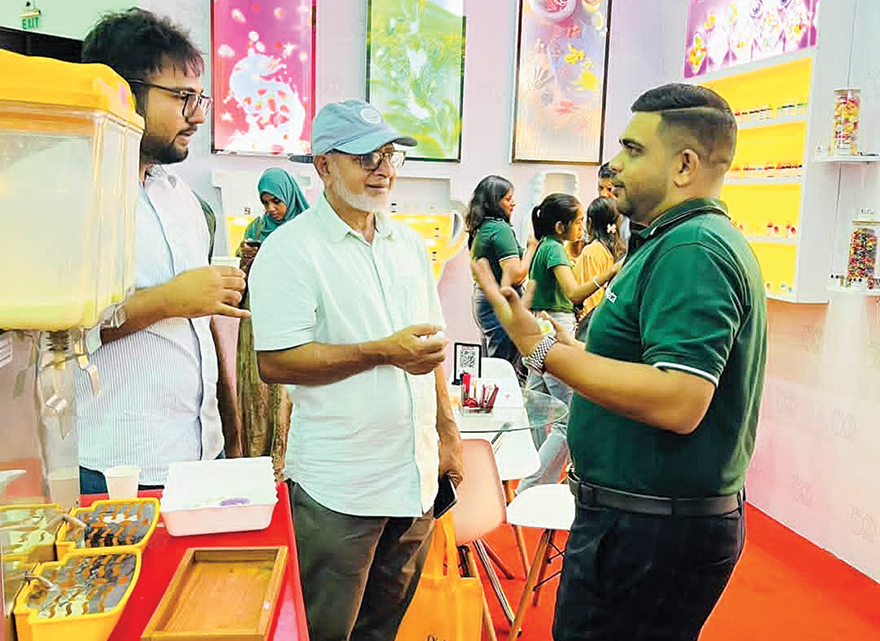
Salman Faiz has turned his family legacy into a modern sensory empire. Educated in London, he returned to Sri Lanka with a global perspective and a refined vision, transforming the family legacy into a modern sensory powerhouse blending flavours,colours and fragrances to craft immersive sensory experiences from elegant fine fragrances to natural essential oils and offering brand offerings in Sri Lanka. Growing up in a world perfumed with possibility, Aromatic Laboratories (Pvt) Limited founded by his father he has immersed himself from an early age in the delicate alchemy of fragrances, flavours and essential oils.
 Salman Faiz did not step into Aromatic Laboratories Pvt Limited, he stepped into a world already alive with fragrance, precision and quiet ambition. Long before he became the Chairman of this large enterprise, founded by his father M. A. Faiz and uncle M.R. Mansoor his inheritance was being shaped in laboratories perfumed with possibility and in conversations that stretched from Colombo to outside the shores of Sri Lanka, where his father forged early international ties, with the world of fine fragrance.
Growing up amidst raw materials sourced from the world’s most respected fragrance houses, Salman Faiz absorbed the discipline of formulation and the poetry of aroma almost by instinct. When Salman stepped into the role of Chairman, he expanded the company’s scope from a trusted supplier into a fully integrated sensory solution provider. The scope of operations included manufacturing of flavours, fragrances, food colours and ingredients, essential oils and bespoke formulations including cosmetic ingredients. They are also leading supplier of premium fragrances for the cosmetic,personal care and wellness sectors Soon the business boomed, and the company strengthened its international sourcing, introduced contemporary product lines and extended its footprint beyond Sri Lanka’s borders.

Where raw materials transform into refined fragrance

Salman Faiz -carrying forward a legacy
Today, Aromatic Laboratories stands as a rare example of a second generation. Sri Lankan enterprise that has retained its soul while embracing scale and sophistication. Under Salman Faiz’s leadership, the company continues to honour his father’s founding philosophy that every scent and flavour carries a memory, or story,and a human touch. He imbibed his father’s policy that success was measured not by profit alone but the care taken in creation, the relationships matured with suppliers and the trust earned by clients.
“We are one of the leading companies manufacturing fragrances, dealing with imports,exports in Sri Lanka. We customise fragrances to suit specific applications. We also source our raw materials from leading French company Roberte’t in Grasse
Following his father, for Salman even in moments of challenge, he insisted on grace over haste, quality over conveniences and long term vision over immediate reward under Salman Faiz’s stewardship the business has evolved from a trusted family enterprise into a modern sensory powerhouse.
Now the company exports globally to France, Germany, the UK, the UAE, the Maldives and collaborates with several international perfumes and introduces contemporary products that reflect both sophistication and tradition.
We are one of the leading companies. We are one of the leading companies manufacturing fine and industrial fragrance in Sri Lanka. We customise fragrances to suit specific applications said Faiz
‘We also source our raw materials from renowned companies, in Germany, France, Dubai,Germany and many others.Our connection with Robertet, a leading French parfume House in Grasse, France runs deep, my father has been working closely with the iconic French company for years, laying the foundation for the partnership, We continue even today says Faiz”
Today this business stands as a rare example of second generation Sri Lankan entrepreneurship that retains its souls while embracing scale and modernity. Every aroma, every colour and every flavour is imbued with the care, discipline, and vision passed down from father to son – a living legacy perfected under Salmon Faiz’s guidance.
By Zanita Careem
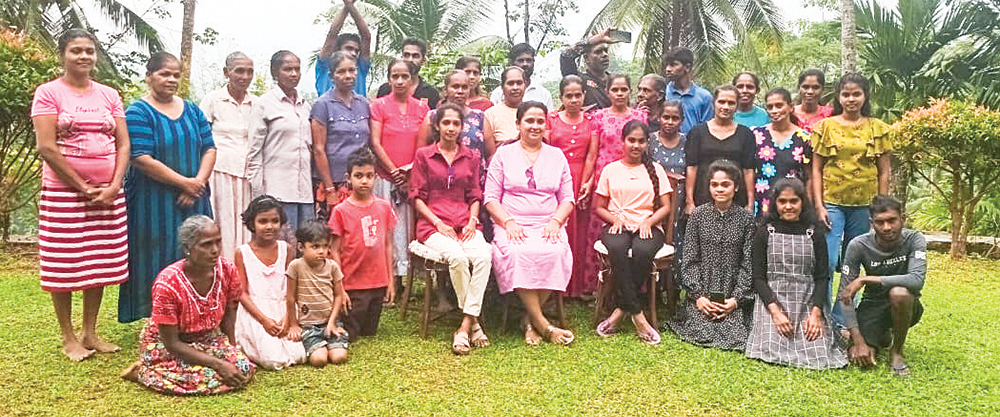
Harini and Chanaka cultivating change
When Harini and Chanaka Mallikarachchi returned to Sri Lanka after more than ten years in the United States, it wasn’t nostalgia alone that they brought home . It was purpose.Beneath the polished resumes and strong computer science backgrounds lay something far more personal- longing to reconnect with the land, and to give back to the country that shaped their memories. From that quiet but powerful decision was born Agri Vision not just an agricultural venture but a community driven movement grounded in sustainability ,empowerment and heritage. They transform agriculture through a software product developed by Avya Technologies (Pvt Limited) Combining global expertise with a deep love for their homeland, they created a pioneering platform that empowers local farmers and introduce innovative, sustainable solutions to the country’s agri sector.
After living for many years building lives and careers in theUnited States, Harini and Chanaka felt a powerful pull back to their roots. With impressive careers in the computer and IT sector, gaining global experience and expertise yet, despite their success abroad, their hearts remained tied to Sri Lanka – connection that inspired their return where they now channel their technological know-how to advance local agriculture.
For Harini and Chanaka, the visionaries behind Agri Vision are redefining sustainable agriculture in Sri Lanka. With a passion for innovation and community impact, they have built Agri Vision into a hub for advanced agri solutions, blending global expertise with local insight.
In Sri Lanka’s evolving agricultural landscape, where sustainability and authenticity are no longer optional but essential. Harini and Chanaka are shaping a vision that is both rooted and forward looking. In the heart of Lanka’s countryside, Uruwela estate Harini and Chanaka alongside the ever inspiring sister Malathi, the trio drives Agri Vision an initiative that fuses cutting edge technology with age old agricultural wisdom. At the core of their agri philosophy lies two carefully nurtured brands artisan tea and pure cinnamon, each reflecting a commitment to quality, heritage and people.
Armed with global exposure and professional backgrounds in the technology sector,they chose to channel thier experiences into agriculture, believing that true progress begins at home.
-
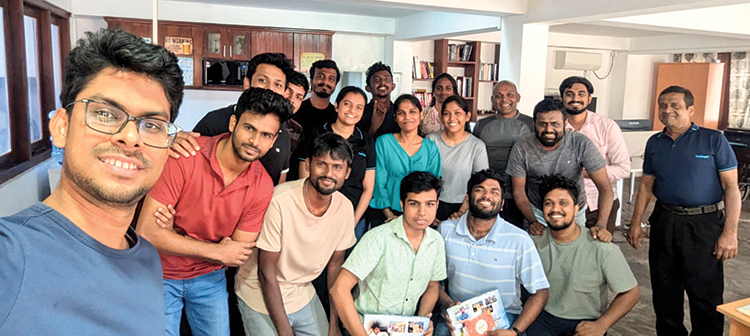
- Avya Technologies (Pvt) ltd software company that developed Agri Vision
-

- Chanaka,Harini and Shakya Mallikarachchi and Malathi Malathi dias (middle)
But the story of Agri Vision is as much about relationships as it is about technology. Harini with her sharp analytical mind, ensures the operations runs seamlessly Chanaka, the strategist looks outward, connecting Agri Vision to globally best practices and Malathi is their wind behind the wings, ensures every project maintains a personal community focussed ethos. They cultivate hope, opportunity and a blueprint for a future where agriculture serves both the land and the people who depend on it .
For the trio, agriculture is not merely about cultivation, it is about connection. It is about understanding the rhythm of the land, respecting generations of farming knowledge, and that growth is shared by the communities that sustain it. This belief forms the backbone of Agro’s vision, one that places communities not only on the periphery, but at the very heart of every endeavour.
Artisan tea is a celebration of craft and origin sourced from selected growing regions and produced with meticulous attention to detail, the tea embodier purity, traceability and refinement, each leaf is carefully handled to preserve character and flavour, reflecting Sri Lanka’s enduring legacy as a world class tea origin while appealing to a new generation of conscious consumers complementing this is pure Cinnamon, a tribute to authentic Ceylon, Cinnamon. In a market saturated with substitutes, Agri vision’s commitment to genuine sourcing and ethical processing stands firm.
By working closely with cinnamon growers and adhering to traditional harvesting methods, the brands safeguards both quality and cultural heritage.
What truly distinguishes Harini and Chanake’s Agri Vision is their community approach. By building long term partnerships with smallholders. Farmers, the company ensures fair practises, skill development and sustainable livelihoods, These relationships foster trust and resilience, creating an ecosystem where farmers are valued stakeholders in the journey, not just suppliers.
Agri vision integrates sustainable practices and global quality standards without compromising authenticity. This harmony allows Artisan Tea and Pure Cinnamon to resonate beyond borders, carrying with them stories of land, people and purpose.
As the brands continue to grow Harini and Chanaka remain anchored in their founding belief that success of agriculture is by the strength of the communities nurtured along the way. In every leaf of tea and every quill of cinnamon lies a simple yet powerful vision – Agriculture with communities at heart.
By Zanita Careem
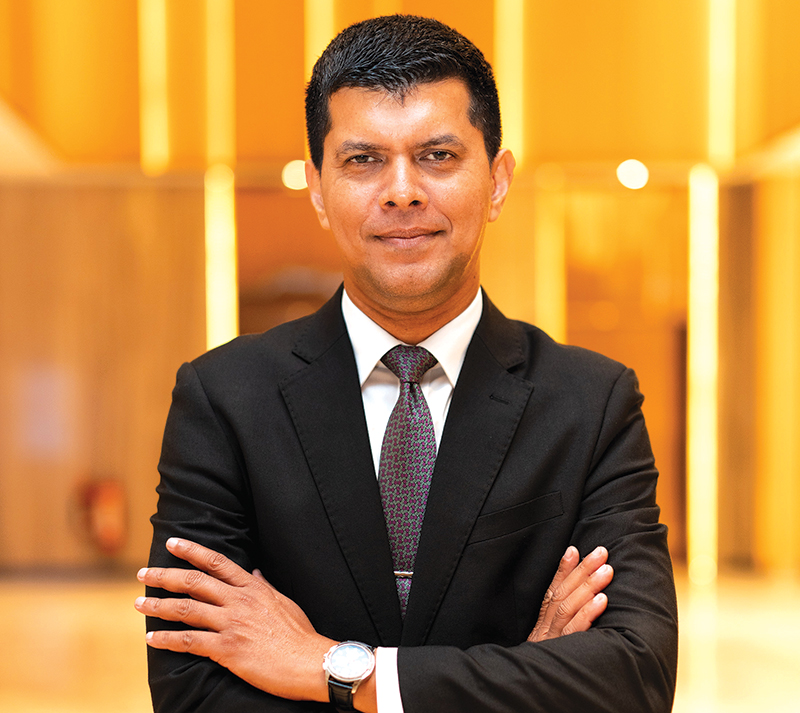
Courtyard by Marriott Colombo has welcomed Suranga Peelikumbura as its new General Manager, ushering in a chapter defined by vision, warmth, and global sophistication.
Suranga’s story is one of both breadth and depth. Over two decades, he has carried the Marriott spirit across continents, from the shimmering luxury of The Ritz-Carlton in Doha to the refined hospitality of Ireland, and most recently to the helm of Resplendent Ceylon as Vice President of Operations. His journey reflects not only international mastery but also a devotion to Sri Lanka’s own hospitality narrative.
What distinguishes Suranga is not simply his credentials but the philosophy that guides him. “Relationships come first, whether with our associates, guests, partners, or vendors. Business may follow, but it is the strength of these connections that defines us.” It is this belief, rooted in both global perspective and local heart, that now shapes his leadership at Courtyard Colombo.
At a recent gathering of corporate leaders, travel partners, and media friends, Suranga paid tribute to outgoing General Manager Elton Hurtis, hon oring his vision and the opportunities he created for associates to flourish across the Marriott world. With deep respect for that legacy, Suranga now steps forward to elevate guest experiences, strengthen community ties, and continue the tradition of excellence that defines Courtyard Colombo.
From his beginnings at The Lanka Oberoi and Cinnamon Grand Colombo to his leadership roles at Weligama Bay Marriott and Resplendent Ceylon, Suranga’s career is a testament to both resilience and refinement. His return to Marriott is not merely a professional milestone, it is a homecoming.

“Sri Lanka Set to Become the First South Asian Country to Enter the Global Charter on Children’s Care Reform”

Incoming Bangladesh PM Tarique Rahman, lawmakers sworn into parliament

Samra’s record 110 in vain as Phillips and Ravindra put New Zealand in Super Eights

Canada reacts as cheating row rocks curling superpower

Long queues and confusion mar first day of India’s landmark AI summit

Ancient bone may prove legendary war elephant crossing of Alps

‘Dates have the highest sugar content to fight Coronavirus’

Sunday Island 27 December – Headlines

#SundayIsland 17th December – Headlines

Sunday Island – 28th March

Sunday Island Headlines – 21 March

Sunday Island – 21st February – Headlines
-

 Life style3 days ago
Marriot new GM Suranga
-

 Business2 days ago
Ministry of Brands to launch Sri Lanka’s first off-price retail destination
-

 Features3 days ago
Monks’ march, in America and Sri Lanka
-

 Midweek Review7 days ago
A question of national pride
-

 Business7 days ago
Autodoc 360 relocates to reinforce commitment to premium auto care
-
 Opinion6 days ago
Will computers ever be intelligent?
-

 Features3 days ago
The Rise of Takaichi
-

 Features3 days ago
Wetlands of Sri Lanka: