
Business
Sri Lanka’s Food Security after Cyclone Ditwah: Risk, Recovery, and Resilience

Cyclone Ditwah destroyed early-stage Maha season paddy, vegetables, and perennial crops, disrupting both current and upcoming harvests.Together, rising prices, lower production, and declining purchasing power are likely to intensify food insecurity and further undermine nutrition.Restoring transport links, supporting farmers to replant, protecting vulnerable households and strengthening climate-resilient farming are essential.
The year 2025 has been disastrous for Sri Lanka’s agriculture, especially after Cyclone Ditwah caused severe destruction through heavy rains, landslides, and crop damages in different agro-ecological zones. While the immediate physical devastation was evident in the destruction of houses and infrastructure, the deeper and far-reaching consequence are the hidden agricultural toll which will shape food availability and farm incomes well into 2026. The cyclone came when the Yala crop had been harvested and most of the Maha season crops were either just emerging or were still young at a stage of high vulnerability. Young plants either got buried or pulled out, field plants were submerged, and trees lost their fruits and flowers at an unusually high rate. All these disruptions affect paddy, vegetables, fruits, plantation crops and home gardens and cause a cascading shock which not only undermines the current production but also threatens future harvests, household nutrition and national food security.
The Hidden Agricultural Toll of Cyclone Ditwah
Cyclone Ditwah caused severe damage to early-stage Maha season crops—particularly paddy, vegetables, and other field crops—creating a shock with both immediate and long-term production impacts. Even perennial crops such as tea, rubber, coconut, fruit trees, and home garden crops, which are typically less affected by short seasonal fluctuations, are expected to have sustained varying levels of damage as well. The scale of these losses is largely because a significant portion of the affected area overlaps with Sri Lanka’s main crop-growing regions. Paddy cultivations were at their most vulnerable early stages such as seedling, transplanting, and early vegetative when the cyclone struck. Intense and prolonged rainfall has left large areas submerged or waterlogged, delaying planting cycles, reducing the cultivated area, and likely causing significant yield losses in the upcoming harvest.
Extensive losses occurred to vegetable and other field crop productions across both up-country and low-country regions. Many vegetable cultivations nearing harvests and in vegetative, flowering, or early fruiting stages, suffered severe damage due to flooding, prolonged waterlogging, and strong winds. Anecdotal reports from the Galkadapathana Village in Nuwara Eliya district, for instance, indicate some localised damage to vegetable cultivations under protective structures such as greenhouses as well.
According to the patterns seen during the 2017 floods and landslides, which were smaller than Cyclone Ditwah, similar or greater levels of damage for plantation crops like tea, rubber, and coconut, are highly likely. Strong winds and landslides can injure trees physically, which may lead to dropping of flowers and immature nuts, resulting in production declines in the following months.
Based on experiences from the 2017 floods and landslides, home gardens and mixed cropping systems, many of which had reached vegetative or early fruiting stages, are also likely to have been damaged, often buried under mud and sand, requiring extensive cleaning and replanting in most cases.
From Production Losses to Price Spikes: The Emerging Food Security Outlook
Using the 101kg annual consumption per capita in 2019 as a benchmark, the total national need for paddy approximates 4 million MT which includes seed paddy, processing losses, wastage and other requirements. The Maha season contributes roughly two-thirds of the rice production with the planting of approximately 800,000 hectares each year. However, the Disaster Management Centre (DMC) has reported that paddy has been sown on 563,950 hectares so far and most of this area has suffered due to the heavy rains. Hence, the production will be very low in 2026, causing food security implications unless immediate soil fertility restoration and replanting take place. Similarly, about 95,799 hectares of other field crops (OFC) and 13,463 hectares of vegetables which is about 64% of Maha 2024 OFC extent and 74% of Maha 2024 vegetable extent have sustained extensive damage.
The income of farmers from the affected areas will most likely reduce significantly because of crop destruction and planting delays. A substantial investment will be required to renew production capacity through soil fertility restoration, protective structure repairing, and replanting. For many smallholder farmers who are already struggling with lower profits, the increased costs of replanting may result in having to borrow funds, thereby reducing their ability to cope with future climate change shocks. Communities working in plantations like tea and rubber will also face income cuts owing to the destruction of estates and the disruption of the harvesting cycles which will subsequently impact their food security and general wellbeing.
The cyclone’s immediate effect was a dramatic rise in vegetable prices that were mainly due to a sudden shortage of supply. Among the affected vegetables were carrot, green chilli, cabbage, beans, tomato, and pumpkin, which in some markets have even experienced price increases of 100% to 350%. These price hikes make it much less affordable for low-income families to buy food and practically cut off their access to micronutrient-rich foods that are taken as a staple in a healthy diet. In fact, vulnerable groups, such as children under five, pregnant and lactating mothers, older persons, and people with disabilities will have an even harder time coping with malnutrition as their access to regular meals gets more limited. While price volatility is likely to persist for at least a few weeks until roads are cleared and supply flows stabilise, this short-term improvement may not fully offset the longer-term food supply challenges that are expected to emerge in 2026.
Nationally, food insecurity is likely to increase due to a reduction in domestic production, reduced farmer incomes, and higher consumer prices. With restricted access to fruits, vegetables, and other nutrient-dense foods, the population’s nutrition will likely worsen, particularly for poor and vulnerable households. More broadly, Sri Lanka’s increased reliance on imports such as onions, potatoes, pulses, fruits, and even rice is going to diminish its foreign exchange reserves and make it more susceptible to the fluctuation in the price of commodities around the world. Recovery and climate resilience development plans throughout the food system are urgently needed given the interconnectedness of the impacts caused by this cyclone through markets, agriculture, livelihoods, and nutrition.
The immediate priority is to restore the physical flow of food from producing areas to the main wholesale and retail markets to normalcy. It is important to consider clearing the up-country road network, improving access to transport corridors that link Nuwara Eliya, Badulla, and Kandy to the Dambulla and Colombo markets. Fast removal of debris, construction of temporary bridges, and emergency repairs on roads can significantly reduce market shortages and, consequently, stabilise prices in the country.
An immediate and precise support package for the agricultural sector is necessary to restore the Maha crop and to avoid further economic losses. Seed packs, tools, and fertilisers given as replacement will support farmers to immediately attend to their paddy fields and vegetable plots. Income loss is another cause for many farmers to struggle with replanting. Thus, grants and soft loans for replanting will be critical in preventing distress borrowing. Repairing collection points, storage areas, and damaged rural roads will not only improve the efficiency of transporting farms produce to markets but also reduce post-harvest losses during the recovery period.
It is necessary to safeguard the most vulnerable households during the time of price fluctuations. Poor families living in towns and plantations can be shielded from malnutrition with the help of temporary targeted food subsidies for essential vegetables and pulses. In addition, market monitoring should be reinforced to prevent skyrocketing prices, hoarding, and rent-seeking, which commonly exacerbate the impact of such crises.
The cyclone has shown that climate resilience in various agro-ecological zones is a pressing need. Climate-smart agricultural practices, such as the use of drip irrigation, protected cultivation, planting of climate-resilient varieties, and slope stabilisation, are most crucial to agriculture in high-risk upcountry regions. It is suggested that the district-level disaster preparedness plans should include better integration and early warning systems for landslides, flash floods, and severe storms. Investment in protected cultivation structures like polytunnels and similar approaches can reduce crop losses and maintain the market supply even in harsh weather conditions in areas that are prone to high rainfall or landslides.
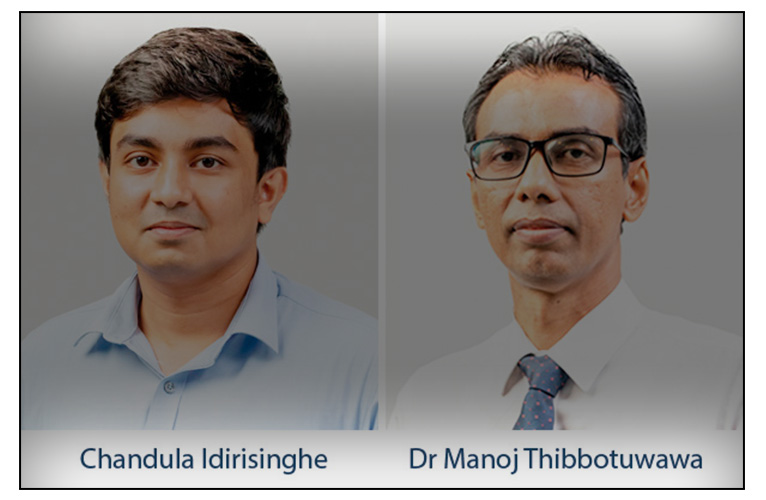
By Manoj Thibbotuwawa and Chandula Idirisinghe

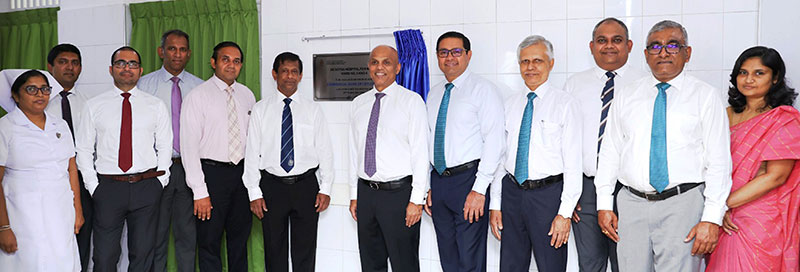
The Commercial Bank of Ceylon recently handed over Wards No. 03 and 04 of the De Soysa Hospital for Women, after the completion of a comprehensive renovation project launched in March this year to mark International Women’s Day.
Wards 03 and 04 handle a substantial share of the hospital’s patient load, and account for approximately 2,500 to 3,000 deliveries and 4,000 to 5,000 admissions annually. Their refurbishment was designed to significantly enhance patient care, safety and comfort, and directly benefit thousands of mothers and newborns.
Five Trustees of the Commercial Bank’s Corporate Social Responsibility Trust participated in the formal handing over of the refurbished wards to the hospital authorities. They were Sharhan Muhseen, the Bank’s Chairman, Raja Senanayake, Deputy Chairman, Sanath Manatunge, Managing Director/CEO, Hasrath Munasinghe, Chief Operating Officer, and Prasanna Indrajith, Chief Financial Officer.
Established in 1879, the De Soysa Hospital for Women is the first maternity hospital in Sri Lanka and the second oldest in Asia and is credited with, among others, performing the country’s first caesarean section in 1905 and establishing one of its earliest organised operating theatres in 1907.
The Commercial Bank’s Corporate Social Responsibility Trust, through which this project was implemented, has via its healthcare-related interventions supported more than 100 government hospitals with essential equipment and infrastructure, contributed to emergency medical services through the ‘Adopt an Ambulance’ initiative, and implemented targeted community health interventions such as water storage solutions for families affected by kidney disease.
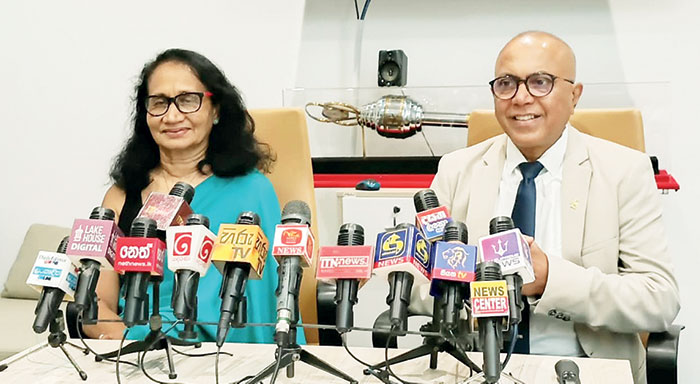
The International Institute of Health Sciences (IIHS) Multiversity is expanding its international education programmes with the aim of creating overseas employment opportunities for Sri Lankan nurses and allied health professionals while contributing to foreign exchange earnings.
Speaking to the media during a conference at IIHS Multiversity in Kerawalapitiya, Dr. Kithsiri Edirisinghe, CEO, Co-Founder and Dean of IIHS aid that the institute has established academic partnerships with overseas universities and higher education institutions, including the University of Surrey in the UK, Deakin University in Australia, Metropolia University of Applied Sciences in Finland, Asia e University in Malaysia and SUNY Canton in the United States.
Under its ‘Study in Sri Lanka, Graduate to the World’ model, students can complete foundational and diploma-level qualifications locally before progressing to international top-up degrees or overseas employment.
Dr Edirisinghe said the model could substantially reduce the cost of obtaining internationally recognised qualifications. It estimates that completing a four-year bachelor’s degree at the University of Surrey in the UK would cost about USD 145,700, including tuition and living expenses, compared with about USD 27,750 through the IIHS pathway in Sri Lanka.
Dr Edirisinghe said the institute’s focus on overseas deployment addressed both Sri Lanka’s economic needs and the growing global demand for healthcare workers.
“Our winning model is producing job-ready, registration-ready healthcare professionals who can seamlessly enter foreign healthcare systems,” he said.
IIHS, which began operations in 2002 as the American College of Health Sciences, established its institutional base in Welisara in 2008 and launched its purpose-built greenfield multiversity campus in 2023.
The institute said it has upgraded the qualifications of more than 5,000 government nurses, supported over 2,500 youth on international employment pathways and trained more than 1,000 allied health professionals. It has also carried out over 250 community health projects.
The institute has identified Germany and Japan among its target markets, with pathways planned for 2,000 nurses for Germany and a one-year preparation programme linked to around 4,000 healthcare positions in Japan.
Dr. Renuka Jayatissa, Vice-Chancellor and a specialist medical doctor, said demographic changes and the growing burden of non-communicable diseases were changing healthcare requirements in Sri Lanka.
Business
Sampath Bank launches Sri Lanka’s first community-powered book discovery platform at Colombo International Book Fair
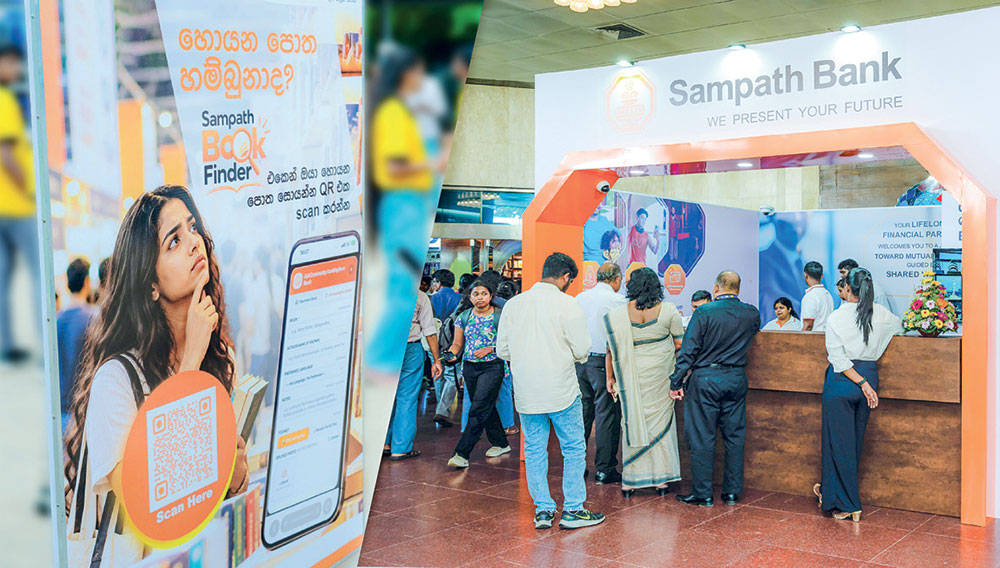
Sampath GPay customers can enjoy 25% cash back on Book Fair purchases
Sampath Bank PLC has launched Sampath Book Finder, Sri Lanka’s first community-powered book discovery platform, giving visitors to the Colombo International Book Fair a faster and more seamless way to find the books they are looking for across the fair’s 150+ stalls, while also opening up new opportunities to discover titles recommended by fellow readers.
Introduced on the opening day of the Colombo International Book Fair on 25 September, Sampath Book Finder brings together digital innovation and the collective knowledge of readers to address a familiar challenge at one of Sri Lanka’s largest literary gatherings, where the scale of the fair can make locating a particular title a time-consuming exercise. When a book proves difficult to locate, visitors can access bookfairtracker.com or scan the designated QR code and submit a request to the community, allowing readers who have already spotted the title to share its location and help others find it without having to search stall after stall.
Commenting on the initiative, Milinda Weerasinghe, Chief Marketing Officer, Sampath Bank PLC, said, “At Sampath Bank, we believe meaningful innovation begins by identifying everyday challenges and creating solutions that make a real difference. Sampath Book Finder brings this thinking to the Colombo International Book Fair by turning the collective knowledge of readers into a real-time digital solution, empowering them to find what they are looking for, discover something new and help others do the same, while making the overall experience more convenient and connected.”
The platform also turns book discovery into a shared experience, allowing visitors to recommend books they encounter by sharing the title, publisher, hall and stall number, which enables fellow readers to discover sought-after titles and recommendations while making it easier to locate them within the fair.
Sampath Bank’s longstanding association with the Colombo International Book Fair also continues in 2026, marking more than 20 years of partnership, with the Bank serving as the Official Banking Partner for this year’s fair. As part of its presence at the event, SampathCards offer 25% cashback for Sampath GPay customers on their purchases and 3 months 0% instalment plans for book purchases via Sampath credit cards, while visitors can also access banking services through the Bank’s physical presence at the fair. Customers registering to open selected Fixed Deposits at the premises will receive an additional 0.25%, adding further value and convenience for visitors.

Landslide Early Warnings issued to the Districts of Kandy, Kegalle, Matale and Ratnapura

No handshakes and a delayed ceremony as India beat Pakistan at Asian Games

Showers or thundershowers will occur in most parts of the island after 1.00 p.m

Lanka enters new phase of prosecutions as hurdles clear

Police warn: Court evaders face property seizure

Nearly 20 Iranian tankers stranded off Lanka amid US sanctions

‘Dates have the highest sugar content to fight Coronavirus’

Sunday Island 27 December – Headlines

#SundayIsland 17th December – Headlines

Sunday Island – 28th March

Sunday Island Headlines – 21 March

Sunday Island – 21st February – Headlines
-

 News6 days ago
Police remove Thileepan statue in Jaffna
-

 Features6 days ago
The 22nd Amendment, constitutional recovery and illiberal slippage
-

 Features6 days ago
Of foreigners as CEOs of Lankan ventures
-

 Latest News4 days ago
Gold winner Tharanga gets brand-new Honda Vezel from SLAAJ
-

 News6 days ago
Sajith rejects Jt. Opp. protest sabotage claim; SJB TU chief demands remedial action
-

 Features4 days ago
Why Sri Lanka needs an Inclusive Civic Nationalism – urgently
-

 News3 days ago
US-assisted ‘Ice’ detection: NPC to examine IGP’s move to transfer drug-busting team
-

 Features5 days ago
Thailand’s biggest new global star …