
Opinion
Sri Lanka’s energy crisis:


The future – Part I
Authors: Emeritus Professor I.M. Dharmadasa; Emeritus Professor Lakshman Dissanayake; Emeritus Professor Oliver Ileperuma; Professor Wijendra Bandara; Ms Nilmini Roelens; Mr Saroj Pathirana; Professor Chulananda Gunasekara; Eng. Parakrama Jayasinghe; Dr Keerthi Devendra; Dr Geewananda Gunawardana; Dr Lakmal Fernando; Dr Vidhura Ralapanawa; Dr. Ajith Weerasinghe.
Summary
The relevant energy technology mix for Sri Lanka at present is indigenous large hydro & mini-hydro systems, biomass, solar farms and solar PV on roof tops, wind and imported fossil fuels.
Sri Lanka is very vulnerable to climate change and made international commitments in relation to an energy transition towards 100% zero Carbon technologies by 2050.
The national electricity grid should be upgraded in a phased manner to absorb more renewables which are freely available and move towards achieving a smart grid.
Current efforts should also be focused on rapid expansion of renewable applications and gradual reduction of the use of imported, expensive and polluting fossil fuels. Other energy solutions such as nuclear are highly inappropriate, unaffordable and dangerous for Sri Lanka.
A phased move towards a smart grid will enable Sri Lanka to produce the future energy carrier, green hydrogen, using excess renewables, and becoming independent and secure as an energy exporting country. Sri Lanka should not miss the green hydrogen revolution and must not regress by remaining dependent on imports of globally dwindling fossil fuel with its environmental and geopolitical risks.
1.0 Introduction
The national electricity grid in Sri Lanka has been failing several times recently, plunging the entire country into darkness, with six countrywide blackouts during the past five years.
The Ceylon Electricity Board (CEB) attributes the instability to an outdated grid that cannot accommodate small-scale renewable energy providers. This was proven to be a false premise according to their own committee of investigation. However, the CEB has issued press releases calling for the shutting down of both rooftop solar systems and mini-hydro systems during festive periods, when the demand for power is lower, the implication being that micro-renewable energy is somehow the cause of the problem.
The CEB clearly does not favour renewable energy from small suppliers. It is, nevertheless, unacceptable to maintain the status quo with imported fossil fuels and high energy prices. Renewable energy is sustainable and cheaper energy prices will not only help us improve the standard of living of all and attract investors, thereby enhancing job opportunities and national income.
This article openly discusses this energy crisis, considers the root causes of the situation, weighs up current trends in the rest of the world, and recommends a way forward for Sri Lanka’s future in relation to its energy needs.
2.0 Energy Supply options for Sri Lanka
Sri Lanka has made several energy-related commitments to the United Nations, including reducing greenhouse gas emissions by 14.5% by 2030, achieving 70% renewable energy in electricity generation by 2030, and aiming for net-zero emissions by 2050. Sri Lanka also signed the No New Coal Energy Compact, committing to not building any new coal power plants. These commitments align with obligations under the Paris Agreement and the UN Sustainable Development Goals.
Is the current energy policy in keeping with these commitments?
The relevant energy technology mix currently is indigenous large hydro & mini-hydro systems, biomass, solar PV on rooftops and solar parks, wind and imported fossil fuels. The term biomass includes the Dendro project, biogas and energy from waste.
Other possible renewable energy sources like waves and tidal are not yet feasible for Sri Lanka. Imported LPG is promoted by the authorities with inaccurate claims of LNG as a clean fuel and information as to the cost of generation is somewhat misleading.
Other energy technologies like geo-thermal and nuclear are not suitable for our island nation not only due to the scarcity of large capital funds (without becoming dependent on and susceptible to foreign geo-political interests) but also the magnitude of their inherent dangers. Nuclear energy cannot meet urgent energy needs. Nuclear power presents further serious issues including problems such as enormous capital costs for commissioning, disposal of radioactive toxic waste, the risk of irreparable damage from nuclear accidents due to natural and manmade causes such as potential harm from tsunami, terror attacks, risks from power failures, and gigantic de-commissioning costs. Nuclear energy is thus not “clean” energy although its proponents seek to present it as such.
3.0 World Energy Scenarios
Since the industrial revolution fossil fuel has advanced two thirds of the world’s population. Most of the infrastructure has been established to use carbon-based fossil fuels (coal, diesel & petrol and natural gas).
This carbon economy has caused numerous issues such as air and environmental pollution, serious health issues, and wider problems like global warming and climate change. Sri Lanka has no indigenous fossil fuel resources and thus our energy security is gravely threatened by heavy reliance of imports.
The remaining one third of the world’s population is not connected to electric grids, suffer from abject poverty and are vulnerable to the heavy storms, flash floods, cyclones, hurricanes and tornadoes many of which are engendered by climate change, brought about by “the advancement” of the other two thirds.
Sri Lanka is said to rank as the sixth country most at risk from climate change.
worldwide community is now moving rapidly to take action to decarbonise the world to mitigate climate change risks.
4.0 The Global Energy Transition
It would be pertinent to begin this discussion with the data presented in a report published in 2024 by the International Renewable Energy Agency (IRENA). This has compared the energy use in the world in 2022 with the projected target use in 2050. (See Table)

The main trends of this energy transition are due to many reasons.
For both climatic reasons as well as equity, the use of fossil fuels will be drastically reduced from 63% to 12%, in favour of direct renewables, which will be doubled from 23% to 52%. Modern biomass and hydrogen are also indirect renewables and hence the total use of renewables would be 81%.
5.0 Unique opportunity for Sri Lanka to export Green Hydrogen
Common complaints about the two main renewables, solar and wind power, are said to be their intermittency. Scientists have however been working to solve this problem, and besides storage options, the solution will be the forthcoming Green Hydrogen revolution.
The future energy carrier will be green hydrogen produced by solar and wind power, which are available in great abundance for us. Throughout the world a GH revolution is taking place.
The pressurised hydrogen can be stored, transported and burned whenever needed to produce power, or as a source of thermal energy.
The important takeaway is that when hydrogen is burned for power, only water vapour is produced, without any air pollution. Only water vapour is produced during the burning of hydrogen without any air pollution. GH can be stored and burned whenever energy is needed, especially during nighttime.
A ready market exists in the shipping industry which already has stringent deadlines to reduce the use of fossil fuels. Green hydrogen is also used to produce ammonia and methanol, enabling the production of fertilisers and other chemicals in industry. Since hydrogen is a versatile future fuel, scaling up and commercialisation of this innovative energy source is taking place globally.
If Sri Lanka is astute, it can capture a large share of these markets being blessed with year-round sunshine or monsoon rains together with wind power.
According to the statistics published by the Sri Lanka Sustainable Energy Authority (SLSEA), the potential of solar and wind power are 104,000 MW and 102,000 MW, respectively. This brings the total of solar and wind power potential to 206,000 MW whereas the present Sri Lankan power production capacity is in fact less than 5,000 MW.
Our country is thus “sitting on a goldmine” in the forthcoming green hydrogen revolution. However, focusing doggedly on fossil fuels Sri Lanka is at considerable risk of “missing the bus”.
Having missed several opportunities in the past, including in the Information Technology (IT) and Bio-Technology fields, our neighbours saw the opportunities and have been developing their countries exponentially in these sectors.
Instead of continuing to import expensive fossil fuels, Sri Lanka would be able to export the green hydrogen produced using our freely available solar and wind power.
Exports can be to those countries which are not blessed with such natural resources, notably those in the northern hemisphere such as Europe and North America and bring much needed foreign income.
This is also a far better and safer option than the proposed HVDC cable connection with India, which is fraught with many Energy Security and national sovereignty issues,
Green Hydrogen produced with renewables would help the Sri Lankan economy grow rapidly with an enormous boost of foreign income and redressing any balance of trade deficits that currently blight our nation.
It is a no brainer.
6.0 What is the shape of energy in Sri Lanka now?
The CEB’s position is that they cannot balance the grid due to the power produced and fed to the grid from privately owned roof top micro-solar and mini-hydro systems.
We note the press release of 13th April 2025 to requiring the temporary pause of rooftop solar to protect grid stability. This claim is adequately debunked by the Committee report on the recent blackout. The link to the CEB press release is reproduced below for ease of reference.
The higher echelons of the CEB appear therefore to be seeking regressive measures contrary to the stated objectives of the present government and in violation of international obligations of Sri Lanka as a part of its Agenda 2030 or Agenda 2050.
The renewable energy sector could generate not only clean and affordable energy at a fraction of the price but also enormous skilled employment opportunities.
From three small solar companies in the early 1990s there are now over 300 active solar companies maintaining some 40,000 jobs for locals. Further development of micro renewables would assure not only thousands more jobs for engineers but will provide opportunities for more local women to be trained in installation and related engineering work as a part of the gender parity sustainable development goals.
The somewhat “reluctant” attitude of the CEB towards renewables is clear. If this is not the case, we would ask the CEB to state its position clearly and to demonstrate a genuine willingness to improve the national grid to enable Sri Lanka to be in lock step with the rest of the world on clean and renewable energy. Moreover, as a state-owned organisation we urge the new Government authorities to require the CEB comply with international commitments and trends.
The remainder of this article looks in depth at these issues and provides recommendations.
7.0 The Main issues for the power sector in Sri Lanka
7.1 CEB’s preoccupation with imported and expensive fossil fuels
During the early stages of renewable energy development, one might have imagined that a certain “visionary approach” would have been necessary as these technologies were relatively expensive just as with any other new technologies. However, far thinking researchers in the field saw the limitless potential and impact renewables presented for the development of Sri Lanka and now renewables present the cheapest, cleanest and safest of energy options.
Interest in renewable energy increased over time and led to the formation of the Sri Lanka Sustainable Energy Authority in 2007 and the introduction of programmes such as the “Soorya Bala Sangramaya” in 2011 with Net Metering and further expansion in 2016 with Net Accounting and Net Plus schemes.
In the early 1990s, an RE consortium was established using a Higher Education Link programme between the UK and Sri Lanka and this organised a series of high-profile conferences.
At one of these conferences, the policymaker of the CEB declared “The future of Sri Lanka is Coal, Coal & Coal“. The position appears not to have shifted. What is the reason for this regressive approach? Developed countries have been closing their coal mines since coal belongs to the dark ages of energy supplies.
Fossil fuels are finite resources; coal is the most damaging fuel, and it adds carbon dioxide, sulphur dioxide, nitrous oxide, and particulate matter contributing both environmental pollution and respiratory illness. Coal ash, produced at a rate of 291,000 tons a year, is another hazard, . It is dumped on open ground currently.
(To be concluded)


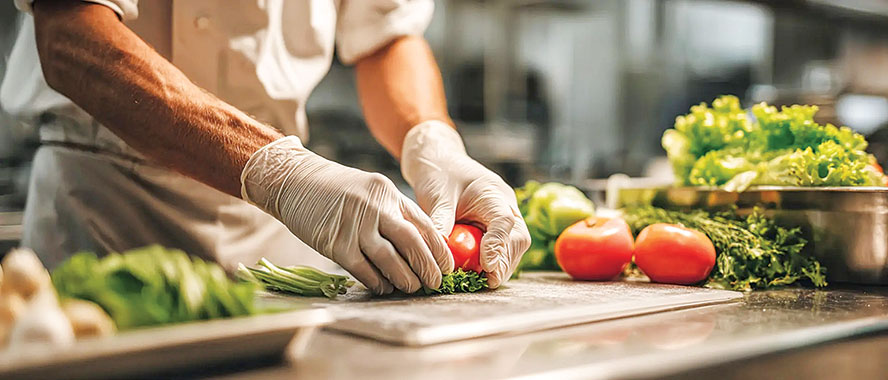
From Burden to Solutions:
Every year on 07 June, the world pauses to reflect on a truth that is at once mundane and profound: the food on our plate should not make us sick. This year, the World Health Organization and the Food and Agriculture Organization of the United Nations have chosen a theme that is both a diagnosis and a directive “From burden to solutions – safe food everywhere.”
The framing is deliberate. For too long, conversations about food safety have been dominated by the language of loss counting the sick, tallying the dead, lamenting the economic damage. The 2026 theme demands that we harness that data not as an epitaph, but as a map that guides us toward targeted, evidence-based action.
Globally, foodborne diseases cause illness in at least 600 million people and claim an estimated 420,000 lives every year. These are not abstractions. They are children who did not return to school, breadwinners who could not return to work, and farmers whose produce never reached a market.
For Sri Lanka, the stakes are deeply personal. As a food scientist who has spent over a decade studying, teaching, and working across our food systems from university laboratories and hotel kitchens to dairy processing plants and international sporting events, I have witnessed both the fragility and the resilience of food safety in this country.
The burden is real. Foodborne infections from Campylobacter, Escherichia coli, Vibrio cholerae, and Hepatitis A continue to be recorded by the Epidemiology Unit. Pesticide residues in vegetables, aflatoxin in stored grains, and heavy metal contamination in seafood present chronic, low-visibility risks that rarely make headlines but accumulate silently in our bodies and in our healthcare bills. The unchecked proliferation of informal food establishments has widened the exposure surface significantly.
Sri Lanka’s food safety architecture rests primarily on the Food Act No. 26 of 1980. A legislation conceived in an era that could not have anticipated the complexity of today’s supply chains, the growth of modern retail, or the risks posed by climate-driven changes in microbial ecology. While amendments in 1991 and 2011 have partially modernised the framework, the foundational challenge of fragmented, multi-ministerial oversight remains unresolved. No single authority commands the end-to-end food chain from farm to fork.
The consequences are visible. Sri Lanka has repeatedly seen food export consignments rejected at international borders due to non-compliance with safety standards. A reputational and economic wound that strikes our tea, spices, fish, and fruit sectors. These rejections are not merely trade disputes; they are data points, signalling systemic gaps in Good Agricultural Practices, cold chain infrastructure, and laboratory testing capacity. The 2026 World Food Safety Day theme is therefore a clarion call to Sri Lanka’s policymakers, industry leaders, academics, and consumers alike. We have data. We have science. What we need is the collective will to act.
The solution begins with data.
The WHO’s landmark 2026 release of national-level foodborne disease burden estimates the first of their kind, covering the period 2000–2021 provides an unprecedented opportunity. For the first time, Sri Lanka will have access to country-specific data on the incidence, mortality, and disability-adjusted life years attributable to specific foodborne hazards. This is not merely an academic resource; it is a policy instrument. Ministries of Health, Agriculture, and Industries must treat it as such, using it to identify where risk is highest, which population groups are most vulnerable, and which interventions deliver the greatest return on public health investment.
Having served as a Food Safety Officer/Trainer and Trainer at the FIFA 2022 World Cup in Qatar, I observed first-hand how a structured, data-driven approach to food safety management grounded in HACCP principles and supported by rigorous real-time monitoring can successfully feed tens of thousands of people across dozens of venues without a single outbreak. The lesson for Sri Lanka is not that we must import foreign systems wholesale, but that the underlying principles of evidence, accountability, and prevention translate universally.
Education is the second pillar of transformation.
In my years of teaching food safety to university students, hotel management students, tourism professionals, and food industry workers, the most consistent finding is that unsafe food practices are rarely born of malice. They arise from ignorance of microbial growth temperatures, of cross-contamination pathways, of the invisible consequences of inadequate handwashing. Behaviour change at scale requires education that begins early. We must embed food safety literacy into our school curricula, not as an elective topic in home economics, but as a fundamental life skill taught alongside reading and arithmetic. Food safety must be as instinctive as looking before crossing a road. Industry bears its own responsibility. Food business operators from the multinational processor to the neighbourhood bakery must understand that food safety is not a compliance cost to be minimised. It is a brand asset, an ethical obligation, and ultimately, a business survival strategy. The investment in quality management systems, whether ISO 22000, FSSC 22000, or the foundational GMP and GHP frameworks, pays returns in consumer trust, export market access, and reduced liability. Safe food is not a luxury reserved for export markets or five-star hotels. It is a right that belongs equally to a schoolchild buying a kottu roti from a street cart and a tourist dining in a star hotel. The 2026 theme reminds us that the burden is well-documented. The solutions exist. The only thing left is the resolve to implement them everywhere, for everyone.
PRIORITY ACTIONS FOR SRI LANKA
= Enact a unified Food Safety Authority consolidating fragmented regulatory mandates under a single body
= Establish mandatory HACCP certification for food businesses beyond the large-scale sector
= Invest in regional food testing laboratories with accredited capacity (ISO/IEC 17025)
= Integrate food safety education into the national school curriculum from primary level
= Strengthen cold chain infrastructure, particularly for seafood and fresh produce destined for export
= Adopt the WHO 2026 national burden data to prioritise health spending on highest-risk hazards
= Empower Public Health Inspectors with digital reporting tools and updated training mandates

I must first thank Gayantha Dehiwatte for inviting me this afternoon to the launch of his book, The Path of Freedom: Dismantling the Imperialist Debt Trap. The title itself suggests that Sri Lanka has yet to achieve genuine independence, particularly in the sphere of economic decision-making. In recent years, most economic decisions of major importance appear to have emanated from Washington. During the initial phase, these decisions reached Colombo in the form of International Monetary Fund- World bank conditionalities. In more recent years, however, many of these policies have been designed locally by the economists and bureaucrats in the Treasury and the Central Bank of Sri Lanka who are trained in western academic institutions. As a result, local and international experts have worked in synergy united by their adherence to what may be called the TINA (There Is No Alternative) doctrine.
According to Dehiwatte, ‘the current economic structure in Sri Lanka is guided by the principles of neo-liberal free-market economics. This economic theory has been steering the course of Sri Lankan economy since 1978’ (page iii). It was consistently claimed that the policy package introduced in 1978 would generate higher rates of growth, lower unemployment, poverty alleviation, reduced dependency and inequality transforming Sri Lanka into the Singapore or South Korea of the Indian ocean region.
In this talk, I would focus on three main points. My first thesis is that Sri Lanka is now facing a simultaneous presence of three crises namely, the structural, conjunctural and contingent crises, as a direct consequence of the neo-liberal economic policies introduced in 1977. Second, the decision to invite the IMF to play a central role in managing the 2022 debt crisis was a serious mistake. Third, although the de-dollarisation is an essential step towards resolving the crisis it is not by itself sufficient to transform the existing global economic architecture.
The performance of the Sri Lankan economy over the last 48 years (1978- 2026) does not support the contention that the adoption of neo-liberal economic policies as outlined in Washington Consensus would pave the way for sustained economic growth and development. Compared to the period from 1950- 77 period, there has been no significant improvement in either the rate of economic growth or in the level of employment. Dehiwatte reports: ‘As of 2024, approximately one-third of Sri Lankan population -around 7 million people – are living below the poverty line, with about 2.3 million children suffering from hunger due to inadequate access of food. That is, exactly half of the children are going hungry. The total number of families in Sri Lanka is about 5.7 million, of which 3.7 million seeking assistance to survive’ (p. 18). data on consumption patterns strongly corroborate these findings. The top 1% of the population accounts for 22% of GDP whereas the bottom 50% accounts for only about 14%. The crisis Sri Lanka has experienced over the last 48 years is an all-embracing structural crisis, the resolution of which requires far-reaching changes to the existing economic structure. Following Istvan Meszaros, four characteristics of the present crisis may be identified:
(1) It is not confined to a particular sector of the economy;
(2) It is global in scope, being closely linked to the process of globalization;
(3) Its temporal scale is continuous rather than limited and cyclical, making it difficult to identify a clear beginning or point;
(4) Its mode of unfolding is gradual and creeping rather than in contrast to sudden and explosive. (Beyond Capital. pp. 680- 81).
The structural crisis is the product of a conjunction of three interrelated developments: the absence of an independent macroeconomic policy framework, the nature of the bourgeoisie, and the nature of the state and its relationship to different social classes. Given the limited time available, I will not attempt a detailed analysis of these three dimensions. Nonetheless, two observations deserve emphasis. First, the average annual growth rate during the last 48 years has not been significantly higher than that achieved during the preceding period of the so-called dirigisme regime. Second, although Sri Lanka experienced two periods of relatively rapid growth (1978- 1982 and 2010- 2915), it failed to sustain the momentum generated during these periods. Consequently, these episodes were ultimately reduced to little more than infra-structure driven bubbles.
Cyclical fluctuations within a prolonged structural crisis are not uncommon in market economies. Sri Lanka is no exception. During the public debate surrounding the 2022 economic crisis, it was frequently argued that the crisis began in 2019 because of misguided economic policies. However, as data demonstrates, the current conjunctural crisis began not in 2019 but in 2016. The recession that started in 2016 culminated in negative growth in 2020. A modest recovery in 2021 was followed by a negative growth both in 2022 and 2023. The economy returned to a limited recovery in 2024, but by 2026 that recovery appears to have lost momentum. If one plots annual growth rates between 2026- 2026 a W-shaped cycle emerges, with its lowest point in 2022. The debt crisis in 2022 should therefore be viewed not as an isolated event, but as the trough of the 2016- 2025 cycle. Of course, the acceleration of the crisis in 2022 was triggered by excessive borrowing in the global capital market through ISDs (International Sovereign Bonds). Prof Prabath Patnaik depicts this specific phenomenon as a contingent crisis: a crisis that appears manageable until a sudden financial crunch exposes underlying vulnerabilities. The IMF’s own projection that annual growth will remain around 3 per cent in 1926 together with its assessment that debt sustainability remains fragile, suggests that Sri Lanka is once again approaching a tipping point.
Confronted with these three interrelated crises, the neoclassical economists, CBSL and Treasury officials and politicians representing bourgeoisie parties argued that seeking IMF support was the only available solution. According to this view, it was imperative to accept a comprehensive IMF program at any cost. The irony is that these same actors have failed to acknowledge that Sri Lanka has been operating under the IMF program for seven out of ten years under consideration. (2017- 2020 and 2022- 2026). A second group adopted a more critical position. While accepting the need for IMF engagement, they argued for greater local input, theoretical as well as practical, into the program and advocated modifications and incorporation of selected elements of the augmented-Washington consensus. Both groups, however justified IMF intervention on the grounds that the IMF is an international institution of which Sri Lanka is a member and that the country therefore has a legitimate right to seek assistance during a foreign exchange crisis.
This argument suffers from three fundamental defects. First, it overlooks that the IMF and the IBRD established in 1945 are very different institutions from those that emerged during the mid-1970s. The original purpose of the IMF and IBRD was to assist war-ravaged countries in Western Europe and Japan facing balance of payment difficulties and reconstruction needs. By the 1970s these tasks had largely been completed rendering the original mandate of the institutions increasingly redundant Following the quadrupling of oil prices and the accumulation of petro-dollars in the US banks, the IMF effectively assigned itself a new role: that of managing the interests international finance capital during the neo-liberalist phase of the capitalist development. Its primary responsibility thus shifted away from member states and towards the preservation and upholding of the interests of the global capital market and its institutions. (For a detailed discussion, see : Unholy Trinity: the IMF, World Bank and WTO by Richard Peet) 2003.
Second, the dominant approach is based on the presupposition that there is no alternative. Consequently. The magnitude of the crisis was exaggerated in order to ensure Sri Lanka’s continued integration into the global financial system and therefore its continued entrapment with a cycle of indebtedness. Third, the argument rests on a fundamental misunderstanding of the IMF’s mode of crisis management. When dealing with a crisis ridden country, the IMF typically intensifies the crisis by imposing deflationary policies designed to restore creditor confidence.
The Sri Lankan experience illustrates this pattern clearly. Although the economy achieved a modest but positive rate of growth in 2021, growth contracted sharply in 2022 and 2023 following the implementation of IMF-backed policies. Once an economy reaches the trough of the cycle, its internal dynamics tend to generate some degree of recovery because aggregate demand rarely falls to zero. Consequently, the stability achieved since 2024 should be understood as a low-level stability -an outcome of economic contraction and adjustment rather than genuine transformation.
Let me turn to my third thesis that Dehiwatte had raised in his proposal for de-dollarization. The book appears to suggest that de-dollarization is imperative if the imperialist debt trap is to be dismantled. In a different historical context, some French economists argued that replacing the franc with a currency based on labour value would provide a solution to balance-of-payments crises. Commenting on this view, Marx observed:
“In order to balance the decrease of domestic production by means of imports on the one side and the increase of industrial undertakings abroad on the other side, what would have been required were not symbols of circulation which facilitate the exchange of equivalents but the equivalents themselves, not money but capital” (Grundrisse, p. 121).
However, the context to which Gayantha Dehiwatte refers is substantially different. In 1944–45, when the advanced capitalist countries debated the design of the post-Second World War international financial architecture, they arrived at a consensus that it should be centred on the U.S. dollar. The principal reason for this decision was the overwhelming dominance and productive superiority of the U.S. economy.
By the early 1970s, however, this superiority had begun to erode. Nevertheless, as Costas Lapavitsas has argued, “dollar dominance persisted and deepened through structural dependence as global trade, finance and reserves remained locked into dollar circuits, sustained by military power and institutional inertia despite the declining share of the United States in the world economy.”
It is in this context that Gayantha Dehiwatte’s argument acquires its significance. For him, de-dollarization does not simply mean replacing the dollar with another international currency. Rather, it entails transforming the structures of power that underpin dollar hegemony and reproducing a global order based on dependence and financial subordination. In this sense, de-dollarization is not merely a monetary reform but part of a broader project of restructuring the international order itself.
Ultimately, the argument points toward the possibility of imagining a new world order founded on the principles of democracy, equality, and ecological sustainability.
The writer is a retired teacher at the University of Peradeniya
Email: sumane_l@yahoo.com
Revieved by Sumanasiri Liyanage
(Text of a recent speech.)

To say that the developing new world order is history in the making may not be an exaggeration, because the economic, military and hegemonic landscape of the world may be undergoing radical realignment in these troubled times. Multipolarity and the emergence of the Global South’s economic and political clout may be the defining features of the new world order. There may be several evidential happenings around the world that give credence to the above observation. For instance, at the 61st Munich Security Conference, held in 2025, multipolarity was accepted as a historical inevitability and a reality. The Munich Security Report 2025, themed “Multi-polarization,” explicitly states that the world already lives in a multipolar order. The Munich Security Council, traditionally dominated by Europe and the US, saw 30 percent of its speakers, this time, representing the Global South, a testament to the world’s multipolar trajectory
The Munich Security Report 2025 highlights that BRICS nations contribute to approximately 40 percent of global trade, as well as crude oil production and exports. Further, according to the International Monetary Fund, the GDP of emerging markets and developing economies accounted for 58.9 percent of the global economy in 2023.
Countries in the Global South are asserting greater independence in global affairs. They have actively promoted greater democracy in international relations through platforms such as BRICS and the Shanghai Cooperation Organisation, injecting vital momentum into the world multi polarisation process.
Another clear indicator of this reality is the way the US failed to impose its will in the affairs of the Middle East. Significantly, it could not achieve its objectives in the war against Iran and, furthermore, its European allies refused to join, saying that it was not their war. The fact that the war, which the US and Israel expected to be a quick “strike and take over,” has ended up in a stalemate, with Iran holding all the cards, according to Prof Jeffrey Sachs, points to the changing balance of power in the world. Obviously, Iran was able to enhance its military capability due to the significant development of the multiple military power blocs.
In this regard it is interesting to see that most of the countries in Asia, Africa and Latin America, which have suffered due to western hegemony and economic exploitation, tariffs and sanctions and dollar weaponisation, are beginning to make moves towards realigning their relationship with world powers. Several African nations, Egypt, Ethiopia, Algeria, Kenya, Tanzania, are actively realigning toward the Global South, shifting away from Western-aligned partnerships to pursue multipolarity, resource sovereignty, and new economic ties with powers like China, Russia, and India.
In Asia, too, the trend is apparent; Malaysia has adopted an explicit Global South policy, focusing on outreach to the Middle East, Africa, and Latin America, as well as deepening ASEAN institutional ties. Indonesia focuses on inclusive multilateralism and critical balancing in global governance, ensuring the developing world’s economic needs are prioritised. Iran, Saudi Arabia, and the United Arab Emirates joined BRICS in 2023, reflecting a strategic shift to diversify their diplomatic and economic alliances away from purely Western orbits. There are several other countries that are emerging as economically independent and diplomatically articulative states, like Nigeria, Turkiye, and Mexico.
What is the position of Sri Lanka in this rapidly changing world order? Are we going to be left behind? Why aren’t there any signs that Sri Lanka is projecting itself as a willing partner of this journey in the South? Why isn’t it attempting to break away from the neo-liberal grip that keeps it in poverty and turn to the South? Are there any tangible economic, political or geopolitically strategic projections, reaching out to the Global South, that Sri Lanka has launched, at present, like so many other countries are doing? Even when opportunities knock on its door, Sri Lanka doesn’t seem to be interested. A case in point is the BRICS meeting in 2024, held in Russia. Though Sri Lanka was invited, none of its state leaders attended the meeting, resulting in the loss of an opportunity to establish vital economic, political and cultural links and bonds with Global South countries.
What is restraining Sri Lanka? Is it its present economic vulnerabilities and dependence on the West? It is the Global North that controls the Sri Lankan economy at present. We are tied to the IMF and controlled by their conditions and the IMF is under the thumb of the West. Further 60 percent of our exports go to the Global North. It seems likely that our export oriented, debt-burdened economy cannot afford to turn towards the Global South because of our utter dependence on the West. We saw that there was no hesitation to slap tariffs on us though we show the least tendency to disobey. One could imagine what could happen if we turn southwards, even a little bit. This is the reason why Sri Lanka would dare not change direction the slightest.
Countries that turn southwards do so to escape from the hegemony, exploitation and coercive power of the West. Isn’t there a way out for Sri Lanka to get out of this vicious global economic system and become economically independent? We were bankrupt in 2022 and people rose up against the system and wanted a change. The present government rode that tide and came to power promising a change. But there was no change and not even an attempt to change. What needed a change was the economy in the main, which would be meaningless unless a break from the fetters of neo-liberalism was the aim. What did not change was exactly that, though there were attempts to change other less vital areas, such as going after the corrupt in the Opposition.
It must be said that the government had an excellent opportunity to correct decades long mistakes. The people were asking for a change which means they were prepared to participate and support the government if it wanted to go for that change. An attempt should have been made to gradually change the export-import-debt based economy and lessen the dependence on the Global North and its economic system. A turn towards the Global South would have facilitated the desired change. The government was left-oriented, or so they said. But it appeared to be helpless to break away from the neo-liberal shackles, leave alone negotiating a better deal with the IMF.
True, we are not strong enough to go for such radical change but we could have made ourselves strong by achieving self-sufficiency, the only way to become economically independent. Such a move, no doubt, would initially result in hardship for the people, but eventually the country would come out of its poverty. Now they are condemned to eternal privation.
The government’s plan, if it wanted to go for the change, they promised, should have been to first launch a comprehensive programme to achieve self-sufficiency in our essential needs like food, cloth, medicine and green energy. The other critical move that Sri Lanka should have made was to join the Global South in its march towards a new world order. Such a strategy would have helped us to achieve a stronger and independent economy.
An important outcome of adopting such a policy would be that our economy would not be vulnerable to external shocks such as tariffs, drop in tourism, turmoil in the Middle East that disrupts fuel supply and migrant-remittances, and external trade vagaries. Further, when we are not dependent on our essentials, nobody would be able to dictate to us or interfere in our internal affairs.
Another important factor in Sri Lanka’s favour is its strategic position in the Indian Ocean and the fact that due to this everybody needs it. India would like to have a firm grip on it, so does the US. China has invested heavily in it due to this reason. However, Sri Lanka, at present, is not strong enough to leverage this geographical strategic situation to its advantage because of its highly dependent and vulnerable status. As a consequence of this strategic situation could be exploited by powerful countries as is now happening.
What Sri Lanka could do in this regard is to develop its airports and harbours as a transit trade hub by leveraging its strategic geographical position in the Indian Ocean to serve as a central stopping point where cargo, vehicles, and raw materials are consolidated, temporarily stored, or re-exported, primarily connecting East Asia, the Middle East, Africa and the Indian subcontinent. This would facilitate trade among the Global South countries and enhance Sri Lanka’s role and image in the new world order. At present Sri Lanka’s true potential in this business has not been realised due to its vulnerabilities, but if it chooses to take the path outlined above it could succeed. For this to happen Global South assistance is vital. There is no choice for Sri Lanka but to grab this moment of history and join the journey towards the new world order before we are left behind.
by N. A. de S. Amaratunga

USS Canberra makes port call in Colombo

Complete the Proposed Education Reform Policy Framework Within One Month – President

Committee appointed for restructuring SriLankan Airlines

Kane Williamson retires from international cricket

Jailed South Korea ex-president gets 30 more years for sending drones into North

Holder, Joseph set up victory as West Indies go 1-0 up against Sri Lanka

‘Dates have the highest sugar content to fight Coronavirus’

Sunday Island 27 December – Headlines

#SundayIsland 17th December – Headlines

Sunday Island – 28th March

Sunday Island Headlines – 21 March

Sunday Island – 21st February – Headlines
-

 News6 days ago
Women’s T20 World Cup 2026 warm-up: Chamari Athapaththu’s 94 helps Sri Lanka beat Pakistan
-

 News6 days ago
Lankan-Canadian inducted to Toronto Sports Hall of Fame
-

 News7 days ago
Asst. Manager, security officer arrested over Rs 30 mn snatch at Horana PB branch
-

 Editorial5 days ago
Probe Sallay’s complaint
-
 News3 days ago
Local firms move millions of dollars overseas for phantom imports: Govt.
-

 Editorial6 days ago
Prez in the dock
-

 Features6 days ago
Entering MIT for my Ph.D program, coping with harsh Boston winter and breasting the tape
-
 News7 days ago
No blanket ban on musical performances; only those promoting LTTE