
Opinion
Dhammam Saranam


It may hurt our pride, but we must admit that our Buddhist education has failed. It adheres to the tradition of memorizing, especially post canonical poetry and commentaries while discouraging critical thinking. The current sorry state of social institutions is living evidence of that failure. Solutions to chronic problems of this nature will take time to bear results, but there is no better time to act than now. We must teach the future generations, using terms they understand, that Dhamma is a way to see the reality of nature and our place in it, and knowing it with wisdom will allow us to live a happy and successful life here and now. We must stress the fact, and be proud of it, that Dhamma is not only compatible with science, but it is also ahead of our times, a unique feature. Future generations of Sangha must be trained to critically evaluate the utility of prevailing practices that Buddha had rejected. Understanding Dhamma does not have to wait for the arrival of a Buddha who is not even mentioned in the Pali Canon. Let us teach future generations, in their language, that Dhammam Saranam means is to ‘Face life armed with the wisdom of Dhamma, free of baseless beliefs and futile rituals.’
(The first part of this article appeared yesterday)
A third characteristic derived from this first principle has to do with human knowledge, or the way they know about their world. Dhamma describes the cognitive process, or the way humans become aware of their world, using the formula referred to as the Five Aggregates (Pancakkhanda). Dhamma ascribes knowledge to what is acquired through the sense organs consisting of eye, ear, nose, tongue, and the body, and deliberations by mind, which is the sixth sense faculty. The stimuli received by the sense organs (Vedana) are received by the brain in the form of electrochemical signals (Sanna), where that data is interpreted and assembled into mental formations (Sankhara).
The brain is isolated from the outside world and relies solely on the information sent by the sense organs to construct an image of the object or phenomenon that caused the stimulus. There is a major shortcoming in this process. That is, there is no way humans can know how accurately the mind interprets the information in constructing mental images. Humans think they see, hear, taste, smell and feel things, but they only become aware of things. Awareness and reality are not the same, and we have no way of knowing how close the former represents the latter. Furthermore, the sense organs, brain, and its activities, as well as all phenomena the sense organs encounter are in flux. Human sense organs have not evolved to see reality, yet we become aware of our world through this process and get attached to them. Dhamma describes this process, the Five Aggregates, as the human condition, or Dukkha in Pali (Sankittena pancupadanakkhanda dukkha).
These limitations of the human cognitive system that the Buddha described two and half millennia ago, have been confirmed by modern science. Dhamma describes this as a state of ignorance (Avijja). That means humans have no way of knowing how closely the mental construct of their world represents reality. This is a subject of quantum physics as well. Einstein described this condition as an illusion, and he said that the purpose of any religion should be to help humans overcome this condition. That is exactly what Dhamma is about: it considers life, the condition in which humans must deal with things that are in flux and beyond control, while not knowing reality is unsatisfactory. It describes this condition as Dukkha. That does not mean life is misery; there is nothing good or bad about life, life is what it is.
Dhamma does not stop there, it also explains the arising (Samudaya), cessation (Nirodha), and the way to cessation (Magga) of this condition. Teaching describes the cause and condition for human condition as ignorance, and the way to eliminate it is to develop the mind to be able to see things as they really are (yathabutha nanadassana). To know that without doubt, one must experience it, know it without names and labels; and the way to accomplish it is described in the Noble Eight-fold Path, also known as the Middle Path (Majjima Patipada).
In essence, Dhamma can be described as nature, truth, law, and the way things are. That is, the purpose of Dhamma is to see the reality of nature and human’s place in it. There is no mysticism or beliefs involved. What is the significance of understanding the position of humans in nature? The one who knows the way will not go astray!
Since everything is in flux, everything is interconnected. As such, human life depends on everything else in nature, and humans must take that into account in all their actions, talking, and even thinking. The science behind how thinking matters is another fascinating aspect to explore. This is where the Buddhist ethics come into play. Buddhist ethics are not decrees of a superpower, they are a set of guidance or conventions that are in harmony with nature’s way. They allow humans to live a happy, harmonious, and prosperous life here and now and make the planet a safe place for all beings. Look at our country; it is disregarding the ethical behavior that has caused the failure of socio-economic institutions of the country.
Now, we can turn to the second part of the question, what is the meaning of Saranam? Even though it is implied in the goal of Dhamma, it must be clarified whether this constitutes an appeal to an authority to bestow its blessings upon those in need, or if it represents a directive. The Pali-English dictionary translates Saranam as Refuge, Protection, Salvation, and Nirvana. A Pali-Sanskrit scholar who analyses the etymology of the word Saranam explains it as to mean defence, shield, not running away from, and providing protection in a fight (Whelan 2022). This explanation gives a sense of active participation or being the agent of the action instead of being the passive beneficiary of a power, as opposed to what is conveyed by dictionary translations.
Dhammam Saranam Gacchami does not mean passively waiting for some blessing to be bestowed upon us. To reap the benefits of Dhamma, one must understand it and live accordingly. Memorising it or listening to recitations in a now extinct language does not serve the purpose. There is no mystery or higher powers involved. Therefore, this phrase can be interpreted as ‘I face the human condition armed with the wisdom of Dhamma.’
A brief investigation of the reasons for the failure of Buddhist education is warranted here. When the Sangha prioritised learning and memorisation of Dhamma over practice, they did the right thing: Dhamma is preserved and safe. Unfortunately, to fill the void created by lack of interpretation and practice, our ancestors have adopted beliefs, practices, and rituals from other cultures that exist on the island, and it is those complex set of practices developed over centuries that the Westerners labeled as Buddhism. Most alarmingly, the process of adding new rituals continues to date.
Theravada is one tradition, or a school, among thirteen or so existing such traditions. To Sri Lankans, it is of paramount importance; not only that it has become an integral part of our large culture, but it is also the system that ensured the perpetuation of Dhamma and made it available to the world. However, we must have the wisdom and courage to see that the Dhamma and Buddhism are two different things, for Dhamma has no ‘ism’ in it. We must appreciate the origin and purpose of those practices and continue to protect and preserve those that have practical utility but critically evaluate and reject those that are utterly meaningless. The time has come to use the treasure that generations sacrificed blood and sweat to protect, and that is the best way to preserve it.
The Buddha recognised that the goals of the monastics and the laity are different, and he provided different sets of guidance accordingly. Monastics, free of household impediments, strive to reach the highest goal of Dhamma, whereas the laity must endeavor for a happy and prosperous life while fulfilling their responsibilities to the family, society, and Sasana at the same time. Since it has been the monastics who had been the purveyors of Dhamma, those aspects relevant to laity and their life here and now have been overlooked. The entire focus has shifted to the wellbeing in the hereafter at the expense of life here and now. The socio-economic breakdown we struggle with is a direct result of this misguided belief. This is not what the Buddha had advised; his teaching has utility whether one believes in continuity (samsara) or not (Kalama sutta). If we live an ethical and moral life, the benefits will result here and now as well as here after. Sadly, misguided, we have ruined both.
The other reason is giving priority to “the higher doctrine” or Buddhist philosophy in attempts to understand Dhamma. This led modern scholars to analyse Buddhist philosophy from the perspective of Western philosophy in hopes of discovering its empiricism (Tilakaratne 2021). Efforts in this direction have produced great scholarly work that allows the students of higher studies to analyse Dhamma, but they do not help the laypeople to bridge the gap in education. Instead of exegesis, we must rely on Buddha’s teaching itself.
Finally, the language is a major obstacle. We must not overlook the fact that the language and the style of the Pali Canon were meant for the iron age society. The scholarship is valuable only if it results in new thinking or interpretations, but that does not appear to be happening in recent times. We must recognise the value of the language of science as an invaluable tool in this respect. It may not work for all ages, but that is the way to get the message across to technology savvy future generations. What other better way to teach complex concepts like pancakkhanda, the human cognitive process than using science? Once they see the practicality of this approach, the students will embrace their proud heritage for being ahead of time and will turn into explore more complex concepts such as rebecoming (punabbhava) and continuity (samsara), which also can be explained based on scientific observations.
It may hurt our pride, but we must admit that our Buddhist education has failed. It adheres to the tradition of memorizing, especially post canonical poetry and commentaries while discouraging critical thinking. The current sorry state of social institutions is living evidence of that failure. Solutions to chronic problems of this nature will take time to bear results, but there is no better time to act than now. We must teach the future generations, using terms they understand, that Dhamma is a way to see the reality of nature and our place in it, and knowing it with wisdom will allow us to live a happy and successful life here and now. We must stress the fact, and be proud of it, that Dhamma is not only compatible with science, but it is also ahead of our times, a unique feature. Future generations of Sangha must be trained to critically evaluate the utility of prevailing practices that Buddha had rejected. Understanding Dhamma does not have to wait for the arrival of a Buddha who is not even mentioned in the Pali Canon. Let us teach future generations, in their language, that Dhammam Saranam means is to ‘Face life armed with the wisdom of Dhamma, free of baseless beliefs and futile rituals.’
(Concluded)
by Geewananda Gunawardana, Ph.D.


I was struck by the article written by MDD Pieris in The Sunday Island, under the title, “Free school uniform decision taken in minutes on a platform in Bakamuna” by President Premadasa. I am penning this piece as a tribute to this remarkable visionary in social development and grassroots economic policy, who was tragically assassinated by an LTTE suicide bomber in Colombo exactly 33 years ago.
The term of Sri Lanka’s first Executive President, J. R. Jayewardene (JRJ), was ending in 1989. As the constitution required, JRJ decided to call a presidential election. After some uncertainty within the United National Party (UNP) about who should be the next candidate, then-Party Chairman Ranjan Wijeratne and JRJ’s security advisor Ravi Jayewardene (JRJ’s only son) thought the best candidate was Prime Minister Ranasinghe Premadasa. They realised that the country was moving from elite-centred, Colombo-focused politics toward a more populist, grassroots and security-dominated phase.
They advised the President JRJ and party stalwarts accordingly.
At a UNP Parliamentary Group and Working Committee meeting, J. R. Jayewardene proposed Premadasa’s name. To maintain party unity and avoid an internal contest, he also arranged for Premadasa’s main political rivals from the UNP, Lalith Athulathmudali and Gamini Dissanayake, to second the nomination. This move made Premadasa the unanimous party choice.
Premadasa played a key role in the UNP’s landslide victory in the 1977 parliamentary election, boosting its grassroots membership through his “Man of the Masses” image. He was then appointed deputy leader of the party.
The second Presidential Election took place on December 19, 1988, amid severe unrest. The Janatha Vimukthi Peramuna (JVP) called for a boycott and staged a violent protest in the south.
Despite a low voter turnout and violence, the election went ahead, and Premadasa won a clear majority of valid votes, defeating main opposition candidate Sirimavo Bandaranaike from the SLFP. Ranasinghe Premadasa was sworn in on January 2, 1989, as Sri Lanka’s second executive president.
Premadasa was a strong nationalist who campaigned for the withdrawal of the Indian Peace Keeping Force (IPKF), whose presence was unpopular among the Sinhalese majority. He saw the Liberation Tigers of Tamil Eelam (LTTE), actively fighting the IPKF, as a potential ally in this effort.
His predecessor JRJ did argue that the Tamil issue was a very ancient problem and therefore external mediation might be necessary, which partly explains why he accepted Indian involvement leading to the 1987 accord.
In a pointed critique of India, Premadasa believed that the ethnic conflict could be resolved internally without foreign intervention.
He invited the LTTE and the JVP for talks as part of a strategy to end the prevailing dual insurrections, bring the groups into the democratic process, and secure the withdrawal of the IPKF from Sri Lanka. The LTTE accepted the offer and sent a delegation to Colombo for talks.
The LTTE delegation was transported by helicopter from the Mullaitivu jungles to Colombo. Premadasa arranged for LTTE ideologue Anton Balasingham and his wife, Adele, to fly to Colombo from London via Air Lanka at government expense. The LTTE team was provided with tight security managed by the Special Task Force (STF). During their stay in Colombo, LTTE cadres were permitted to retain their personal weapons as part of the security arrangements.
During the Premadasa–LTTE talks, the LTTE visited the homes of key traditional Tamil democratic leaders, such as A. Amirthalingam and V. Yogeswaran, for discussion and assassinated them, effectively destroying moderate Tamil parliamentary politics.
Both the JVP and Premadasa were opposed to the Indo-Lanka Accord and the IPKF presence, which provided a shared point of interest. He called an All Party Conference (APC) to resolve the problem through dialogue. JVP, however, refused to attend this conference. He then launched a brutal crackdown on the JVP using extreme counter-insurgency methods under the direct supervision of State Minister for Defence General Ranjan Wijeratne.
A period remembered for severe human-rights abuses and some opposition members even took the matter to the UN Commission on Human Rights. The crackdown ended with JVP leader Rohana Wijeweera being killed.
At the request of the President Premadasa, India withdrew the IPKF between September 1989 and March 1990.
Rural Unemployment and 200 Garment Factory Programme
Premadasa was from a humble, urban, working-class background, rose through grassroots politics in Colombo and had a better understanding of the grievances and aspirations of people of rural areas compared to JRJ. He knew the main problem was the unemployment of rural youth. He also knew that developing agriculture alone would not help solve this problem. He therefore decided to take industries to rural areas and embarked on the famous 200 garment factory programme.
He logically explained what his objective was when a prominent university professor of the time asked him what he was aiming to achieve through the programme.
He said one of the main problems Sri Lanka faced was rural unemployment, especially among the youth. Unless this issue was addressed, there would be no meaningful development in the country, as these youths would become pawns of political activists.
He identified unemployment as the root cause of political violence. Therefore, he wanted industrialisation to reach rural areas.
But he said there are obstacles. Sri Lanka, being an agriculture-based country, has most people not used to “industrial discipline.” It had been largely an Agricultural, Public-sector oriented and Plantation-based economy and society since colonial era and even after independence. The majority Sinhalese are accustomed to an easy life working in the paddy fields and practing Chena cultivation for thousands of years.
A common feature of the few factories established since Independence, both public and private, was the high absenteeism during the paddy harvesting periods, which left the management in a precarious situation.
Many rural youths had never worked in a factory environment with fixed working hours, meeting production targets, strict quality control and assembly-line work.
Without industrial discipline among the rural folks, no investor would risk his money setting up factories in rural areas. Some rural girls working in the Katunayake FTZ faced significant problems. They face isolation and lack of support, sexual risks and exploitation, language barriers, and more. When they work in a factory close to their homes, most of these issues could be resolved, Premadasa said.
On the other hand, garment manufacturing isn’t too complicated technology-wise. So, it was easy to train mechanics in preventive and break-down maintenance and operators in operational aspects.
He also knew it would help integrate rural areas into the export economy, and into a global value chain (GVC) moving beyond traditional free trade zones like Katunayake and Biyagama.
World Textile and Apparel (T&A) production went through three main phases, mostly based on production costs. First, in the 1970s in Hong Kong, Singapore, the Republic of Korea, and Taiwan, and during 1985-1990, they (Factory owners) reduced production and moved operations to the Philippines, Indonesia, Thailand, and Malaysia. The third phase involved shifting to countries like Bangladesh, Pakistan, Sri Lanka, Laos, Nepal, and Vietnam during the early 1990s. Premadasa aimed to take advantage of this trend.
His target was to create about 100,000 jobs, with factories typically employing at least 500 workers and giving employment opportunities in rural areas. Preference was deliberately given to economically disadvantaged families, helping spread incomes beyond urban centres.
Structural changes initiated to facilitate 200 garment factory programme
The Greater Colombo Economic Commission (GCEC), established in 1978 under JRJ, was originally created to manage Free Trade Zones (FTZs) like Katunayake and attract export-oriented foreign direct investment (FDI) into specific zones.
Premadasa transformed the GCEC into a national-level investment facilitator and renamed it the Board of Investment of Sri Lanka (BOI). It was more of a functional transformation and expansion of the GCEC role. With BOI, he established a centralised decision-making structure to expedite project approvals and reduce bureaucracy.
BOI effectively served as a “one-stop shop”, which was crucial because garment investors required speed and predictability.
President Premadasa Meeting the Potential Investors
\Working out the strategy with his handpicked officials, President Premadasa convened a meeting of potential investors at BMICH. The first meeting played a key role in launching the garment factory programme and demonstrated his hands-on, interventionist approach to economic development.
There were many would-be investors, mainly locals and entrepreneurs from countries like South Korea, Singapore and other Newly Industrialised Countries (NICs).
Premadasa personally addressed attendees and explained his vision of moving investment into rural districts. He said there are tax holidays on offer (the length varies by location, especially for rural/”difficult” areas), duty-free import of machinery and raw materials would be allowed, and guaranteed access to U.S. garment quotas under the Multi-Fibre Arrangement (MFA). The quotas would be allocated based on location: 10,000 dozen for non-difficult areas, 25,000 dozen for difficult areas and 50,000 dozen for the most difficult areas.\
He also said land, electricity, water, roads, and telecommunication would be provided by the state through the Board of Investment (BOI), the government agency responsible for promoting and facilitating investment. On the finance side permission to open foreign currency accounts would be allowed, and access to loans (including foreign currency banking units) would be available.
Premadasa requested investors to set up their factories to employ around 500 workers per factory and prioritise recruitment from low-income rural families. He also requested to provide meals (or subsidised food) to workers. It was however not a formal legal requirement written into BOI agreements.
He also offered duty-free import of a luxury vehicle (e.g., Benz car) after project completion.
Premadasa then concluded the meeting, assuring them that he will meet in a month or so to assess the progress.
At the progress review meeting held at the same venue, Premadasa asked if anyone had problems. About 10% of the attendees raised their hands, and the president asked them to move to the side. Then he said, “I will work with those who don’t have problems,” and asked the others to leave the chamber. This was how Premadasa achieved his goals.
Opening of factories under the programme
Premadasa personally supervised the progress of the programme. All initial problems reported to him by investors through his officials were quickly resolved.
He often had a clock tower built near many factories opened under the “200 Garment Factories Programme.” He believed that factory workers—mostly young people who had previously worked in agriculture or informal jobs—needed to adapt to strict working hours and punctuality. The clock tower served as a visible public timekeeper for workers and the surrounding community and it symbolized the transition from a village lifestyle to an industrial work culture.
Although Sri Lankan youth initially lacked technical skills and industrial discipline, they were able to assimilate into the garment industry relatively quickly because training requirements were short, production systems simplified tasks and strong factory training programs were introduced with the public institutions like Sri Lanka Institute of Textile & Apparel (SLITA). Above all literacy levels among the Sri Lankan youths were high.
This adaptability is one reason why Sri Lanka became a major garment exporter in the 1990s.
He attended numerous factory opening ceremonies from the late 1980s to the early 1990s, especially in less underdeveloped areas like Matale, Polonnaruwa, and Monaragala. Some factories launched under this programme have now grown into large conglomerates with factories in many other countries.
Success of the garment factory programme The 200 Garment Factories Programme played a pivotal role in transforming Sri Lanka into a global hub for apparel manufacturing, while also introducing modern industrial employment to rural districts for the first time.
Today, the garment industry continues to be Sri Lanka’s largest export sector, underscoring the lasting impact of this initiative.
J.R. Jayewardene’s modernisation strategy
It was JRJ who attempted to modernise Sri Lanka after coming to power.
Although JRJ’s government (1977–1989) achieved many successes in modernising the country, leading to economic development and improved living standards through major economic liberalisation and constitutional changes, it also faced numerous failures.
The benefits of the open economy concentrated in urban and Western Province areas. Expansion of the private sector and open economy did not absorb educated youth from rural areas. As a result, there was a huge mismatch between the education system and job market contributing to youth frustration and radicalisation, especially in the south.
Premadasa, after coming to power as Executive President of Sri Lanka, attempted to correct many weaknesses under the previous president, while taking forward the “Modernisation Programme” launched by him. Through “200 Garment Factories Programme” he attempted to take “National Development” to rural areas.
Another area he attempted to rectify was the recruitment process in public employment, which was often based on political patronage and arbitrary appointments made based on party loyalty. He directed that vacancies—particularly for non-technical jobs in the public service and state institutions—be filled through competitive written examinations and interviews, rather than ministerial recommendations.
Unfortunately, Premadasa’s main failure was underestimating the LTTE’s long-term goals. He only sought a political opening with the LTTE, mainly to achieve one objective: the withdrawal of the IPKF. Although he succeeded, the LTTE quickly turned against the government and launched the Second Elam War in June 1990 after attacking police and military targets.
Premadasa was assassinated in an LTTE suicide bomber attack in Colombo exactly 33 years ago.
The LTTE continued its insurgency until its defeat in 2009.
by Rohan Abeygunawardena
abeyrohan@gmail.com)
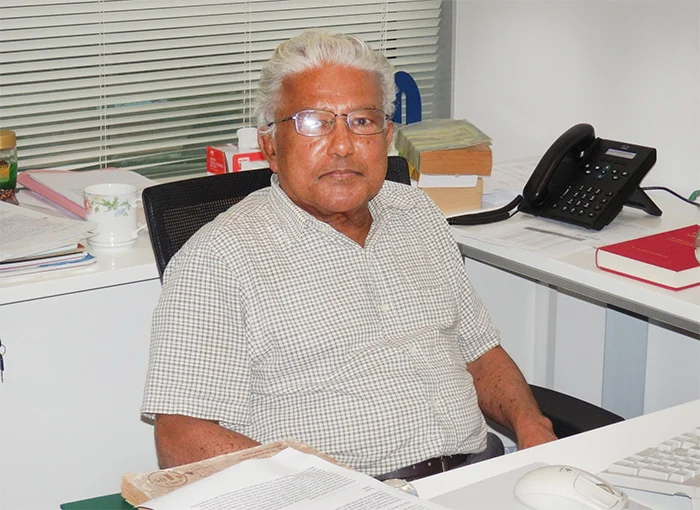
On 27 April 2026, Sri Lanka lost a quiet giant. Professor Y. Karunadasa, one of the world’s foremost scholars of Abhidhamma and Buddhist philosophy, passed away in Colombo. He was 92.
For those who never sat in his classroom, the name might sound distant. But for anyone who has ever wondered what the Buddha really meant by anatta (no‑self) or sabhāva (intrinsic nature), Karunadasa’s work was a lantern in the dark. He did not write to impress other academics. He wrote to make the Dhamma clear.
Born in 1934, he graduated with First Class Honours in Pali from the University of Ceylon in 1958. A decade later, his PhD thesis from the University of London became his landmark book, The Buddhist Analysis of Matter. One reviewer called it “the final word on the subject for many years to come.” He later served as Dean of Arts at the University of Kelaniya and founded its Postgraduate Institute of Pali and Buddhist Studies. The nation honoured him with Sri Lanka Sikhamani in 2005.
Yet his true gift was teaching. He once said he loved students who knew nothing about Buddhism. “It’s more adventurous,” he explained. “For those already exposed, it’s not so fascinating. In a way, it’s easier because they carry no prejudices.” He taught at SOAS, Toronto, Calgary, and Hong Kong, but he always returned to Sri Lanka – because, he said, “the Dhamma lives best where the language of the texts is still spoken.”
What exactly made his scholarship so special? Before Karunadasa, Western, and even some Asian scholars, often dismissed Abhidhamma as dry scholasticism – a medieval invention far from the Buddha’s original words. Karunadasa spent four decades proving otherwise. He showed that Abhidhamma is not a later corruption but a natural extension of the early suttas. His analysis of sabhāva (intrinsic nature) was revolutionary: he demonstrated that the Abhidhamma schools never posited eternal substances, only conditioned, momentary realities. In doing so, he rescued the entire Abhidhamma tradition from the charge of being “proto‑Hindu” or essentialist. Philosophers in London and Chicago began citing him alongside Western phenomenologists. Yet he never lost his Sri Lankan accent or his habit of drinking plain black tea while discussing citta and cetasika.
His most profound contribution was to Abhidhamma, the analytical heart of the Buddha’s teaching. Western scholars often dismissed Abhidhamma as dry scholasticism. Karunadasa showed it was a living philosophy of mind and matter, free from eternalism and nihilism. He argued that the Buddha’s refusal to posit a permanent self was not a mere negation but an invitation to see reality as a process – a stream of conditioned moments, luminous and awake.
What made him rare was his humility. He never claimed to be a meditation master or a saint. He was a reader of texts, a lover of words, a man who believed that truth shines brightest when pointed at, not possessed. “I present what I find,” he said. “Whether one decides to accept it is an individual matter.”
I recall a small story that students often told. Once, a young monk asked him after a lecture, “Venerable Professor, after all this analysis, does the self exist or not?” Karunadasa smiled. “That question,” he said, “is like asking whether the flame in this oil lamp is the same as the flame a moment ago. The Buddha’s answer is neither ‘yes’ nor ‘no’ but ‘it is not proper to say so.’ Learn to live with the question, and you will be freer than any philosopher who claims to have an answer.”
Students remember him not for grand speeches but for small kindnesses – a patient explanation of a Pali compound, a gentle nod when a young scholar stammered through a seminar. He never raised his voice. He never needed to.
The Buddha once said that the Dhamma is like a finger pointing to the moon. Do not stare at the finger, he warned. Professor Karunadasa spent a lifetime perfecting that finger – polishing it, straightening it, making sure it pointed true. We may now look at the moon and remember the hand that showed us where to turn.
May his passing be his final lesson: that even the greatest scholar must one day let go. And in that letting go, become the silence from which all teaching first arose.
May he attain the supreme bliss of Nibbana!
Dedicated to the memory of a teacher who never stopped learning.
K.L. Senarath Dayathilake
Sri Lanka is currently facing a complex set of interrelated economic, social, and governance challenges that cannot be attributed to a single policy failure or institutional weakness. Rather, these challenges reflect deeper structural issues that have evolved over time and now manifest as systemic constraints on economic stability and effective governance.
The key issues at the centre the current debate include fiscal discipline, the role of the Central Bank and the Ministry of Finance, governance challenges, the experience of public administration, and the capacity for effective policy implementation.
This short paper aims to lay the foundation for this discussion by initiating a focused and structured dialogue on these critical issues.
Fiscal Discipline: Current Status and Core Challenges
Fiscal discipline refers to the government’s ability to maintain a balance between its revenue and expenditure. It is a fundamental requirement for macroeconomic stability. However, an assessment of Sri Lanka’s current situation indicates that this balance remains significantly weakened.
Over the past three decades, government revenue as a share of GDP has steadily declined. From approximately 18–20 percent in the 1990s, it fell to nearly 9 percent in the early 2020s. While recent tax reforms have contributed to a gradual recovery, government expenditure has remained persistently high at around 20–25 percent of GDP. This imbalance has resulted in sustained budget deficits and a significant accumulation of public debt.
Within this context, constrained revenue growth and structural weaknesses in expenditure management have emerged as key factors shaping the country’s long-term fiscal outlook.
In 2024, tax revenue increased to 12.4 percent of GDP, up from 9.9 percent in 2023, and is projected to reach 14.8 percent in 2025. While this reflects a positive trend, it remains insufficient to ensure fiscal sustainability.
Expanding the tax base, strengthening tax compliance, and rationalising tax exemptions remain critical priorities. However, these efforts are constrained by structural factors, including the large size of the informal economy, weak income reporting mechanisms, and low levels of formalsation among small and medium-sized enterprises.
In addition, the heavy reliance on indirect taxation represents a structural imbalance. Currently, around 70–75 percent of total tax revenue is derived from indirect taxes, while direct taxes account for only about 25–30 percent. Among these, Value Added Tax (VAT) contributes a disproportionately large share, whereas income and corporate taxes remain relatively limited. Such a structure has implications not only for revenue stability but also for income distribution.
Tax administration continues to face operational challenges, including limited administrative capacity, technological constraints, weak enforcement, and persistent issues of tax evasion and avoidance.
Therefore, despite recent improvements in revenue performance, deeper structural reforms in the tax system are essential—particularly increasing the share of direct taxation and broadening the overall tax base.
The expenditure side presents equally significant challenges. According to the 2025 budget, government expenditure is estimated at around 21.8 percent of GDP, while revenue stands at approximately 15.1 percent. This reflects a substantial and persistent fiscal gap, the closure of which requires difficult and often politically sensitive policy choices, including borrowing, revenue enhancement, or expenditure rationalisation.
A particularly pressing concern is debt servicing. According to the World Bank, nearly half of government revenue between 2024 and 2027 may be absorbed by interest payments. This represents a significant fiscal risk. If a large share of public revenue is allocated to debt servicing, the fiscal space available for education, healthcare, social protection, and productive investment becomes severely constrained.
Public debt management therefore remains highly vulnerable. Although debt restructuring efforts have been undertaken, their long-term success depends critically on sustained fiscal discipline. Without this, debt sustainability risks re-emerging as a major macroeconomic concern.
The financial performance of state-owned enterprises further compounds these challenges. In 2024, 52 major state institutions reported combined losses exceeding LKR 150 billion. Key entities such as the Ceylon Electricity Board, Ceylon Petroleum Corporation, SriLankan Airlines, and the Sri Lanka Transport Board continue to exert pressure on public finances. Notably, in the first half of 2025 alone, the Ceylon Electricity Board recorded a loss of LKR 13.2 billion.
Taken together, the challenge of fiscal discipline is not isolated. It reflects a broader structural imbalance arising from weak revenue performance, ineffective expenditure control, high debt burdens, rising debt servicing obligations, and persistent losses in state-owned enterprises.
Accordingly, addressing these challenges requires more than incremental adjustments. It calls for a comprehensive and sustained restructuring of public financial management to restore long-term fiscal stability.
The Central Bank and the Ministry of Finance: Roles and Performance
Against this fiscal backdrop, the role and effectiveness of key economic institutions become critically important. The Central Bank and the Ministry of Finance are the two principal institutions responsible for macroeconomic management in Sri Lanka. The Central Bank is tasked with maintaining price stability and financial system stability through monetary policy, while the Ministry of Finance is responsible for the design and implementation of fiscal policy.
In recent years, the Central Bank has adopted a tight monetary policy stance to contain inflation. This represents a necessary and positive adjustment. However, a key concern lies in the clarity, consistency, and credibility of policy communication. When markets, investors, and the public do not receive clear and predictable signals regarding the future direction of policy, an uncertain environment emerges. Under such conditions, investment decisions are often delayed, market volatility increases, and overall economic confidence weakens.
With regard to the Ministry of Finance, the central issue is the gap between policy intent and effective implementation. While targets have been set to increase tax revenue, progress in broadening the tax base and strengthening compliance remains limited. This reflects not only technical challenges but also deeper institutional constraints.
Another critical area is the reform of state-owned enterprises. Although policy intentions and reform frameworks have been articulated, implementation has been slow and uneven. This delay imposes an additional burden on fiscal discipline, as continued losses in these institutions ultimately translate into increased public expenditure and fiscal pressure.
At the same time, the International Monetary Fund has emphasised, particularly in the context of the 2026 budget, the need for stronger revenue mobilization, disciplined expenditure management, improved tax compliance, and enhanced public financial management. These recommendations reinforce the urgency of institutional strengthening.
It would be overly simplistic to conclude that these institutions have entirely failed in their mandates. However, it is evident that they have not yet achieved the expected levels of efficiency, coordination, and transparency required under current economic conditions.
A key structural weakness lies in the limited coordination between monetary and fiscal policy. When these two policy domains are not aligned, their outcomes can be mutually undermining. For example, while the Central Bank may pursue tight monetary policy to control inflation, expansionary fiscal policies or excessive government spending can offset these efforts.
Going forward, strengthening institutional effectiveness requires more than clarifying mandates. It demands improved policy coordination, stronger implementation capacity, and more transparent and credible communication. These elements are essential to restoring confidence among markets, investors, and the public.
Governance Challenges and the Experience Gap: Reality and Limits
Beyond institutional performance, governance capacity itself remains a central concern. One of the most prominent criticisms directed at the current administration is the perceived lack of experience in public governance. This concern cannot be entirely dismissed. A governing team with limited experience may face significant challenges in managing the complexity of the state apparatus, fiscal risks, international commitments, and institutional processes.
However, it is insufficient to interpret this issue solely as an individual limitation. It must also be understood as a systemic challenge. In the presence of a strong advisory framework, data-driven decision-making processes, and effective coordination within a professional public service, the impact of limited experience can be mitigated to a considerable extent.
Conversely, when such institutional mechanisms are weak, the absence of experience can have more pronounced consequences. These may include delays in decision-making, misalignment of policy priorities, and increased policy instability. In such an environment, governance becomes more uncertain, and institutional trust tends to erode.
Therefore, the issue cannot be adequately captured by simply referring to a “lack of experience.” The more fundamental challenge lies in the interaction between limited experience, institutional weaknesses, and deficiencies in decision-making frameworks.
This perspective is reinforced by an observation shared in response to this discussion:
“The appointment of underqualified individuals and political appointees to senior positions in the Treasury and the Ministry of Finance can significantly contribute to such challenges. In the past, many of these roles were held by experienced senior public servants and capable economists, who possessed a deep understanding of public financial policy and governance.
It is not sufficient to characterise such issues merely as a ‘cyber incident.’ They should also be understood as manifestations of deeper systemic gaps. Accordingly, the government must identify and decisively address these gaps. However, there is limited evidence of such preparedness at present.”
This view underscores the need to assess governance challenges not only at the level of individuals, but also at the institutional and systemic levels.
Accordingly, a sustainable long-term response requires strengthening professionalism within the public sector, ensuring greater transparency and meritocracy in appointments, and institutionalizing more structured and evidence-based decision-making processes.
Priority Reforms for Immediate Action
Addressing the challenges outlined above requires a set of coordinated and decisive reforms. These actions are not optional; they are essential to restoring fiscal stability and rebuilding public confidence.
First, public expenditure must be realigned based on clear strategic priorities. Resources should be redirected away from politically popular but low-impact spending toward areas that support economic growth, strengthen human capital, and enhance social protection.
Second, the tax system must be simplified, made more equitable, and significantly broadened. Rather than increasing the burden on a narrow base of existing taxpayers, policy efforts should focus on expanding the tax base, strengthening compliance, and improving the efficiency of tax administration.
Third, reforms of state-owned enterprises must be accelerated without delay. The continued reliance on public funds to sustain loss-making institutions is fiscally unsustainable. Comprehensive restructuring is required, including improvements in governance, pricing mechanisms, operational efficiency, and accountability frameworks.
Fourth, transparency must be strengthened as a core principle of public financial management. Timely and credible disclosure of fiscal data—including debt positions, the financial performance of state-owned enterprises, and progress on reform implementation—is essential to building trust and ensuring accountability.
Finally, accountability mechanisms must be reinforced. Clear responsibility must be assigned for policy decisions, and outcomes must be systematically monitored and evaluated. Sustainable improvements in governance depend on the consistent application of accountability.
In conclusion, Sri Lanka’s current economic and governance challenges cannot be attributed to a single cause. They reflect a broader systemic imbalance arising from weak fiscal discipline, institutional limitations, communication gaps, shortcomings in policy implementation, and constraints in governance capacity.
An economy is not merely a collection of numbers; it is fundamentally a system built on trust. Rebuilding that trust is not optional—it is essential. It requires immediate and credible action to strengthen fiscal discipline, institutional accountability, transparency, and policy consistency.
This remains the defining challenge facing the current administration.
by Prof. Ranjith Bandara

The cost of 76 years of US wars, from Korea to Iran

Myanmar ex-leader Aung San Suu Kyi moved to house arrest, military says

“Let’s move forward together in unity to build a country where all labour is valued, rights are protected, and equality prevails” -PM

Violence in Australian town after arrest of man over girl’s murder

Holder, Rashid and Arshad give Gujarat Titans NRR-boosting win

Showers or thundershowers will occur in most parts of the island after 1.00 pm.

‘Dates have the highest sugar content to fight Coronavirus’

Sunday Island 27 December – Headlines

#SundayIsland 17th December – Headlines

Sunday Island – 28th March

Sunday Island Headlines – 21 March

Sunday Island – 21st February – Headlines
-
 News3 days ago
Treasury chief’s citizenship details sought from Australia
-

 News5 days ago
BIA drug bust: 25 monks including three masterminds arrested
-

 Business6 days ago
Nestlé Lanka Announces Change in Leadership
-
 News6 days ago
Hackers steal $3.2 Mn from Finance Ministry
-

 News5 days ago
Banks alert customers to phishing attacks
-

 News2 days ago
Rooftop Solar at Crossroads as Sri Lanka Shifts to Distributed Energy Future
-
 News4 days ago
Govt. assures UN of readiness to introduce ‘vetting process’ for troops on overseas missions
-
 Business4 days ago
ADB-backed grid upgrade tender signals next phase of Sri Lanka’s energy transition