
Business
Sri Lanka’s COVID-19 response: saving lives today, preparing for tomorrow

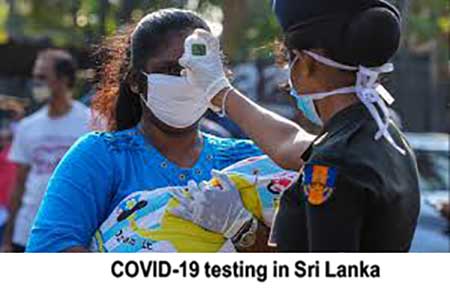
On March 11, 2020, the World Health Organization (WHO) declared COVID-19 a global pandemic. Sri Lanka was extremely vulnerable to the spread of the virus because of its thriving tourism industry and large expatriate population. The first case was detected on January 27, 2020 and the first Sri Lankan national tested positive for COVID-19 on March 10, 2020. In response, the government of Sri Lanka rapidly introduced measures to curb the spread of the disease and imposed a strict island-wide lock-down on March 16, 2020. Infected patients were treated in secure environments, testing and contact tracing efforts were quickly escalated, and awareness raising campaigns on risk and prevention measures were implemented. Already facing fiscal constraints, the pandemic placed additional resource demands on the country. The challenge was to quickly coordinate the mobilization of financial, technical and procurement support to contain the pandemic.
Approach
Within this context, the World Bank responded quickly, leveraging the dedicated COVID-19 Fast-Track Facility, to mobilize resources and prepare the project in just 10 working days. Recognizing the limited availability of the health authorities for separate detailed design discussions, strategies and project priorities were built on gaps and needs outlined in the Health Disaster Preparedness, Response and Recovery plan that was being developed by the Ministry of Health (MoH) and development partners including WHO, World Bank and Asian Development Bank (ADB), among others. This approach allowed for swift preparation, while ensuring coordinated financing support by multiple partners. Bank financing was used to fill resource gaps and to supplement and scale up Sri Lanka’s pandemic management strategy.
The project adopted a flexible approach to respond to urgent health needs, enabling reimbursement for routine goods and operating expenditures for facilities that were engaged in the COVID-19 response. This helped identified facilities to quickly upgrade their wards to make them COVID-ready. Flexibility to use ongoing government procurement methods (adopting the principles of advance procurement) were provided for the first three months following project signing.
Activities were also initiated to strengthen the National Emergency Operation Unit and its island wide network. For better preparedness, selected hospitals are now being developed as medical centers for current and future pandemic situations, and the existing laboratory system is being strengthened. The project is also helping to develop the country’s infection control and surveillance systems and supporting epidemiological studies on the patterns of transmission, and on community response and behavior. This research will underpin long-term plans and strategies on pandemic management.
The World Bank also provided additional financial resources in the form of cash transfers to high-risk populations including the elderly and disabled and patients with chronic diseases. This social sector response was in addition to the health sector response to manage vulnerabilities that emerged due to COVID-19.
The project will also strengthen mental health services and services for victims of gender-based violence (GBV) at the community level especially during emergency situations. These activities will be implemented with support of a grant from the Pandemic Emergency Financing Facility (PEF).
Results
Within six months of project implementation, World Bank financing—both through the International Development Association (IDA) and the International Bank for Reconstruction and Development (IBRD)—has contributed to the following results between March and October 2020:
As of October 1, 2020, there were a total of 3,380 confirmed COVID-19 cases in Sri Lanka, with 3,233 fully recovered and 13 deaths. The spread of COVID-19 has been limited to 18 out of 26 districts in the country, with 8 districts having no reported cases. Even among the 18 districts with COVID-19 cases, the caseload is concentrated in 6 districts, with the majority of cases in the district of Colombo, the capital city. In the remaining 12 districts there are fewer than 10 cases per district. This relatively low COVID-19 morbidity and mortality number reflects the government’s strong and rapid response and effective implementation of the ‘test, track, isolate and treat’ strategy supported through this project.
300,000 units of PPE have been procured and delivered, along with essential medical consumables (‘treat’); 32 quarantine centers are up and running across country (‘isolate’); and 250,000 PCR test kits have been procured through the project, facilitating testing randomly at outpatient departments, in community settings and at ports of entry (‘test’).
805 public health inspectors have been provided with motor bikes to travel to conduct contact tracing; and double cabs (pick-up trucks) have been provided to 25 offices of the Regional Director of Health Services (RDHS) to enhance grassroots community outreach (‘track’).
Plans for transforming select hospitals into 9 provincial case management centers and 25 district level suspected case management centers covering all parts of the country are underway. The preliminary design stage has been completed and site inspections are currently ongoing. The centres are expected to be refurbished with dedicated isolation wards, robust infection control and waste management systems and upgraded laboratory facilities.
Preliminary work on establishing a Bio Safety Level 3 laboratory at the Medical Research Institute (MRI) has been initiated.
699,915 vulnerable populations, which include the elderly, disabled and those with chronic kidney disease from low income households benefited from social cash transfers in the months of April and May 2020.
Bank Group contribution
The World Bank has provided $217.56 million in financing for the project. This includes a $35 million loan from the International Bank for Reconstruction and Development (IBRD), $180.84 million from the International Development Association (IDA), and a grant of $1.72 million from the Pandemic Emergency Financing Facility (PEF).
Partners
Sri Lanka’s COVID-19 management strategy is led by the Ministry of Health, and is being implemented with support from a network of development partners including WHO, UNICEF and other United Nations agencies. The Bank has actively participated in the Emergency Health Cluster meetings, chaired by the WHO, and is also Co-Chair of the Health Development Partner Working Group, which will be coordinating the medium- to long-term plans for health preparedness. UNICEF has also been contracted under the project to support the Ministry of Health in the procurement of essential medical consumables and PPEs. The regular dialogue and coordination with the partner network has helped prevent duplication and has enabled the Bank to identify the gaps in the country’s emergency response strategy and to address these gaps through the project. This is strengthened by the close working relationship with the Ministry of Health, established through the previous and ongoing projects including the Primary Health Care Systems Strengthening Project (PSSP).
Since 2004, the World Bank has funded two major health sector development projects in Sri Lanka, aimed at strengthening the health system service delivery, and quality of care, improving emergency treatment unit facilities, and preparing the system to respond to emerging health challenges. These investments have helped to strengthen the health service delivery network, which has been the cornerstone of Sri Lanka’s COVID-19 response strategy. Moving forward, the project will continue to develop emergency health care services at the secondary and tertiary levels, in line with national strategies and priorities, and will build capacities and establish emergency response systems, mechanisms and facilities that will benefit the population of Sri Lanka in years to come.
The activities will also complement the work being carried out under the ongoing Bank-funded PSSP project, which aims to strengthen healthcare service delivery at the primary care level. The COVID-19 project addresses health facilities beyond the primary care level, and in this way will support the continuum of care and overall health sector development plans financed by the government and the development partner network.
Beneficiaries
The project has benefited the entire population of Sri Lanka by supporting the emergency response, contributing to saving lives. While infected people, medical and emergency personnel and service providers, and high risk populations, such as the elderly, disabled and chronic kidney disease patients from low income households have benefited in particular; through population based preventive measures, the project has touched the lives of everyone in Sri Lanka. Further, by focusing on strengthening the capacity of the public health system throughout the country for future pandemic preparedness, it will continue to benefit the people of Sri Lanka.
English Brief : https://www.worldbank.org/en/results/2020/10/21/sri-lanka-covid-19-response-saving-lives-today-preparing-for-tomorrow
Sinhala Brief : https://www.worldbank.org/si/results/2020/10/21/sri-lanka-covid-19-response-saving-lives-today-preparing-for-tomorrow
Tamil Brief : https://www.worldbank.org/ta/results/2020/10/21/sri-lanka-covid-19-response-saving-lives-today-preparing-for-tomorrow


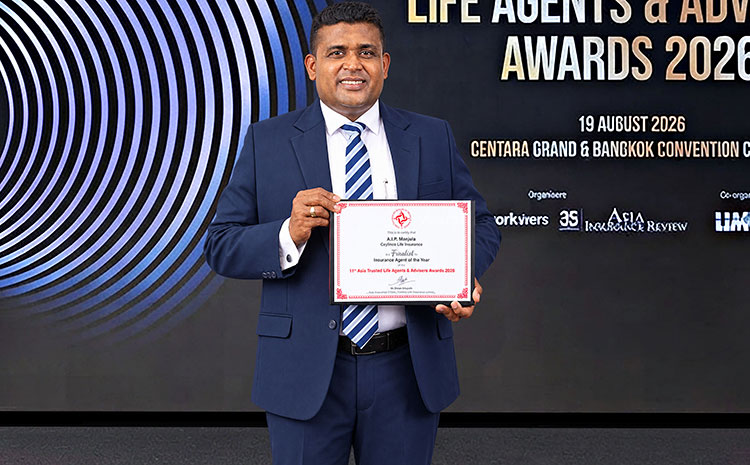
Ceylinco Life’s Ambalantota branch agent AIP Manjula has been named one of three global finalists for the prestigious Insurance Agent of the Year award at the 11th Asia Trusted Life Agents & Advisers Awards (ATLAA) 2026.
The recognition places a Sri Lankan insurance professional among the finalists in a regional field spanning South Asia, Southeast Asia, East Asia and the wider Asia-Pacific region.
Ceylinco Life said the achievement reflected the calibre and customer-focused approach of its agency force, while recognising Manjula’s professionalism and commitment to policyholders.
The award evaluates insurance agents on criteria extending beyond sales performance, including ethical conduct, client service, policy persistency, digital adoption, innovative practices and contributions to the insurance industry and community.
The awards are organised by Asia Advisers Network and Asia Insurance Review, with LIMRA as co-organiser. An independent judging and balloting process is monitored by KPMG as the official scrutineer. The judging panel comprises senior insurance executives, association presidents and industry experts from across the Asia-Pacific region.
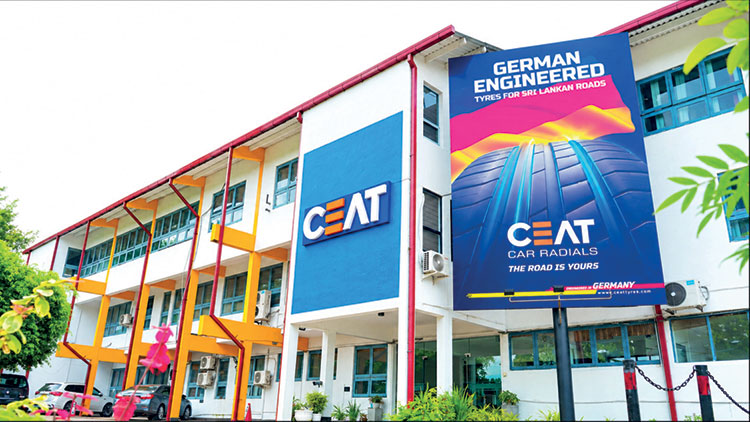
CEAT Kelani Holdings (CKH) has retained its National Long-Term Rating of ‘AA+(lka)’ with a Stable Outlook from Fitch Ratings for the sixth consecutive year, reflecting the company’s financial resilience and leading position in Sri Lanka’s pneumatic tyre market.
The ‘AA+(lka)’ rating, the second-highest on Fitch’s national scale, indicates a very strong capacity to meet financial commitments.
Fitch said CKH’s established market leadership and resilient financial profile remained key strengths, while noting its exposure to price-sensitive, cyclical and highly competitive markets.
The Stable Outlook reflects expectations that the company will maintain its market position despite rising input costs and increasing competition from imported tyres, while preserving adequate credit metrics during periods of weaker earnings and higher investment.
Fitch expects CKH’s established brand, extensive dealer network and adaptive pricing strategies to support its market position. Planned production facility upgrades are also expected to improve product quality, particularly in the radial tyre segment.
The rating agency expects near-term pressure on margins from higher raw material and energy costs but said the company’s low leverage and sound liquidity would provide a cushion.
CKH Chairman Chanaka De Silva said the rating reinforced the company’s focus on disciplined financial management, operational adaptability and long-term investment.

SLT-MOBITEL Enterprise, the enterprise services arm of Sri Lanka Telecom PLC, has launched its Premium Cloud service powered by Nutanix, aimed at helping Sri Lankan businesses modernise their IT infrastructure and accelerate digital transformation.
The service was unveiled at the Lanka Tech Summit 2026 held recently at ITC Ratnadipa, Colombo.
The Premium Cloud combines hybrid multi-cloud capabilities with enterprise-grade performance, enabling businesses to run mission-critical workloads, scale cloud deployments and strengthen business continuity through disaster recovery capabilities.
Hosted on SLT-MOBITEL’s Tier III data centre infrastructure, the platform is designed to provide enhanced security, reliability and flexibility while supporting the growing technology requirements of enterprises.
SLT-MOBITEL Enterprise said the platform would also support organisations seeking to adopt AI-ready capabilities and improve the management and performance of IT workloads.
A key feature of the launch was SLT-MOBITEL Enterprise joining the Nutanix Elevate Service Provider Program (NESPP), which the company said made it the first service provider in the region to join the programme.
Powered by Nutanix’s hybrid multicloud platform, the service enables application and data mobility across on-premises environments, public clouds and edge locations.
The company said the partnership combined Nutanix’s cloud technology with SLT-MOBITEL’s local expertise and support, strengthening its multi-cloud portfolio.

Buttler out of Oval decider as Lawrence earns ODI call-up

Showers will occur in the Western, Eastern, Uva and Sabaragamuwa provinces and in Galle, Matara, Kandy and Nuwara-Eliya districts.

Nor’easter brings flooding as New York and New Jersey declare emergency 2 hours ago

Trump rejects Iran deal to reopen Strait of Hormuz in seven days

Govt plans to hire 121,000 state workers, redistribute tax revenue

Parliament clears 22A amid protests

‘Dates have the highest sugar content to fight Coronavirus’

Sunday Island 27 December – Headlines

#SundayIsland 17th December – Headlines

Sunday Island – 28th March

Sunday Island Headlines – 21 March

Sunday Island – 21st February – Headlines
-

 News5 days ago
Mastermind Naufer Moulavi among 15 found guilty
-
 News7 days ago
Hatton youth protest against reported death sentence for Lankan in Saudi Arabia
-
 News7 days ago
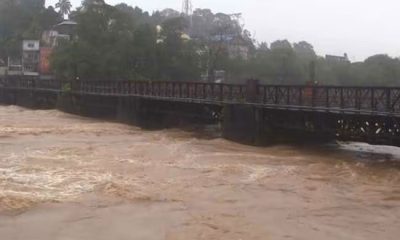
Mahaweli rises as heavy rain triggers flood, landslide fears
-
 News6 days ago
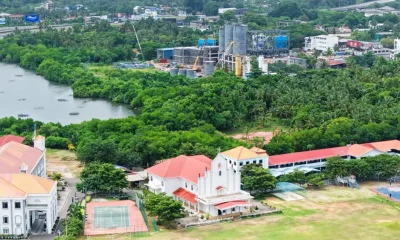
Protest against setting up of cement factory in highly populated area near BIA
-

 Midweek Review5 days ago
Thileepan’s fast unto death: An authentic narrative that many missed
-
 Latest News4 days ago
Showers above 100 mm are likely at some places in the Western, Sabaragamuwa, Central and North-western provinces and in Galle and Matara Districts
-

 Editorial6 days ago
Trouble beginning in earnest
-
Editorial5 days ago
Big Bad Bills