
Business
Sri Lanka’s Angel Fund shortlists five startups for investment

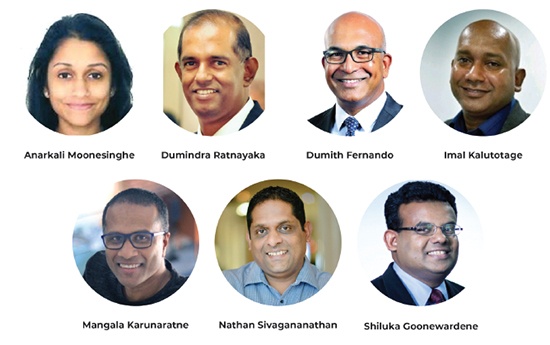
The Angel Fund Investment Committee members who unanimously select the startups for investment.
The Angel Fund, the first of its kind in Sri Lanka, has shortlisted its five early-stage startups for potential investment; Niftron, Traccular, Medica, Soulboner Clothing, and Ophir. This follows an intense application and selection process, spanning September, October, and November 2020, which initially attracted 80 applications.
The Angel Fund, launched earlier this year by the Lankan Angel Network (LAN), was established with the support of ecosystem development partner Ford Foundation to catalyze the growth of Sri Lanka’s startup ecosystem. Comprising 100 angel investors, including many high-profile entrepreneurs and corporate leaders, who represent more than a dozen sectors with proven competencies in over 20 functional domains, the Angel Fund is also distinct in that it features 20% of its investment from members based out of Canada, Dubai, Hongkong, Qatar, UK, and the USA.
The process was guided by the Fund’s high-profile Investment Committee (IC) consisting of angel Fund members Dumith Fernando, chairman of Colombo Stock Exchange/chairman of Asia Securities, Dumindra Ratnayaka, Chairman/Senior Consultant at Martin & George. The IC also comprises Nathan Sivagananathan, Co-Founder of Hatch Works; Anarkali Moonesinghe, former CEO of CIMB Sri Lanka; Mangala Karunaratne, Founder/CEO of Calcey Technologies; and Imal Kalutotage, Founder/CEO of NCINGA. Joining them as Independent IC Member is Shiluka Goonewardene, Principal – Deal Advisory – KPMG.
Angel Fund IC member Dumith Fernando stated, “The investment approval process for the Angel Fund was quite robust with seasoned experts from varied backgrounds participating in the Investment Committee. We were encouraged by the quality of the shortlisted startups that presented to us. We set a high bar for investment selection this time. And even among those founders who did not gain funding this quarter, we found several who would be investable with some tweaks to their business models and plan.”
Some shortlisted startups were:
• Niftron – A Blockchain-as-a-Service platform that allows for easy and efficient integration of blockchain with products or projects, enhancing ownership, transparency, and security.
• Traccular – A cloud-based IoT-enabled visitor management system that provides a scalable solution for companies looking for an efficient check-in and verification process to improve efficiency and security.
• Medica – A cloud-based patient and prescription management platform for doctors. From when a patient registers, to when they walk out with their medicines from the pharmacy, the entire process is managed within Medica, which aims to build a digital ecosystem for primary health care for Sri Lanka.
• Soulboner Clothing – A fun, casual Sri-Lankan streetwear line made for GenZ and the young Millennial. The brand focuses on creating a lifestyle and a community and boasts a customer base in many countries.
• Ophir – A brand focusing on a range of chemical and synthetic-free, all-natural body care and spa products, which deliver the rich benefits of Camellia Sinensis, Ceylon Tea. Ophir taps into the skyrocketing global demand for natural skincare products, with the added advantage of Sri Lanka’s millennia-old fame resulting from its cornucopia of botanicals, spices, and herbs, as well as Ayurveda.
Independent IC Member Shiluka Goonewardene said, “The finalists for evaluation by the committee were all startups with good ideas and opportunities. The varied experience of the IC members enabled us to evaluate and shortlist the best participants for the funding stage. Overall, it was a great learning experience for me as well, listening to the presentations of the finalists and the follow-up discussions among the IC members.”
These startups will be featured at the LAN hosted Angel Roundup, an exclusive virtual event to be held in mid-December for the network’s angel investors. The event is partnered with Sri Lanka’s largest private-sector retail bank Hatton National Bank PLC, a long-term strategic partner for LAN
Commenting on behalf of the top five shortlisted startups, Ophir Founder Rohini Nordmann said, “The Angel Fund has been both rigorous and supportive of its participants. A winning combination for the investment seekers as well as the investors.”
Angel Fund IC member Anarkali Moonesinghe added, “The Angel Fund was created to bridge the gaps that exist within the startup ecosystem in terms of opening this alternative asset class to a wider audience as well as connecting these investors with incredible entrepreneurs. It serves as not only an avenue to secure funding at an early stage, but also affords startups access to an amazing group of individuals who can be true mentors while, also, opening doors to international markets and networks.”
The Rs. 100 million Angel Fund has plans to eventually invest in six to 10 high potential startups in total, gearing them up to scale domestically, and even internationally. It is managed by LAN’s fund management team, which continues to identify and evaluate opportunities for investment across the island, including in traditionally underserved regions. The fund is dedicated to investing in, and mentoring and supporting, early-stage startups across multiple sectors; from making investments at the early stages, to even helping startups identify sources for future funding.





18 March 2026; Colombo – SriLankan Airlines wishes to alert customers to social media scams circulating on Facebook, WhatsApp and other platforms, often sent from both known and unknown contacts, featuring fake offers that misuse the SriLankan Airlines name, logo and brand.
SriLankan Airlines will never request payments, OTPs, credit card details, bank information or any other financial details via social media channels.
Customers are advised to always verify that any promotional offer is linked to the airline’s official website, www.srilankan.com, or shared through the verified social media accounts of SriLankan Airlines, as scammers often use fake links with unusual characters or spellings, or impersonate the airline through fake social media accounts.
Business
JSL & Fentons Joint Venture to Construct Double Circuit Transmission Line from Mannar Grid Substation to Mullikulam Collection Grid Substation


Approval has been granted at the Cabinet meeting held on 03-02-2025 to implement the formal procurement procedure to select a contractor for the construction of a 28 km long double circuit transmission line with the capacity of 220 kW, from Mannar Grid Substation to Mullikulam Collection Grid Substation under the Lot B of the Mullikulam Wind Power Transmission Project.
Bids have been invited following the International Competitive Procurement Procedure and five (5) bids have been received.
Accordingly, based on the recommendations submitted by the High-Level Standing Procurement Committee after evaluating the aforementioned bids, the Cabinet of Ministers has approved the resolution furnished by the Minister of Power and Energy to award the contract to the JSL & Fentons Joint Venture – Intend (Jyoti Structure Limited, India and Hayleys Fentons
Limited, Sri Lanka), substantially responsive minimum bidder, for an equal amount of Sri Lankan Rs. 2,269.18 million (without VAT).

Economic pressure likely to push already-strained businesses into a liquidity crunch
By Sanath Nanayakkare
Sri Lanka is slowing to a midweek halt as a deepening fuel shortage has compelled the government to suspend most public sector operations every Wednesday, while courts have been advised to take a lenient view of attendance requirements amid transportation difficulties caused by fuel rationing.
The directive, issued by the Commissioner General of Essential Services, suspends most state functions one day a week until further notice in an attempt to conserve scarce fuel reserves. Authorities have also urged the private sector to adopt a similar arrangement.
Officials say the measure is aimed at reducing commuter traffic into major cities, particularly Colombo, where thousands of public servants travel daily from suburban areas.
Explaining the decision to select Wednesday, officials said declaring Friday a holiday could have effectively denied the public access to government services for three consecutive days when combined with the weekend.
However, the development underscores the fragility of Sri Lanka’s economic recovery as households continue to grapple with rising prices of essential goods.
The impact is already visible on the streets. Long queues have formed outside fuel stations while public buses have been seen overcrowded, with passengers clinging to footboards. Many commuters were also seen attempting to secure rides through the ride-hailing platforms Uber and PickMe, where drivers were demanding higher fares as demand surged.
Recognising these difficulties, the Judicial Service Commission (JSC) has issued a circular instructing judges to take transportation constraints caused by fuel rationing into consideration when making legal determinations.
Judges have been advised to consider the possibility that lawyers, litigants, witnesses and even suspects may be unable to attend court due to limited fuel availability.
While court proceedings are expected to continue, judicial officers have been asked to assess such situations on a case-by-case basis.
The JSC has also directed courts to make greater use of virtual platforms whenever possible. This is expected to apply particularly to proceedings such as extending remand orders, thereby avoiding the need to transport prisoners physically to court.
Authorities believe that conducting such hearings online could significantly reduce fuel consumption associated with prison transport. The temporary measures will remain in effect until further notice.
Meanwhile, officials say special fuel allocations may be considered for critical sectors including tourism, the Colombo Port, agriculture, health services, the plantation industry and public transportation in order to sustain essential services and economic activity.
However, the broader economic outlook remains uncertain. Business leaders warn that companies already burdened with higher taxes, rising operational costs and thin margins could face severe liquidity pressures if global oil prices remain elevated.
Industry observers say some firms may be compelled to seek loan moratoria if the disruption linked to the conflict involving Iran continues for another month.
Public concern has also been heightened by recent comments from Iranian officials indicating that Tehran has not sought a ceasefire in the ongoing conflict.
For President Anura Kumara Dissanayake, the unfolding fuel shortage is emerging as one of the most serious challenges facing his administration. Although the government has been holding internal consultations, critics say an all-party conference has yet to be convened to formulate a unified national response to the crisis.
Within business circles and sections of the public, questions are increasingly being raised about whether the government possesses the institutional capacity and experience required to manage a prolonged energy shock.

SriLankan Airlines Alerts Customers to Social Media Scams

Four dead 32 injured in head on collision at Weerawila

JMSDF ship OONAMI concludes goodwill visit

Cabinet nod to amend Central Cultural Fund Act No. 57 of 1980
’National Namal Uyana’ declared as a National Heritage
Establishment of Supervisory Committees for restoring economic activities.

‘Dates have the highest sugar content to fight Coronavirus’

Sunday Island 27 December – Headlines

#SundayIsland 17th December – Headlines

Sunday Island – 28th March

Sunday Island Headlines – 21 March

Sunday Island – 21st February – Headlines
-

 News7 days ago
Historic address by BASL President at the Supreme Court of India
-

 Sports7 days ago
The 147th Royal–Thomian and 175 Years of the School by the Sea
-

 Business3 days ago
Browns EV launches fast-charging BAW E7 Pro at Rs. 5.8 million
-

 Life style4 days ago
From culture to empowerment: Indonesia’s vision for Sri Lanka
-

 News7 days ago
Power sector reforms jolted by 40% pay hike demand
-
 Latest News3 days ago
QR code system will be implemented for fuel with effect from 06.00 a.m. today (15th)
-

 Opinion6 days ago
M. D. Banda: Memories of Appachchi – II
-

 News5 days ago
Crypto loopholes funnel Lankan funds abroad