
Opinion
Sri Lankan democracy enters new phase of forced retreat

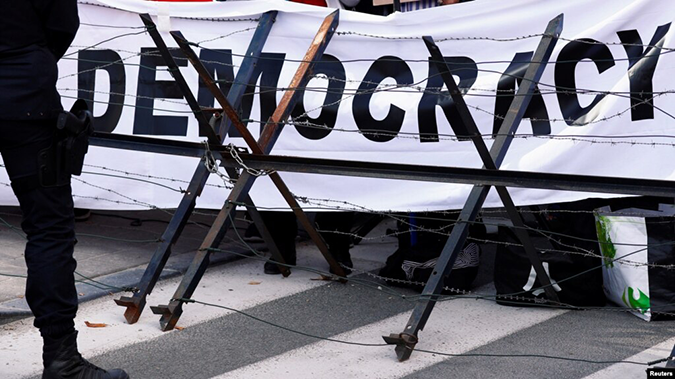
Text of the speech delivered by
Prof. Jayadeva Uyangoda
at the launch of the book,
Democracy and Democratization in Sri Lanka: Paths, Trends and imaginations, September 09, 2023, at Kamatha Cultural Center Auditorium, BMICH. Prof. Uyangoda is the Editor of this two-volume publication.
I have no doubt at all that the Chairperson of the BCIS, the Board of Academic Affairs, the BCIS management, the chapter contributors, and the BCIS staff are delighted to see the two volumes of Democracy and Democratization in Sri Lanka: Paths, Trends and imaginations in print. This, as far as I know, is the first major academic publication undertaken by the BCIS. It is Madam Chandrika Kumaratunga’s vision, initiative, guidance and unwavering support that has made this notable achievement possible.
It is she who proposed this research project’s thematic focus. She trusted the Academic Board and the research team and gave them a free hand to develop and work on it. At the same time, I apologize to her on behalf of the team for giving her a few anxious moments.
There were some delays caused partly by the general crisis triggered by the Covid-19 pandemic. Besides, the missed deadlines set during normal times were unavoidable in a project of research and publication of this magnitude, carried out in a time of exceptional crises in our society, politics and the everyday life. For me as the lead researcher and the Editor, seeing these two volumes in print is a worthy reward for two and half years of hard labour.
Context
We at the BCIS began to conceptualize and plan this publication on the experience of democracy in our country, at a time when the Sri Lankan people were on the verge of losing their democratic heritage. When the year 2019 began, the threat of a hard authoritarian system replacing a weak and battered democratic order had indeed become alarmingly real.
We at the BCIS Board of Academic Affairs and its Chairperson felt that an analysis of why a promising democracy at the time of independence had failed so abysmally is a theme warranting critical scholarly inquiry and explanation.
Thus, we launched this research and publication project on democracy and democratization in Sri Lanka in mid -2020. As I have already mentioned, the Covid-19 Pandemic of 2021 came while we had just begun our work. It interfered with our project in a variety of ways, including halting most of the research.
More significantly, the Pandemic had led to a new political process in Sri Lanka. It can be termed as accelerated backsliding of democracy spearheaded by one faction of the ruling elites. It appeared almost like the last stage of Sri Lanka’s democracy.
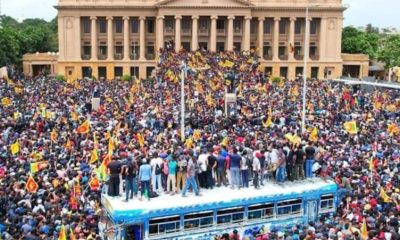
But, Sri Lanka’s democracy, even in retreat, has shown that it has had some magical capacity for surprises. And that is exactly what we witnessed during the Spring and Summer of 2022. Sri Lankan citizens suddenly woke up demanding more democracy than what the political elites were willing to concede.
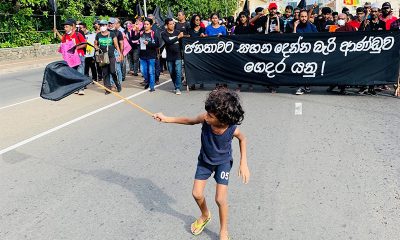
During the Aragalaya of 2022, the ordinary people, citizens without wealth or power, rose up demanding substantive democratic reforms. The ordinary citizens in their capacity as demos began to make claims to their ownership of democracy. They also highlighted that Sri Lanka’s democracy in general and representative democracy in particular, were in a deep crisis.
It was indeed an attempt by the people, demos, to re-generate as well as re-invent democracy in Sri Lanka. That is why the citizens’ protest in 2022 diserves to be acknowledged as a significant turning point in the somewhat twisted process of democratization in Sri Lanka.
In brief, the events of 2022 provided new perspectives and critical insights immensely useful to our own work on democracy and democratization in Sri Lanka. It showed us that the ordinary people play a powerful role as an agency for democratization. Their faith in democracy is far greater than that of the elites who exploit democracy for predatory ends. That is the spirit with which these two volumes evolved.
Organisation of the Book
The book has 22 chapters divided into two volumes. They are written by Sri Lankan scholars. The chapters are lined up under six themes which are as follows:
· Democracy in South Asia and Sri Lanka: Historical and Conceptual Contexts.
· Constitutional and Institutional Crises of Democracy in Sri Lanka.
· Democracy in the Social and Ethnic margins
· Alternative Forms of Democratic Thinking and Practice
· Democracy, Discontent and Resistance
· Protests as a Vector of Democratisation.
I want to share with you very briefly what I as the Editor see as unique about this book.
· This is the first book-length scholarly work exclusively devoted to the theme of democracy in Sri Lanka.
· All chapter contributors are Sri Lankan scholars who have been witnesses to the rise, decline and attempts at regeneration of democracy.
· The analysis developed in the chapters do not belong to a specific disciplinary area of the social sciences, such as political science or constitutional law. There is a plurality of approaches from the fields of social sciences and humanities.
· The book does not advocate or campaign for any particular version or variant of democracy. It argues for the plurality of democracy as a political concept and practice. Yet all chapter contributors stand for bringing the normative ethics of equality, freedom, justice and social emancipation back to the theory and practice of democracy.
Key Messages
What are the messages that these two volumes with chapters on diverse themes convey? Let me share with you a few of them that have a direct bearing on how we should view democracy and democratization anew.
· Democracy, as an organizing principle of political and social life, has strongly local social and popular roots in Sri Lanka as it has been the case elsewhere globally: It is a historical fact that modern democracy in Sri Lanka is an aspect of the European colonial legacy: However, people of Sri Lanka from various social classes have appropriated it and made use of it for their own social interests. In this process, there has been a double transformation. While the local society and its politics has been altered by liberal democracy, the local society has also changed the idea of democracy with a substantive, though subtle, critique of liberal democracy.
This has two theoretical implications. Firstly, the Sri Lankan people have not been passive recipients of a Western, European, or colonial, political idea. Secondly, they have played an active, agential role in appropriating and transforming that European idea. This book describes it as a creative process of ‘localizing democracy.’
· Ideas and practices of democracy have preceded the invention of the language of democracy
: Genealogies of the idea and practices of democracy predates its colonial origins in Sri Lanka and South Asia. The impulses and desires for democracy have always been there everywhere and whenever there were organized political power in the form of the state in pre-modern societies too. Historical and literary evidence in ancient and pre-colonial India and Sri Lanka show that the human desire for freedom from domination, independence, autonomy and justice have been integral to the social and political struggles within organized social formations.
It has been so in the processes of state formation in ancient Sri Lanka and South Asia, as elsewhere. This is the primary historical essence of ‘universalism’ of the idea of democracy. In other words, the idea and practices of democracy have been there in many forms in pre-colonial societies long before the language of modern democracy has been invented and the impulses for democracy rigidly formalized and frozen in meaning.
· The ordinary citizens are more faithful custodians of democracy than the elites:
Democratization is not a process confined to the activities of political elites as well as governments, as wrongly assumed in the mainstream democracy studies and assessments. The Sri Lankan case studies in the book show that democratization from below, at the level of the governed and the disempowered citizens, is most important in mapping paths of democratization in Sri Lanka. This thesis is valid to democracy’s liberal variant too.
The book shows that the dispossessed and the ordinary citizens, rather than the elites, have had a greater stake at defending and consolidating democracy. They have done it through the struggles of resistance against the elite-led de-democratization. The elites have domesticated, tamed, abandoned, and even became hostile to the liberal normative content of democracy.
People have also collaborated with backed the political elites in the latter’s projects of de-democratisation. However, in crucial moments of crisis the people, demos, have defended and deepened the idea and the normative content of even liberal democracy in Sri Lanka.
· Elite capture of liberal democracy has made democracy thin
: A lesson I have learned in the course of research for this book is that liberal democracy has the unintended consequence of dividing the population of Sri Lanka into two new classes in its own way: political elites and political non-elites. This has been a general pattern in other societies too.
Sri Lanka’s process of elite-led democratic backsliding has been paralleled with the introduction of representative government early last century. Elites who benefitted from the electoral, representative democracy have appropriated the liberal democracy and used it as an instrument for consolidating their social, economic, political and familial power.
Thus, the conception of democracy associated with Sri Lanka’s ruling elites has been a thin and truncated version of liberal democracy. Its role in democratization has now come to an effective end. Sri Lankan people await a strong democracy in terms of its social roots and normative commitments.
· Popular resistance to deprivations and unjust exercise of power has deepened the normative foundations of democracy in Sri Lanka
: The instrumentalist use of representative and parliamentary democracy by the elites is only one side of the story of democratization in Sri Lanka. In contrast, there is a subaltern story of democratization too.
The Left parties, working class, peasants, the working people, women’s groups, ethnic minorities, and student movements have contributed substantively to deepening the idea, the meaning, normative goals and the social relevance of Sri Lanka’s democracy. Through social practices of demands and direct political action for substantive equality and justice, they have shown how the limits of narrowly conceived and much abused representative democracy could be reformed. Thus, Sri Lanka’s democracy is not the monopolistic possession of the political elites. It is the inheritance of a plurality of non-elite social groups as well.
· Continuing conflict between democratic backsliding and popular demand for more democracy awaits a deep-democratic resolution:
Since independence, Sri Lanka’s democracy has evolved along two contradictory trajectories. The first is the path of democratic backsliding and de-democratization chosen by the elites. The second is the path of demanding and fighting for more democracy by the subordinate and non-elite social classes, trade unions and social movements, the civil society groups, and reformist elites.
The conflict between these two opposing paths is a major facet of the crisis of democratization in Sri Lanka. Its resolution presupposes a project of re-democratisation through radically substantive political and constitutional reforms.
What is Happening to Democracy
Let us briefly reflect on what is happening to democracy in Sri Lanka at present. Sri Lankan democracy seems to have entered a new phase of forced retreat engineered by the new ruling coalition. People of Sri Lanka who have yearend for the revival of democracy find themselves caught up in a new version of what our book calls the ‘de-democratization trap.
’ Its key feature has been the incorporation of ordinary citizens as disempowered voters to a deceitful social contract crafted by the political elites. As the citizen’s protests last year and this year have shown us, that deceitful social contract is now shattered. Citizens want to replace it with a deeply democratic and authentic social contract.
Meanwhile, there seems to be two processes of polarization of the Sri Lankan society into two hostile camps. The first is between the haves and have nots in the economic and social sense. The second is the growing enmity between the majority of the citizens who crave for more democracy and a minority of the elites who thrive on no democracy. The ways in which these polarities and contradictions will play themselves out are sure to shape the nature of politics of Sri Lanka in the months and years to come.
Returning to open democracy, more executive, legislative and judicial accountability, re-democratization of the constitution, the state, the government, and parliament, guaranteeing of economic and social justice to the poor, the working people and the middle classes are essential pre-conditions for resolving these contradictions peacefully with no recourse to violence by any side. That is also a message implicit in our book.
So, students of democracy in Sri Lanka will have a politically exciting time ahead. I and my collaborators sincerely hope that these two volumes will inspire a new interest in democracy studies among the young scholars in Sri Lanka. I am also hopeful that the readers will not fail to notice that the chapters have been written by a team of Sri Lankan scholars who have a deep passion for democracy.
Finally, let me thank a few people whose contribution to the success of this initiative warrants special acknowledgement. I have already referred to the inspiring and non-interventionist leadership provided by Madam Kumaratunga. Of course, it is our team of chapter contributors who have made these two volumes actually possible. They had the patience to tolerate the constant nagging by an impatient Editor and his support staff.
I must also mention the contribution made by our two copy-editors, Madara Rammunthugala and Nicola Perera, for refining the entire text. All reveiwers of the draft chapters also deserve my grateful acknowledgement for their contribution to ensuring the scholarly quality and standards of the publication. Suresh Amuhena designed the cover for us amidst many other commitments. Dr. Minna Taheer and Ms. Isuri Wickramaratna of the BCIS extended to me their assiatance throughout this project.
The BCIS staff Board of Academic Affairs and BMICH Board of Management ensured generous institutional support for the success of this entire intiative. Finally, Mr. Vijitha Yapa and his staff undertook the task of designing, printing and selling the book. All of them are partners of this worthy achievement. There are so many others who deserve my sincere thanks, and they are mentioned by name in the ‘Acknowledgements’ section book.
Finally, I am really happy that we have Professor Pratap Bhanu Mehta, an eminent scholar from India, as our keynote speaker. I will not take any more of your time to allow you to listen to his erudite presentation.









By Lalin I De Silva
Sri Lanka speaks constantly about hospitals, medicines, food imports, agricultural productivity and the rising cost of living. Yet there is one simple question we rarely ask:
Are we eating enough of the food that our own soil can naturally give us?
Fruit is perhaps one of the finest gifts of the earth to humankind. A ripe mango, banana, papaya, guava or avocado comes to us almost ready to eat. Sunlight, rain, soil, microorganisms, minerals and the labour of a farmer have already done most of the work.
That is why I like to describe fruit as the “cream of the earth.”
This is, of course, not an argument that fruit alone can prevent every disease, or guarantee longevity. Science does not support such exaggerated claims. But there is strong international evidence that regular consumption of fruits and vegetables forms an important part of a healthy diet and is associated with lower risks of several major non-communicable diseases.
Sri Lanka’s own dietary guidance encourages the daily consumption of fruit as part of a balanced diet.
The tragedy is that we live on an island capable of producing an extraordinary variety of fruits, while many families increasingly depend on highly processed foods, sugary drinks and imported snacks.
This deserves national attention.
We Produce — But Do We Connect?
Sri Lanka grows banana, mango, pineapple, papaya, avocado, rambutan, mangosteen, guava, woodapple, beli, pomegranate, durian and many lesser-known indigenous fruits.
Yet our fruit value chain remains fragmented.
The farmer often does not know the final consumer.
The consumer rarely knows the farmer.
Fruit travels through several intermediaries, sometimes suffering poor handling, unnecessary damage and price escalation along the way.
Consumers may not know where a fruit was grown, when it was harvested, whether it was naturally matured or what crop-protection practices were followed.
Meanwhile, a careful farmer, producing exceptional fruit, may receive almost the same farm-gate price as someone producing an inferior product.
That is not value-chain management.
It is precisely this disconnect that a new citizen-led initiative could begin to address.
25 Districts — 25 Consumer Societies
A proposal now emerging is to establish a Pure Sri Lankan Authentic Healthy Fruit Consumers Society in each of Sri Lanka’s 25 districts.
The concept should not become another organisation full of titles, meetings and ceremonial functions.
Its purpose must be practical.
Each district society could bring together consumers, growers, doctors, nutritionists, horticulturists, schools, universities, retailers, hotels, processors and young entrepreneurs.
The first task would be to understand the district itself.
What fruits are grown?
Where are they grown?
When are they available?
Which traditional varieties are disappearing?
Where can consumers purchase genuinely good fruits?
Where are the post-harvest losses?
What do farmers need?
What do consumers actually want?
From this information, each district could eventually develop its own Fruit Map.
Twenty-five district maps could then become a National Fruit Map of Sri Lanka.
From Anonymous Fruit to Traceable Fruit
Imagine buying a mango and scanning a QR code.
You could see the district, grower, variety, approximate harvest date and production information.
You could perhaps even provide feedback on taste.
That may sound futuristic, but the technology already exists.
The problem is not technology.
The problem is that our food system was never designed to connect the person who grows the fruit with the person who eats it.
Traceability could change that.
The principle is simple:
Know your farmer. Know your fruit.
Let the Consumer Lead
For decades, agriculture has largely been driven from the production side.
“How much can we produce?” has been the dominant question.
A healthier agricultural economy should begin with another question:
What does the consumer need, value and trust?
If thousands of consumers deliberately demand fresh, safe, flavorful and traceable Sri Lankan fruit, the message travels backwards through the entire value chain.
Retailers respond.
Farmers respond.
Nurseries respond.
Researchers respond.
Investors respond.
Government eventually has to respond.
That is the real power of an organised consumer movement.
Start With Children
Perhaps the most powerful campaign message could be remarkably simple:
Two Fruits a Day.
Imagine a Sri Lankan child coming home from school and asking:
“What are our fruits today?”
Imagine every school having a small fruit garden.
Imagine children being able to identify 10 Sri Lankan fruits, understand their seasons and know where they are grown.
Such behavioral change cannot be achieved merely by issuing circulars from Colombo.
It must become part of family culture.
Kandy Could Begin
Kandy would be a logical district in which to pilot the concept.
Its climatic diversity, surrounding agricultural communities, educational institutions, hotels, markets and strong plantation heritage provide an excellent testing ground.
A successful Kandy model could then be adapted—not blindly copied—across the other 24 districts.
The objective should ultimately be much larger than selling more fruit.
It is about reconnecting soil, farmer, food, consumer and health.
Sri Lanka does not need to invent every solution from outside.
Sometimes the answer may already be hanging from a tree beside us.
We simply have to recognise its value.
Know Your Farmer. Know Your Fruit. Live Well.
Review
by Colleen Figg, Editor
and Reviewer – Amazon, New Voices Publishing
“Fernando echoes Macbeth with the line, “There is judgment here.” It captures the question running through the novel: can anyone participate in corruption and remain untouched by it? Beneath this satire is a dark story about power and the danger of believing, that someone else will always pay the price.”
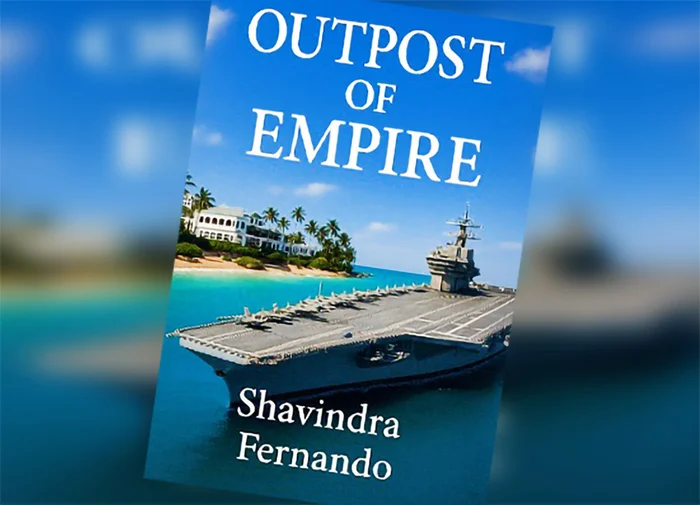
Shavindra Fernando’s Outpost of Empire is a political novel set in the fictional country of Lackadasia. At its heart is a strong idea: an exploration of world politics, terrorism and the ways in which powerful countries manipulate smaller ones. Fernando is clearly writing about political issues that matter deeply to him.
The names immediately establish the book’s satirical character. Lackadasia, Burgherbugaria and the various Klowns suggest a world in which the people and places are exaggerated, but the issues beneath the exaggeration are recognisable. The playful language allows Fernando to approach terrorism, religious conflict and political corruption from an unusual angle.
Henry Stockwell is a central character: an ambassador who arrives in Lackadasia presenting himself as a friend of the country. He believes he understands how power works and treats the country, its politicians and its people as pawns on his personal chessboard. In his arrogance, he never doubts that he controls events rather than being controlled by them. This confidence makes him a compelling figure and in him, we explore the workings of political influence and the potential traps contained therein.
As the story develops, Fernando reveals a political world where causes are adopted when they are useful, people are exploited and discarded, and the truth becomes whatever those in power need it to be. Ordinary people suffer the consequences of decisions made far beyond their reach or knowledge, while those making those decisions continue to justify their actions. Even the people who help keep this world running may not be as important or as safe as they imagine.
Stockwell brings this idea into focus. He recognises corruption in others and willingly takes part in it himself, yet he cannot see that he might also suffer its consequences. Ultimately, he thinks his position will keep him safe. He is intelligent enough to understand the game, but not insightful enough to grasp the limits of his place within it. This blindness gives the novel a strong sense of irony.
The satirical approach gives Fernando room to criticise political hypocrisy without turning the novel into a direct political argument. By using fictional countries and exaggerated names, he creates some distance from specific governments and events while still making the larger targets of the book clear. The humour does not take away from the seriousness of the subject; instead, it makes the cruelty and self-interest beneath the political performance stand out more sharply.
Near the end, Fernando echoes Macbeth with the line, “There is judgment here.” It captures the question running through the novel: can anyone participate in corruption and remain untouched by it? Beneath this satire is a dark story about power and the danger of believing that someone else will always pay the price.
I came away feeling that Outpost of Empire is a valuable and thought-provoking book, particularly in today’s political and social climate. It has a distinctive voice, and the questions it raises about power, responsibility and foreign interference remain relevant far beyond the fictional borders of Lackadasia.
About the Author
Shavindra Fernando has worked as a reporter. He read English & Classics at the University of Peradeniya in Sri Lanka, and took International Relations & Ethnic Politics as a Reuter Fellow at the University of Oxford in England. The Vague Poetess (1999)was his first novel.
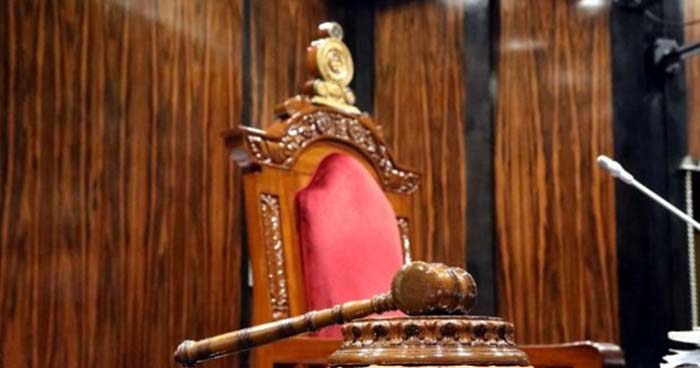
The Opposition, in its wisdom (or perhaps stupidity), has submitted yet another No-Confidence Motion (NCM) against the Speaker of Parliament. Perhaps it hopes to score some brownie points in the eyes of the public, which is hardly indifferent to such developments. Yet, knowing full well that the motion is unlikely to succeed, the exercise may well prove futile — akin to banging one’s head against a solid rock.
Nevertheless, the nearly fifty allegations levelled against the Speaker, whether justified or mere mudslinging, cannot simply be brushed aside. Such allegations may well have a bearing on the individual concerned, particularly where it matters most — his conscience — and few would dispute that possibility.
From a protocol standpoint, the Speaker occupies one of the highest positions in the country, ranking third in the hierarchy of state. He consequently belongs to the uppermost echelons of public life, with acquaintances and associates extending across a wide spectrum of society, including diplomats and other distinguished personalities. Such a position carries with it not merely prestige and privilege, but also an onerous responsibility to uphold the dignity and integrity of the office.
As the guardian of Parliament, the Speaker is expected to maintain standards of conduct, impartiality and discipline that are beyond reproach.
Whether the allegations are justifiable or not may be of little consequence to members of the ruling party, who will undoubtedly defend their colleague to the hilt. Nevertheless, the stigma arising from such allegations may prove difficult to erase, particularly in the eyes of his family, close associates and, ultimately, the voters who placed their trust in him. Of course, it is common knowledge that politics can be a dirty game and that, as Lord Acton famously observed, “power tends to corrupt, and absolute power corrupts absolutely.”
Yet, nothing could be more devastating than a person losing his own soul in the process. On the one hand, stepping down could be construed as an admission of responsibility for the allegations levelled against him. On the other, allowing the No-Confidence Motion (NCM) to proceed could expose him to further public scrutiny and potentially inflict lasting damage on his character, dignity and reputation. Thus, he finds himself caught between two unenviable choices, each carrying consequences that may extend far beyond the immediate political fallout.
The Speaker is therefore confronted with a classic Hobson’s choice, with neither option likely to be without consequences. After all, in politics, there are no permanent friends or enemies—only permanent interests.
WILLIAM

Heavy showers above 100 mm are likely at some places in the Western, Sabaragamuwa, Southern, Central, and North-western provinces and in Anuradhapura district.

Sri Lanka, India caught in US-Iran ship crisis

Namal further remanded

IMF projects Lankan economic growth to moderate amidst mounting global uncertainties

Major Gen Pushpakumara assumes command of 56 Infantry Division

Dickwella axed, Bandara earns maiden Test call up

‘Dates have the highest sugar content to fight Coronavirus’

Sunday Island 27 December – Headlines

#SundayIsland 17th December – Headlines

Sunday Island – 28th March

Sunday Island Headlines – 21 March

Sunday Island – 21st February – Headlines
-

 Features6 days ago
The Sri Lankan who made Scottish history
-

 Sports6 days ago
Nissanka absence opens door for Sri Lanka’s young guns
-

 News5 days ago
NDB fraud Rs 60mn more than reported
-

 News5 days ago
Removing monk’s robes matter for Sangha to decide: Mahanayake Theras
-
 News6 days ago
Shiranthi R remanded until 13 Oct.
-

 Features6 days ago
Future of Sri Lanka’s state university system: Should it be shut down and reopened?
-

 News3 days ago
Sri Lanka escalates anti-graft drive with Shiranthi’s jailing
-

 Latest News4 days ago
Farhan, Sadaqat help Pakistan ace 183 chase to go 1-0 up