
Sports
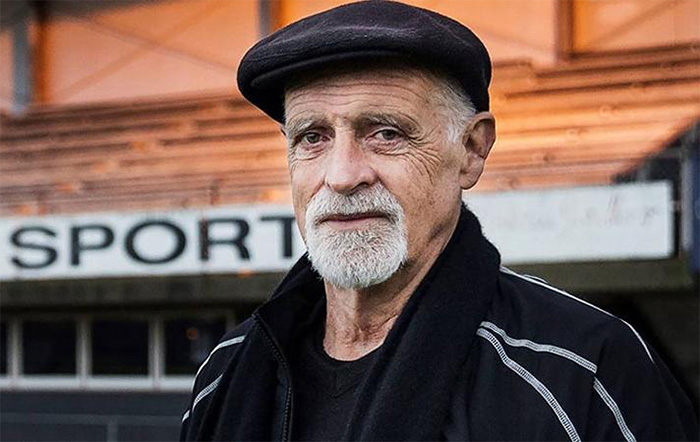
Sri Lanka still rich with the legacy that Simpkin left behind

By a Special Sports Correspondent
Sri Lanka cannot help but recall the name of George Simpkin when it prepares players for international rugby assignments. The islanders are now preparing for the upcoming Division 1 tournament of the Asian Men’s Rugby Championships. There is still only speculation about who would be the likely coach. But already, three names are being floated in conversations within the rugby fraternity and even in some sections of the media; these names are Sanath Martis, Nilfer Ibrahim and Dushanth Lewke.
From what we hear as ‘news’ doing the rounds is that Sri Lanka Rugby (SLR) is yet to make that announcement. From what we’ve heard as unofficial news it seems that SLR is, this time around, banking on home grown coaches over foreigners in the build up to this international rugby event. We remember the days when the SLR always overlooked home coaches and signed contracts with foreign coaches in the wake of international tournaments. There was a time in this island when most of the local clubs had foreign coaches and also foreign players. Then what the SLR did was get one of these foreign coaches to handle the national side. This is understandable because when an expatriate rugby coach works with a club side and follows domestic rugby for an entire season he starts understanding the strengths and weaknesses of all the players featuring in the league tournament. Our protagonist in today’s article is Simpkin who initially visited Sri Lanka thanks to a coaching stint with the Chinese national side. He then ended up taking over the reins and preparing the Kandy SC side. Eventually he was roped into take over the Sri Lanka national rugby team.
Simpkin was enterprising where ever he went to coach rugby. His first bit of work or assignment with SLR was to be the rugby consultant of the national side preparing for the 2002 Rugby Asiad. At the time he arrived in Sri Lanka the national team was having mixed fortunes; during the worst of the times Sri Lanka even losing to Asian giants Japan by a thumping score of 129-6 at the year 2002 Asian Games in Busan, South Korea. That same year, the results in rugby were disastrous at the Rugby Asiad; Sri Lanka losing to Thailand with a score of 70 points to nothing. That year, at the Dubai Sevens, Sri Lanka lost all its matches. That was the background in rugby when Simpkin began work here with Sri Lanka Rugby. Simpkins, a New Zealander, loved to set foot in volatile environments and turn things around. He did just that with the Sri Lanka rugby team and its players.
After a few months of working with the national side he was able to lift Sri Lanka’s game. In 2003 (The following year) Simpkin’s chargers gave fancied Hong Kong a tough time in a ‘Test’ match played at Nittawela. Sri Lanka went down fighting 36-22 in this match which was billed as an IRB/ARFU international rugby fixture. Simpkin was breathing in professionalism and commitment into the side and the players and the management were happily getting infected with this ‘positive’ virus. The New Zealander’s presence here sent out a signal to the rest of the Asian countries that Sri Lanka had put its rugby in order. Before coming to Sri Lanka, Simpkin had coaching stints with the national sides of Hong Kong, Fiji and China. He was also credited in introducing new rules to the seven-a-side version of rugby to speed up the game and was a recognized international figure in the sport of rugby union.
He always made Sri Lankan players believe that their legitimate place in the Asian rankings was either third or fourth. That meant Sri Lanka would always play in the Asian Rugby Championship; unlike now where the islanders have been relegated to the Division 1 tournament and are playing against unrecognized rugby playing nations.
At the time Simpkin was here in Sri Lanka as head coach, the island’s rugby players could even draw inspiration from their big brother Japan. The Japanese rugby team took credit for producing the highest point scorer of all time at the rugby world cup. That accolade went to Toru Kurihara who accumulated a mammoth 60 points in world cup rugby and the year was 2003. Just to underscore the strength of the Japanese team in the Asian circuit that year, the ‘Cherry Blossoms’ smashed the daylights out of Chinese Taipei; notching up a score of 155 points to 3 against their hapless opponents.
Despite Simpkin’s presence here in the island, SLR didn’t stop experimenting with local coaches. These coaches were mostly put in charge of preparing the national team for overseas seven-a-side rugby tournaments. Though Sri Lanka managed to produce sparks of brilliance here and there (In rugby sevens) the overall result was depressing and it demanded that the SLR started seriously thinking about having a permanent ‘head’ coach for rugby. Simpkin slotted in perfectly in this role. He was appointed as SLR’s technical consultant in 2004. The New Zealander accompanied the junior national side for the Asian Championships in 2004 as Technical Consultant. That side was coached by C.P.P Abeygunawardene and had the services of Martis (Mentioned above) as Assistant Coach.
Martis once told this writer, “When Simpkin is in the coaching team there is nothing much the others can do except follow his plan; which is always flawless”. The high point in Simpkin’s coaching stint here came during the qualifiers for the 2007 rugby world cup. In these matches held in 2005-6 Sri Lanka beat teams like Thailand, Singapore and Kazakhstan before going down fighting to Hong Kong.
There was another reason for Simpkin to visit Sri Lanka often; even if he wasn’t involved in rugby coaching. He was suffering from acute arthritis and benefited immensely through ayurvedic treatment which he received in Sri Lanka.
After his exit as the national coach, Sri Lanka rugby took a dip. The islanders were in the news for all the wrong reasons; Sri Lanka gained a black mark in the sport for producing a player guilty of taking a banned substance, some players were guilty of indiscipline for making rugby tours abroad as spectators when their presence was needed here to prepare for the Asian tournament. Several players made themselves unavailable for national duty and chose to play club rugby instead. SLR then experimented with a horde of foreigners as national coach after Simpkin and there was at least one who vanished without a trace during a national assignment.
Several years later, when rugby was lifting its head after the Covid pandemic, we head the sad news of Simpkin breathing his last. This rugby legend who was born on May 22, 1943 died in 2020; just a few days short of his 77th birthday. Sri Lanka still has fond memories of this New Zealander and the seeds that he sowed in this island have the potential to produce ‘a rich harvest’ in the field of rugby.



The Rose Bowl, which has been awarded to the winner of ODI series between the women’s teams of Australia and New Zealand since 1985, has now been expanded to include T20Is as well.
New Zealand’s three match T20I tour of Australia, which begins on Sunday at the North Sydney Oval, will be the first T20I edition of the Rose Bowl. The teams will get to face off again for the trophy in March 2027 when they meet again for three ODIs, also in Australia.
For Rose Bowl series that include matches in both white-ball formats, the trophy will go to the team with the most wins overall. In case of a drawn series, the current holder will retain the trophy.
“The Rose Bowl is a prestigious trophy that holds a lot of meaning to current and past players, and it’s a series we’ve always taken a lot of pride in competing in,”Catherine Campbell, NZC’s chief cricket operations officer and a former New Zealand player, said. “With so much T20I cricket now being played, this is a brilliant opportunity to keep the Rose Bowl relevant and to build on the history between us and our Australian rivals.”
New Zealand captain Melie Kerr was excited by the broadening of opportunities to compete for the Rose Bowl.
“We’re all aware of what the Rose Bowl represents and the importance it holds in the White Ferns whakapapa [genealogy],” said Kerr. “Great players and teams have fought for it over the years and we’d love the opportunity to claim our own piece of that history.”
Australia have held the Rose Bowl continuously since wresting it back from New Zealand in 2000. Since that 3-0 win, Australia have won 18 times with one series – in 2008-09 – shared 2-2. Overall, Australia have won 26 of the 31 ODI series played for the Rose Bowl, with New Zealand winning three times and three series drawn.
North Sydney will host all three T20Is of the upcoming Rose Bowl series, on October 18, 20 and 22.
[Cricinfo]

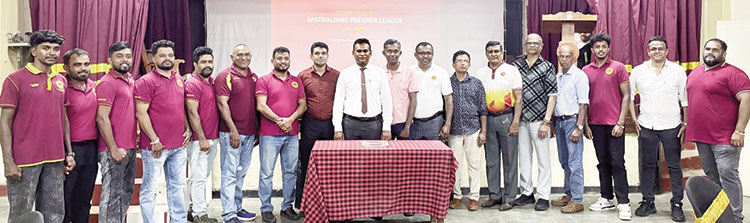
The inaugural Sastralian Premier League (SPL), a T10 cricket tournament aimed at strengthening the cricketing fortunes of Ananda Shasthralaya National School, Matugama, will get underway next month, bringing together eight teams.
Organised by the Old Sastralians Cricket Association in collaboration with the school, the tournament is designed to provide a platform for emerging talent while generating much needed financial support for the school’s cricket development programme.
Each franchise will be required to assemble a squad of 16 players, excluding the captain, with the competition featuring a unique set of regulations aimed at encouraging participation across different age groups.
Cricketers from other schools in the Matugama area will also have an opportunity to showcase their skills under the ‘Guest Players’ category. Each team can recruit up to six guest players, with four required to feature in the playing XI.
In a move designed to nurture the next generation, every team must include two current school cricketers in its squad, with at least one guaranteed a place in the playing XI.
The tournament will also accommodate experienced campaigners, with teams permitted to select five players over the age of 20 and three over 40. The provision to use an ‘Impact Player’ is another feature of the competition.
The eight teams have been divided into two groups. Group A comprises JSD Challengers, Jagath Express, Liveka Power Lions and Rexhill Warriors, while JPI Royals, Five Star Heroes, Marine Titans and Finnk Falcons make up Group B.
A total of 16 matches will be played across November 7, 8 and 15, with November 16 set aside as a reserve day.
Beyond the action on the field, organisers hope the tournament will provide a financial boost to school cricket while forging stronger ties between past and present cricketers.
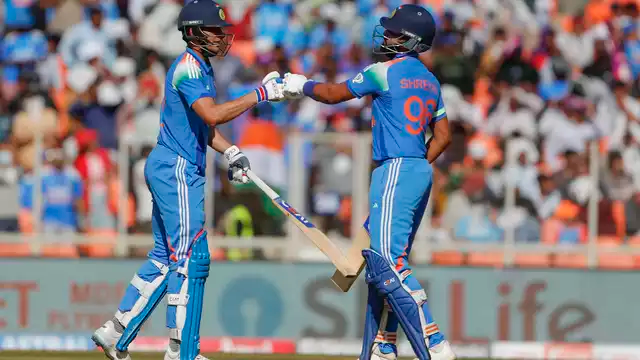
Squad for the first three ODIs: Shubman Gill [C], Rohit Sharma, Virat Kohli, Shreyas Iyer [VC], KL Rahul [WK], Nitish Kumar Reddy, Axar Patel, Naman Dhir, Anshul Kamboj, Gurnoor Brar, Ruturaj Gaikwad, Arshdeep Singh, Ishan Kishan [WK], Mohammed Siraj, Prasidh Krishna*, Kuldeep Yadav
Squad for fourth and fifth ODIs: Shreyas Iyer [C], Rohit Sharma, Virat Kohli, Tilak Varma, Ishan Kishan [WK, VC], Nitish Kumar Reddy, Axar Patel, Naman Dhir, Auqib Nabi, Gurnoor Brar, Ruturaj Gaikwad, Arshdeep Singh, Kumar Kushagra [WK], Mohammed Siraj, Yash Thakur, Kuldeep Yadav
[Cricbuzz]

Rose Bowl expanded to include Australia vs New Zealand T20Is

Trump claims US Navy blockade stops Iranian ships in Hormuz

Showers above 75 mm are likely at some places in the Western, Sabaragamuwa, Central and North-central provinces and in Trincomalee and Mullaitivu districts

Cut power bills by 3-5%, don’t hike them, consumers demand

Asgiri Mahanayake calls for immediate release of Gnanasara Thera

Lanka Air Force joins multinational exercise in India

‘Dates have the highest sugar content to fight Coronavirus’

Sunday Island 27 December – Headlines

#SundayIsland 17th December – Headlines

Sunday Island – 28th March

Sunday Island Headlines – 21 March

Sunday Island – 21st February – Headlines
-

 News6 days ago
Sri Lanka escalates anti-graft drive with Shiranthi’s jailing
-

 Latest News5 days ago
Farhan and Sadaqat help Pakistan seal series in style
-

 News6 days ago
Iranian ships stranded, Lanka fears US sanctions
-

 Latest News4 days ago
Nissanka’s return headlines Sri Lanka’s Test squad against Pakistan
-

 Features5 days ago
Intake 16: 45 years of duty and honour
-

 News5 days ago
Malwathu Chapter issues statement on talks with President over Gnanasara Thera’s robes
-

 News6 days ago
Navi Pillay’s Lankan affairs in focus as she wins 2026 Nobel Peace Prize
-
 News5 days ago
CP alleges NPP has taken the blame for illegal US sanctions on Iranian vessels