
News
Sri Lanka: Repression of Civic Space Threatens Financial Reform


IMF Should Oppose Restrictions on Freedom of Expression, Civil Society Groups
(Washington, DC) – The International Monetary Fund (IMF) should urge Sri Lanka’s government to abandon draft legislation that would severely curtail civil society and jeopardize the IMF’s program in the country, Human Rights Watch said in a letter to the IMF that was released today. The proposed Non-Governmental Organizations (Registration and Supervision) Act is among several recent and planned measures that would curtail fundamental freedoms, despite the critical role of public scrutiny in promoting good governance and combatting corruption.
The IMF’s US$3 billion bailout of Sri Lanka – which is linked to government commitments to reform – helped stem the immediate economic crisis after the country defaulted on its foreign debt in 2022, but further progress is threatened by the adoption of laws by President Ranil Wickremesinghe’s administration that would severely restrict basic rights. The Online Safety Act, enacted in January, creates vague and broad speech-related offenses punishable with lengthy prison terms. The Anti-Terrorism Bill, currently before parliament, contains sweeping new speech-related offenses and arbitrary powers of arrest. And the draft law to regulate nongovernmental organizations could make independent civil society activity all but impossible in Sri Lanka.
“As the economy collapsed in 2022, Sri Lankans demanded good governance and an end to corruption, but instead now face draconian laws and policies that threaten human rights and undermine reforms,” said Meenakshi Ganguly, deputy Asia director at Human Rights Watch. “The protests helped bring President Wickremesinghe to power, but instead of listening to calls for change, he’s clamping down on peaceful dissent.”
A 2023 IMF study of Sri Lanka known as the Governance Diagnostic Assessment stated that “[a]nticorruption efforts are unlikely to achieve their objectives unless they also encompass initiatives designed and led by groups outside of government who are committed to rule-based inclusive economic and social progress.” However, the study found that civil society’s participation in oversight and monitoring of government actions has been “restricted by limited transparency, the lack of platforms for inclusive and participatory governance, and by broad application of counter-terrorism rules.” As a result, “opportunities for public participation and oversight of official behaviour, including by civil society, are increasingly restricted.”
The government on January 30, 2024, provided the draft NGO law to selected members of civil society, who were given three weeks to respond. The bill does not address any evident need, but instead seeks to subject civil society organizations to invasive government scrutiny and interference, and threatens civil society members with prison if they don’t comply with cumbersome administrative procedures.
The National Collective of CSOs and NGOs, a coalition of Sri Lankan civil society organizations, wrote to the government on February 28 that the proposed law would “violate the fundamental rights to freedom of association and expression,” while damaging the delivery of services by civil society organizations, including to “the many families who are struggling to make ends meet in the midst of severe economic hardship.”
The United Nations High Commissioner for Human Rights, Volker Türk, in his March 1 update to the UN Human Rights Council on the crisis in Sri Lanka, said he was “concerned by the introduction of new or proposed laws with potentially far-reaching impact on fundamental rights and freedoms … which variously strengthen the executive, grant broad powers to the security forces, and severely restrict rights to freedom of assembly, association and expression, impacting not only on civic space but the business environment.”
The IMF should protect the credibility and efficacy of its program in Sri Lanka by publicly calling upon the government to abandon the proposed NGO law, impose a moratorium on use of the Online Safety Act, and amend the Anti-Terrorism Bill to ensure that it respects human rights standards, Human Rights Watch said.
“The IMF and other international partners supporting Sri Lanka’s economic recovery recognize that this crisis has its roots in misgovernance and corruption,” Ganguly said. “If their efforts are to be successful, they need to stand firm against the government’s attempts to curtail fundamental civil and political rights.”





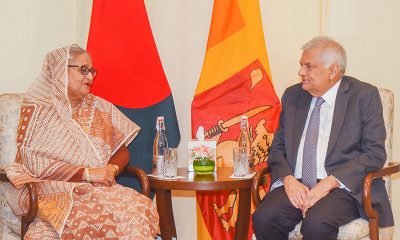



A group of Tamil Progressive Alliance (TPA) members, including its Leader Mano Ganesan, met President Anura Kumara Dissanayake on Thursday (02) morning at the Presidential Secretariat.
Extensive discussions were held on the issues faced by the Malayagam communities, particularly in relation to education, housing and land, as well as on the urgent measures required to address these concerns. The President paid special attention to all these matters.
Attention was also drawn to the recruitment of qualified Tamil-medium teachers to address the teacher shortage in estate sector schools and this too was discussed at length.
Members of Parliament P. Digambaram and V. Radhakrishnan, along with several other party members, were present at the meeting.
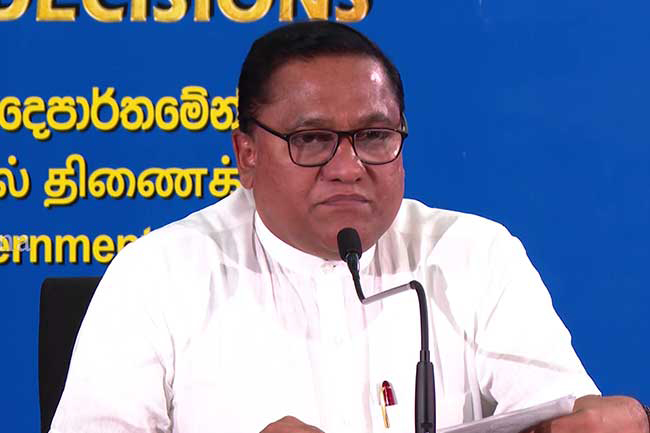
Minister of Foreign Affairs, Vijitha Herath, held talks with Deputy Foreign Minister of Russia Andrey Rudenko at the Foreign Ministry, in Colombo, on Thursday (02), with both sides reaffirming their commitment to strengthening bilateral relations.
The Sri Lanka Ministry of Foreign Affairs said the visiting Russian Deputy Minister noted that Russia regarded Sri Lanka as a long-standing friend.
Rudenko assured that Russia stood ready to support Sri Lanka when required, including in the swift supply of Russian oil to help address the current energy challenges, encouraging Russian investors to explore new opportunities in the country and promoting increased tourist arrivals.
He also expressed Russia’s readiness to provide compensation for Sri Lankan war veterans who had lost their lives in the ongoing conflict between Russia and Ukraine.
Minister Herath welcomed Russia’s willingness to assist, emphasising that Sri Lanka valued the support extended by its “old friend”, particularly at a time when the country was facing pressing energy needs.
He noted that the two countries shared nearly seven decades of diplomatic relations and said the present moment provided an opportunity to further strengthen ties, including through long-term trade agreements.
The discussions focused on enhancing cooperation in the fields of energy, investment, tourism and diplomacy, with both sides reiterating their commitment to further deepen the longstanding friendship between Sri Lanka and Russia.

Police yesterday arrested 157 foreign nationals in connection with an alleged organised online financial scam, conducted from a hotel in the Iranawila area in Chilaw.
The suspects were taken into custody during a raid carried out by the Police while they were staying at the hotel in Iranawila.
Police said the arrested group included 143 nationals from China, 13 from Bangladesh and one from Vietnam.
Investigators suspect the group had been involved in a coordinated online financial scam, targeting victims through digital platforms.
The suspects are being detained for further questioning while investigations are continuing to determine the full extent of the operation and whether additional individuals were involved.Police said further inquiries are underway.
By Norman Palihawadane

Iran executes two convicted members of banned opposition group

Afghanistan earthquake kills eight members of same family

Breakdown of the teams and groups of the FIFA World Cup in Canada, Mexico and the US after the final playoffs

365 US service members injured since start of Iran war – Pentagon

World Cup 2026: Italy’s football chief resigns after qualifying failure

Iran says it downed two US jets as search for one pilot continues

‘Dates have the highest sugar content to fight Coronavirus’

Sunday Island 27 December – Headlines

#SundayIsland 17th December – Headlines

Sunday Island – 28th March

Sunday Island Headlines – 21 March

Sunday Island – 21st February – Headlines
-

 News3 days ago
2025 GCE AL: 62% qualify for Uni entrance; results of 111 suspended
-

 News5 days ago
Tariff shock from 01 April as power costs climb across the board
-
 News6 days ago
Inquiry into female employee’s complaint: Retired HC Judge’s recommendations ignored
-
 Features7 days ago
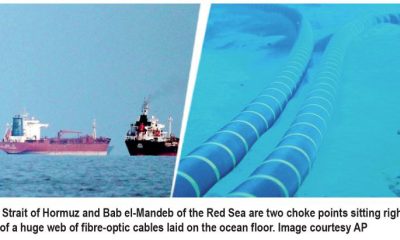
When seabed goes dark: The Persian Gulf, cable sabotage, and race for space-based monopoly
-
 Features6 days ago
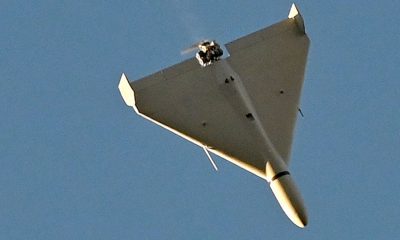
New arithmetic of conflict: How the drone revolution is inverting economics of war
-

 Editorial3 days ago
Search for Easter Sunday terror mastermind
-

 Business4 days ago
Hour of reckoning comes for SL’s power sector
-

 Sports6 days ago
Sri Lanka’s 1996 World Cup heroes to play exhibition match in Kuala Lumpur