
Business
Sri Lanka ‘keeping an open mind’ on an IMF bailout

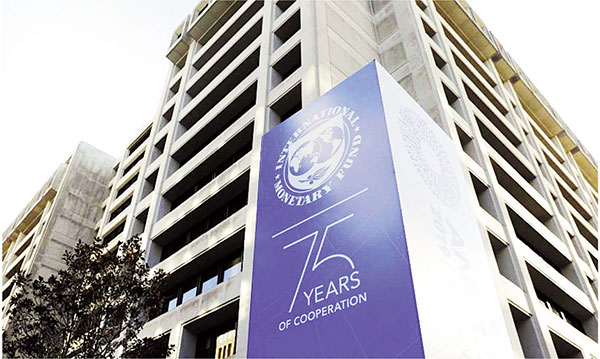
Cabinet Spokesman and Plantation Minister Dr. Ramesh Pathirana said yesterday that Sri Lanka was keeping an open mind about dealing with the IMF and would not ruled out assistance from the global lender to bailout Sri Lanka from the current economic and foreign currency reserves crisis.
While expressing hopes for an economic turnover in the coming months, Dr. Ramesh Pathirana said that the government was assessing the situation with an open mind. “We are in touch with the World Bank, the Asian Development Bank (ADB) and other global financial agencies. The government has not taken a decision not to deal with the IMF. It was under Mahinda Rajapaksa presidency that Sri Lanka obtained the highest amount of foreign loans from the IMF,” he recollected.
“Foreign remittances and tourist arrivals have recorded a steady increase in the last few months. The benefits accrued from vehicle and other nonessential imports were negated as a result of the sharp escalation of oil process in the international market and the three waves of the pandemic,” he said addressing the media.
“Sri Lanka’s import bill exceeds its export income drastically creating a huge trade gap. For instance, Sri Lanka imported goods in excess of US$ 4.1 billion in 2021 more than the value of its exports. Until we take steps to contain the trade deficit, Sri Lanka cannot come out of this economic crisis,” he observed.
Sri Lanka is facing debt repayment obligations of about $4 billion this year. In this context, politicians in the Opposition and economists are urging the government to seek assistance from the IMF.
Some opposition members have also urged the government to table in parliament an anticipated IMF assessment of the economic and financial situation, conducted as part of its regular consultations with Sri Lanka.
“It is essential that the government table this document before parliament and clearly state their plan for addressing this crisis in a sustainable manner,” members of the Opposition said.
With fuel stocks sufficient to last only for a few days, Pathirana said the Central Bank has been directed to release funds for fuel shipments.
Fuel shortage is also hitting power supply in the country with the power regulator (PUCSL) warning hours of rolling power cuts described as load shedding, over the next few days unless oil supplies to thermal power plants increase.
Pathirana mentioned the fact that any further increase in global oil prices would make the situation even more difficult. “We hope tensions in Ukraine will not push oil prices further up putting more pressure on Sri Lanka,” he said.





Business
CBSL and Australia’s S4IE programme partner to advance digital financial literacy for MSMEs


The Central Bank of Sri Lanka (CBSL) has entered into a Memorandum of Understanding (MoU) with Australia’s Skills for an Inclusive Economy (S4IE) programme to launch a pilot initiative aimed at enhancing digital financial literacy among micro, small, and medium enterprises (MSMEs). Recognised as a vital engine of Sri Lanka’s economic recovery and inclusive development, MSMEs stand to benefit from targeted interventions designed to improve access to finance, strengthen institutional coordination, and foster a more supportive enabling environment.
The pilot will test evidence-based approaches, the outcomes of which will inform future policy design and programming. CBSL intends to scale successful measures in collaboration with national and international partners.
Commenting on the partnership, Dr. P. Nandalal Weerasinghe, Governor of the Central Bank of Sri Lanka, stated: “This initiative reflects CBSL’s dedication to practical, evidence-based solutions. The pilot enables us to test and refine methodologies that can be expanded over time to deliver sustainable outcomes for MSMEs across the country.”
His Excellency Matthew Duckworth, Australian High Commissioner to Sri Lanka, emphasied the program’s long-term vision: “Australia is pleased to partner with the Central Bank of Sri Lanka on this initiative. From the outset, our focus has been on building systems and partnerships that are both sustainable and scalable, ensuring benefits extend well beyond the pilot phase.”
The initiative aligns with broader efforts to promote inclusive economic growth and strengthen institutional capacity. It reflects Australia’s ongoing partnership with Sri Lanka in support of reforms that advance economic stability, resilience, and shared prosperity.
Representing the Australian High Commission, Zoe Kidd, First Secretary (Development), and R. Sivasuthan, Senior Programme Officer, reaffirmed Australia’s commitment to close collaboration with CBSL. Their aim is to ensure the pilot yields actionable insights and sustainable outcomes, with a clear pathway toward future scaling.

Adding to the existing pressures, the Public Utilities Commission of Sri Lanka (PUCSL) has approved a revision of electricity tariffs for the second quarter of 2026, effective from today for users who consume over 180 electricity units. This increase arrives just as the Sri Lankan rupee faces renewed pressure, having recorded a 3.6% depreciation against the US dollar year-to-date. The convergence of a weaker currency and higher power costs creates renewed pressure on the cost of living.
For the average Sri Lankan household, this policy shift is not just a line item on a utility bill; it is a catalyst for a broader inflationary trend. Even before this revision, headline inflation had already shown signs of a sharp ascent, with the Colombo Consumer Price Index (CCPI) surging to 5.4% in April 2026, a stark jump from the 2.2% recorded only a month prior.
This statistical climb is most painfully visible at the local marketplace. At the Narahenpita Economic Centre, the cost of essentials has become highly volatile: beans have climbed to Rs. 700/kg, while carrots have reached Rs. 400/kg. The protein basket is equally strained, with Kelawalla fish priced at Rs. 2,980/kg. With the new electricity tariffs taking effect, the food manufacturing industry now faces fresh overheads for processing, refrigeration, and packaging. These increased costs will inevitably trickle down to the retail shelf, threatening to push these prices even higher.
While global energy markets offered a brief moment of relief with Brent crude prices dipping by over $6 per barrel last week, the domestic impact of a depreciating rupee means that the cost of imported fuel and raw materials remains high.
This invisible pressure, combined with the visible hike in electricity rates, leaves little room for families to breathe.
Despite these immediate challenges, the broader economic framework shows pockets of resilience, according to the Central Bank’s economic indicators. Industrial production in food and apparel grew steadily earlier this year, and the government recorded a notable budget surplus of Rs. 169.7 billion in the first two months of 2026.
However, as the nation moves into the second quarter, the strength of this fiscal discipline will be tested against the lived reality of its citizens. As the new rates come into effect from today, Sri Lankans are left to wait and see just how much further their kitchen budgets can be stretched.
By Sanath Nanayakkare

Janashakthi Finance PLC, a member of JXG (Janashakthi Group), has relocated its Nugegoda Branch to a more accessible and customer-friendly location at No. 136/5, S. De S. Jayasinghe Mawatha, Nugegoda, further strengthening its commitment to convenience and service excellence.
Situated in the heart of one of Colombo’s busiest urban centres, the new premises offer improved accessibility and enhanced facilities, enabling customers to engage with the Company’s services in a more comfortable and efficient environment.
The branch continues to provide a comprehensive range of financial solutions, including deposits, savings accounts, leasing, gold loans, alternative finance solutions, corporate and SME financing and other tailored financial services designed to meet both individual and business needs.
Speaking at the opening, Sithambaram Sri Ganendran, Chief Executive Officer of Janashakthi Finance PLC said, “Customer convenience and accessibility remain central to our branch strategy. Nugegoda is a vibrant and densely populated commercial hub, and this relocation allows us to enhance service delivery while providing an improved experience for our valued customers. We remain committed to supporting the financial aspirations of individuals and businesses within the community”.

Aligning graduate output with labour market needs:Why national policy intervention essential

A potential problem to be managed

CBSL and Australia’s S4IE programme partner to advance digital financial literacy for MSMEs

Lalkantha cites Lenin: “No women’s liberation while kitchen culture exists”

EU supports development of Net-Zero Roadmap for Lanka’s textile and apparel sector

Higher power costs and a weakening rupee set to strain Sri Lankan kitchen budgets

‘Dates have the highest sugar content to fight Coronavirus’

Sunday Island 27 December – Headlines

#SundayIsland 17th December – Headlines

Sunday Island – 28th March

Sunday Island Headlines – 21 March

Sunday Island – 21st February – Headlines
-

 News4 days ago
MIT expert warns of catastrophic consequences of USD 2.5 mn Treasury heist
-
 News6 days ago
CJ urged to inquire into AKD’s remarks on May 25 court verdict
-

 News7 days ago
USD 3.7 bn H’tota refinery: China won’t launch project without bigger local market share
-

 Editorial4 days ago
Clean Sri Lanka and dirty politics
-

 News24 hours ago
Lanka Port City officials to meet investors in Dubai
-
 Opinion6 days ago
Security, perception, and trust: Sri Lanka’s delicate balancing act
-

 Editorial3 days ago
The Vijay factor
-

 News2 days ago
SLPP expresses concern over death of former SriLankan CEO