
News
Sri Lanka exporters should convert, rupee worth 185 to dollar: Minister Cabraal

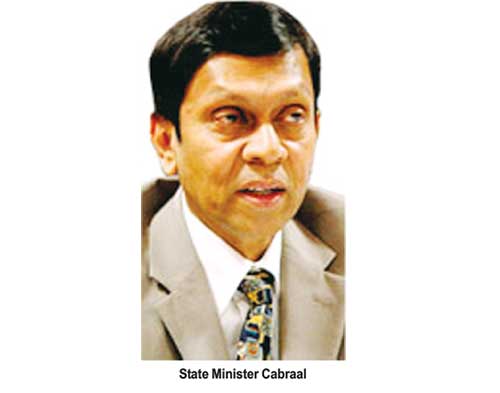
by Imesh Ranasinghe
Sri Lanka’s rupee should be around 185 to the US dollar, State Minister for Money and Capital Markets Nivard Cabraal has said urging exporters to convert dollar inflows without holding them back.
“I think the rupee should be around 185 to the US dollar depending on the macroeconomic factors,” Minister Cabraal said at a conference last week.
Cabraal a former central bank Governor kept the rupee stable for several years, though after a fall in 2012, it was not allowed to appreciate when credit fell in 2013 and the central bank bought billions of dollars for its reserves, for reasons that are not clear.
Sri Lanka’s rupee fell sharply in over January 2021 after the central bank printed money and brought rupee interest rates below local dollar yields over the past year amid a credit downgrade which drove up dollar bond yields, making forward premiums negative and incentivizing importers to cover forward.
As exporters also unwilling to sell forward at a discount, banks bought dollars in the spot and near term market, using the printed money from the central which are sloshing around as excess liquidity to provide forward cover to importers, putting pressure on exchange rate.
Some exporters loaned dollars and were borrowing rupees due to the inverted interest rates.
Due to unprecedented levels of excess liquidity in the overnight market interest rates did not move up in a correction – which would have raised the forward premium – despite interventions by the central bank which reduced some excess liquidity.
Excess liquidity fell from 266 billion rupees at the beginning of the year to around 120 billion rupees amid dollar losses to interventions and debt repayments.
The central bank then closed the forward market, preventing banks from giving forward cover.
“So the central bank took necessary actions about that,” Cabraal said. “And because of those actions taken by the central bank in the past few days, we once again saw the rupee being appreciated.”
Minister Cabraal asked exporters to convert their dollars as soon they receive them, as they may face losses by listening to fear mongers.
“We should keep in mind that it is a tough period for the world, so in such a tough period when we are going forward we all should go forward together,” he said.
“It’s like going in a boat, when that boat is going in a rough sea we should not shake the boat, If one or two tries to shake the boat everyone in the boat will have to face the consequences.”
Cabraal said if some are shaking the boat in that manner will, they will have to take necessary steps in order to stop them from shaking and making the boat unstable,
“It is what the central bank has done now,” he said. “There are other things the central bank can do but our opinion is that it is not necessary to do them now.”
Analysts have blamed a so-called ‘flexible exchange rate’ where a pegged exchange rate is suddenly turned into a floating exchange rate as money printing puts pressure triggering panic and uncertainty forcing importers settle bills immediately taking more credit and exporters to watch and wait.
There have been calls for central bank reform to stop the instability.
The rupee has appreciated in recent days from around 196 to 191 to the US dollar.
Meanwhile Cabraal said in 2014, when Mahinda Rajapaksa administration had left office, the US dollar was 131.5 rupees to the dollar.
At the time the only accusations from the economic experts in the opposition at that time were that the Central Bank is controlling the rupee as it was stable for years and the rupee should be allowed to float.
“But after they came into power the rupee depreciated for 5 years like never before with an annual average depreciation of 6.7 percent,” he said.
There were no global crisis or any other problem during those five years but the rupee depreciated to 181.63 against the US dollar.
“The rupee only depreciated by 2.6 percent in 2020, it is a big achievement when considering the tough period we are going through, meanwhile, the central bank was able to collect 282 million dollar to buttress its reserves,” Cabraal.
Other analysts had also blamed the last administration for giving the central bank independence to target a real effective exchange rate on contested claims that the rupee was more ‘overvalued’ than East Asia while printing money.
The resulting currency crisis then created consumption shocks that lowered growth.
More money was then printed on the basis that there was an output gap, triggering another currency crisis and destroying the economic credential of the United National Party, which was the largest partner of the then ruling coalition.
Analysts had warned of the outcome earlier.
Analysts and economists are now warning that the current monetary framework involving so-called modern monetary theory, with high levels of excess liquidity would also have dangerous consequences as soon as economic activity picks up.
While tourism receipts fell, with no dollar income for tourist sector workers and hotel owners to spend, imports will fall by the same amount, unless money was printed, and credit picked up.
There have been steady losses in foreign reserves, mostly from the financial account despite weak credit lowering imports. (ECONOMYNEXT)

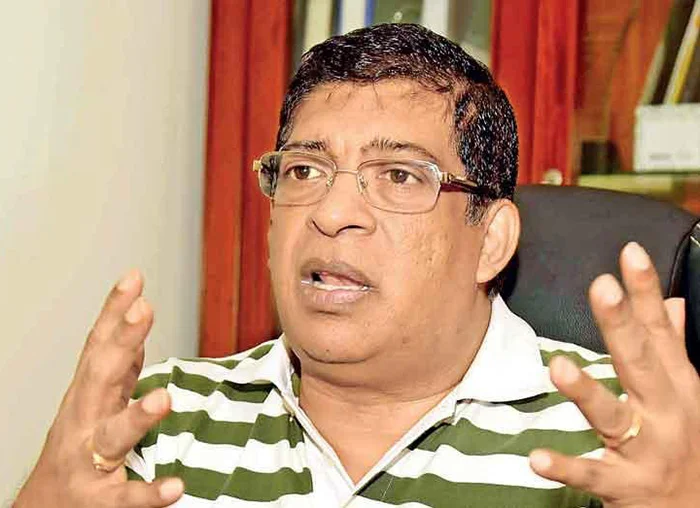
Returned cheques, delayed payments and unresolved insurance claims dominated Parliament on Tuesday as National Democratic Front (NDF) MP Ravi Karunanayake asked the government to make statement on compensation and restoration following Cyclone Ditwah.
Raising the matter under Standing Order 27(2), Karunanayake said thousands of citizens, affected by the 28 November, 2025 cyclone, were still waiting for relief, despite a presidential directive that all compensation and restoration work be completed by 31 December, 2025.
Karunanayake told the House that affected communities were reporting “crippling delays, non-payment, returned cheques and unresolved insurance claims,” warning that the situation had left tens of thousands displaced more than a month after the deadline. “These delays raise grave concerns about transparency, administrative capacity and accountability,” he said.
Cyclone Ditwah caused widespread destruction across several districts, claiming lives and damaging homes, infrastructure, agriculture, fisheries and small and medium-sized enterprises. Karunanayake said reports indicated that around 48,000 people were still unable to return to their homes, underscoring the scale of the humanitarian and economic impact.
Full text of Karunayake’s statement: I rise under Standing Order 27(2) for an urgent Government statement on compensation and restoration after Cyclone Ditwah of 28 November 2025, which caused severe loss of life, destruction, and widespread damage. Despite a Presidential directive for completion by 31 December 2025, affected citizens report crippling delays, non-payment, returned cheques, and unresolved insurance claims. Reports suggest tens of thousands remain displaced, raising grave concerns.
For transparency, I seek clarification on:
1. Has the Disaster Management Centre formally approved a consolidated national loss and damage assessment? What is the total estimated loss and approval date?
2. What is the total restoration cost, disaggregated by housing, infrastructure, agriculture, fisheries and SMEs?
3. What is the total affected population? Provide a district-wise breakdown of casualties, displaced families, and destroyed/damaged houses. Is it correct that 48,000 persons cannot return home?
4. What compensation categories, eligibility criteria, and payment rates were approved for households, the deceased, farmers, SMEs, and others and under what authority?
5. As of 31 December 2025 and now, how many payments and total amounts have been disbursed for each band (e.g., Rs. 25,000; Rs. 50,000; Rs.1Mn for deceased; housing bands up to Rs. 10Mn), plus farmer and SME payments, by district?
6. How many eligible beneficiaries remain unpaid, by category and district and what are the principal causes (verification, documentation, banking, funding)?
7. Why have compensation Cheques been returned, how many cases exist and what remedial measures are in place?
8. What steps ensure Insurance Companies settle claims? How many claims and what value remain unpaid?
9. What donor funds (grants, loans, aid) have been received? How much has been spent on compensation vs. infrastructure and when will the International donor conference be held?
I request the Government table its response with annexed district-wise tables on assessments, allocations, disbursements, returned cheques, insurance status and unpaid balances.”
Deputy Defence Minister Major General (retd) Aruna Jayasekara said that the government needs two weeks to respond to the queries raised by MP Karunanayake.
by Saman Indrajith
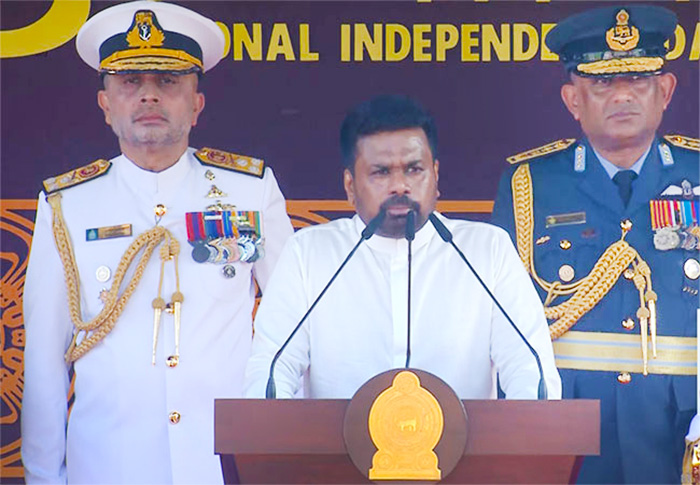
President Anura Kumara Dissanayake yesterday called for unity, beyond petty differences, to build an economically strong Sri Lanka, declaring that the country’s greatest asset was its human resource and warning that there would be no place for racism or extremism in the nation’s future.
Addressing the 78th National Independence Day celebrations, at Independence Square, in Colombo, the President said Sri Lanka must embark on a path of rebuilding, rooted in its sovereignty, history and values, while embracing reform and progress. The national celebrations, held under the theme, ‘Rebuilding Sri Lanka’, commenced at around 7.30 a.m., paying tribute to those who sacrificed much to secure independence from British rule in 1948.
More than 4,500 personnel from the tri-forces and Police took part in the ceremony, alongside around 400 invited guests, including foreign diplomats. A special security and traffic management plan was also in effect, with over 2,000 Police officers deployed across Colombo to ensure public safety and smooth traffic flow.
In his address to the nation, President Dissanayake paid tribute to past generations who fought for the countrys freedom, describing them as heroic patriots whose sacrifices formed the foundation of the nation.
The land on which we stand today is drenched with the blood and tears of our ancestors, he said, adding that it was the duty of present and future generations to honour that legacy.
The President stressed that rebuilding Sri Lanka required drawing strength from the country’s proud history while rejecting harmful practices of the recent past. Economic development, he said, must not erode the foundations of the nation but instead be firmly rooted in the soul of the land and its people.
Emphasising the importance of human capital, the President said Sri Lanka must transform its human resources into a competitive force capable of standing alongside developed nations. He underscored the need to prioritise knowledge, unity and progress over ignorance, prejudice and division, and announced that the Government was ready to implement the most far-reaching education reforms in the country’s history to achieve this goal.
We are prepared to initiate a transformative era in education, he said, pledging to overcome resistance from outdated thinking, and expressing confidence that the people would support the reform process.
The President also highlighted the centrality of the rule of law, national unity and healthy international relations in rebuilding the country. True freedom, he said, could only be achieved through economic strength, supported by good governance and social cohesion.
Reaffirming his commitment to national unity, President Dissanayake said racism and extremism would not be tolerated, warning that both only weakened the nation. He called on all segments of society, including the Government, Opposition, public service and religious leaders, to unite with determination to rebuild Sri Lanka in every sphere.

Prime Minister and Education Minister Dr Harini Amarasuriya told Parliament on Tuesday (3) that none of the modules introduced for Grade 6 under the proposed education reforms had been withdrawn.
Responding to a question by SJB Kurunegala District MP Nalin Bandara Jayamaha, the Prime Minister said the government was planning to implement reforms from 2027.
“Only the modules for the first term of Grade 6 have been printed so far. None of these modules has been rejected or withdrawn. They will be used when the reforms are implemented. No decision has been taken to discard them or to take any action that would result in a financial loss,” she said.
The PM said distribution of the printed Grade 6 textbooks, which had been stored in warehouses, had already commenced and that the government expected to complete the distribution of them by mid-February.
“The teaching process has already begun. As the existing syllabus remains in force, teachers are continuing instruction under the current curriculum,” the Prime Minister said.
MP Jayamaha said there had been controversy surrounding a particular Grade 6 module and sought clarification as to whether it would be withdrawn.
In response, the Prime Minister reiterated that no modules had been removed, due administrative action had been taken with regard to the relevant Grade 6 module and that the matter would be addressed appropriately.
By Saman Indrajith

Showers above 75 mm are likely at some places in the Uva province and in Batticaloa, Ampara, Hambantota and Nuwara-Eliya districts

Parliament: Govt. questioned on returned cheques, delayed payments for disaster victims

President urges shedding of petty differences to achieve an economically strong Sri Lanka

PM: No withdrawal of modules introduced for Grade 6 under proposed education reforms

Lion flags flutter in Vavuniya as black flags mark Independence Day in Kilinochchi

From Gut Feel to GPS: Why Sri Lankan brands must own their AI intelligence

‘Dates have the highest sugar content to fight Coronavirus’

Sunday Island 27 December – Headlines

#SundayIsland 17th December – Headlines

Sunday Island – 28th March

Sunday Island Headlines – 21 March

Sunday Island – 21st February – Headlines
-
 Opinion6 days ago
Sri Lanka, the Stars,and statesmen
-

 Business5 days ago
Hayleys Mobility ushering in a new era of premium sustainable mobility
-

 Business2 days ago
SLIM-Kantar People’s Awards 2026 to recognise Sri Lanka’s most trusted brands and personalities
-

 Business5 days ago
Advice Lab unveils new 13,000+ sqft office, marking major expansion in financial services BPO to Australia
-

 Business5 days ago
Arpico NextGen Mattress gains recognition for innovation
-

 Business4 days ago
Altair issues over 100+ title deeds post ownership change
-

 Business4 days ago
Sri Lanka opens first country pavilion at London exhibition
-

 Editorial5 days ago
Govt. provoking TUs