
News
Sri Lanka expects more Chinese tourists : senior official


COLOMBO , Jan. 14 (Xinhua) — “I have traveled almost all over China, and get impressed by the beauty of the diverse culture, food and friendly people. I also hope that more Chinese tourists will come to my country to experience Sri Lanka’s scenery and culture,” Ruwan Ranasinghe, deputy minister of the Ministry of Foreign Affairs, Foreign Employment and Tourism of Sri Lanka, has told Xinhua.
In 2014, Ranasinghe realised his dream of studying in China. Under the Belt and Road Initiative, Ranasinghe won a Chinese government scholarship and went to Sichuan University to pursue a doctorate in tourism management.
During his stay in China, Ranasinghe and his tutor promoted the establishment of the International Center for Interdisciplinary Culture Heritage & Tourism Research, SCU-UWU. He also witnessed the increasing preference of Chinese tourists for Sri Lanka.
In 2017, China became the second largest source of tourists to Sri Lanka, with more than 260,000 Chinese tourists travelling to Sri Lanka throughout the year. However, with turbulence in Sri Lanka’s domestic situation and the COVID-19 pandemic, the number of Chinese tourists to Sri Lanka has sharply declined for some time.
After the pandemic, Chinese tourists travelling abroad increased significantly. Ranasinghe said that the Sri Lankan government welcomed the return of Chinese holidaymakers. The country hopes to create more convenient conditions for Chinese tourists regarding visas and direct flights, so that Sri Lanka will become one of preferred choices for Chinese tourists.
“Sri Lanka and China have close economic, diplomatic and cultural exchanges,” said Ranasinghe, stressing that high-quality Belt and Road cooperation and major projects between the two countries such as the Colombo Port City and Hambantota Port have provided important impetus for Sri Lanka’s economic recovery and showcased a strong connection between the two countries.
Sri Lanka’s President Anura Kumara Dissanayake pays a state visit to China from Jan. 14 to Jan. 17. Ranasinghe said that Sri Lanka and China are expected to achieve more results in many aspects including trade and investment, cooperation in key projects, and cultural and tourism exchanges, to promote bilateral ties to a new high.
“Sri Lanka also has had frequent and close cultural exchanges with China for many years,” Ranasinghe said. Famous Chinese monk Fa Xian and legendary Chinese navigator Zheng He had visited this island.
Exchanges between the two peoples and cultures can still establish strong bonds to further our bilateral relations, Ranasinghe said. “For example, I studied in a school in Sichuan and knew that Sichuan people like spicy food. Sri Lanka is also a country where its people relish spicy food very much. I welcome more Chinese tourists to visit my country.”






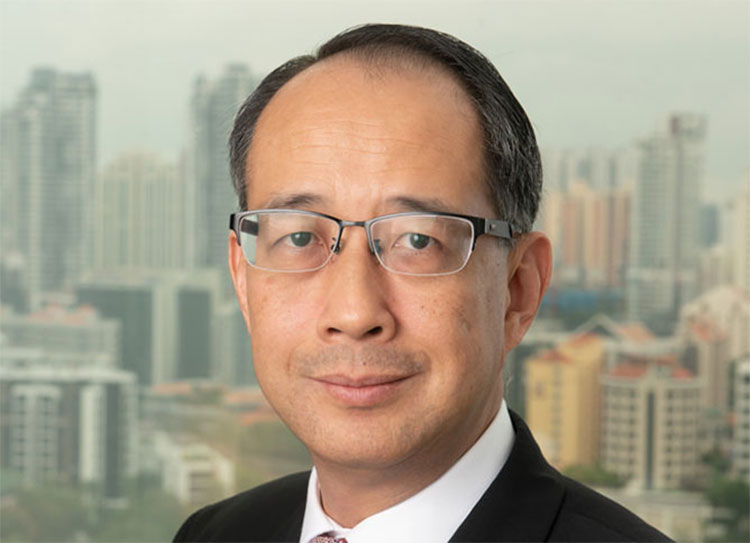
The Law Association for Asia and the Pacific (LAWASIA) has backed the campaign by the Bar Association of Sri Lanka against the government’s effort’s to extend the retirement ages of judges of the Superior Courts.
T.L Yap, President of LAWASIA, in a statement dated 26 June, has expressed concern over the NPP government’s move in the wake of President Anura Kumara Dissanayake’s recent statement in Parliament on the delay in making the appointments.
The text of the statement: “LAWASIA shares the concern expressed by the Bar Association of Sri Lanka (BASL) on 25th May 2026 in a letter to His Excellency the President of Sri Lanka regarding the prospect of the Government of Sri Lanka introducing an amendment to the Constitution which would increase the retirement age of the Judges of the Court of Appeal and the Supreme Court.
LAWASIA supports the sentiments expressed by BASL in its letter of 25 May, namely: “Extending the retirement age of the sitting Judges of these Courts at this point of time is likely to be viewed by the public as a blatant attempt to interfere with the judiciary… The independence of the Judiciary and the public confidence reposed in it, are indispensable pillars of the rule of law and the democratic framework of (Sri Lanka).
In that regard it is of paramount importance that the Judiciary must not only remain independent in fact but also must be seen by the public to be wholly independent, impartial, and free from even the slightest perception of influence, favour, accommodation, or impropriety”
The Constitution of Sri Lanka recognizes the independence of the judiciary and its importance in preserving and maintaining the rule of law. The retirement age of senior judges is presently fixed by Article 107(5) of the Constitution. Constitutional amendment in any jurisdiction is a serious matter which must not be undertaken lightly. LAWASIA’s principal concern is that the proposed constitutional amendment has the appearance of an ad hoc initiative without adequate public consultation. This in turn has the potential to undermine public confidence in the judiciary.
An independent, competent and respected judiciary is the cornerstone of any democracy. LAWASIA has long advocated the fundamental importance of this principle.
The essence of LAWASIA’s formal position in relation to the independence of the judiciary lies in the Beijing Statement of Principles on the Independence of the Judiciary in the LAWASIA Region, adopted at the Conference of Chief Justices held in Beijing in 1997 and subsequently signed by 32 Chief Justices from across the Asia-Pacific.
The Beijing Statement in essence emphasizes the fundamental importance of the independence of the judiciary, and comments on a range of related issues including the objectives of the judiciary, the appointment of judges, the tenure of judges, judicial conditions and the relationship between the judiciary and the executive.
Endorsing the concerns raised by another international organization, the Commonwealth Lawyers Association, LAWASIA accordingly calls upon the authorities in Sri Lanka to:
• refrain from proceeding with the proposed constitutional amendments seeking to increase the
retirement age of members of the Judiciary;
• resist piecemeal and ad hoc amendments to the Constitution of Sri Lanka.
• adhere to due process of consultation and stakeholder engagement in constitutional reform;
• desist from taking any steps which would undermine confidence in the Judiciary and
irreparably diminish the independence of the judiciary; and
• ensure adherence to the rule of law and respect for the independence of the judiciary.
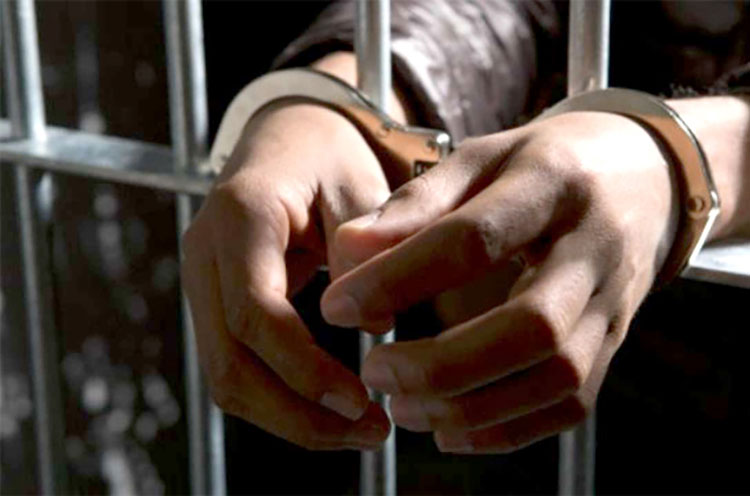
A total of 7,300 young people, below the age of 21, had been arrested on suspicion since the launch of the nationwide ‘Ratama Ekata’ anti-drug operation, DIG in charge of the Police Narcotics Bureau, Ashoka Dharmasena, told The Island yesterday.
DIG Dharmasena said the suspects included about 150 females under the age of 21. He added that more than 214,000 suspects had been taken into custody since the commencement of the national anti-narcotics operation.
The operation was launched with the primary objectives of disrupting the supply of narcotics across the country, reducing the demand for illegal drugs and rehabilitating those addicted to narcotic substances, he said.
DIG Dharmasena said law enforcement authorities had so far seized more than 15,000 kilogrammes of narcotics, including cannabis, during the ongoing operation.
He also noted that police had achieved considerable success in intercepting narcotics smuggled into the country by sea, contributing significantly to efforts to curb the illicit drug trade.
The Police Narcotics Bureau said the nationwide operation would continue as part of the government’s broader strategy to dismantle drug trafficking networks and minimise the social impact of narcotics.
by Norman Palihawadane ✍️
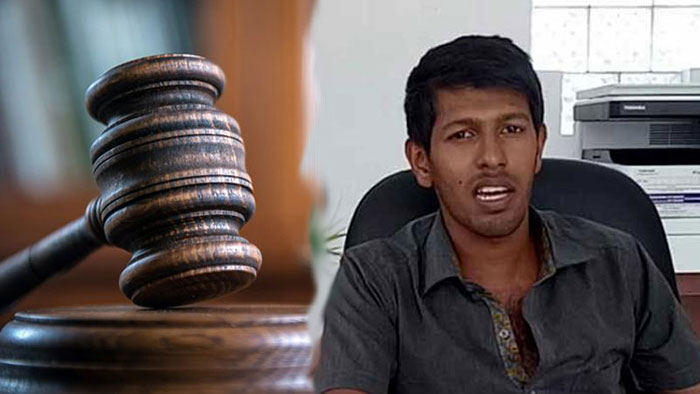
Leader of the Abhinava Nivahal Peramuna, Amit Weerasinghe, was yesterday ordered to be remanded until July 3 by Teldeniya Magistrate Kamal Sanjaya Jayatilake over allegations that he defrauded state officials and businessmen of approximately Rs. 120 million by promising to construct cabana holiday resorts in Ella and Digana.
The suspect was produced before court by the Teldeniya Police Headquarters following his re-arrest on fresh complaints. The Magistrate also ordered an investigation into the suspect’s assets and properties, imposed a travel ban, and directed authorities to freeze his bank accounts.
The Teldeniya Police informed the Magistrate that 26 complaints had been received against the suspect so far and that investigations had revealed a large-scale financial fraud.The Magistrate further directed the police to hand over investigations into the alleged fraud to the CID in Colombo by the next court date.
Weerasinghe had previously been granted bail by court but was arrested again following the receipt of additional complaints.
Investigations are being conducted by Teldeniya Police Headquarters OIC CI D. M. Chandrapala and Teldeniya Division SSP Harsha Amarasinghe under the supervision of Central Province Senior DIG Lalith Pathinayake and DIG Sudath Masinghe.
by SK Samaranayake ✍️

Padikkal fifty, Sudeera five-for before India A, Sri Lanka A settle for draw

Canada score late to beat South Africa and reach last 16 at World Cup 2026

Tector and Moondra headline Ireland’s historic series sweep against India

Roach’s 300th wicket headlines West Indies’ innings win over Sri Lanka

Showers will occur at times in the Western, Sabaragamuwa and North-western provinces and in Galle, Matara, Kandy and Nuwara-Eliya districts.

LAWASIA warns against ad hoc initiative to increase judges’ retirement ages

‘Dates have the highest sugar content to fight Coronavirus’

Sunday Island 27 December – Headlines

#SundayIsland 17th December – Headlines

Sunday Island – 28th March

Sunday Island Headlines – 21 March

Sunday Island – 21st February – Headlines
-
 Opinion6 days ago
Ranasinghe Premadasa: The man who would not take ‘No’ for an answer
-
 News2 days ago
Another 1,132 Sri Lankan Personnel to be deployed for United Nations Peacekeeping Missions
-

 Opinion5 days ago
Sri Lanka’s national security: Justice, reconciliation, and forward-looking vigilance
-

 News6 days ago
US Assistant Secretary of State for South and Central Asian Affairs meets President
-

 News3 days ago
Kelaniya emerges as highest ranked Lankan uni in Times Higher Education Sustainability Impact Ratings
-
 Opinion4 days ago
A triumph for Pakistan’s skilled diplomacy at Iran-US talks
-

 Editorial6 days ago
FCID’s big catch
-

 Features5 days ago
US-Iran war, global exchange rates and Sri Lankan Rupee