
News
Sri Lanka disputes Canadian Travel Advisory

… immediate steps taken to apprise Ottawa
Sri Lanka has challenged a Canadian bid to undermine ongoing efforts to attract tourists. In the wake of the latest Canadian Travel Advisory on Sri Lanka issued on January 13, 2022, the Foreign Ministry has stated that the communique contained erroneous and outdated information that did not reflect the actual situation in Sri Lanka. As such, the Ministry has taken steps to apprise the Canadian authorities of ground realities.
The following is the text of the statement: “There are flawed references to the economic and security situation in the country as well as inaccurate information with regard to the safety and security of female travelers and harassment of foreigners.
Sri Lanka has successfully overcome the immediate challenges posed by the COVID-19 pandemic, and is now in a state of normalcy with all public service, corporate and business, and education activities functioning normally without interruption, in accordance with COVID-19 health and safety guidelines. The nationwide inoculation programme has been commended by the World Health Organization (WHO) and almost 90% of the eligible population has received both doses of the COVID-19 vaccine. A campaign has been launched to provide the booster dose to the population above 20 years of age.
Despite the pandemic, Sri Lanka has received several international accolades in the tourism industry including CNN’s “Where to Travel in 2022”; the Global Wellness Institute; Conde Nast Traveler 2021 Reader’s Choice Awards as well as other endorsements received previously in 2019 by Lonely Planet and the National Geographic Travel. GoSL looks forward to more tourists visiting Sri Lanka from Canada and elsewhere with the gradual normalization of travel globally.
It is important to note that even though Sri Lanka’s economy has been affected by the COVID-19 pandemic, the country is making every endeavor to reinvigorate its economy this year, through the implementation of prudent policies. Food security and law & order are the topmost priorities of the Government, and the availability of all essentials is considered as a vital part of the Government’s functions. As such high priority is given to ensuring that all essential items continue to be available to the public at all time and there are sufficient stocks of food items.
With regard to the security situation, the GoSL maintains minimum presence of military in the North and the East to ensure security and stability in keeping with national security imperatives and this is similar to such presence elsewhere in the country. There is no arbitrary arrest and detention of persons by the police or security forces. Since the end of the terrorist conflict in 2009, security forces have conducted a comprehensive demining operation in the North and East, with technical support of several foreign Governments and international agencies. As at December 2014, 94% of the de-mining had been completed, while presently, the figure has risen to 98.7%. The Advisory states, that ‘there is a threat of terrorism’ and that ‘further attacks cannot be ruled out’. It is notable that since the election of President Gotabaya Rajapaksa in November 2019 the GoSL has taken all necessary measures to ensure public safety and national security throughout the country, to prevent any resurgence of terrorism. It is noteworthy that during this period, there has not been even a single terrorist related incident in Sri Lanka, due to the enhanced vigilance and proactive measures taken by the relevant security authorities.
Sri Lanka is a multi-ethnic, multi-religious and multi-cultural country with a rich, cosmopolitan heritage where different communities have peacefully co-existed over centuries. There is no civil unrest in the country. Sri Lanka has a long democratic tradition with strong institutions, and a vibrant civil society. Freedom of association and assembly are safeguarded with peaceful demonstrations occurring in Sri Lanka as in any other country where liberal democratic norms and traditions prevail. The police have allowed and continue to allow such peaceful demonstrations to take place unimpeded. These demonstrations do not in any way hinder the comfort, movement, safety or activities of tourists.
Specific attention is being paid to the safety and security of women tourists with measures taken to strengthen the presence of police, including tourism police, island-wide in all regions. Under this programme, police presence is being increased in all popular tourist destinations of the country with greater presence of women police officers in police stations. Emergency numbers of tourist police regional units, local police, and other emergency units such as hospitals, are available online to be accessed by travelers to Sri Lanka.
Sri Lanka is an island nation with friendly people with a high level of education, knowledge of English and literacy, and incidents of harassment or violence against tourists or foreigners are extremely rare.”


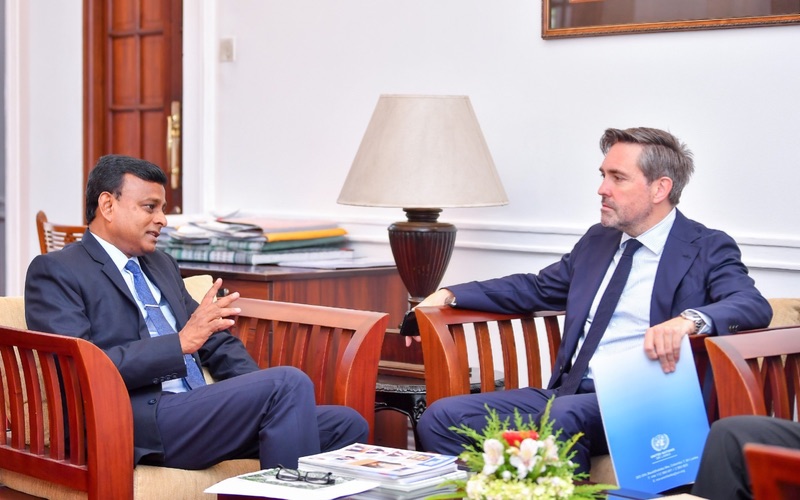
A meeting between UN Resident Coordinator Marc-André Franche and Chief of Staff to the President Prabath Chandrakeerthi was held on Monday (07) morning at the Presidential Secretariat.
Particular attention was given to the Government’s programme to resettle people who lost their homes due to Cyclone Ditwah.
The Government’s programme to address potential disasters that may arise in the future amid El Nino conditions was also discussed. The Chief of Staff to the President briefed the UN Resident Coordinator on the Government’s preparedness and plans to address such challenges.
Mr Franche stated that the United Nations was prepared to provide the necessary assistance to the Government to support the successful implementation of these programmes.
Partnerships and Development Finance Specialist at the United Nations Azam Bakeer Markar and UN Sri Lanka Humanitarian and Resilience Officer Wagisha Perera also participated in the discussion.
[President’s Media Division]
[ Cricbuzz]
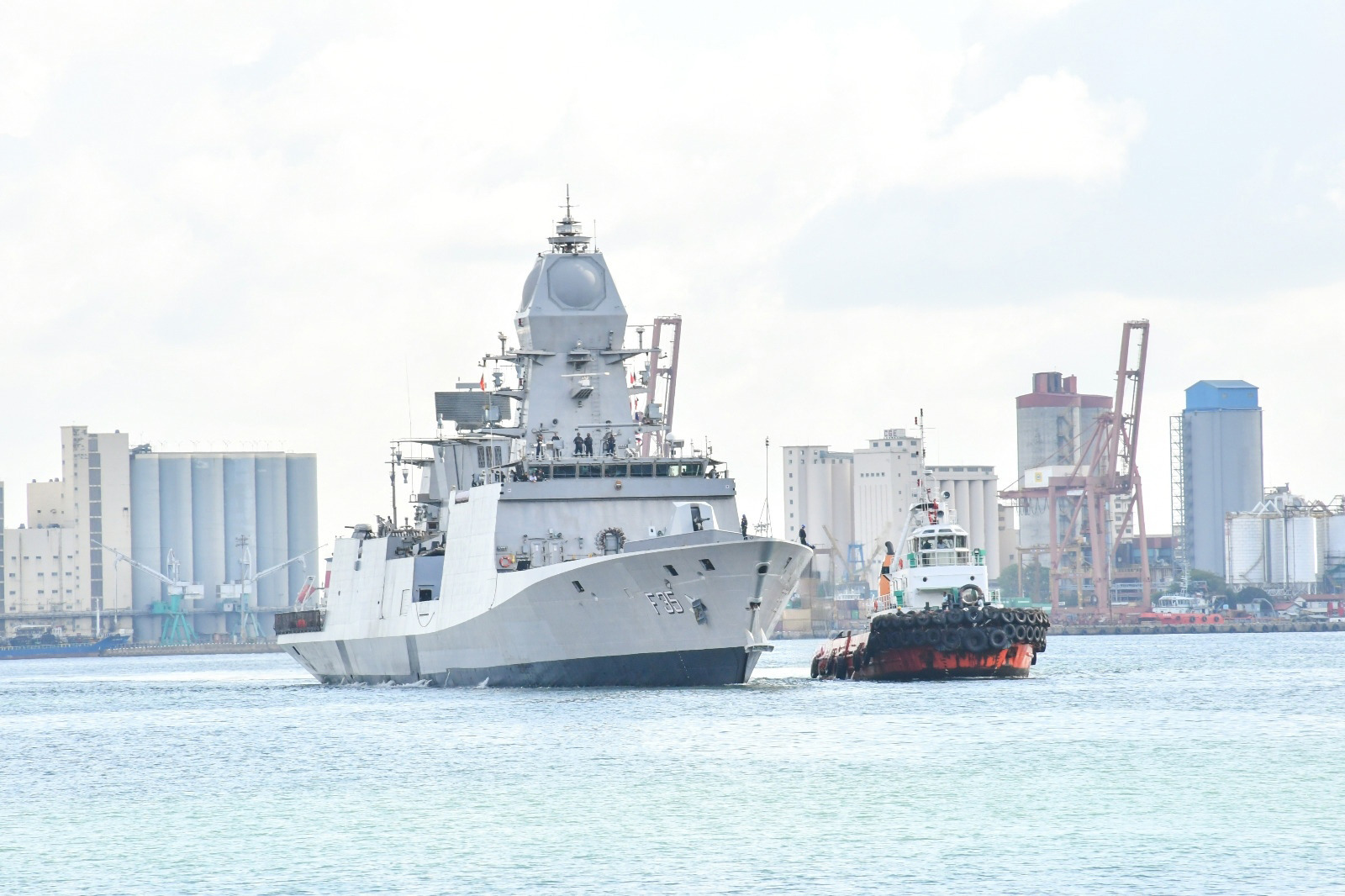
The Indian Naval Ship (INS) Udaygiri arrived at the Port of Colombo on an official visit today, 8 September 2026, where it was received by the Sri Lanka Navy in accordance with time-
honoured naval traditions.
INS Udaygiri is a 149.02m long Frigate, Commanded by Captain Vikas Sood. Meanwhile, the Commanding Officer of the visiting ship is scheduled to call on Commander Western Naval
Area, Rear Admiral Harsha De Silva at the Western Naval Command Headquarters.
Captain Sood served as the Defence Adviser at the Indian High Commission in Sri Lanka from July 2020 to October 2023.
During their stay in the island, the crew of INS Udaygiri will participate in several goodwill events organized by the Sri Lanka Navy to enhance camaraderie between the two forces.
The visiting personnel are also scheduled to visit prominent tourist and cultural locations across the island.
Additionally, Sri Lanka Navy personnel are expected to visit the ship for capability observation and knowledge sharing, and will conduct onboard training during its stay.

UN Delegation Meets Chief of Staff to the President

Afghanistan to host Zimbabwe, Bangladesh in ODI tri-series

Sandhu’s 6 for 7 seals Pakistan’s semi-final spot

INS Udaygiri makes port call in Colombo

Showers in the Uva, Central and Eastern provinces and in Polonnaruwa district

22A: Exclusion of 8 petitions questioned, action filed against SC Registrar, others

‘Dates have the highest sugar content to fight Coronavirus’

Sunday Island 27 December – Headlines

#SundayIsland 17th December – Headlines

Sunday Island – 28th March

Sunday Island Headlines – 21 March

Sunday Island – 21st February – Headlines
-

 News6 days ago
Denied of promotion to SC despite vacancies, justice Gurusinghe retires
-

 Latest News6 days ago
Grade 5 scholarship exam results released
-

 News6 days ago
22A: SC urged to suspend hearing, appoint full bench
-

 Midweek Review7 days ago
The local and global dynamics of Sri Lanka’s 22nd Amendment
-
 News4 days ago
Namal remanded until Sept. 18 over Airbus deal investigation
-

 Latest News3 days ago
Tharanga creates history with Diamond League crown in Brussels
-
 News6 days ago
Govt. seeks NATO assistance
-

 News7 days ago
40 professional organisations and TU oppose proposed 22A