
News
Journalism’s defining battle: Winning trust in the age of AI, misinformation and changing audiences

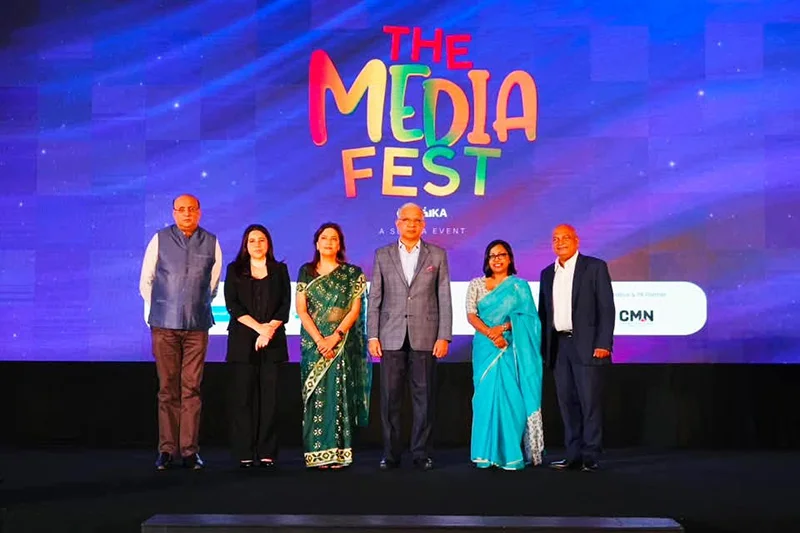
In an era where artificial intelligence can create convincing stories, images and videos within seconds, journalism is facing one of its most defining moments. The challenge before the media is no longer simply finding information, but establishing what is true in an increasingly crowded and confusing information environment.
The future of journalism will not be determined only by technological advancement. It will depend on whether journalists and media organisations can preserve the values that have sustained the profession for centuries — truth, independence, verification, accountability and public trust.
This was the central message that emerged from The Media Fest 2026, organised by the Sri Lanka–India Media Friendship Association (SLIMFA) at Taj Samudra, Colombo, bringing together leading media personalities, editors, journalists, academics, digital experts and communication professionals from Sri Lanka and India.
Held under the theme “Staying Relevant in a Changing World,” the forum examined the transformation taking place across the media industry — from artificial intelligence and misinformation to changing audience behaviour, investigative journalism, digital innovation and the future sustainability of news organisations.
The discussions demonstrated a common reality faced by newsrooms globally: technology may change the tools of journalism, but credibility remains the profession’s most powerful asset.
Indian High Commissioner to Sri Lanka Santosh Jha described MediaFest as an important platform strengthening professional dialogue between journalists of the two countries.
He said India and Sri Lanka, as vibrant democracies with deep historical and cultural connections, shared similar challenges in adapting to technological change while protecting journalistic values.
“As two vibrant democracies, our journalists share many common challenges, from adapting to new technologies and combating misinformation to sustaining public trust and preserving editorial integrity,” Jha said.
He emphasised that closer cooperation between media institutions could help both countries learn from each other’s experiences.
“We can certainly benefit from sharing our experiences, which is an opportunity this platform provides us. We can also use this occasion to strengthen partnerships between our media institutions,” he added.
Jha said artificial intelligence, digital platforms and social media had transformed journalism by expanding the reach and possibilities of storytelling.
However, he stressed that traditional journalistic principles had become more important than ever.
“Accuracy, fairness, verification, integrity and public trust are more important today than ever before,” he said.
Highlighting the resilience of Sri Lanka’s media sector and the scale of India’s media landscape, Jha encouraged greater journalist exchanges, newsroom visits, professional training and institutional partnerships.
Describing the media as a bridge between people, he called for stronger collaboration to create informed and constructive narratives about both countries.
“People-centric narratives can address past stereotypes and false narratives that sometimes inhibit meaningful cooperation,” he said.
SLIMFA President Nisthar Cassim said MediaFest had emerged as an important professional platform connecting journalists, editors, media executives, academics, digital creators and communication experts.
He said SLIMFA, established in 2024, had rapidly developed into a forum promoting closer engagement between the media communities of Sri Lanka and India.
Through editor discussions, roundtables, masterclasses and training initiatives, SLIMFA had encouraged dialogue on issues shaping the future of journalism.
Cassim said the value of such programmes extended beyond discussions, creating opportunities for professional friendships, knowledge sharing and institutional cooperation.
Centre for Investigative Reporting (CIR) Director Dilrukshi Handunnetti brought the perspective of accountability journalism to the discussion, highlighting the continuing importance of investigative reporting in protecting democracy.
She stressed that journalism must go beyond simply reporting events and must examine the deeper issues affecting society.
In an age where misinformation spreads rapidly, investigative journalism remains a vital mechanism for uncovering facts, questioning powerful institutions and ensuring public accountability.
Handunnetti emphasised that technology could provide powerful tools for journalists — from analysing large volumes of information to identifying patterns and strengthening evidence-based reporting.
However, she noted that no technology could replace the essential qualities of an investigative journalist: curiosity, independence, courage and commitment to the public interest.
Her message reflected a central theme of MediaFest — journalism’s relevance depends on its ability to serve society, not merely chase attention.
Another key message from the panel was that organisations must experiment with new technologies rather than wait until others succeed.
The speakers noted that AI, social intelligence and digital platforms would reward organisations willing to learn, adapt and innovate.
By Ifham Nizam





by Norman Palihawadane
Bodu Bala Sena (BBS) General Secretary Ven. Galagoda Aththe Gnanasara Thera’s whereabouts have remained unknown since the Supreme Court, on Monday, annulled a presidential pardon granted to him in 2019.
Prison officers visited the Thera’s temple in Nawala, Rajagiriya, to take steps to return him to prison to serve the unexpired portion of his six-year sentence. However, monks at the temple had reportedly informed the officials that they were unaware of his whereabouts.
Police spokesman ASP F.U. Wootler said a separate court order was required for the police to trace the Thera, or assist in taking him into prison custody. No such order had been issued so far, he claimed.
Meanwhile, sources close to Gnanasara Thera said he was expected to attend a book launch in Colombo tomorrow (17),
The development follows the Supreme Court declaring the 2019 presidential pardon granted to Gnanasara Thera, by then President Maithripala Sirisena, null and void.
A three-member Supreme Court bench held that the pardon had been granted arbitrarily and violated public trust and principles of natural justice.
Gnanasara Thera had been serving a six-year prison sentence for contempt of court when the then President Sirisena granted him the pardon, in May, 2019. He had served only about nine months of the sentence at the time.
With the pardon annulled, the original sentence remains in force and the Thera is now required to serve the balance of his six-year term.
The Supreme Court ruling has raised questions over the procedure to be followed to return him to prison, with police and prison authorities yet to take custody of him.
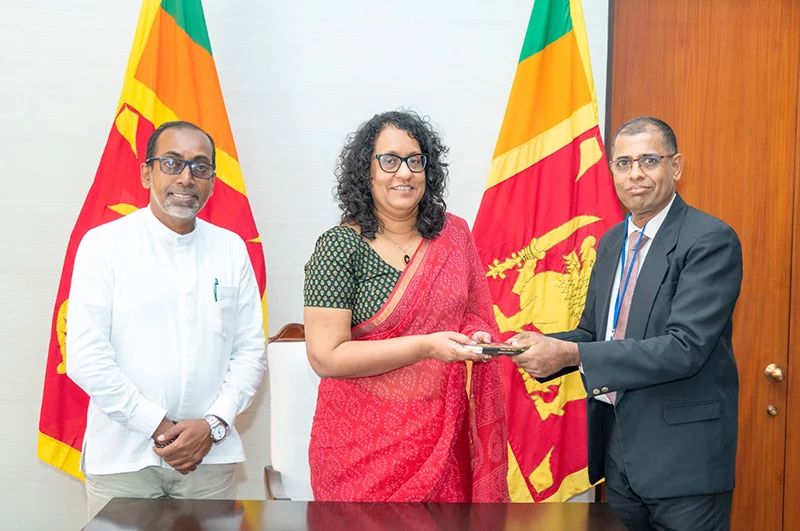
Russian citizens residing or temporarily visiting Sri Lanka will have the opportunity to cast their ballots in the elections to the State Duma of the Federal Assembly of the Russian Federation on September 20.
The Embassy of the Russian Federation in Sri Lanka said polling would be held at polling station No. 8338 at the Russian Embassy, 404, Bauddhaloka Mawatha, Colombo 07.
The polling station will be open from 8 a.m. to 8 p.m. on September 20, according to the Embassy.
Russian citizens aged 18 and above, including those permanently residing in Sri Lanka and those temporarily visiting the country, are eligible to vote, the Embassy said.
Voters are required to visit the polling station during its operating hours and produce documents certifying their Russian citizenship.
The Embassy said prior registration was not required to participate in the voting.
The election will be held to elect deputies to the ninth convocation of the State Duma, the lower house of Russia’s Federal Assembly.
Plastic waste is a growing challenge for Sri Lanka’s food sector, yet important gaps remain in understanding where and how single-use plastics are used, how they move through food value chains, and where interventions could have the greatest impact.
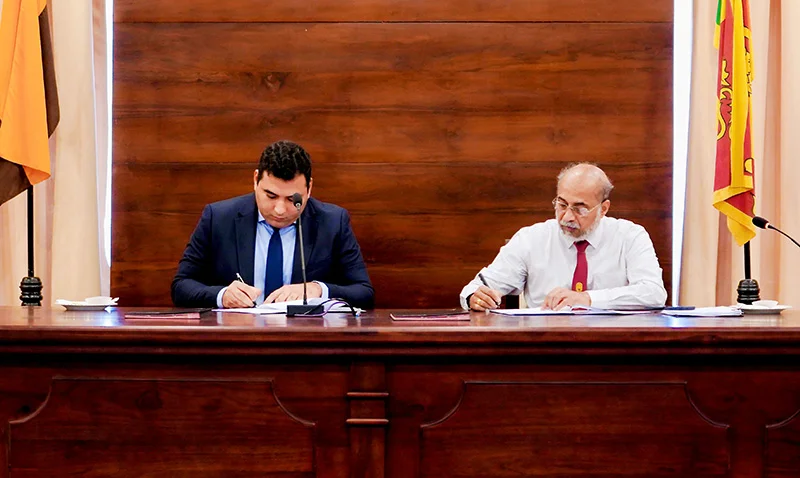
Through the European Union-funded CIRCULAR project, new research will help address these gaps by generating evidence to inform policy, business practices and more sustainable choices. Three research grants, totalling €Euro 110,000, will support university-led studies by research teams from the Faculty of Agriculture at the University of Ruhuna, and the Faculty of Medicine and Faculty of Computing at the University of Kelaniya.
Together, the studies will examine the use, flow and impacts of single-use plastics (SUPs) across selected food and beverage value chains in the Colombo and Galle Districts. The research will also seek to identify practical opportunities to reduce plastic use, promote more sustainable alternatives and strengthen circular economy practices.
At present, available data on plastic waste in Sri Lanka, particularly single-use plastics, do not provide sufficient detail on the sectors, sources and types of plastics involved. This limits the ability of policymakers, businesses and other stakeholders to pinpoint where plastic use can be reduced most effectively and to assess which interventions could deliver the greatest impact. The new research will help provide a more detailed understanding of these patterns, supporting more targeted and evidence-based action.
The three research teams will use a combination of data collection, waste-flow mapping, environmental and public health assessments, and life-cycle approaches to examine these challenges from different perspectives. The findings are expected to help identify opportunities to reduce plastic use, improve resource efficiency and promote more sustainable packaging and waste management practices.
The research grants are part of the CIRCULAR project’s broader efforts to support Sri Lanka’s transition towards more sustainable production and consumption in the food sector. Alongside research and evidence generation, the project works to raise awareness, encourage behaviour change and support approaches that move away from the traditional “take, make and dispose” model towards a more circular economy.
Circular Economy in the Food Sector (CIRCULAR) project is a three-year initiative focused on reducing food loss and food waste (FLW) and Single-use plastic (SUP) waste in the Food Sector in Sri Lanka. Funded by the European Union, and partially co-funded by the German Federal Ministry for Economic Cooperation and Development (BMZ), the project is jointly implemented by Expertise France (EF), the Food and Agriculture Organisation (FAO) and Deutsche Gesellschaft für Internationale Zusammenarbeit (GIZ) GmbH.
By strengthening the evidence base on single-use plastics, the research is expected to provide a stronger foundation for practical action, helping decision-makers, businesses and other stakeholders better understand where change is needed and how more sustainable solutions can be put into practice.

Showers about 75 mm are likely at some places in the Western, Sabaragamuwa, Central and Southern provinces

Brook, Buttler, Baker star as Sri Lanka slump to 119-run rout

Where is Gnanasara Thera?Police pass buck to court

Russian citizens in Lanka to vote in State Duma elections

Euro 110,000 research drive to tackle plastic waste in food sector

New SAU-RCSS pact to boost South Asian dialogue

‘Dates have the highest sugar content to fight Coronavirus’

Sunday Island 27 December – Headlines

#SundayIsland 17th December – Headlines

Sunday Island – 28th March

Sunday Island Headlines – 21 March

Sunday Island – 21st February – Headlines
-

 Sports5 days ago
DDS set to lose Test captaincy
-

 News5 days ago
Sri Lanka faces new grid challenge as rooftop solar surges: former CEB GM
-

 Latest News5 days ago
Shafali, Deepti power India into sixth T20 Asia Cup final
-

 Latest News4 days ago
Sri Lanka thwart Fatima Sana challenge to secure Asia Cup final spot
-

 News3 days ago
Gnanasara Thero absconding after SC ruling
-
 Features6 days ago
Lost for 90 years: Rare Goby resurfaces in Jaffna
-

 News4 days ago
Ammunition cache found in old Kandy bungalow
-

 Latest News7 days ago
Italian Naval Vessel ‘ITS Giuseppe Garibaldi’ arrives in Colombo