
Business
Sri Lanka Development Update 2021 – World Bank Report

(Select extracts)
Amid the COVID-19 pandemic, Sri Lanka’s economy contracted by 3.6 per cent in 2020, the worst growth performance on record, as is the case in many countries fighting the pandemic. Swift measures enacted by the government in the second quarter helped contain the first wave of COVID-19 successfully, but these measures hit sectors like tourism, construction, and transport especially hard, while collapsing global demand impacted the textile industry.
Job and earning losses disrupted private consumption and uncertainty impeded investment. As a result, the economy contracted by 16.4 per cent (y-o-y) in the second quarter. The economy began to recover in the third quarter as the first wave was brought under control and containment measures were relaxed. The momentum continued in the fourth quarter as the economy was broadly kept open despite a second wave of COVID-19 infections.
The government took proactive measures to mitigate the impact of the pandemic. Despite limited fiscal space, resources were allocated (approximately 0.7 per cent of GDP) for health measures, cash transfers, and postponed tax payments. While public expenditures increased, revenues declined, resulting in a widening of the fiscal deficit in 2020. Due to the economic contraction and the elevated fiscal deficit amid COVID-19, public and publicly guaranteed debt is estimated to have increased to 109.7 percent of GDP. In line with the government strategy to reduce external debt over the medi- um-term, debt financing relied increasingly on domestic sources.
The Central Bank of Sri Lanka (CBSL) significantly contributed to the crisis response. It undertook considerable monetary policy easing, for which there was room given benign inflation, and additional measures to increase liquidity in the market and support businesses. It also introduced financial sector regulatory measures, like a debt moratorium for COVID-19 affected businesses and individuals.
However, despite these efforts, bank lending to the private sector remained low. By contrast, credit to the government and state-owned enterprises surged and accounted for 80 per cent of the total credit in 2020.
The pandemic likely exacerbated pre-existing financial sector vulnerabilities, although the full impact of COVID-19 cannot yet be observed. An improved trade balance and strong remittance inflows narrowed the current account deficit. A sharp drop in imports in 2020 more than offset the decline in exports. However, with financial inflows insufficient to meet external liabilities, reserves declined to an 11-year low in February 2021, before a currency swap worth US$ 1.5 billion with the People’s Bank of China was approved in March 2021. Due to a shortage of foreign currency, the exchange rate depreciated by 6.5 per cent from January through March 17, 2021.
The CBSL took several measures to preserve foreign exchange reserves and reduce pressures on the exchange rate. Growth is expected to recover to 3.4 per cent in 2021, mainly reflecting a base effect and FDI inflows. Gradually normalizing tourism and other economic activities as well as already signed investments will support growth. However, the subdued global recovery may dampen export demand. Over the medium-term, continued trade restrictions, economic scarring from the slowdown and the high debt burden may weigh on growth prospects.
Through an enhanced focus on an export-oriented growth model that taps the full potential of private investment, the country could realize its ambitions to increase its competitiveness and raise growth in a sustainable manner. The forecast is subject to both upside and downside risks. If the global economy recovers faster than expected and the global tourism industry rebounds more quickly with the progress on vaccination programs, the growth outlook could become more favorable.
On the other hand, downward risks persist, pertaining to debt and external sustainability given high debt and low external buffers, especially because the repayment profile requires accessing financial markets frequently. Given large refinancing requirements, constrained market access amid rating downgrades is a challenge. Thus, striking a balance between supporting the economy amid COVID-19 and ensuring fiscal sustainability is key. A reform program to provide a fiscal anchor could help Sri Lanka to reduce debt vulnerabilities and lower sovereign risk.
The COVID-19 impact on employment and poverty
The economic contraction in the wake of COVID-19 has reversed past progress, at least temporarily. Poverty is expected to have risen since the onset of the pandemic mostly due to widespread job and earning losses. Simulations suggest that job losses were more likely to occur in urban areas and among private sector and own-account workers. Job losses were concentrated in the lower-middle of the income distribution: workers most vulnerable to job loss are located between the 20th and 40th percentiles of the pre-pandemic earnings distribution.
Temporary absence from work and job losses occurred less frequently than declines in earnings. While informal workers are more likely to suffer earnings losses, formal workers have been affected as well, for example in the export-oriented apparel industry. With jobs lost and earnings reduced, the $3.20 poverty rate is projected to have increased from 9.2 per cent in 2019 to 11.7 per cent in 2020.
The poorest experienced the largest proportionate earnings shock while the smallest proportionate income losses were suffered by the richest. The latter tend to have formal, secure jobs and better access to digital technology that allows them to conduct wage work or business operations remotely. To mitigate the impact of the economic hardship on the poor and vulnerable, the government implemented several livelihood support programs, which helped to soften the labor market shock and the impact on poverty.
Further progress in restoring livelihoods and making them more resilient could help Sri Lanka to continue its path of poverty reduction and shared prosperity. The current social protection system could support the reintegration of those who lost their jobs. In the medium term, social safety nets could be better targeted toward the poor and vulnerable, and adjusted to allow for support to be scaled up quickly and effectively in times of crises. Unequal opportunities to work from home have introduced new economic and spatial divides as working remotely is nearly exclusively an option for high income earners, and small and medium-sized enterprises were unlikely to adopt digital technologies.
In the medium to long-term, digital technologies could become an important engine for job growth. However, despite wide scale ownership of cellphones in Sri Lanka, the digital revolution will fall short of expectations without expansion of high-speed networks and accessible data on the whole island. Sri Lanka could provide new opportunities for economic mobility through policies that expand or universalize access to digital infrastructure.
Investments in digital literacy are a prerequisite for widely shared benefits from these new opportunities.
Growth should recover gradually in 2021. The economy is expected to grow by 3.4 per cent in 2021, from a low base, as vaccination programs progress in Sri Lanka and its major trading partners.
Already-signed investments into the Colombo Port City and Hambantota Industrial Zone and gradually normalizing domestic economic activities should provide an impetus to growth. However, the momentum of the recovery is expected to be constrained due to: (i) subdued export demand and tourism, as well as lower remittances growth amidst the sluggish global recovery; and (ii) the challenging domestic macroeconomic situation. Continued import restrictions and the high debt bur- den will adversely affect growth and poverty reduction over the medium-term. Inflationary pressure is expected to materialize in 2021-2023 due to the partial monetization of large fiscal deficits. External buffers are expected to remain low, with subdued financial inflows and significant financing needs. The current account deficit is projected to remain low in 2021, with strict import restrictions largely offsetting relatively low garment exports and tourism receipts.
Courtesy – Sri Lanka
Financial Chronicle

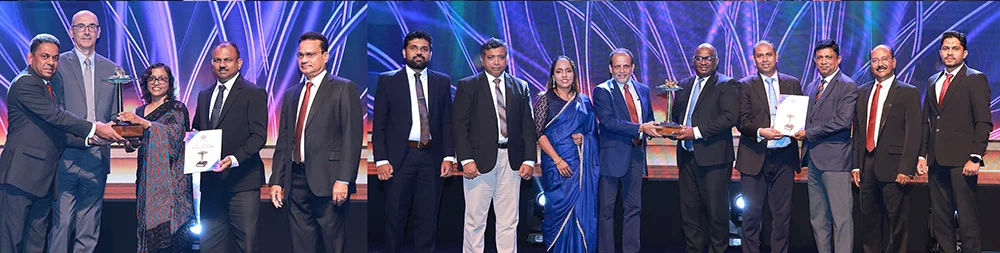
Corporate accolades underscore the alignment between its operational excellence and national development
In an era where national competitiveness is intrinsically tied to digital connectivity, strengthening the country’s digital backbone has become an urgent priority. Within this context, the evolving role of Sri Lanka’s leading telecommunications provider, SLT-MOBITEL, offers valuable insight into how technological infrastructure can underpin broader economic resilience.
Telecommunications and digital networks are foundational to economic transformation. By expanding high-speed broadband access, upgrading enterprise cloud capabilities, and bridging the urban-rural connectivity divide, SLT-MOBITEL helps reduce business transaction costs, streamline supply chains, and enable micro, small, and medium enterprises to reach global markets.
Recent corporate accolades further underscore this alignment between operational excellence and national development. SLT-MOBITEL’s triple triumph at the National Business Excellence Awards 2026 – winning in the Infrastructure and Utilities sector, Performance Management, and ICT Services categories – highlights its growing impact. Notably, the recognition of eChannelling’s contributions to digital healthcare reflects a broader strategic pivot toward integrated technology solutions.
“Institutional efficiency of this nature is critical for attracting foreign direct investment, as global partners increasingly assess a country’s digital maturity and systemic stability before committing capital,” noted industry observers.
Moreover, the company’s transition from a conventional telecom utility to a comprehensive digital solutions provider aligns seamlessly with Sri Lanka’s national digitalisation agenda. As the country pursues public sector modernisation, enhanced e-governance, and a competitive knowledge economy, the private sector must step up to deliver secure, scalable, and future-ready networks. Investments in data centres, cybersecurity frameworks, and advanced ICT infrastructure act as strategic buffers, ensuring that Sri Lanka’s economic apparatus remains agile and resilient amid future global uncertainties.
However, industry experts caution that while these achievements are commendable, SLT-MOBITEL still has a considerable distance to cover in fully enabling a truly digital economy.
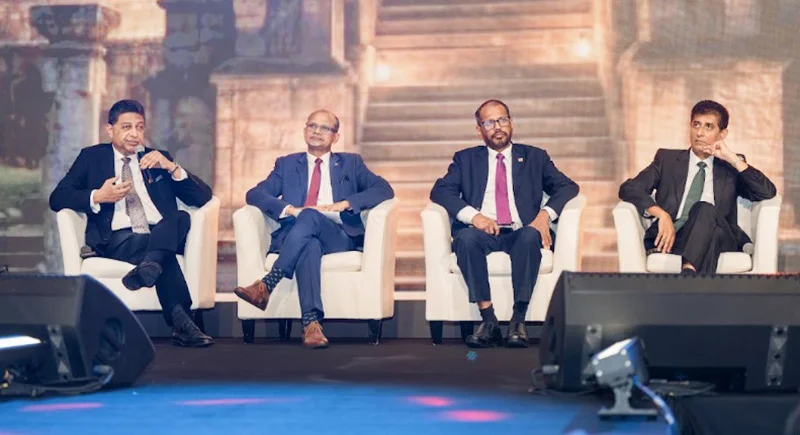
Port City Colombo (PCC) took a prominent role as Platinum Sponsor at the second edition of Sri Lanka Beyond Your Dreams, a high-level diplomatic and investment engagement hosted by the Consulate General of Sri Lanka in Dubai and the Northern Emirates. The event, held on 2nd September 2026 at the Hilton Dubai Al Habtoor City, brought together over 400 senior UAE-based business leaders, investors, diplomats, and institutional stakeholders, alongside Sri Lanka’s most senior government representatives.
The gathering was graced by Dr. Thani bin Ahmed Al Zeyoudi, UAE Minister of Foreign Trade, as Guest of Honour, and Vijitha Herath, Sri Lanka’s Minister of Foreign Affairs, Foreign Employment and Tourism. A high-level Sri Lankan delegation – including the Secretary to the Prime Minister, the Chairman of the Board of Investment, the Chairman of the Export Development Board, and the Director General of Commerce – underscored the government’s strong commitment to deepening economic diplomacy with the UAE.
In his keynote address, Minister Herath reaffirmed the centuries-old ties between Sri Lanka and the Arab region, emphasising the UAE’s vital role as a key economic partner. He stressed the urgency of finalising a Comprehensive Economic Partnership Agreement (CEPA) with the UAE, which would establish a robust framework to elevate trade, investment, and bilateral cooperation. Declaring Sri Lanka “open and ready for business,” he positioned Port City Colombo as the physical embodiment of this economic mission – a modern Special Economic Zone (SEZ) with a dedicated legal framework and competitive incentives, offering UAE investors a natural gateway to South Asia while maintaining strong Gulf connectivity.
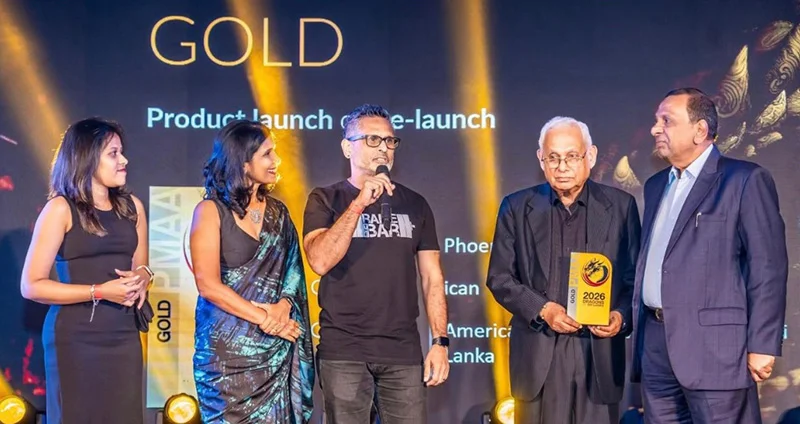
American Premium Water has secured four wins at Dragons of Sri Lanka Awards 2026, including three Gold Dragons and one Black Dragon, marking a significant milestone for the brand following its relaunch last year.
Part of the prestigious Dragons of Asia awards, Dragons of Sri Lanka brings the program’s regional platform to the local market, celebrating creative and effective marketing communications, with entries evaluated on strategic thinking, creativity, execution and impact. Established in 2000, Dragons of Asia is one of Asia’s premier results-driven marketing awards programs.
For American Premium Water, the achievements are particularly significant given that the company’s debut at the Dragons awards has resulted in four Dragons across four categories. In the distinction of Gold Dragons, American Premium Water was recognized across three categories including Product Launch or Re Launch, Cause, Environment or Sustainability and Creative Excellence while the Black Dragon was awarded in recognition of Small Budget.
Competing alongside leading brands and agencies in Sri Lanka, American Premium Water’s four wins demonstrate the strength and effectiveness of its recent work. Winning three Gold Dragons across three distinct categories highlights the breadth of the brand’s achievements, while the Black Dragon for Small Budget further emphasizes its ability to create meaningful impact through focused and efficient investment.

Pakistan seek revenge, Sri Lanka eye another Asia Cup final

Trump says every adult American will get $5,000 if Republicans win midterms

Protesters mistake Pakistan’s U-19 team for asylum seekers in Portsmouth

Steps are being taken to provide accommodation facilities for 16,000 university students – Prime Minister

Showers will occur in the Western and Sabaragamuwa provinces and in Kandy, Nuwara-Eliya, Galle and Matara districts.


‘Dates have the highest sugar content to fight Coronavirus’

Sunday Island 27 December – Headlines

#SundayIsland 17th December – Headlines

Sunday Island – 28th March

Sunday Island Headlines – 21 March

Sunday Island – 21st February – Headlines
-

 News6 days ago
Namal remanded until Sept. 18 over Airbus deal investigation
-

 Latest News5 days ago
Tharanga creates history with Diamond League crown in Brussels
-

 News5 days ago
Dispute which triggered listed company director being detained at BIA resolved
-

 Features4 days ago
After the parade: What a traffic OIC’s walk-out tells us
-
 Opinion7 days ago
In Memory of Dr Upatissa Pethiyagoda
-

 Editorial6 days ago
Power vs Equality
-
Editorial4 days ago
Arrests as theatre
-

 Latest News6 days ago
SLPP MP Namal Rajapaksa arrested by CIABOC