
Latest News
Sri Lanka crumble after Khawaja and Inglis set up mammoth Australia total

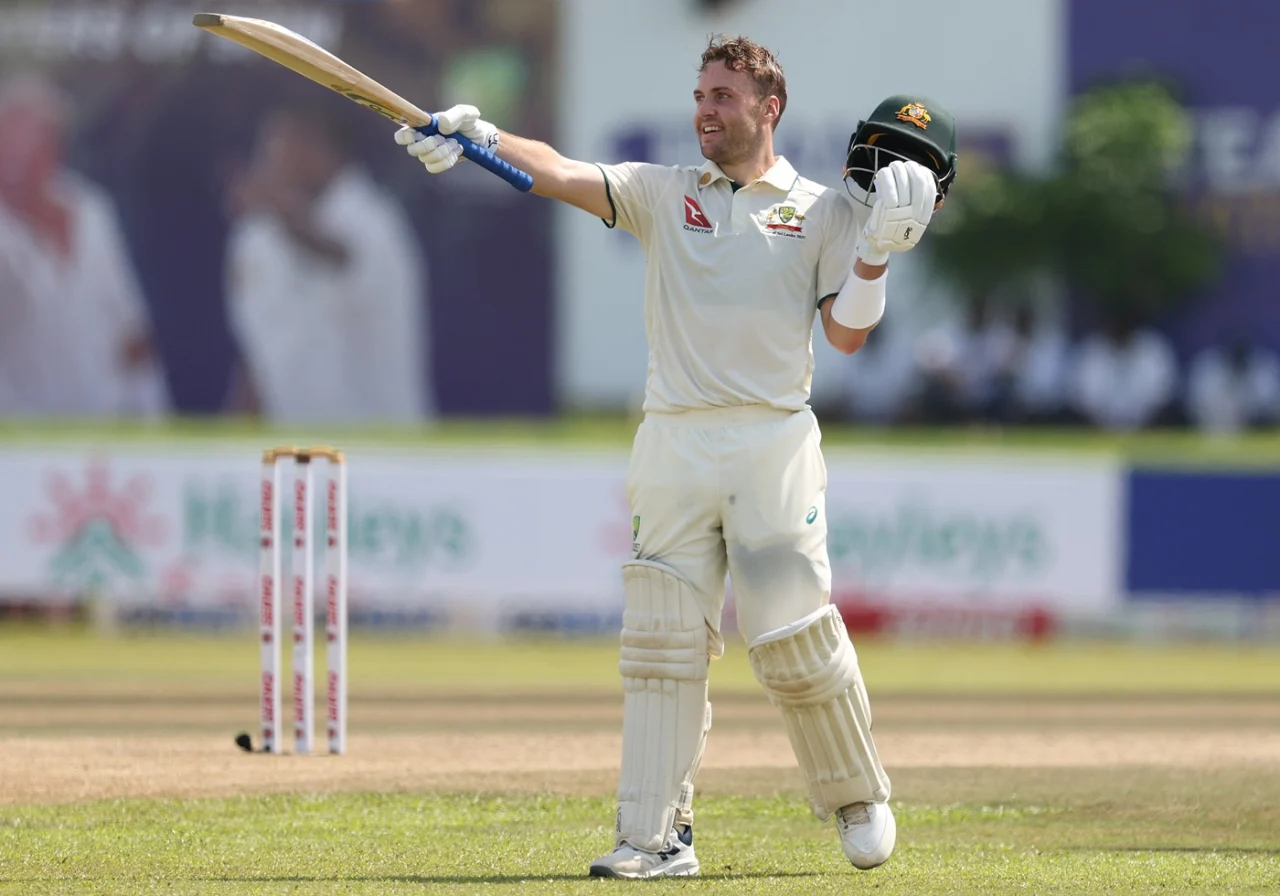
Usman Khawaja’s maiden Test double century and a rapid ton from debutant Josh Inglis decimated a flagging Sri Lanka before Australia’s attack breathed life into a slow Galle surface late on day two.
After stand-in captain Steven Smith declared Australia’s innings on 654 for 6 midway through the final session, Sri Lanka’s top order fell apart and they lost three wickets inside the opening 10 overs. Sri Lanka reached 44 for 3 when rain ended the day’s play prematurely with Australia enjoying a firm grip on the first Test.
Exhausted after spending 154 overs in the field, openers Oshada Fernando and Dimuth Karunaratne were dismissed within the first five overs.
With Mitchell Starc selected as Australia’s only frontline quick, there was intrigue over who would share the new ball with him. Left-arm spinner Matthew Kuhnemann, playing in his first Test match in almost two years, was an inspired choice and claimed Fernando lbw for 7 in his first over.
Bowling from around the wicket, Kuhnemann trapped him on the flap of his front pad as Fernando reviewed in vain. Kuhnemann was mightily pleased when the decision was upheld having made a speedy recovery from a thumb injury sustained in a BBL match on January 16.
Sri Lanka slid further when Karunaratne edged a short-of-a-length delivery from Starc to gully, where substitute fielder Nathan McSweeney completed a catch on the juggle having desperately turned around and dived after the ball bobbled over his head.
Having had little to do in the recent series against India, offspinner Nathan Lyon completed Australia’s near perfect day with the wicket of Angelo Mathews, who was brilliantly caught by a diving Travis Head at short leg.
Australia have completely capitalised on winning a favourable toss and batting first on a slow surface amid stifling humidity as they amassed their highest ever total against Sri Lanka.
Khawaja finished with 232 off 352 balls and fell early in the second session dominated by Inglis, who became the first Australian debutant to score a Test century since Adam Voges – his Western Australia coach – in 2015.
England-born Inglis reached his century off just 90 balls and he jumped high before punching the air with his proud parents visibly emotional in the terraces. He joined Michael Clarke and Shaun Marsh as Australian century-makers on Test debut in Asia.
Inglis showcased his proficiency against spin with decisive footwork either by skipping down the track or rocking back deep into the crease. His aggressiveness and maturity, having captained Australia in ODI and T20I cricket recently, reinforced why the selectors were keen to shoehorn him in the side.
Inglis, the Western Australia wicketkeeper playing as a specialist batter, celebrated his milestone with incumbent keeper Alex Carey at the crease before he fell on 102 having faced 94 balls.
Khawaja had earlier notched his highest Test score, overtaking his 195 not out against South Africa at the SCG in 2023 when rain forced an Australia declaration.
Khawaja and Smith were the fulcrum of Australia’s massive first innings, combining for a 266-run partnership. Smith was the only wicket to fall in the morning session after being trapped lbw for 141 by legspinner Jeffrey Vandersay, Sri Lanka’s most threatening bowler.
Smith added 37 runs to his overnight tally after a momentous opening day where he became the fourth Australian to reach 10,000 Test runs en route to a 35th century.
The 38-year-old Khawaja celebrated his first Test double century just before lunch as he kneeled down and bowed to the turf as the fans, many of whom are Australians, applauded with gusto.
He had earlier overtaken Justin Langer’s 166 in Colombo in 2004 as the highest score by an Australian in Sri Lanka. Having struggled against spin earlier in his career in South Asia, Khawaja has become only the second Australian after Allan Border to make Test centuries in India, Pakistan and Sri Lanka.
Khawaja has wound back the clock after an 18-month Test-century drought, having most recently against India struggled at the hands of tormentor Jasprit Bumrah.
Sri Lanka utilised just their four frontline bowlers with sole quick Asith Fernando bowling just 15 overs. Left-arm spinner Prabath Jayasuriya was effectively blunted with 3 for 193 off 60 overs in a far cry from when he claimed 12 wickets against Australia on the same ground in 2022.
Sri Lanka’s attack were unable to counter Australia’s aggressive approach and stem the flow of runs. Their tardy performance in the field on the opening day, where they missed several opportunities to dismiss Khawaja and Smith, proved costly.
Australia resumed on 330 for 2 with play starting 15 minutes early after rain ended day one prematurely. After resorting to a defensive leg-stump tactic late on day one, Jayasuriya attacked the stumps and aimed to skid the second new ball on.
But after four overs, Smith had enough and showed his first signs of aggression by skipping down the wicket as the partnership passed 200 runs.
Khawaja unfurled the reverse sweep to good effect on day one, but was lucky on his first attempt in the morning’s play when he only just cleared Peiris over short third for a boundary.
A third straight wicketless session loomed for Sri Lanka until Vandersay deceived Smith with a delivery that straightened down the line and hit him on the back pad. Vandersay’s enthusiastic appeal was initially turned down, but the decision was overturned on review in a massive relief for Sri Lanka.
After waiting almost 100 overs, Inglis finally entered the crease as he chewed gum furiously awaiting his first delivery in Test cricket. He started in fine fashion with a boundary after whipping Vandersay through mid-on and was at ease against spin.
He showcased his confidence by skipping down the track and launching several blows down the ground to race to 44 at a run a ball pace by tea.
Fernando was handed the ball after the interval for the first time in the day’s play and tried to provide a spark for his flagging team. But his short delivery was treated with disdain by Inglis, brought up on the WACA’s fast and bouncy surface.
Inglis reached his half-century off 51 balls to become the third Australian debutant in as many Tests to reach that landmark, following in the footsteps of Beau Webster and Sam Konstas.
Shortly after the pair reached their 100-run partnership, Inglis was given out lbw on 58 off Nishan Peiris after being struck on the back leg having missed a reverse sweep. But he reviewed immediately and the decision was overturned with a nick on the bottom of the bat detected.
Inglis remained unflustered and continued attacking, but Khawaja’s indefatigable knock finally ended when Jayasuriya enticed an edge to wicketkeeper Kusal Mendis.
Inglis reached his ton with a push through the off-side before providing a simple catch to cover as Jayasuriya’s toil was again rewarded.
Australia ground Sri Lanka into the ground before Smith finally declared and batting suddenly became extremely difficult for the beleaguered home team.
Brief scores:
Sri Lanka 44 for 3 (Kamindu Mendis 13*, Dinesh Chandimal 9*; Mitchell Starc 1-10, Mathew Khuneman 1-26, Nathan Lyon 1-7) trail Australia 654 for 6 dec in 154 overs (Usman Khawaja 232, Steven Smith 141, Josh Inglis 102, Travis Head 57; Jeffrey Vandersay 3-182, Prabath Jayasuriya 3-193) by 610 runs
[Cricinfo]

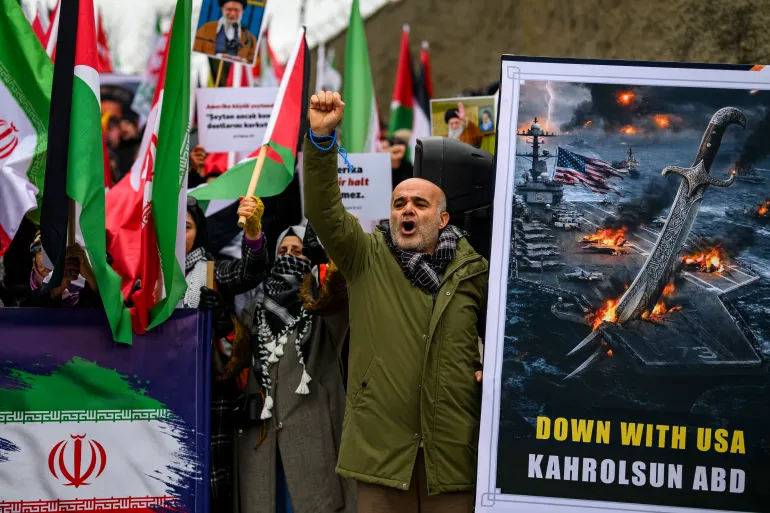
United States President Donald Trump has confirmed that talks with Iran are continuing to try to de-escalate tensions in the Gulf, even as the US military announced shooting down an Iranian drone that approached its aircraft carrier in the Arabian Sea.
Trump told reporters at the White House on Tuesday that Washington was negotiating with Iran “right now”, but declined to say where the talks were taking place.
“[The talks] are all over. But they are negotiating. They’d like to do something, and we’ll see if something is going to be done,” he said.
“They had a chance to do something a while ago, and it didn’t work out. And we did ‘Midnight Hammer’, I don’t think they want that happening again,” he added, referring to the operation last June in which the US Air Force and Navy struck three Iranian nuclear facilities.
Trump, who has been pushing Teheran to agree to talks over its nuclear programme, has repeatedly threatened to attack the country again over a recent crackdown on antigovernment protests. The US president sent the USS Abraham Lincoln to the Gulf last week, leading to fears of a possible military confrontation.
The carrier strike group, which brought roughly 5,700 additional US troops, joined three destroyers and three littoral combat ships that were already in the region.
Tensions have been easing in recent days amid a push by regional powers for a resolution.
Iranian President Masoud Pezeshkian said earlier on Tuesday that he had instructed the country’s foreign minister to “pursue fair and equitable negotiations, guided by the principles of dignity, prudence, and expediency”, provided that a “suitable environment exists”.
“These negotiations shall be conducted within the framework of our national interests,” Pezeshkian added
[Aljazeera]
Seven million people’s cancer could be prevented each year, according to the first global analysis.
A report by World Health Organization (WHO) scientists estimates 37% of cancers are caused by infections, lifestyle choices and environmental pollutants that could be avoided.
This includes cervical cancers caused by human papilloma virus (HPV) infections which vaccination can help prevent, as well as a host of tumours caused by tobacco smoke from cigarettes.
The researchers said their report showed there is a “powerful opportunity” to transform the lives of millions of people.
Some cancers are inevitable – either because of damage we unavoidably build up in our DNA as we age or because we inherit genes that put us at greater risk of the disease.
But researcher Dr Isabelle Soerjomataram said “people are surprised to hear” that nearly four in 10 cancers can be prevented as it is “a substantial number”.
The International Agency for Research on Cancer, part of the WHO, analysed 30 preventable factors known to increase the risk of cancer.
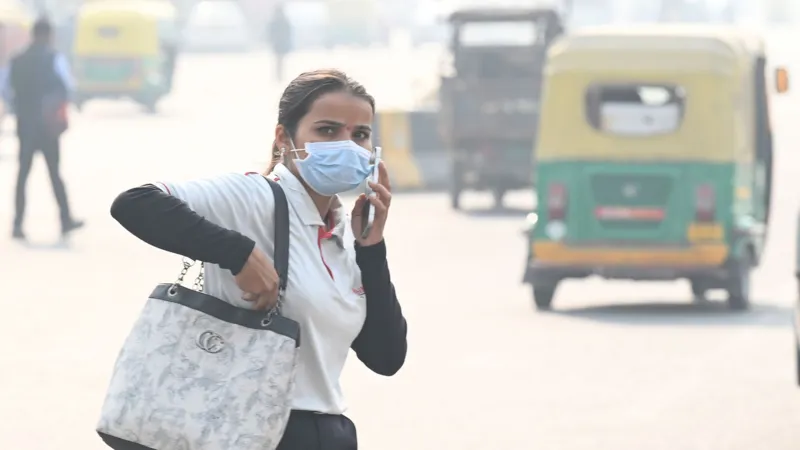
These include smoking and ultraviolet (UV) radiation which can directly damage our DNA; obesity and too little physical activity which alter inflammation and hormones in the body to raise cancer risk; and air pollution which can wake up dormant cancer cells.
The agency’s report also looked at nine cancer-causing infections including HPV, hepatitis viruses which lead to liver cancer and the stomach bug H. pylori.
The team used data on cancer cases from 2022 and from the 30 risk factors a decade earlier – across 185 countries – to perform their statistical analysis.
The big three contributors to more than 18 million cancer cases around the world were found to be:
- smoking tobacco which caused 3.3 million cancers
- infections causing 2.3 million cancers
- alcohol use leading to 700,000 cancers

However, the overall figures mask a nuanced picture of cancer risk around the world.
There is a stark sex-divide with 45% of men’s cancers being preventable compared with 30% in women, partly down to higher levels of smoking among men.
In women living in Europe, the top three preventable causes of cancer are smoking, closely followed by infection and then obesity.
While in sub-Saharan Africa, infections dominate and account for nearly 80% of preventable cancers in women.
This means any measures to tackle these cancers would need to be tailored to each region or country.
“This landmark study is a comprehensive assessment of preventable cancer worldwide, incorporating for the first time infectious causes of cancer alongside behavioural, environmental, and occupational risks,” said Soerjomataram, the deputy head of the IARC Cancer Surveillance Unit.
“Addressing these preventable causes represents one of the most powerful opportunities to reduce the global cancer burden.”
The report, published in the journal Nature Medicine, showed lung cancer (linked to smoking and air pollution) stomach cancer (linked to H. pylori infection) and cervical cancer (linked to HPV infection) made up nearly half of all preventable cases of cancer.
Dr Andre Ilbawi, team lead for cancer control at WHO, said the study was “good news” as it showed something could be done and he pointed to the success of countries that have introduced policies to tackle smoking or vaccinate against HPV.
“The percentage of preventable cancers can change over time and our goal is to get it as close to zero as possible,” he said.
[BBC]

BCB receives investigation report on sexual misconduct allegation

Trump confirms talks with Iran as US military shoots down Iranian drone

Shower will occur in the Northern, North-central, Eastern and Uva provinces and in Nuwara-Eliya and Matale districts

House erupts over suspension of Deputy Secretary General

78th Independence Day celebrations at Bogambara Stadium

Colombo-Kandy railway line to be fully restored this year – Minister Bimal

‘Dates have the highest sugar content to fight Coronavirus’

Sunday Island 27 December – Headlines

#SundayIsland 17th December – Headlines

Sunday Island – 28th March

Sunday Island Headlines – 21 March

Sunday Island – 21st February – Headlines
-
 Opinion5 days ago
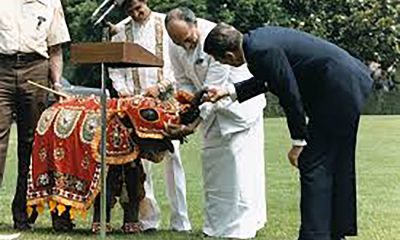
Sri Lanka, the Stars,and statesmen
-
 Business6 days ago
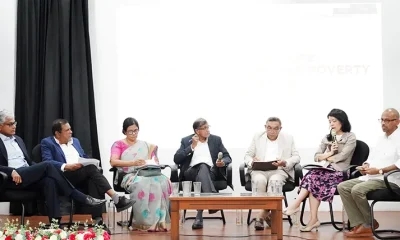
Climate risks, poverty, and recovery financing in focus at CEPA policy panel
-

 Business4 days ago
Hayleys Mobility ushering in a new era of premium sustainable mobility
-

 Business1 day ago
SLIM-Kantar People’s Awards 2026 to recognise Sri Lanka’s most trusted brands and personalities
-
 Business4 days ago
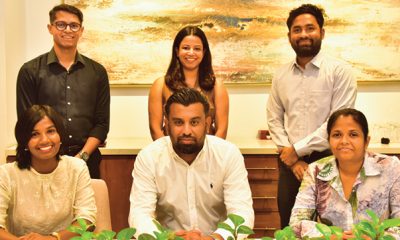
Advice Lab unveils new 13,000+ sqft office, marking major expansion in financial services BPO to Australia
-
 Business4 days ago
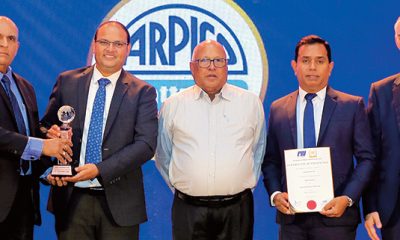
Arpico NextGen Mattress gains recognition for innovation
-

 Business3 days ago
Altair issues over 100+ title deeds post ownership change
-

 Business3 days ago
Sri Lanka opens first country pavilion at London exhibition