
Business
Sri Lanka could benefit from global trend towards EV use – IPS study

By Ifham Nizam
The latest publication of the Institute of Policy Studies of Sri Lanka (IPS), `Trade Wars in Electric Vehicle Supply Chains: A Win for Sri Lanka’s Graphite Industry?” indicates that Sri Lanka is poised to benefit from the global trend towards electric vehicles (EVs). Sri Lanka stands to gain by leveraging its top-quality vein graphite, crucial for EV battery manufacturing, the publication says.
Sri Lanka, renowned for its high-quality vein graphite, is poised to benefit from the increasing demand for “non-China origin” graphite, driven by the global push towards electro mobility and the US Green Industrial Policy.
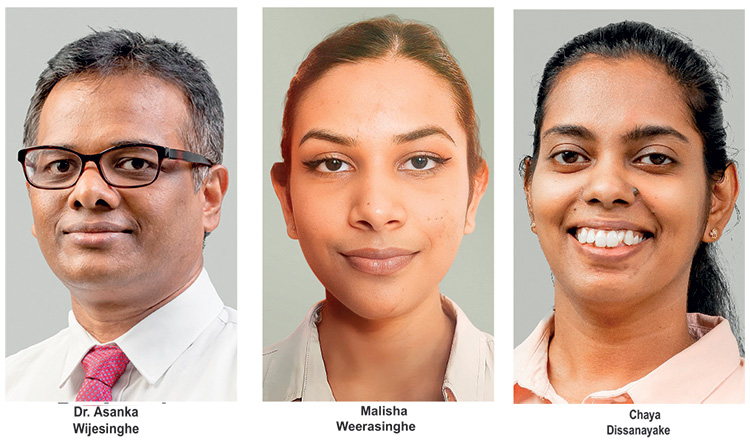
The IPS publication brought out by IPS researchers, Dr Asanka Wijesinghe, Malisha Weerasinghe and Chaya Dissanayake, explores the potential for Sri Lanka to join the supply chain for Electric Vehicle (EV) battery manufacturing.
Speaking at a seminar recently at the IPS, Colombo 7, IPS Research Fellow, Dr. Asanka Wijesinghe said that Sri Lanka’s commitment to sustainability and quality standards places it strategically in the non-China graphite export market, boosted by US industrial policies favouring domestic assembly and non-China sources.
Wijesinghe said that their new study highlights Sri Lanka’s opportunity to become part of the EV battery supply chain.
The study suggests that Sri Lanka could focus on upstream activities, including exporting battery-grade graphite and anodes, and strengthen Research & Development to enhance its strategic position in the non-China graphite export sector, thus attracting investment and ensuring sustainability.
Responding to The Island Financial Review on the possibility of a Free Trade Agreement (FTA) with the US, Wijesinghe believes that a comprehensive FTA may be challenging but a limited one, in the style of the Japan-US Mineral Free Trade Agreement, will be beneficial to Sri Lanka.
“Sri Lanka will have to navigate the complex geopolitical landscape in finalizing such an agreement. On the upside, such an agreement helps value addition to Sri Lanka’s graphite within the country and via export to the US under the subsidy program proposed by the US, he added.
Dr. Wijesinghe also said that US’s strategic move to adopt a proactive green industrial policy, driven by the imperative to achieve net-zero emissions and national security concerns, presents fresh opportunities for graphite producers outside China. The recently enforced Inflation Reduction Act (IRA) plays a pivotal role in reshaping the global EV battery supply value chain by excluding China and promoting domestic assembly and manufacturing of EV components.
Key findings from the IPS study reveal that as a result of these developments, the demand for graphite, a critical component of Lithium Ion Batteries (LIBs), is set to surge. “Non-China” graphite exporters, including Madagascar, Mozambique and particularly Sri Lanka, are positioned to benefit from the re-alignment of the supply chain.
The study also focuses that the Partial Equilibrium modeling results indicate that Sri Lanka holds a strategic advantage in the emerging market. Sri Lanka’s vein graphite, known for its purity, flawless crystal structure, and strong electrical conductivity, stands out as an ideal choice for the growing global demand.
Wijesinghe also stressed that despite facing challenges in terms of cost competitiveness, Sri Lanka’s focus on sustainable practices, minimal environmental impact, and compliance with acceptable labour standards positions it as a key player in the evolving landscape of “non-China” graphite exports.
“Additionally, Sri Lanka possesses a comparative advantage in graphite production and benefits from an established mining sector with an existing consumer base. Increased demand will party help Sri Lanka by increasing the world market price of graphite in the future. However, the productivity of the mining sector needs to be increased to lower the unit cost, to benefit from the emerging global opportunities,” he added.



Two groundbreaking reports launched by the Pathfinder Foundation in collaboration with the Australian Trade and Investment Commission have laid out a practical vision for Sri Lanka’s economic future, pinpointing the mineral and clean energy sectors as twin engines for sustainable growth and investment.
The reports, unveiled on December 17 in Colombo, present actionable roadmaps for project developers and technology providers, positioning Sri Lanka as an emerging frontier in the global clean energy and critical minerals supply chain.
Key content from the minerals report:
Sri Lanka’s largely underutilised mineral sector holds significant potential, with resources increasingly vital to global industries. The country boasts high-purity graphite, rare earth elements (REEs), mineral sands, and phosphate – all critical for electric vehicles, renewable energy technologies, and high-tech manufacturing.
While current mineral exports are around USD 389 million, the International Trade Centre estimates a potential of USD 778 million, with primary data suggesting the true figure could reach USD 2 billion. To capture this value, the report stresses moving beyond exporting raw materials to domestic refining and beneficiation.
A key strategic recommendation is deeper regional collaboration, particularly under the South Asian Free Trade Area (SAFTA). It highlights an opportunity for Sri Lanka to partner with India’s booming automotive and clean energy sectors, where demand for REEs and permanent magnets is soaring. This could involve upstream Indian investment in Sri Lankan REE resources or exports of rare earth oxides for India’s EV, wind, and electronics industries.
Key content from Clean Energy report:
Parallel to its mineral potential, Sri Lanka is pursuing an ambitious transition to clean energy, targeting carbon neutrality by 2050. The country’s renewable energy sector offers a diverse range of investment and trade opportunities for international stakeholders, spanning large-scale utility projects, distributed generation, and service-based collaborations.
Specific opportunities include utility-scale solar and wind projects, offshore wind resource mapping, and rooftop solar in urban corridors. There is also growing momentum for Battery Energy Storage Systems (BESS) to stabilise the grid, green hydrogen pilot plants, and the development of net-zero industrial parks powered entirely by renewables.
The reports highlight a powerful synergy: Sri Lanka’s minerals are essential for the very clean technologies it seeks to deploy. For instance, its phosphate can be used in lithium iron phosphate (LFP) batteries, while its high-purity quartz is vital for solar-grade silicon.
Australia is identified as a key partner in both sectors. Australian Mining Equipment, Technology, and Services (METS) firms can provide cutting-edge, sustainable mining technology, while Australian expertise in smart grids, BESS, and green hydrogen aligns with Sri Lanka’s long-term energy strategy.
While outlining vast potential, the reports also acknowledge challenges, including regulatory complexities, infrastructure gaps, and the need for enhanced skills development. Proposed solutions include modernising approval processes, developing a national critical minerals strategy, and fostering public-private partnerships.
The consensus from keynote speakers at the event – including Pathfinder Foundation Chairman Bernard Goonetilleke, Australian High Commissioner Matthew Duckworth, and senior representatives from academia, government, and Austrade – was clear. Their collective insight underscored the reports’ central thesis: Sri Lanka is presented with a unique, synergistic opportunity. By strategically developing its mineral wealth and accelerating its clean energy transition in tandem, the nation can attract significant foreign investment, create high-value jobs, and secure a competitive position in the Indo-Pacific’s sustainable economic future.
By Sanath Nanayakkare ✍️
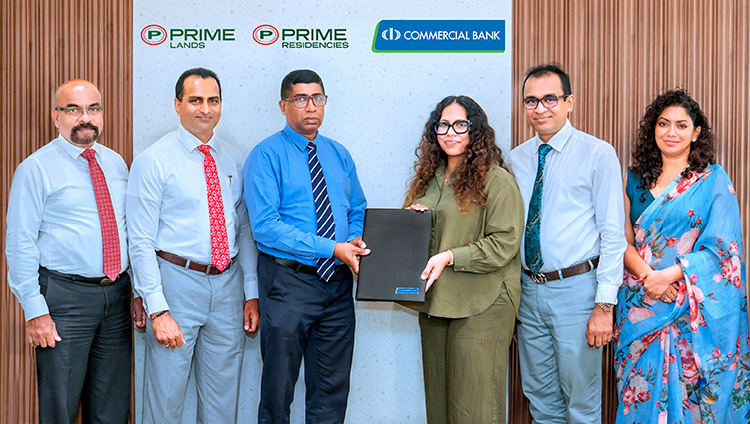
The Commercial Bank of Ceylon has signed a Memorandum of Understanding with Prime Lands and Prime Land Residencies to provide up to 100% financing for customers purchasing condominium units or gated houses developed by the Prime Group, demonstrating the Bank’s unwavering commitment to empowering more Sri Lankans to achieve their dream of home ownership.
The agreement enables prospective homeowners to seamlessly access Commercial Bank’s home loan facilities with tripartite agreements involving the developer, the buyer and the Bank. As the market leader in home loans, Commercial Bank brings unmatched expertise and flexibility to borrowers seeking to invest in properties developed by one of Sri Lanka’s most trusted names in real estate.
Commenting on the partnership, S. Ganeshan, Deputy General Manager – Personal Banking at Commercial Bank said: “This agreement with Prime Lands and Prime Land Residencies creates an excellent opportunity for us to expand our housing loan portfolio while enabling more Sri Lankans to realise one of their life goals. Commercial Bank’s strong home loan offering, combined with Prime Group’s reputation as a leading developer, ensures customers benefit from both financial strength and quality of construction.”
The Prime Group, which positions itself as the leader of real estate artistry in Sri Lanka, comprises subsidiaries associated with lands, houses, finance and condominiums. With over 30 years of trust and excellence and a base of more than 300,000 customers, the Group says it is driven by its evergreen vision: ‘Committed to Creating a Better Place on Earth,’ which continues to inspire its passion to deliver homes that bring customers’ dreams to life.
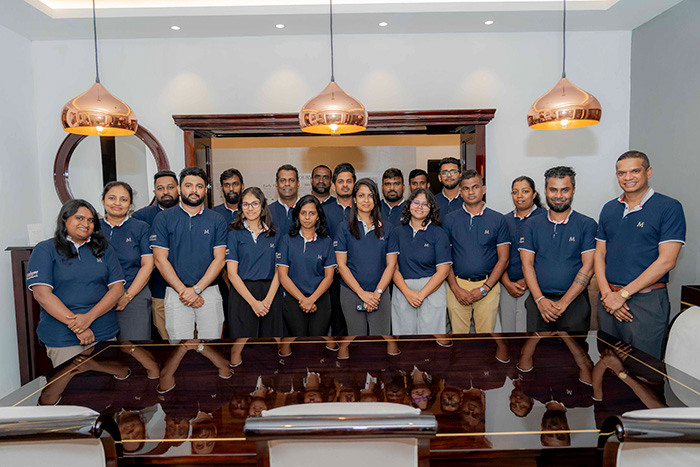
Mahogany Masterpieces, a Sri Lankan luxury furniture brand, has launched the “An Ode to Grain” collection. This showcase honors mahogany’s natural beauty and the brand’s craftsmanship. The philosophy is to let the wood’s grain guide the design, creating timeless pieces that respect the material. The collection includes new architectural elements like architraves, paneling, and corbels, designed to bring lasting warmth and character to interiors.
Visitors can view the full collection at the Mahogany Masterpieces Showroom and Design Studio which is located at No. 87, Dr. Lester James Peiris Mawatha (Dickman’s Road), Colombo – 05. www.mahoganymasterpieces.com

Duffy, Ajaz rip through West Indies as New Zealand seal series 2-0

Financial contributions received for ‘Rebuilding Sri Lanka’ Fund

UNICEF representatives and PM discuss rebuilding schools affected by the Disaster

A few showers may occur in the Uva province and in Ampara, Batticaloa, Matale, Nuwara-Eliya, and Hambantota districts

NMRA laboratory lacks SLAB accreditation

Air quality deteriorating in Sri Lanka

‘Dates have the highest sugar content to fight Coronavirus’

Sunday Island 27 December – Headlines

#SundayIsland 17th December – Headlines

Sunday Island – 28th March

Sunday Island Headlines – 21 March

Sunday Island – 21st February – Headlines
-

 Midweek Review6 days ago
How massive Akuregoda defence complex was built with proceeds from sale of Galle Face land to Shangri-La
-
 News5 days ago
Pope fires broadside: ‘The Holy See won’t be a silent bystander to the grave disparities, injustices, and fundamental human rights violations’
-

 News5 days ago
Pakistan hands over 200 tonnes of humanitarian aid to Lanka
-

 Business4 days ago
Unlocking Sri Lanka’s hidden wealth: A $2 billion mineral opportunity awaits
-

 News6 days ago
Burnt elephant dies after delayed rescue; activists demand arrests
-

 Editorial6 days ago
Colombo Port facing strategic neglect
-

 News4 days ago
Army engineers set up new Nayaru emergency bridge
-

 News6 days ago
Sri Lanka, Romania discuss illegal recruitment, etc.