
News
South Asia not ready for common currency

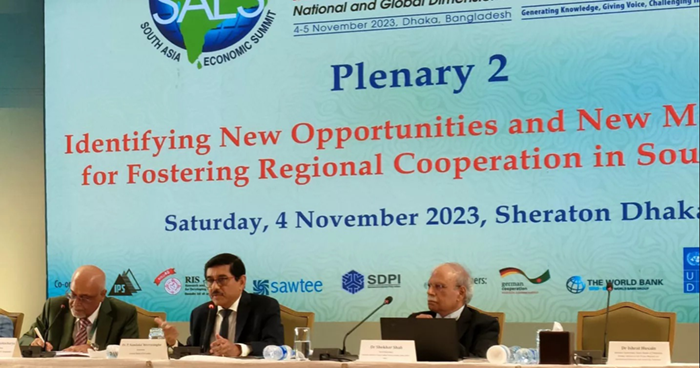
(Daily Star/ANN) South Asia is not yet ready for a common currency, said economists from countries in the region at the opening of a two-day 14th South Asia Economic Summit in Sheraton Dhaka on Saturday.
However, integration in trade and investment, increased mobility and people-to-people connectivity will provide the incentive for monetary cooperation in the region, they told a session on macroeconomic cooperation and the possibility of a common currency.
South Asia accounts for nearly one fourth of the global population and it has the market and ability to grow together, said the economists at the event being hosted by the Centre for Policy Dialogue.
Yet it is the least integrated in terms of trade, said Zahid Hussain, former lead economist at The World Bank, Bangladesh.Intra-regional trade accounts for 5 percent of South Asia’s total trade whereas the share of intra-regional trade in the Association of Southeast Asian Nations (Asean) region is 25 percent, he said.
South Asia is diverse in land area, gross domestic product or economic output, and population but the region’s countries have similar levels of human and economic development which calls for increased integration, he said.However, there is a lot of barriers to mobility, he said, citing non-tariff barriers, complicated visa policies and rigid bureaucracies.
“There is high sensitivity to national sovereignty. National currencies evoke strong attachment and emotion,” said Hussain at the event.
Political will to give up fiscal and monetary autonomy is also necessarily to go for a common currency, he said.
Complementarity in trade and free flow of labour and capital among the members can make cooperation over a currency more likely, he said.
Several countries have taken steps to reduce dependence on the US dollar and Bangladesh also took bilateral initiatives to settle trade in Chinese yuan and Indian rupee in 2022 and 2023, said Hussain.
However, the response with regard to trade in rupee is muted while exporters in China prefer receiving payments in dollars, euro and pound sterling, he said.There is persistent and growing trade deficit among Bangladesh, China and India, which makes trade in rupee and yuan limited here, he said.
Bangladesh’s average monthly trade deficit is $1.13 billion with China and $644 million with India.Comparability of economies is needed for a common currency, said Md Habibur Rahman, chief economist at Bangladesh Bank. “We are not right there…We can search for an appropriate time and opportunity for this,” he said.
A mechanism enabling independence is needed to avoid sanctions, said Abid Qaiyum Suleri, executive director at Sustainable Development Policy Institute, Pakistan.
Pakistan is relying on barter trade with countries such as Afghanistan, China and Russia, he said.
“Instead of losing hope on a common currency, we can explore so that we reduce dollar dependence,” said Suleri.
Posh Raj Pandey, senior economic advisor of the finance ministry of Nepal, proposed for establishing a regional financial market in this regard.
Use of the US dollar for international transaction settlement is declining, said Professor Sachin Chaturvedi, director general of the Research and Information System for Developing Countries, India.
International transactions other than that of the US dollar accounted for 9 percent of total global trade in July 2022 and it rose to 14 percent in December the same year, he added.
“This is an indication of rising arrangement of settlement in non-dollar,” he said, adding that 38 countries have shown interest to trade with India in rupee.
However, to make trade in the rupee popular between Bangladesh and India, a large line of credit in rupee is needed, said Ahsan H Mansur, executive director of the Policy Research Institute of Bangladesh.
“Otherwise, the performance we have seen is dismal…We also should think of currency swap to protect against external shock,” he said.
Countries should start with trade facilitation for economic integration and go for common documentation for customs, encourage firms to invest regionally and foster people to people connectivity, said Mansur.
Visa issuance and border control is quite pervasive and old fashioned, he said.
The economist also suggested harmonisation of tax and trade policies among members of the South Asian Association for Regional Cooperation.
“We also need monetary policy harmonisation. We need to think about bringing inflation close to each other and currency stability. Cooperation at the institutional level is critical,” he said.


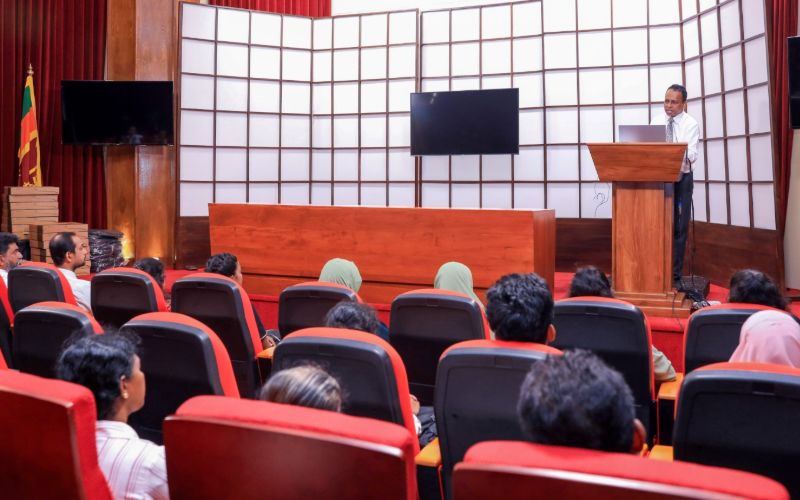
A programme to provide educational equipment to selected university students was held on Thursday (18) morning at the Head Office of the President’s Fund.
During the event, laptop computers were distributed to 14 students selected from applications received through Divisional Secretariat offices across the island. The President’s Fund has allocated Rs. 5.8 million for this initiative.
Accordingly, the President’s Fund has provided educational equipment to approximately 30 university students in 2025 and 2026. More than Rs. 9.8 million has been spent on this programme to date.
The event was attended by Secretary to the President’s Fund and Senior Additional Secretary to the President, Roshan Gamage, along with senior officials of the President’s Fund, parents, and other invitees.
(PMD)

Amidst ongoing accusations that the theft of USD 2.5 mn (nearly 1 bn Rupees) from the Treasury hadn’t been properly investigated, The Island learns that the relevant payments had been made to the actual creditor on the instructions of the Finance Ministry.
Confirming the inquiries made by us, authoritative sources said that payments had been made to several accounts through the US banks. Earlier, Sri Lanka released funds to fake foreign accounts in spite of warnings regarding the suspicions about the process.
The funds were part of a bilateral debt repayment to Australia with a settlement due in September 2025. The payment was part of a $ 22.9 million debt settlement.
The lapses occurred in the wake of far reaching changes regarding the debt management functions. In terms of a particular condition of the International Monetary Fund (IMF), Sri Lanka’s debt management functions that had been previously handled by the Central Bank were transferred to a new institution established under the General Treasury—the Public Debt Management Office (PDMO).
Sources said that regardless of the loss of USD 2.5 mn, Sri Lanka couldn’t have defaulted and therefore payments had been made.
Sources who closely followed the issue said that the government owed an explanation and public apology regarding the loss of USD 2.5 mn and how fresh payments were made.
Sources said that the USD 2.5 mn paid to fake accounts had been lost and could never be traced. CoPF Chairman Dr. Harsha de Silva has said that the NPP government has told the IMF that stolen USD 2.5 mn would be recovered from the public by introducing an amendment to the budget.
By Shamindra Ferdinando
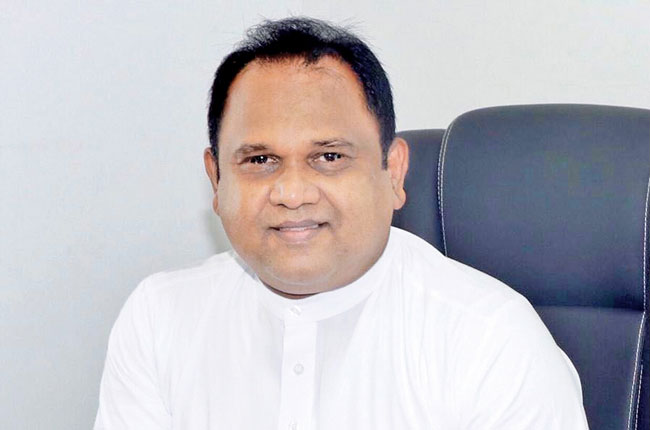
The Court of Appeal yesterday (18) postponed until June 25 the hearing of a petition filed by former Minister Nalin Fernando seeking the dismissal of an indictment brought against him by the Attorney General in connection with the controversial ‘Carrom Boards’ case.
The petition was taken up before a bench comprising Justices P. Kumararatnam and Pradeep Hettiarachchi.
Appearing for the petitioner, President’s Counsel Ali Sabry, instructed by Attorney-at-Law Ramzi Bacha, informed court that Fernando had already been convicted and sentenced to 30 years rigorous imprisonment in a case instituted by the Commission to Investigate Allegations of Bribery or Corruption (CIABOC) arising from the same incident.
Counsel argued that the Attorney General had subsequently filed a separate case based on the same set of charges and maintained that subjecting an accused person to a second prosecution for the same offence was contrary to law.
He submitted that preliminary objections on the issue had been raised before the Colombo High Court but were dismissed by the trial judge.
The petitioner has therefore sought a declaration from the Court of Appeal that the indictment filed by the Attorney General is unlawful and requested that the charges be set aside.
The court directed that the matter be called again on June 25, when the Attorney General is expected to present submissions on the petition.
The case stems from allegations that during the 2015 presidential election campaign, 14,000 carrom boards and 11,000 checkers boards were imported and distributed through Lanka Sathosa outlets for allocation to political offices of former President Mahinda Rajapaksa, resulting in an estimated loss of Rs. 39 million to the State.
Based on those allegations, the Attorney General has instituted proceedings against Fernando before the Colombo High Court under the Public Property Act.

Asia’s richest man Ambani announces what could be India’s biggest share sale

Educational equipment Provided to University Students through the President’s Fund

Fears for US-Iran deal as talks delayed by Israeli strikes on Lebanon

BCCI secretary hints at early start to IPL 2027

Cricket journalist and broadcast legend Qamar Ahmed dies aged 88

Stafanie Taylor, spinners help West Indies overcome Scotland threat

‘Dates have the highest sugar content to fight Coronavirus’

Sunday Island 27 December – Headlines

#SundayIsland 17th December – Headlines

Sunday Island – 28th March

Sunday Island Headlines – 21 March

Sunday Island – 21st February – Headlines
-

 News5 days ago
Release of 2025 O/L results likely to be delayed
-

 Sports5 days ago
Tharanga set for high-profile javelin clash in Ostrava
-

 Features6 days ago
Politics of protected species
-

 News4 days ago
Beijing Capital Airlines to resume flights to Colombo signalling boost to tourism
-

 News5 days ago
Theft of USD 2.5 mn from Treasury: CoPF accused of complicity in NPP cover-up
-

 News7 days ago
Commonwealth lawyers urge Lanka to uphold rule of law
-

 Opinion5 days ago
Decoding Trump’s 12.5% “Forced Labor Tariff” on Sri Lanka
-
 Features3 days ago
Killing of Colombo’s ancient trees — a warning on UN’s World Desertification Day – 17 June