Connect with us

Latest News

Social relations and solidarity emerge as fundamental pillars essential for steering our nation forward along the path of progress and prosperity – President

Published

on

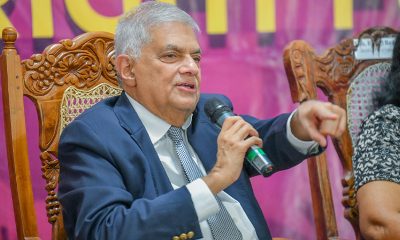
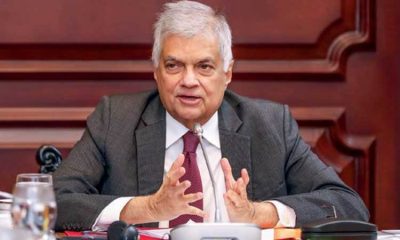
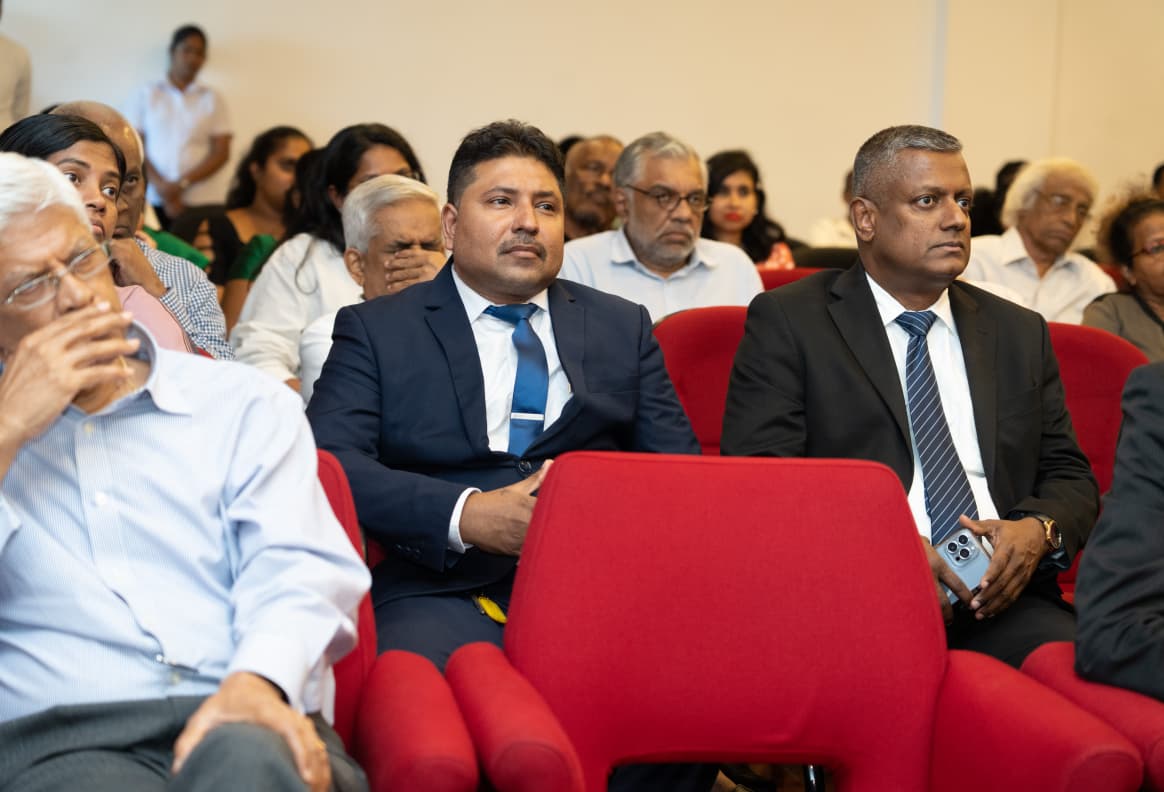
President Rani Wickremesinghe in his New Year Message stressed that social relations and solidarity emerge as fundamental pillars essential for steering our nation forward along the path of progress and prosperity

The full text of the President’s message follows:

“The progression of nations, countries and the global community is propelled by the perpetual cycle of renewal, where innovative ideas are nurtured and novel creations come to fruition.

Embracing renewal in accordance with the traditional New Year, the calendar year, or the changing seasons, individuals across the globe find themselves revitalized, endowed with fresh opportunities for growth and advancement. Beneath the surface of these myriad renewals lies a fundamental truth; the paramount importance of social relationships and collective unity.

During the Sinhala and Tamil New Year, we engage in a profound renewal of self, centering our focus on nurturing bonds and fostering a sense of gregariousness. This emphasis on interpersonal bonds is the cornerstone of traditional New Year rituals observed across diverse cultures worldwide.

It is important to emphasize the significance of this pivotal point, particularly during the New Year festivities, as it serves as a poignant reminder of the essence of human connection and communal solidarity.

In the dawn of the New Year, social relations and solidarity emerge as fundamental pillars essential for steering our nation forward along the path of progress and prosperity. With this understanding in mind, I extend my heartfelt wishes for a joyous and fulfilling Sinhala and Tamil New Year.”


Latest News

India and Zimbabwe out to raise the roof at Chepauk

Published

on

By

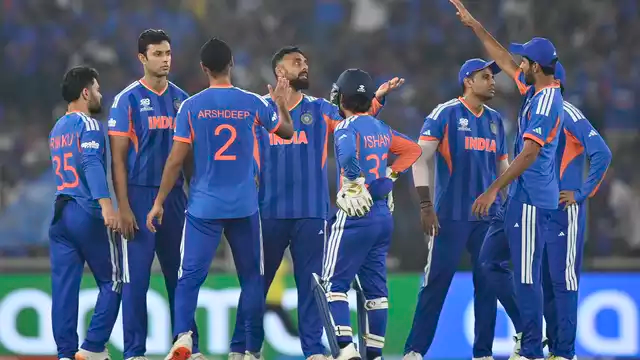
As India seek to return to winning ways, they will hope to boost their net run-rate as well [Cricbuzz]

Blue jerseys on the backs of a teeming crowd along the Walajah Road on Thursday evening will finally not be out of context. Fans in Chennai have embraced every team that has set foot in the city and played at the iconic venue, turning up in tens of thousands even for sweltering afternoon matches here. But India are finally in town, with everything riding on their fixture.

For the second World Cup in a row, the locals were meant to be treated to an India-Australia spectacle. That’s what the pre-tournament seeding had it chalked down as. But Zimbabwe emphatically struck that out, proving once again that there are no certainties in this format.
Speaking of no certainties, India have reached Chennai with their tag of favourites fast fading, and their batting – unrivaled until the tournament began – is now being seriously questioned. Not all is lost yet of course, but the Net Run Rate column has them in a tangle. The defeat to South Africa means India can only reach four points at best. There’s a possibility where they could be dragged into a three-way tangle for two semifinal spots with NRR being the deciding factor. The decimation in Ahmedabad left them with -3.800, which they need to resuscitate over the next four days. Wins alone won’t cut it.
Zimbabwe are now in the same boat, needing two wins and a surge in NRR. Their unbeaten journey through the group stage in Sri Lanka was cut short violently by West Indies in Mumbai, where a six-hitting batting line-up and the short square boundaries caught them unawares. Chennai offers better dimensions in that regard, but there will be the challenge of dew to deal with.
The competitiveness of the Super Eights group has raised the stakes for the 3 PM fixture on Thursday too. West Indies and South Africa will jostle for two crucial points in Ahmedabad, and nearly 2,000 kilometers away in Chennai, India and Zimbabwe will watch on keenly for as long as they can.
Yet, their futures in the tournament will still be determined by what they can control later that evening, as Chepauk gears up to bounce with bated anticipation for one last time at the World Cup.
Equal-sized square boundaries, with the game to be played on the central pitch (No.5). It’s confirmed to be a black soil surface, but in what will come as music to India’s ears, Chepauk has the worst bowling strike-rate and second-worst bowling average for spinners among the eight venues in this World Cup.
Furthermore, they might just stumble upon the true surface they have sought all along. In the two 7 PM matches at the venue, first innings scores have been 200/4 (by Afghanistan) and 196/6 (by USA).
Batting coach Sitanshu Kotak revealed that there have been conversations about changes to mix up the left-handed top-three. Sanju Samson, who batted long and did keeping drills two days out from the fixture, could be an option.
Kotak also confirmed that Rinku Singh had left to attend to his ailing father but was due to return on Wednesday evening. There’s still a chance India don’t feature him and maintain their batting depth by adding to the heft at the top. With only two left-handers in Zimbabwe’s top-order, expect Axar Patel to reclaim his spot too.
“Sikandar Raza is 100% playing. Good luck telling him that he’s not going to play against India,” Ryan Burl said with a chuckle. The Zimbabwe skipper took a hit to his left palm in the game against West Indies in Mumbai, but is ready to go again.
Zimbabwe could resist the urge to make changes after the big loss in Mumbai, and instead choose to alter their bowling plans. Against West Indies, they used four quicks and just two spinners in Raza and Graeme Cremer. If the opportunity comes up, Raza could throw on leg-spinner Burl against the likes of Suryakumar and Tilak in the middle-overs.
India Probable XI:Abhishek Sharma, Sanju Samson (wk), Ishan Kishan, Tilak Varma, Suryakumar Yadav (c), Shivam Dube, Hardik Pandya, Axar Patel, Arshdeep Singh, Varun CV, Jasprit Bumrah
Zimbabwe Probable XI:Brian Bennett, Tadiwanashe Marumani (wk), Dion Myers, Ryan Burl, Sikandar Raza (c), Tony Munyonga, Tashinga Musekiwa, Brad Evans, Graeme Cremer, Richard Ngarava, Blessing Muzarabani

[Cricbuzz]

Continue Reading

Latest News

South Africa vs West Indies: Clash of heavyweights in another high-stakes battle in Ahmedabad

Published

on

By

Is the ICC’s Super Eight the silliest qualifying process in the sporting universe? The unfathomable permutations of UEFA’s rejigged Champions League might beg otherwise. But it’s surely in a club of two.

After precisely two completed fixtures in an impressively sub-standard Group 2 of this T20 World Cup, we already knew our first semi-finalists … and even England themselves might be wondering how on earth they are still pointing in the right direction after their endless flirtations with catastrophe.

Over in Ahmedabad, however, there’s significantly more jeopardy brewing in Group 1. West Indies and South Africa, the two remaining unbeaten teams in the tournament, are gearing up for a heavyweight clash of the most literal variety, but even after they’ve finished battering seven bells out of each other, the victors will have no gurantees of progression just yet.

For West Indies, in particular, this feels like a must-win contest. They could hardly have laid out a more emphatic marker than their 107 run win over Zimbabwe on Monday.  But, even allowing for that hefty NRR boost, a wounded India await as their final Super Eight fixture on Sunday. If that ends up being a straight knockout, then it’d be best to lay the killer blow here and now.

West Indies certainly have the form and the focus to do so. But, thrillingly, so do their opponents. In a tournament marked by reticence from a host of likely contenders, West Indies and South Africa have both been refreshingly route-one in their approach. Shimron Hetmyer’s 85 from 34 balls against Zimbabwe may have been the apogee of attacking batting in the tournament to date, but it was merely a continuation of the pedal-to-metal approach that enabled his team to out-muscle England by 13 sixes to six in their statement victory in Kolkata a fortnight ago.

South Africa, similarly, have not been backward in coming forward. India must have thought their last contest was in the bag when Jasprit Bumrah reprised his Barbados impact to reduce them to 20 for 3 after four overs at this same venue. They reckoned without a relentlessly aggressive middle order of Dewald Brevis, David Miller and Tristan Stubbs, who kept piling into the breach to produce a total of 187 for 7 that Marco Jansen soon proved to be more than enough to defend. A win on Thursday will almost certainly place South Africa in the semis, unless India lose all three games in the Super Eight.

More such bravery will be the requirement on Thursday. On a localised level, it’s thrilling to have such a high-stakes encounter at this stage of the competition. In reality, though, each of the tournament’s three likeliest winners would appear to have been crammed into the same under-sized pool. It’s sink-or-risk-being-sunk time at the Narendra Modi Stadium.

With 11 wickets at 12.18 – including eight in his last two outings, at this very venue, against New Zealand and India – Marco Jansen has the form and the method to make another statement impact for his team. Five of those wickets came in the powerplay – three against New Zealand, though they used his pace and bounce against him in between whiles, and two against India, who were never allowed to rally after his first-ball extraction of Tilak Varma. Every team craves a rangy left-arm seamer in this format, and Jansen’s combinations of angle, accuracy and steepling bounce mark him out as one of the very best.

If West Indies are to win, their batters need to keep swinging with the freedom and confidence that has brought them this far already. And no-one epitomises their current mood better than Shimron Hetmyer.  With 219 runs at 54.75, he is the tournament’s second-highest run-scorer, behind Sahibzada Farhan’s tally of 283. In terms of pure six-hitting, his tally of 17 puts him way out on his own. If his game can sometimes seem too loose to function consistently, then it is entirely in keeping with West Indies’ mighty T20I heritage, including his 2016 forebears who counted almost exclusively in boundaries as they powered to their second world title, here on Indian soil, a decade ago.

No obvious reasons for West Indies to tinker with their winning formula, although Roston Chase’s offspin could be a consideration, especially with the significant core of left-handers in South Africa’s batting ranks. He would also add further depth to the batting line-up.

West Indies (probable): Brandon King, Shai Hope (capt & wk), Shimron Hetmyer,  Rovman Powell,  Sherfane Rutherford, Romario Shepherd,  Jason Holder,  Matthew Forde,  Akeal Hosein / Roston Chase,  Gudakesh Motie,  Shamar Joseph.

The team that took on India was the strongest that South Africa could have put out, and for such a crunch contest, there’s no reason to think they’ll fiddle with their options.

South Africa (probable):  Aiden Markram (capt),  Quinton de Kock (wk), Ryan Rickelton, Dewald Brevis,  David Miller,  Tristan Stubbs,  Marco Jansen,  Corbin Bosch, Keshav Maharaj, Kagiso Rabada,  Lungi Ngidi.

[Cricinfo]

Continue Reading

Latest News

Ravindra, Santner, McConchie eliminate Sri Lanka

Published

on

By

Dasun Shanaka looks on with his team on the verge of elimination [Cricinfo]

A stunning rearguard from Mitchell Santner and Cole McConchie knocked Sri Lanka out of the 2026 T20 World Cup in spite of an electric start for the hosts as New Zealand sealed a crushing 61-run win. At an electric R Premadasa Stadium that crackled with perhaps the best atmosphere of the tournament, Sri Lanka’s spinners put New Zealand’s top and middle order to the sword, reducing them to 84 for 6.

But just as New Zealand’s innings looked to be petering out, Santner and McConchie responded with a fierce counterattack in the last four overs. McConchie began it with a takedown of Dushmantha Chameera before Santner flayed Maheesh Theekshana, up till then the game’s best bowler. The last four overs produced 70 runs as the duo put on 84, the highest seventh-wicket stand in T20 World Cup history.

Punch-drunk Sri Lanka never got up off the floor following that flurry of attacks. The first ball of the innings saw them lose their talisman Pathum Nissanka to Matt Henry’s  inswinger, and Charith Asalanka fell in his following over. In response, Sri Lanka retreated into their shell as New Zealand strangled them with spin.

Rachin Ravindra only had a part-time role in India but he was thrust in as the main character. He responded with two wickets in his first over and rounded out his spell with 4 for 19 – his best T20I figures. The game was long done even as it meandered to a dispiriting conclusion for a crowd that had shown its side it was ready to play its part. As Sri Lanka limped to 107 for 8, and out of the tournament, the team itself simply couldn’t keep up its end of the bargain.

It was a boomerang of a day for Maheesh Theekshana for the extremes it swung between. It began inauspiciously when he put down a diving catch of Tim Seifert at short third off the bowling of Dilshan Madushanka – and copped a spray from the bowler for his trouble.

The following over, Theekshana would make no such mistake off his own bowling, diving sharply forward to send Finn Allen packing. It began three sensational overs for the spinner as he engineered a New Zealand collapse, dismissing Ravindra and Mark Chapman within three balls of each other. At that stage, his figures read 3-0-9-3. However, New Zealand’s late counterattack sullied them somewhat, with the spinner unable to stem the run-flow as Santner took him apart for 21 in his last over.

New Zealand had the momentum at the halfway mark thanks to the Santner-McConchie stand, and Henry made sure it carried on uninterrupted. Off the first ball of the chase, he produced an unplayable inswinger that burst past Nissanka’s inside edge to knock off the top of the stumps. It was the start of a wicket-maiden, and that dagger already plunged, he returned for his second to take another wicket to open the over. This time, it was Charith Asalanka, a listless heave merely ballooning up in the infield.

To add insult to injury, McConchie and Santner returned to strangle Sri Lanka through half of the powerplay, their three overs inside the first six going for 14. It all combined for the hosts limping along to 20 for 2 in six, the lowest powerplay score all tournament.

New Zealand played most of this World Cup on the flat Chennai surfaces, but tonight’s bowling performance revealed their impressive flexibility. Coming to Colombo, they demonstrated they were fully prepared for slower, turning surfaces. McConchie was added in place of James Neesham to add bowling depth, with Ish Sodhi playing his first game of the tournament, not counting the Pakistan fixture that was washed out.

But it was Ravindra who epitomised New Zealand’s vast flexibility with a career-best performance, taking four wickets across his spell and carving the heart out of Sri Lanka’s middle order. All told, the visitors used five different spin options with only three overs of seam bowled all innings – the fewest for New Zealand in a completed T20I innings.

Brief scores:
New Zealand 168 for 7 in 20 overs (Finn Allen 23, Mitchell Santner 47, Rachin Ravindra 32, Glenn Phillips 18, Cole McConchie 31*; Dunith Wellalage 1-27, Maheesh Theekshana 3-30, Dushmantha Chameera 3-38) beat Sri Lanka 107 for 8 in 20 overs (Kusal Mendis 11, Pavan Rathnayaka 10, Kamindu Mendis 31, Dunith Wellalage 29; Rachin Ravindra 4-27, Matt Henry 2-03, Mitchell Santner 1-19, Glenn Phillips 1-21) by 61 runs

[Cricinfo]

Continue Reading

Trending