
News
SLIMA urges govt. to fall in line with other countries and UN on using cannabis for medical purposes

By Chaminda Silva
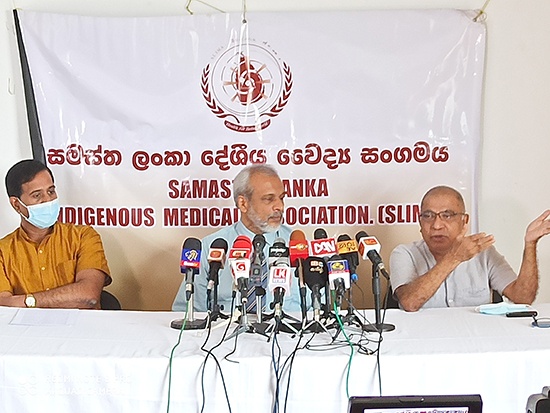
Samastha Lanka Indigenous Medical Association (SLIMA), a local ayurveda medical body yesterday urged the government to ease the laws on cannabis for it to be developed as an herbal drug as in our past for many ailments, which many countries have already done.
Addressing the media at the Sri Sambuddhathwa Jayanthi Mandira complex in Colombo, Adviser to SLIMA former Registrar of Ayurveda Medical Council Dr. Danister L. Perera said that the United Nations had recently reclassified strict control measures applied on the Cannabis plant.
“There have been recent calls for amending the laws here by some persons with an ulterior motive to promote the narcotic use of the plant. It is that campaign now stands as an obstruction to our efforts to have the plant legalised for medical purposes. We too are against the abuse of the medicinal plant as a narcotic. It is high time the government considered relaxing and reintroducing laws pertaining to medicinal use of cannabis in the country. Such measures could pave the way to utilise it for medicinal purposes, as done in Ayurveda for centuries.
Dr. Perera said the United Nations central drug policy making body Commission on Narcotics Drugs (CND) had recently reclassified cannabis from its previous state of strict control measures, that discouraged its use for general medical purposes.
Dr. Perera said on Dec 02 last year 53 member countries of UN-CND had voted to remove cannabis from Schedule IV of 1961 Single Convention on Narcotic Drugs, where it was listed alongside specific deadly, addictive opioids including heroin, having little to no therapeutic purposes.
“The UN Commission on Narcotic Drugs with 53 of its members has recognised cannabis as a plant with various medicinal properties after 59 years, and consented to reclassify it from the list of dangerous drugs, which is a great breakthrough in promoting Ganja for health benefits.
“We know that most countries including ours, draft laws pertaining to drugs, crimes and terrorism under the guidelines and resolutions adopted in the international conventions like the United Nations. Therefore, it is a golden opportunity for the government to reconsider its harsh policies on cannabis preventing it being developed into a multi-million dollar generating industry as a medicinal product.”
Chairman SLIMA Dr. Upul Dela Bandara said many international research had proved that cannabidiol (CBD), the second most prevalent of the active ingredients of cannabis was an essential component in medicinal Marijuana.
He said a number of countries that had legalized the use of plant including several states in India for medicinal purposes earned millions of dollars in foreign exchange by exporting it to the West.
Dr. Bandara questioned why Sri Lanka was not using the opportunity to develop this herbal product, which was grown abundantly in remote areas, to make a steady foreign currency generating industry, as a novel solution for a pandemic hit economy.
Organiser SLIMA Dr. Washington Nanayakkara explained the numerous medicinal properties of the ganja plant, which had been prescribed in Ayurveda treatments for thousands of years and how certain western powers had invented misconceptions regarding cannabis since the early nineteenth century to promote their chemical drugs worldwide.


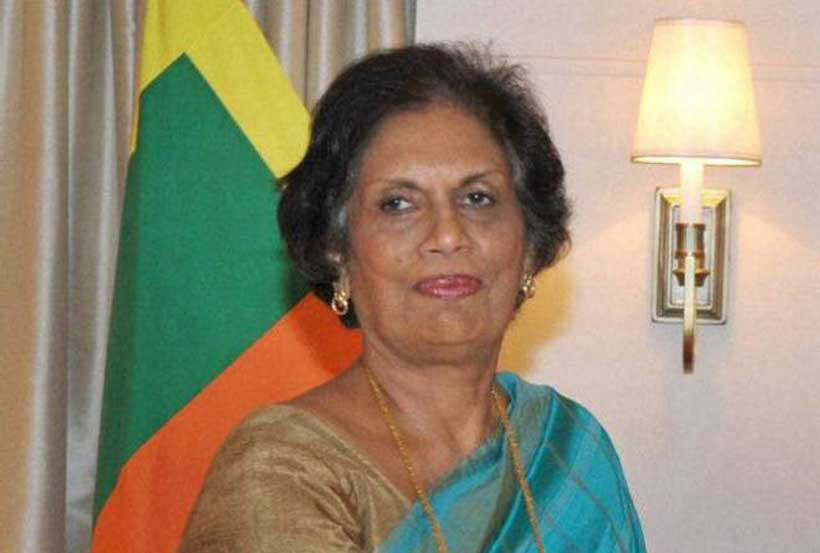
Former President Chandrika Bandaranaike Kumaratunga has called for a comprehensive reform programme within Sri Lanka’s Buddhist clergy, warning that repeated efforts to strengthen the Sasana have in the past been derailed by opposition from within sections of the Sangha itself.
In a statement addressed to the Mahanayake Theras of the three Buddhist chapters, Kumaratunga stressed that the long-term preservation of Buddhism depends on safeguarding both the Dhamma and Vinaya, or disciplinary code, and urged urgent internal reform to address what she described as deep-rooted structural weaknesses.
She noted that Buddhist history has consistently demonstrated that periods of institutional crisis were addressed through reform processes, citing precedents from the First Buddhist Council to reforms during the Kandyan era under Welivita Sri Saranankara Thera.
Referring to post-independence efforts, Kumaratunga said initiatives taken during the 1956 Bandaranaike administration to strengthen Buddhism were left incomplete following the assassination of former Prime Minister S.W.R.D. Bandaranaike.
She further stated that during her own presidency, plans to convene a Buddhist Council under the guidance of the late Madihe Pannasiha Mahanayake Thera had received government backing but were ultimately abandoned due to resistance from certain sections within the clergy.
The former President alleged that, on both occasions, vested interests benefiting from existing weaknesses within the Buddhist establishment had worked to obstruct meaningful reform efforts.
Warning that Buddhism in Sri Lanka is currently facing serious challenges, she called for a broad internal dialogue within the Sangha to identify root causes and implement both short- and long-term corrective measures.
Kumaratunga urged the Mahanayake Theras to take the lead in convening a Dharma Sanghayana, or Buddhist Council, and said she was prepared to work with senior lay Buddhist leaders to support such an initiative.
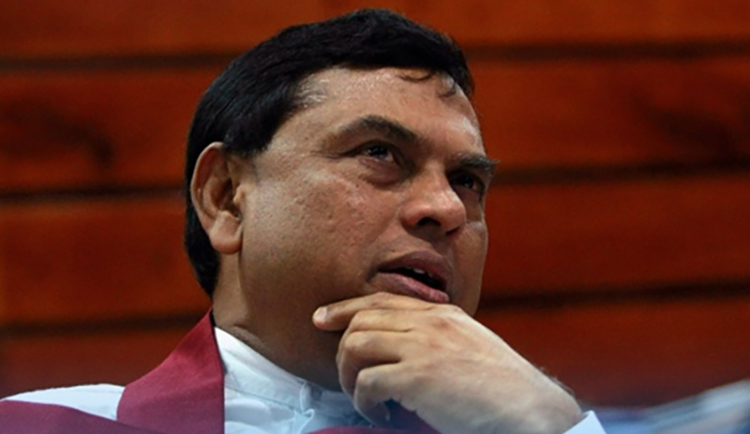
The Colombo Fort Magistrate’s Court on Friday ordered the arrest of former Minister Basil Rajapaksa, Tourism Promotion Bureau Chairman Bhashwara Gunaratne, Managing Director Rumi Jauffer and several others over the alleged misuse of Rs. 7.8 million belonging to the Tourism Promotion Authority during the 2014 Uva Provincial Council election campaign.
Magistrate Pasan Amarasena directed the Criminal Investigation Department (CID) to arrest and produce the suspects before court, after it was informed that they would be named under the Public Property Act on the advice of the Attorney General.
The CID told court that attempts to take the suspects into custody from their residences had been unsuccessful as they were not present.
The Magistrate also imposed an overseas travel ban on the suspects and ordered that the Controller of Immigration and Emigration be notified.
Investigations have reportedly revealed that the funds were used to print 12,000 T-shirts bearing an image of former President Mahinda Rajapaksa on one side and the name of a political party on the other.
According to the CID, the T-shirts were later distributed at a political event held in the Monaragala District.
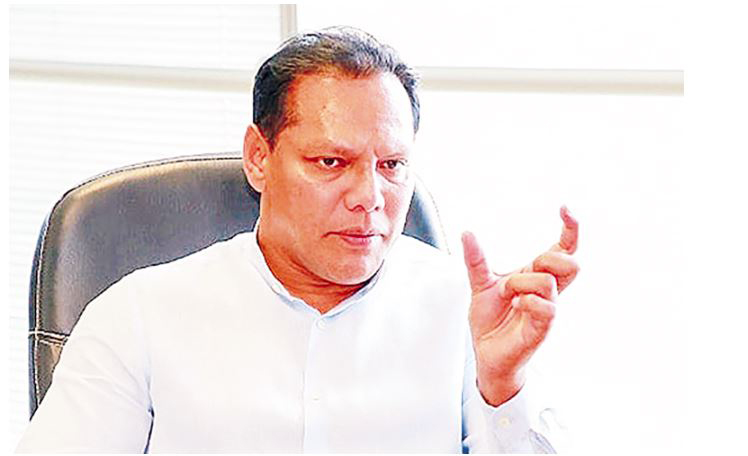
Kurunegala District SJB MP Dayasiri Jayasekera last week lodged a detailed submission before the Special Presidential Commission probing coal imports, alleging that Sri Lanka’s power sector is being exposed to serious national security risks due to irregularities, collusion and sanctions-related vulnerabilities in the coal procurement process for the Norochcholai Lakvijaya Power Plant.
In a dossier submitted last week, the MP called for a comprehensive investigation into the ongoing 2026/2027 tender for 2.28 million metric tonnes of coal, warning that the awarding of contracts to certain bidders could jeopardise the stability of the country’s electricity supply and trigger risks reminiscent of the 2022 power crisis.
The Lakvijaya Power Plant, Sri Lanka’s largest coal-fired power station, contributes nearly 40 percent of the national electricity generation.
Jayasekera alleged that the procurement process has been compromised by what he described as a “network of disreputable international commodity traders” and urged the Commission to examine patterns of alleged corruption, collusion and sanctions circumvention linked to coal supply chains.
Among the companies flagged in his submission was Potencia LLC-FZ, which he claimed is involved in ongoing legal proceedings against the Lanka Coal Company (LCC) while simultaneously participating in the current tender process. The MP questioned the propriety of such participation and further warned that the company’s alleged links to Russian supply networks could expose Sri Lanka to secondary sanctions risks, potentially affecting letters of credit, shipping arrangements and marine insurance coverage.
Jayasekera also called for the immediate exclusion of Taranjot Resources from the tender, citing its reported suspension by India’s state-owned NTPC Limited since March 2024. He further alleged that the company has a track record of supplying coal with sub-standard calorific value in previous shipments, which he said had contributed to operational disruptions in power generation.
Raising further concerns over possible bid rigging, the MP pointed to what he described as corporate interlinkages between Mohit Minerals and Taranjot Resources through a common associated entity, Trona Minerals. According to his submission, shared directorships and corporate overlaps suggested coordinated participation in the tender process, which he claimed could amount to a breach of national procurement guidelines.
The dossier also referred to several other international suppliers, raising concerns over their past records. These included allegations relating to shipping practices, arbitration disputes, quality certification issues and exposure to sanctioned supply chains. The MP cited instances involving alleged “dark shipping” practices, quality disputes in past deliveries, and contractual disputes that had led to arbitration proceedings in international forums.
Jayasekera also urged the Commission to revisit the Trident Chemphar coal procurement controversy of 2025/2026, alleging that a contract had been signed prior to obtaining Attorney General clearance. He claimed the episode had resulted in significant shortfalls in power generation, estimating a loss of around 250 gigawatt-hours.
Describing the matter as one of “national security rather than a commercial dispute”, the MP warned that any compromise in coal procurement could destabilise the country’s power supply, particularly at a time when Sri Lanka remains under an IMF-supported economic reform programme.
He urged the Commission to take a firm stance on procurement integrity and ensure that only credible and compliant suppliers are considered in future tenders.
The Commission is expected to examine the submissions as part of its wider inquiry into coal procurement practices dating back to 2009.

Showers expected in the Western, Sabaragamuwa and North-western provinces and in Galle, Matara, Kandy and Nuwara-Eliya districts

Sangha reform drives stymied from within: CBK

Court orders arrest of Basil

Dayasiri raises alarm over ‘coal cartel’, flags national security risks

Coal procurement probe: Statements to begin next week

Colombo Uni Alumni to felicitate Dr. Kumari Jayawardena

‘Dates have the highest sugar content to fight Coronavirus’

Sunday Island 27 December – Headlines

#SundayIsland 17th December – Headlines

Sunday Island – 28th March

Sunday Island Headlines – 21 March

Sunday Island – 21st February – Headlines
-
 News6 days ago
Police probe underway to ascertain links between criminals deported from UAE and local politicians
-
 News5 days ago
Easter Sunday carnage: Court told Maulana’s statement cannot be accepted without cross-examination
-
 News1 day ago
IMF urges Lanka not to meddle with exchange rate
-
 Opinion5 days ago
Undermining the democratic political framework
-
 News5 days ago
UK passport holder hiding here wants to have deportation order rescinded to leave without blemish
-

 Features2 days ago
The Division Bell Mystery
-
 News6 days ago
Dickoya double murder suspect arrested
-
 Midweek Review4 days ago
Israeli-US aggression won’t go unanswered -Iranian Ambassador