
News
SL scientists clueless about mission of Chinese research ship, says expert

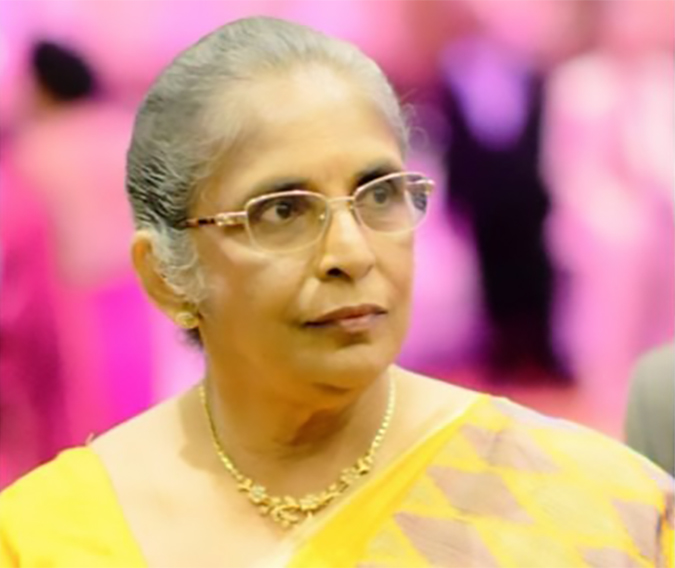
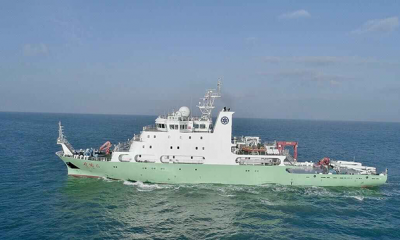
There should be bilateral discussions and agreements on itineraries when foreign research vessels sail to foreign countries, says Prof. Emeritus Ruchira Kumaratunga, who established the country’s first university Oceanography Department at the University of Ruhuna. She said so commenting on the Chinese research vessel Shi Yan 6, which has sought permission to dock and resupply in Sri Lanka.
“There must be a discussion between the Chinese and Sri Lankan scientists and researchers involved. For example, what will be done, what kind of information will be gathered and where the collected information will be stored. This is not the first time that a research ship has arrived in Sri Lanka. I have even been involved in discussions when Norwegian marine research vessel, Fridtjof Nansen arrived,” she said.
Prof. Kumaratunga said that Ruhuna University had engaged with Chinese research vessels in the past. Prior to her retirement from the university, she was involved with the discussions with Chinese scientists, she said.
“However, the manner in which the collected data is stored is problematic. There is no report on the previous Chinese engagement with the university on the university website. On the other hand, Fridtjof Nansen data can be accessed by anyone,” she said.
Kumaratunga said she had written to the Minister of Justice before the approval for the ship was granted, asking him a few questions on the Chinese research vessel.
“The VC who held the discussions with the Chinese is now sick. The main geologist involved in the discussion is now a resident of the US. The university itself is not sure who will engage with the Chinese. The current VC also has no idea. I wasn’t involved in the discussions. I think academics of the Oceanography Department must be informed when such discussions are taking place,” she said.
The emeritus professor said that the National Aquatic Resources Research and Development Agency (NARA) said the Chinese vessel would work with the University of Ruhuna. However, given that the academics at the university seem to be clueless about the research vessel, Kumaratunga said she was apprehensive about the Chinese vessel.
“Not a single permanent academic at the university is aware of who will be involved in the research. Who will take part in the research, and where will the data repository be? Sri Lanka needs to have access to the data,” she said.
Prof. Kumaratunga said Shi Yan 6 would study the ocean floor owned by Sri Lanka and information on the ocean floor must be closely guarded. There can be many resources that Sri Lanka can extract, she said.
“Are there Sri Lankans who know what equipment that the Chinese will bring? First of all, we need to train our scientists. They need to know what equipment the foreign scientists will use. The data must be shared with us,” she said.


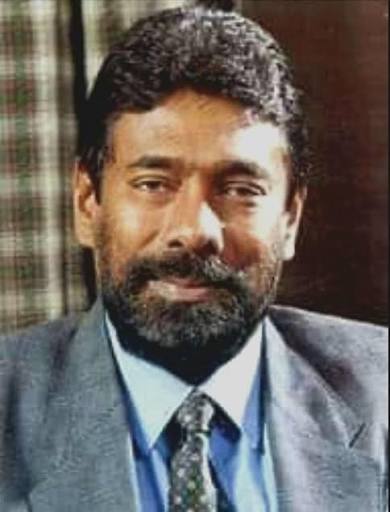
Former Matara District Member of Parliament and Cabinet Minister Mahinda Wijesekara has passed away this morning (02) at the age of 83 family sources have announced.
Mahinda Wijesekara served as a Member of Parliament for the Matara district for over two decades (1989 to 2010), representing the People’s Alliance, the United National Party and the United People’s Freedom Alliance.
He held several ministerial portfolios, including Minister of Postal and Telecommunication Services in 2008, Minister of Forestry and Envioronment 1999-2001, Minister of Fisheries and Ocean Resources from 2001 to 2004 and Minister of Special Projects 2007-2008
He was in poor health following injuries sustained in the 2009 bomb attack by the LTTE terrorists in Godapitiya, Matara.
He was the father of former Minister Kanchana Wijesekara.

In a decisive strike against the drug menace, the Sri Lanka Navy intercepted a local multiday fishing trawler carrying a staggering haul of suspected narcotics in the seas southwest of the island.
This operation, carried out under the national mission “A Nation United”, resulted in the apprehension of six suspects (06) and the seizure of the trawler used to smuggle the illicit substance.
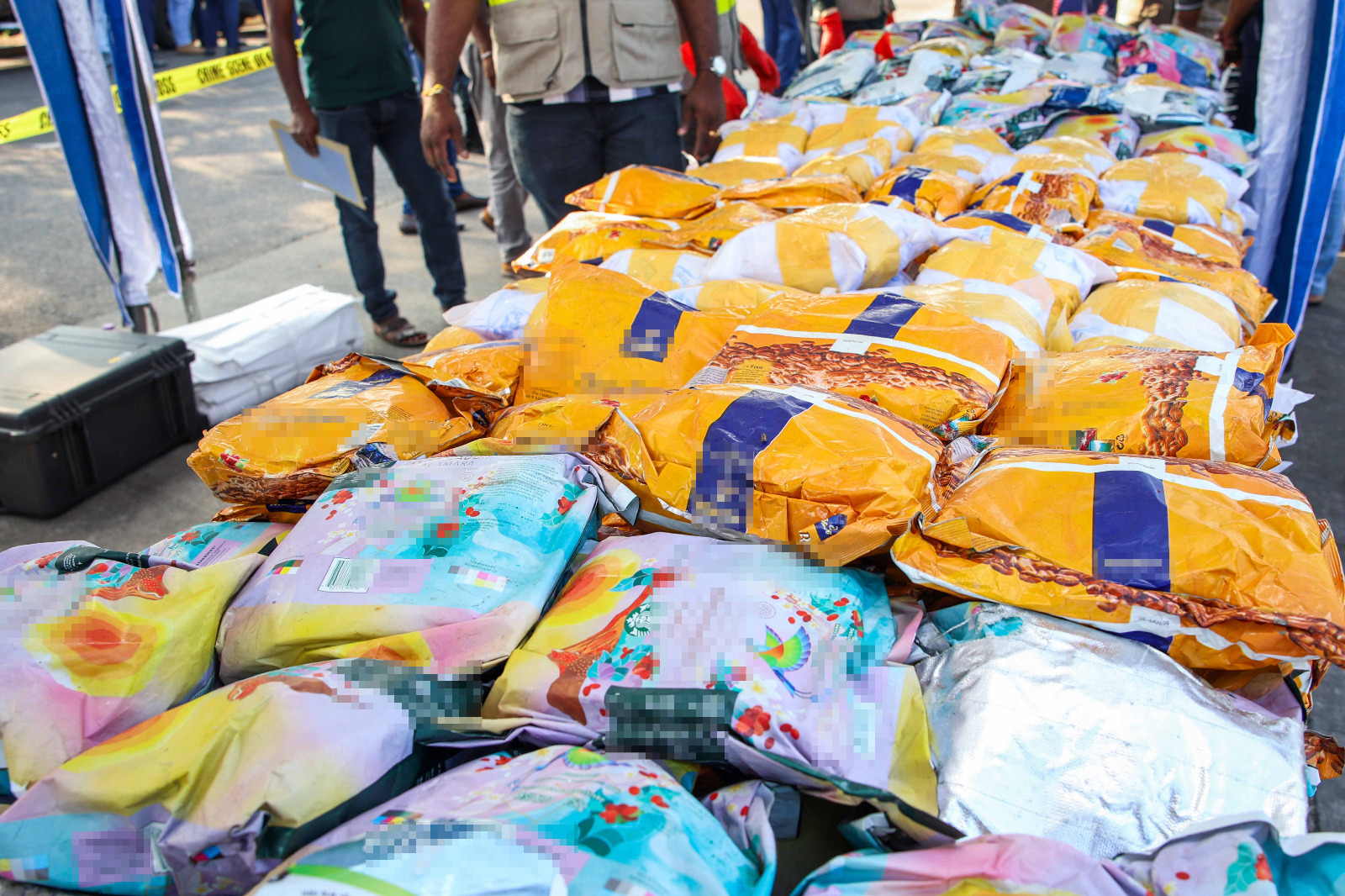
Following the mid-sea interception, the trawler was escorted to the Dikkowita Fisheries Harbour on the morning of 01 Apr 2026. A meticulous inspection conducted by the Police Narcotic Bureau (PNB) subsequently confirmed that the sacks (19) aboard contained more than 323kg of heroin.
The Commander of the Navy, Vice Admiral Kanchana Banagoda, accompanied by the Commander Western Naval Area and the Director General Operations, visited the Dikowita harbour to personally inspect the drug haul.
Addressing the media, the Navy Commander emphasized that these intensified surveillance efforts are carried out under the direct guidance of the Ministry of Defence. He highlighted that the Navy and the Sri Lanka Coast Guard have strategically coordinated operations across the island’s maritime zones to disrupt trafficking routes and ensure national security.
The Commander of the Navy stated that through surveillance operations conducted this year, the Navy has intercepted local multi-day fishing trawlers attempting to bring illegal substances. This has enabled the seizure of a large quantity of narcotics intended to be smuggled into Sri Lanka.
Furthermore, based on foreign intelligence received by the Sri Lanka Navy, continuous surveillance operations carried out off the Beruwala sea area over the past few days led to the recent (01 April) successful operation, he opined.
The Naval Chief stated that so far this year, 07 local multi-day fishing trawlers have been apprehended by the Navy. The street value of the narcotics seized from these boats is estimated to be approximately Rs. 40 billion.
The 06 suspects, the fishing trawler, and the seized heroin were handed over to the Police Narcotic Bureau for comprehensive investigation and onward legal proceedings.
News
PM opens ‘Silver Age Center,’ an Elder Care, Training and Research Centre built with modern facilities in Kataragama

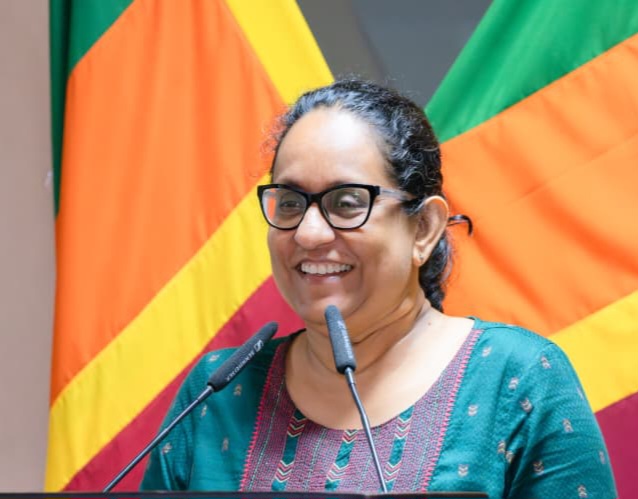
Prime Minister Dr. Harini Amarasuriya stated that a society must be built where all senior citizens can lead lives of safety, freedom, happiness, health, mobility, and spiritual well-being, with their rights safeguarded. She further emphasized that this is a responsibility shared by both the government and society.
The Prime Minister made these remarks on Tuesday (31st of March) while virtually participating in the opening of the ’Silver Age Center,’ an Elder Care, Training and Research Centre constructed with modern facilities in Kataragama. The event was held at the Ministry of Rural Development, Social Security and Community Empowerment, located in the new Sethsiripaya building.
During the event, the Prime Minister was presented with a draft of regulations and guidelines related to the regulation of institutions that provide residential care for senior citizens, by representatives of the National Council for Senior Citizens.
Expressing her views further, the Prime Minister stated:
“This project, which commenced in 2022, had been halted due to various reasons. However, we have now resumed the project and are pleased to hand it over to the public today.
One of the key commitments of our policy is to create a society that ensures safety and protects the rights of all. Everyone, from the young to the elderly, deserves to enjoy these rights, freedom, and happiness.
A significant portion of our population is rapidly transitioning into senior age. However, the age of 60 still represents an active stage of life where individuals can contribute meaningfully to society and the economy. Senior citizens have needs, as well as abilities and valuable experience. We must recognize that they can continue to engage with society and remain active contributors.
Institutions that provide services for senior citizens play a vital role, and maintaining them is a social responsibility. It is essential to ensure the rights and provision of necessary services for all senior citizens, whether they live within families, independently, or in institutional settings.
We must ensure access to healthcare, transportation, lifelong learning, freedom, happiness, and spiritual well-being for senior citizens, while safeguarding their rights.
We should move beyond the traditional concept of ’elders homes’ and instead develop institutions that cater to the diverse needs of senior citizens, enabling them to spend their later years with dignity and respect.”
The opening of the ’Silver Age Center,’ Elder Care, Training and Research Centre, was carried out by Deputy Minister of Trade, Commerce, Food Security and Cooperative Development, R. M. Jayawardhana, along with regional public representatives and government officials. The occasion was attended virtually by the Minister of Rural Development, Social Security and Community Empowerment, Dr. Upali Pannilage; Secretary to the Ministry, Sampath Manthrinayake; and other ministry officials.
(Prime Minister’s Media Division)

Brook, Bethell receive warnings from Cricket Regulator after Wellington incident

Former Minister Mahinda Wijesekara passes away aged 83

Navy seize 323kg of heroin from fishing vessel in southwestern seas

Magnitude 7.4 quake hits off Indonesia’s Ternate, tsunami warning lifted

NASA successfully launches historic Artemis II moon mission

Sameer Rizvi arrives in the IPL to guide Delhi Capitals home in low-scoring chase

‘Dates have the highest sugar content to fight Coronavirus’

Sunday Island 27 December – Headlines

#SundayIsland 17th December – Headlines

Sunday Island – 28th March

Sunday Island Headlines – 21 March

Sunday Island – 21st February – Headlines
-

 Features6 days ago
A World Order in Crisis: War, Power, and Resistance
-

 News7 days ago
Energy Minister indicted on corruption charges ahead of no-faith motion against him
-

 Sports7 days ago
SLC to hold EGM in April
-

 Opinion7 days ago
When elephants fight, it is the grass that suffers
-

 Features7 days ago
Lest we forget
-

 News3 days ago
Tariff shock from 01 April as power costs climb across the board
-
 Business7 days ago
Pan Asia Bank empowers export sector as Strategic Partner of NCE Export Awards
-
 News6 days ago
Minister Jayakody indicted in Colombo High Court over alleged corruption