
News
SL dedicated to driving digitalisation initiative: Nimal

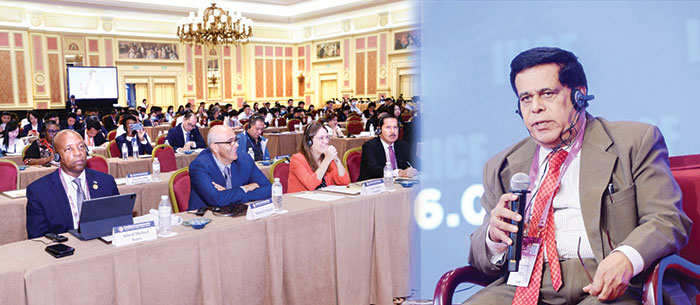
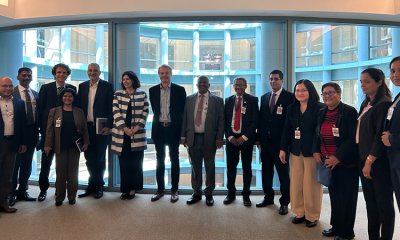
Representing Sri Lanka at the 14th International Infrastructure Investment and Construction Forum (14th IIICF) Friday (02), Minister of Ports, Shipping and Aviation – Nimal Siripala de Silva said that under the leadership of President Ranil Wickremesinghe, the government was dedicated to driving the digitalization initiative forward under name ‘DIGIECON 2030’, signifying a pivotal step towards transforming Sri Lanka into an inclusive Digital Economy. The two-day Forum started on June 11 in Macao SAR, China.
“In our pursuit of a digitalised Sri Lanka, I am proud to reaffirm that our government places tremendous importance on the digital economy. This visionary initiative, conceived by our Government, aims to foster a regulatory policy framework and a master plan that will propel our nation forward in the digital realm. We are dedicated to creating conducive business environment, attracting investments, and nurturing a digital ecosystem that benefits all stakeholders. Therefore, Sri Lanka considers this Forum a very important event as it encompasses introducing policy framework for scientific and technological innovations to be adopted in the crucial development sectors,” the Minister said.
Minister Silva said that Sri Lanka had made significant strides in developing its ports and maritime infrastructure in the maritime sector and with its advantageous position in the Indian Ocean, the country aimed to become a prominent regional maritime hub.
“To achieve this, the government has implemented policies to attract foreign investments, particularly in port development and logistics,” he said.
The Minister said that in line with commitment, the Government of Sri Lanka would establish a committee of Cabinet Ministers, entrusted with the responsibility of accelerating the digitization process across the Government sector and such coordinated effort would ensure rapid progress in implementing digital solutions and policies that drive the nation’s transformation.
As a world-renowned event in the international infrastructure industry, the IIICF attracts annually more than 2000 delegates from over 70 countries and regions including around 50 ministerial officials, serving as an important platform for industry elites from Government authorities, financial institutions, engineering companies, survey & design firms, consultancy and equipment manufacturers to exchange strategic thinking and insights on cutting-edge topics, explore opportunities and seek cooperation.
“One notable advancement in Infrastructure Digitalization is the introduction of new technology in the port sector. Sri Lanka’s maritime ports require significant infrastructure upgrades to meet the demands of a digitalized era. This includes modernizing port terminals, improving navigational systems, upgrading traffic control systems, and enhancing connectivity infrastructure. Without adequate infrastructure, the full potential of digital solutions cannot be realized
The Sri Lanka Ports Authority (SLPA) has collaborated with the National Trade Facilitation Committee to expedite the implementation of the National Single Window and Trade Information Portal. These initiatives aim to streamline trade, enhance efficiency and transparency, and promote economic growth. The National Single Window system enables standardized information and document transmission through a single-entry point, involving all parties engaged in the trading process, such as customs, banks, ports, insurers, public agencies, and private participants.
In alignment with the government’s tourism development plans, SLPA has initiated a project to transform Galle’s Port into a comprehensive tourist port and leisure hub for South Asia. The project, undertaken as a Public-Private Partnership (PPP), involves an investment ranging from $175 to $200 million. It encompasses the construction of two offshore breakwaters to ensure calm waters in the Galle bay and harbour, as well as the development of a state-of-the-art cruise terminal to accommodate large cruise ships. The objective is to convert Galle into a regional commercial port with a significant emphasis on tourism, supported by new investments from the private sector.
Expanding the capacity of the Port of Colombo (POC) poses a primary challenge. SLPA has undertaken measures to attract new investments and develop the necessary infrastructure for capacity enhancement. Within the next two to three years, two deep-water terminals will be added. We will introduce the Automation and semi automation terminals to the Port of Colombo which will be a huge technological step in the ports in south Asia. Sri Lanka has recently sealed a ground-breaking investment deal worth $650 million with joint project promoters, including India’s Adani, local conglomerate John Keells Holdings (JKH), and the state-owned SLPA. This Build, Own and Transfer (BOT) agreement establishes the Colombo West International Terminal (CWIT) as the largest-ever investment in the port sector. In addition the SLPA will be constructing the ECT through its own funds.
Speaking on Bandaranaike International Airport’s Terminal 2 development the Minister said that the airport was undergoing a major expansion to provide improved passenger experience and increase handling capacity.
“The project will address issues such as congestion and passenger discomfort at the airport. The new terminal is expected to handle nine million passengers a year, taking the airport’s passenger handling capacity to 15 million passengers annually. We aim to provide seamless and efficient passenger experience, with innovative use of digital technologies, such as e-gate empowered by state-of-the-art biometric systems for streamlined immigration processes, utilized self-check-in kiosks and baggage drop systems to expedite passenger flow, and incorporated advanced data analytics to optimize flight scheduling and resource allocation with cutting-edge agile network solutions.
“We must foster strong partnerships to share knowledge, exchange best practices, and jointly address challenges. Collaboration will enable us to leverage collective expertise and resources, driving the digitalization agenda forward. The Government of Sri Lanka has established the Digital Economy Steer Committee, Chaired by H.E. the President himself, Cabinet Ministers such as Ministry of Technologies, Finance, and my ministry, and industry organizations, under collaboration with the World Bank. We are happy to have global technologies companies such as Huawei, to share with us the worldwide industrial digitization experiences and practices. Together, let us embrace the limitless potential of digitalization in revolutionizing our maritime and aviation sectors, driving economic growth in the digitalized era, the Minister said.








By Shamindra Ferdinando
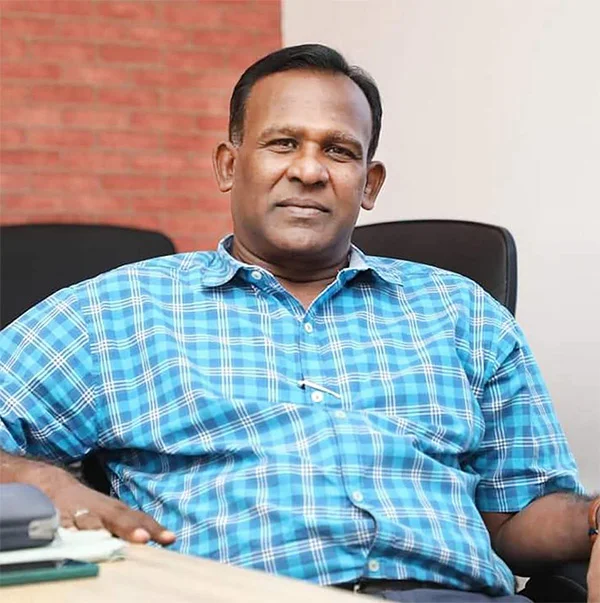
The use of low quality coal, over a period of time, had led to the developing crisis at the Lakvijaya Coal Power Plant (LVPP) at Norochcholai that compelled the boastful NPP government to implement power cuts, former Lanka Electricity Company (Private) Limited (LECO) Chairman Bandula Chandrasekera said yesterday.
The government imposed one-hour countrywide power cuts on 19 Oct.
Chandrasekera, now a consumer rights activist, warned that though the government declared the power cuts would be limited to three days, the situation could take a turn for the worse.
The top United Republican Front (URF) activist said so in response to the government’s claim that Saturday’s sudden drop in electricity generation at the country’s only coal-fired power plant hadn’t been caused by the quality issue of coal.
The former LEOCO Chief emphasised that the country was paying a very heavy price for the controversial procurement of low-quality coal for the 2025/2026 season.
“Procurement of low quality coal is not an allegation. It has been accepted by a seven-member committee, headed by K. L. R. C. Wijayasinghe, Additional Secretary, Energy Ministry, appointed by Parliament,” Chandrasekera said, pointing out that the government was trying to mislead the public into believing that the use of coal supplied by Trident Chemphar wasn’t the cause of the current power crisis.
The expert committee that investigated the coal scam had disclosed losses caused by substandard coal, Chandrasekera said, adding that the total losses/damages could be as much as Rs 20 bn.
Trouble erupted in Dec, 2025 when LVPP began using coal purchased from the new supplier, whose selection was challenged by the Auditor General in a special report submitted to Parliament, in April this year, he said.
Since the government entered into a deal with the Indian company, LVPP has so far received 19 ship loads of coal. An investigation conducted on the orders of the Public Utilities Commission of Sri Lanka (PUCSL) revealed that the use of low-quality coal had had a detrimental impact on the LVPP.
The Frontline Socialist Party (FSP) exposed the corrupt deal in Sept. 2025. The NPP run Parliament ignored the disclosure made by the JVP breakaway faction.
Chandrasekera said that the Committee asserted that it would cost approximately Rs 80 mn to restore the LVPP to the previous status. Responding to The Island queries, Chandrasekera emphasised the country couldn’t meet the power requirement unless the LVPP operates without hindrance. Those who had been, for whatever reason, switched to South African coal provided by the Indian supplier should be held accountable and punished, Chandrasekera said, recalling how the NPP parliamentary group defeated the no-confidence motion moved against the then Power Minister Kumara Jayakody, who later quit, as the enormity of the scam and its repercussions shook the government.
Chandrasekera said that the government couldn’t maintain services though the powers that be intended to meet the power deficit with the help of hydropower generated by the Victoria power station. The ex-official underscored the need to inquire into the failure of the authorities to implement the backup plan last Saturday. Had Victoria met the requirement, last Saturday’s countrywide power failure, that lasted from 11.43 am to 11 pm could have been averted, Chandrasekera said.
He also questioned the controversial government decision to disconnect solar power over the weekend as the absence of solar generation obviously aggravated the problem. Chandrasekera emphasised that the latest countrywide power outage exposed the government whose basic strategy was to blame everything on the Opposition.
“We sincerely hope the Presidential Commission inquiring into the coal scams also looks into the situation developing at LVPP due to the use of substandard coal. According to him, the loss caused by the recent outage was estimated to be around Rs 16 bn and the crisis could not be addressed by propaganda campaigns, especially on social media. But, if other factors, including the expenditure on hydro and thermal generation were taken into consideration, the losses could be as much as Rs 20 bn.
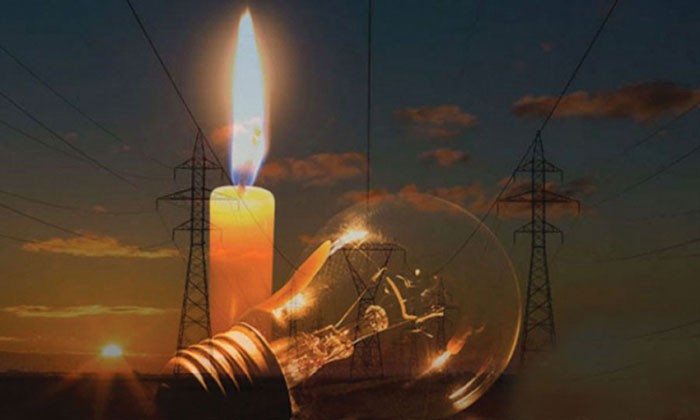
Power cuts continued across the country yesterday and are expected to continue today following the shutdown of all three generating units at the Lakvijaya Power Plant in Norochcholai.
The Public Utilities Commission of Sri Lanka (PUCSL) said approval had been granted on Monday (19) following a request by the National System Operator (NSO) to impose scheduled power cuts.
Accordingly, one-hour power cuts were scheduled between 4.30 p.m. and 9.00 p.m., with the country divided into four zones. Hospitals and locations providing essential services were exempted.
The three Norochcholai generating units remain out of operation following the countrywide power failure last Saturday, prompting the NSO to introduce daily power cuts to manage the available electricity supply.
NSO Chief Executive Officer Buddhika Samarasekara said the power cuts would be necessary yesterday and today (21).
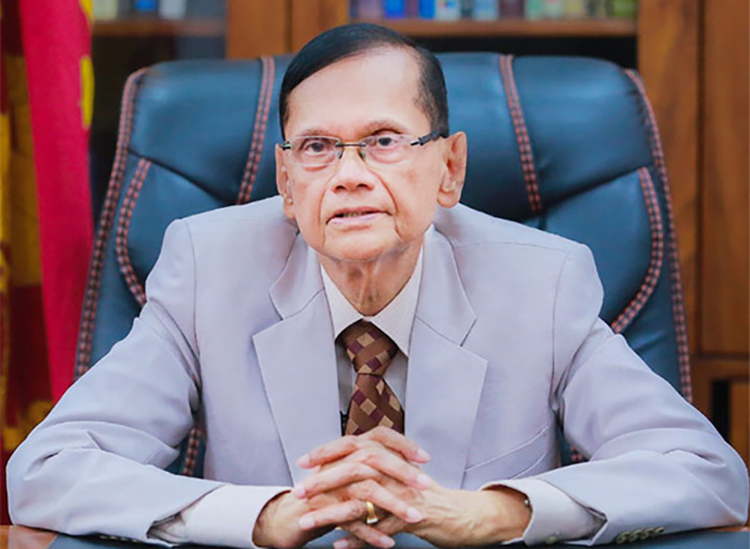
By Shamindra Ferdinando
Prof. G. L. Peiris yesterday said he had not been concerned at all about being arrested when the Commission to Investigate Allegations of Bribery or Corruption (CIABOC) summoned him to record a statement regarding an ongoing investigation.
Addressing the media outside the CIABOC, the former External Affairs Minister emphasised that his family had never taken anything from people but contributed to their welfare. The internationally renowned academic said that he didn’t accept lucrative opportunities abroad but remained committed to do whatever possible for the public here.
The CIABOC questioned Prof. Peiris on the launch of the Shangri-La Hotel project here. The Convener of the Janathawadi Joint Opposition said that when the top management of the hotel got in touch with
him, he had brought the matter to the notice of the then President Mahinda Rajapaksa, who promptly gave the go ahead.
Shangri-La was opened in Nov. 2017 with the participation of the then President Maithripala Sirisena and Prime Minister Ranil Wickremesinghe.
Prof. Peiris said that he had been appointed External Affairs Minister nearly a year after the successful conclusion of the war against the LTTE in May 2009. Shangri-La, which owned over 100 hotels at that time, was keen to explore the possibility of opening a hotel here and the government had swiftly grabbed the opportunity. Referring to the opening of ITC Ratnadeepa, in late April 2024, Prof. Peiris explained the importance of foreign investment, particularly after the end of the 30-year war that caused massive devastation.
Responding to media queries, Prof. Peiris said that he strongly opposed efforts to silence political opponents but accepted the need to investigate waste, corruption and irregularities. “People shouldn’t be targeted over their political stand,” the ex-lawmaker said, adding that he as the Minister tasked with attracting such special investments worked in line with the overall government policy.

Low-quality coal causes power cuts: Ex-LECO Chief

Power cuts continue

GL stresses importance of post-war Shangri-La investment after CIABOC questions him

Coal inquiry gets extension until 16 December

Dilshan, Hirupama named best athletes at All Island Schools Games Athletics Championships

Saudi Vision 2030 offers new economic opportunities for Sri Lanka

‘Dates have the highest sugar content to fight Coronavirus’

Sunday Island 27 December – Headlines

#SundayIsland 17th December – Headlines

Sunday Island – 28th March

Sunday Island Headlines – 21 March

Sunday Island – 21st February – Headlines
-

 Features3 days ago
Kotahena:A Small Enclave, An Extraordinary Legacy
-

 News4 days ago
Asgiri Mahanayake calls for immediate release of Gnanasara Thera
-

 News3 days ago
Record 1,600 students take Russian Classical Ballet examination in Sri Lanka
-
 News6 days ago
AC President recuses himself from hearing prison attire case pertaining to Gnanasara Thera
-

 Latest News7 days ago
Heavy showers above 100 mm are likely at some places in the Western, Sabaragamuwa, Southern, Central, and North-western provinces and in Anuradhapura district.
-
 News5 days ago
Naval officer testifies Yoshitha received Rs. 5.15 mn in salaries during SLN service
-

 News3 days ago
Karannagoda pushed for £24,536 for Yoshitha’s UK training, Court told
-

 News6 days ago
CID informs Fort Magistrate’s Court investigation into money laundering case against Namal completed