
News
SJB says Online Safety Bill signing during prorogation deemed unconstitutional

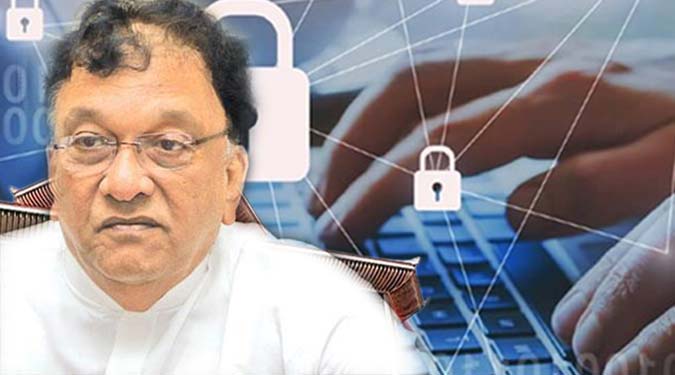
By Saman Indrajith
Main Opposition SJB says that the Online Safety Bill has not become law because the Speaker placed his signature to endorse the bill at a time when parliament was prorogued.
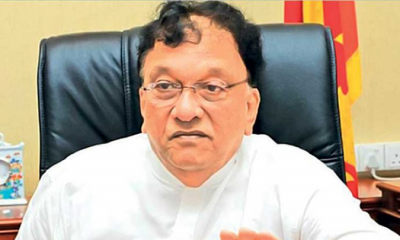
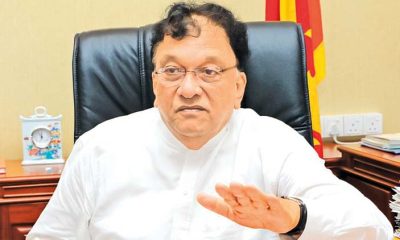
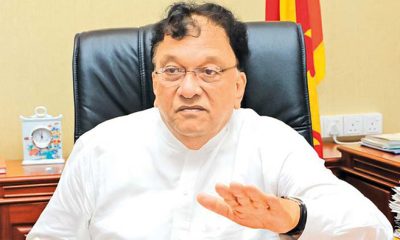
Addressing a press conference at the Opposition Leader’s Office in Colombo, Chief Opposition Whip and Kandy District MP Lakshman Kiriella said that the Bill was put to debate on Jan 23 and 24 and the Speaker himself announced that it was passed. “Thereafter Parliament was prorogued on Jan 26 and the new session started on Feb 07. It is stated that the Speaker certified the Bill on Feb 01. This is wrong. A Speaker cannot give his accent to a bill during a prorogation. He should have waited till Parliament summoned to complete unfinished business as per the rule. Endorsing a Bill is a legislative act which is not valid during prorogation,” Kiriella said.
“Article 70 (4) of the Constitution says that all matters which, having been duly brought before Parliament, have not been disposed of at the time of the prorogation of Parliament, may be proceeded with during the next session,” Kiriella said.
“Our Speaker, in his mighty hurry, placed his signature to endorse this Bill on Feb 01 without waiting till Feb 07. By doing so, he violated the Constitution and thereby rendered this Bill not valid,” Kiriella said, adding that his party hoped to raise this in support of petitions being argued against the passing of the Online Safety Bill before the Supreme Court.
When the House is prorogued all the unfinished legislation stop progressing, but they could be completed in the next session, Kiriella said, adding that paragraph 4 of the Article 70 of the Constitution clearly states so.




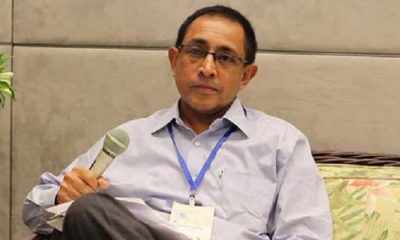

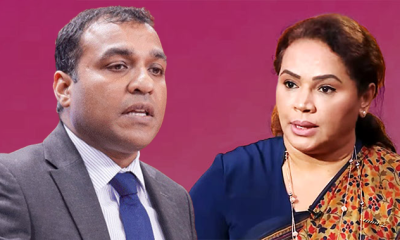



The “Gauravabhinandana” ceremonial felicitation was held in honour of the Chief Sanghanayake of the Sabaragamuwa Province of the Malwathu Maha Vihara Chapter of the Maha Vihara tradition of the Siyamopali Maha Nikaya; former Pirivena Examiner; Rajakiya Pandith; holder of Master; Scholar of classical texts; recipient of the Kala Bhushana title; Vinaya Keerthi Sri Dhammdinna Saranapala; the Most Venerable Kaeligama Vijithananda Nayaka Thero on Wednesday [25th of February] at the auditorium of the Rathnapura District Secretariat
The event was organized under the patronage of the Anunayake of the Malwathu Chapter of the Siyamopali Maha Nikaya, Most Venerable Acharya Agga Maha Panditha Niyangoda Dharmakeerthi Sri Sangharakkhitha Vijithasiri Abhidhana Anunayake Thero.
The presentation of the symbolic casket to the Most Venerable Kaeligama Vijithananda Nayaka Thero took place with the participation of Prime Minister Dr. Harini Amarasuriya and the Governor of Sabaragamuwa Province, Ms. Champa Janaki Rajaratne.
Addressing the gathering, the Prime Minister stated:
“It is a privilege for me to participate in this felicitation ceremony held in appreciation of the religious and social service rendered by the Chief Sanghanayaka of the Sabaragamuwa Province, Most Venerable Kaeligama Vijithananda Nayaka Thera.
When we reflect on his life journey, it serves as a profound inspiration to us all. Having entered monastic life as a disciple of the Sabaragamuwa prelate, the late Most Venerable Kelle Sri Saranananda Thero, the Nayaka Thera has now rendered over five decades of distinguished service following higher ordination.
After obtaining a Bachelor of Arts degree from the Vidyodaya University, he devoted several decades as a Pirivena teacher and examiner, enlightening thousands of students. He has also authored numerous scholarly works. His classical literary contributions, especially for students of Pirivena education, are of exceptional value”.
The Prime Minister further recalled with gratitude the commitment shown by the Nayaka Thera, centred around the Ratnapura Mahawala Sri Dharmayathana, to uplift the spiritual and social well-being of the local community, and extended her wishes for good health and long life for the continuation of his invaluable service to the Buddha Sasana.
The occasion was also graced by the presence of Most Venerable Karagoda Uyangoda Maithreemurthi Thera, Supreme Mahanayaka of the Sri Lanka Amarapura Maha Sangha Sabha; the Anunayaka of the Sri Lanka Ramanna Maha Nikaya, Waleboda Gnanissara Thera; Lecturer of the University of Peradeniya and Deputy Registrar of the Malwathu Chapter, Panditha Mahawela Dhammakkhanda Rathanapala Thera; the Chief Sanghanayaka of Ratnapura and Uva Wellassa and former Vice-Chancellor of Uva Wellassa University, Bethgamuwa Dhammadinna Thera; along with members of the Maha Sangha. The occasion was also attended by the Minister of Buddhasasana, Religious and Cultural Affairs Sunil Senavi, Governor of Sabaragamuwa Province, Ms. Champa Janaki Rajaratne, Member of Parliament Shantha Padmakumara, former Members of Parliament A. A. Wijethunga and Janaka Wakkumbura, Ratnapura District Secretary Chinthana Udaya Nanayakkara, Basnayake Nilame of the Maha Saman Devalaya Ishan Sanka Mapitigama, Mayor of Ratnapura Indrajith Katugampala, and many other distinguished invitees.


[Prime Minister’s Media Division]

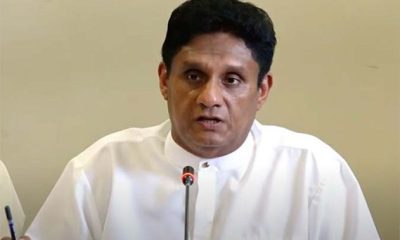
Opposition and SJB Leader Sajith Premadasa yesterday raised serious concerns over the Government’s importation of substandard coal, warning that its use has resulted in inefficient electricity generation, increased equipment damage and significant financial losses to the State and consumers.
In a video statement, the Opposition Leader said the SJB had exposed details regarding the importation of inferior-quality coal, prompting what he described as an admission by Government representatives that the coal in question was of poor standard.
Premadasa charged that the continued use of such coal has reduced generation efficiency at the Norochcholai Power Station, while increasing the likelihood of damage to critical equipment.
He further claimed that ash content had risen sharply, from the accepted 11–15 percent range, to over 21 percent, doubling the volume of toxic pollutants generated. The disposal of the excess ash, he said, poses additional environmental risks.
The Opposition Leader also noted that a further 15 to 16 coal shipments are expected to arrive within the next two to three months. However, he alleged that the failure to procure high-quality coal has reduced megawatt output, necessitating greater reliance on fuel-powered plants to bridge the shortfall.
“This results in financial losses to the country, the Government, and, ultimately, to electricity consumers,” he said.
Premadasa cited Section 30 of the Electricity Act of 2009, maintaining that consumer tariffs can only be imposed, based on efficient electricity generation. He urged the Public Utilities Commission of Sri Lanka to safeguard the rights of the country’s 7.5 million electricity consumers, insisting that losses stemming from inefficient generation cannot lawfully be passed on to the public.
He further alleged that the Government’s promised “system change” had, instead, resulted in questionable coal procurement deals. The financial losses incurred through, what he termed, corrupt transactions, he argued, could have been channelled into essential public services, such as education, healthcare, poverty relief and support for entrepreneurs.
Premadasa called not for the appointment of a committee of experts, but for a full forensic audit into the transactions surrounding the coal imports.
He stressed that the SJB would continue to stand in defence of electricity consumers and asserted that the President and Cabinet must accept responsibility for the damage allegedly caused to the Norochcholai power plant, which, he described, as a national asset.

Grama Niladharis, Disaster Relief Service Officers, and Technical Officers have temporarily suspended Cyclone Ditwah-related relief operations, citing unresolved administrative and financial issues. The halt began yesterday (27).
The decision stems from the absence of a formal circular for relief assessment and the non-payment of promised allowances.
Upul Kumara, Chairman of the All Island Disaster Relief Services Officials’ Union, said there is still no proper system in place for delivering Cyclone Ditwah relief.
He added that trade unions, representing Grama Niladharis, who manage relief distribution, and Technical Officers, responsible for disaster damage assessments, had discussed continuing relief operations. Despite this, 95 days after the cyclone struck, the government has yet to implement the necessary mechanisms to ensure proper relief delivery.
“As a result, all parties involved have collectively decided to initiate this trade union action,” Kumara said.
He noted that discussions with the relevant secretaries had already taken place and formal demands submitted. “We are informing the President that we no longer require discussions with the secretaries. Our demands have been presented. This action is, therefore, necessary,” he added.
Kumara emphasised that all Grama Niladharis, Disaster Relief Service Officers, and Technical Officers, engaged in relief operations, will suspend Ditwah-related duties until proper directives are issued and allowances are paid.

Chief Sanghanayaka of Sabaragamuwa Province felicitated

Fair weather, except for showers in the Kaluthara, Rathnapura, Galle and Matara districts after 2.00 p.m.

Sajith raises fresh concerns over toxic pollutants emanating from burning of substandard coal

Cyclone Ditwah relief halted over unresolved issues

Fugitive “Podi Lassi” brought back from India

Police revive “Tell IGP” in a strengthened format

‘Dates have the highest sugar content to fight Coronavirus’

Sunday Island 27 December – Headlines

#SundayIsland 17th December – Headlines

Sunday Island – 28th March

Sunday Island Headlines – 21 March

Sunday Island – 21st February – Headlines
-
 Features6 days ago
Why does the state threaten Its people with yet another anti-terror law?
-
 Features6 days ago
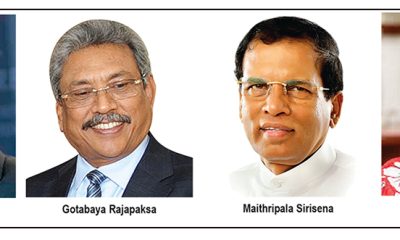
Reconciliation, Mood of the Nation and the NPP Government
-

 Features6 days ago
Victor Melder turns 90: Railwayman and bibliophile extraordinary
-

 Features5 days ago
LOVEABLE BUT LETHAL: When four-legged stars remind us of a silent killer
-
 Features6 days ago
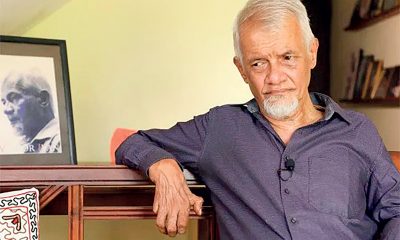
Victor, the Friend of the Foreign Press
-
 Business5 days ago
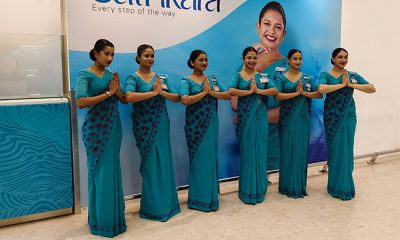
Seeing is believing – the silent scale behind SriLankan’s ground operation
-

 Business5 days ago
Bathiya & Santhush make a strategic bet on Colombo
-
 Features6 days ago
Barking up the wrong tree