
News
SJB questions Kanchana over suspension of fuel pricing formula, USD 3 bn debt to suppliers


‘Petroleum, water services, too, should be under electricity regulator’
By Shamindra Ferdinando
The Convenor of the combined trade union front, in fuel, ports and power sectors of the Samagi Jana Balavegaya (SJB), Ananda Palitha, yesterday (04) alleged that consumers had been deprived of the benefit of the continuing drop in world crude oil prices as the government had suspended the cost-reflective fuel pricing formula, introduced in late May last year.
Having declared that the new pricing formula would be adjusted bi-monthly, or monthly, the government had conveniently discarded the mechanism, Ananda Palitha alleged.
Power and Energy Minister, Kanchana Wijesekera, owed the public an explanation why the pricing formula had been suspended for about six months.
Responding to The Island queries, the former CPC/Ceylon Petroleum Storage Terminals Ltd. (CPSTL) employee claimed that a litre of petrol, both 92 and 95, as well as diesel, could be sold much less than the current prices charged from consumers.
The failure on the part of the Power and Energy Ministry to implement the pricing formula had paved the way for the Indian Oil Corporation’s subsidiary in Sri Lanka, Lanka IOC, to earn massive profits at the expense of the bankrupt country.
Lanka IOC, incorporated in 2003, to carry out retail marketing and bulk supply to industrial consumers owns one-third of shares in CPSTL, Palitha said.
The trade union activist said that a joint parliamentary group should inquire into what was going on in the petroleum sector as successive ministers, given the responsibility of managing the vital sector, caused irreparable harm by pursuing agendas inimical to the national economy. The incumbent Minister Wijesekera is not an exception, the trade union leader added.
Had petroleum and water utilities, too, been brought under the Public Utilities Commission, established in 2002, as was originally envisaged, the issues at hand could have been handled in a different way, the SJB activist said.
In spite of the Commission being designated the regulator for petroleum and water utilities, successive governments conveniently refrained from bringing them under the Commission by way of Parliamentary Acts, Ananda Palitha said.
Ananda Palitha pointed out how the Chairman of the Commission, Janaka Ratnayaka, in spite of quite heavy political pressure, stood by the public in the face of relentless pressure exerted by the government, hell-bent on going ahead with massive tariff hikes.
The trade unionist said that all political parties, represented in Parliament, should be held accountable for the developing crisis. According to Ananda Palitha, the non-inclusion of petroleum sector and water services industries was deliberate and meant to prevent the regulator from doing his job, in the interest of the country, consumer and fair play.
Referring to the continuing crisis at the Sapugaskanda oil refinery, Ananda Palitha said that those who disrupted the supply of crude oil, delivered heavy blows to the CEB. “By disrupting operations, they thwarted the supply of naphtha, diesel and furnace oil. Everyone knows who benefits from such disruptions,” Ananda Palitha said.
Commenting on President Ranil Wickremesinghe demanding explanations from the CPC and SriLankan Airlines over the payment of bonuses, at the end of 2022, Ananda Palitha asked how Wickremesinghe, who held the Finance portfolio, didn’t know what was going on.
The Wickremesinghe-Rajapaksa government should be ashamed, if it really didn’t know until the workers of those institutions were paid bonuses. Referring to a media statement, issued by the Presidential Media Division (PMD), Tuesday evening, in this regard, Ananda Palitha questioned the status of CPSTL, jointly run by the CPC and Lanka IOC.
Ananda Palitha said that the CPC owed suppliers as much as USD 3 bn whereas the government was down on its knees before the Washington-based International Monetary Fund (IMF) for USD 2.9 bn spread over a period of four years.
Of this staggering amount, the CPC owed USD 700 mn to India and this needed to be settled in March-April this year, Ananda Palitha said, adding that the country owed a further USD 800 mn to other suppliers. There was also a long outstanding payment to Iran, believed to be USD 425 mn.
The political activist alleged that USD 45 mn paid for the procurement of crude oil, under controversial circumstances, was missing.
Meanwhile, the government was in the process of clearing the way for the privatization of both the CEB and the State Banks, he alleged.








Former first lady Shiranthi Rajapaksa, wife of former President Mahinda Rajapaksa was produced before the Hulftsdorp court, after being arrested by officers of the Commission to Investigate Allegations of Bribery or Corruption (CIABOC) and produce
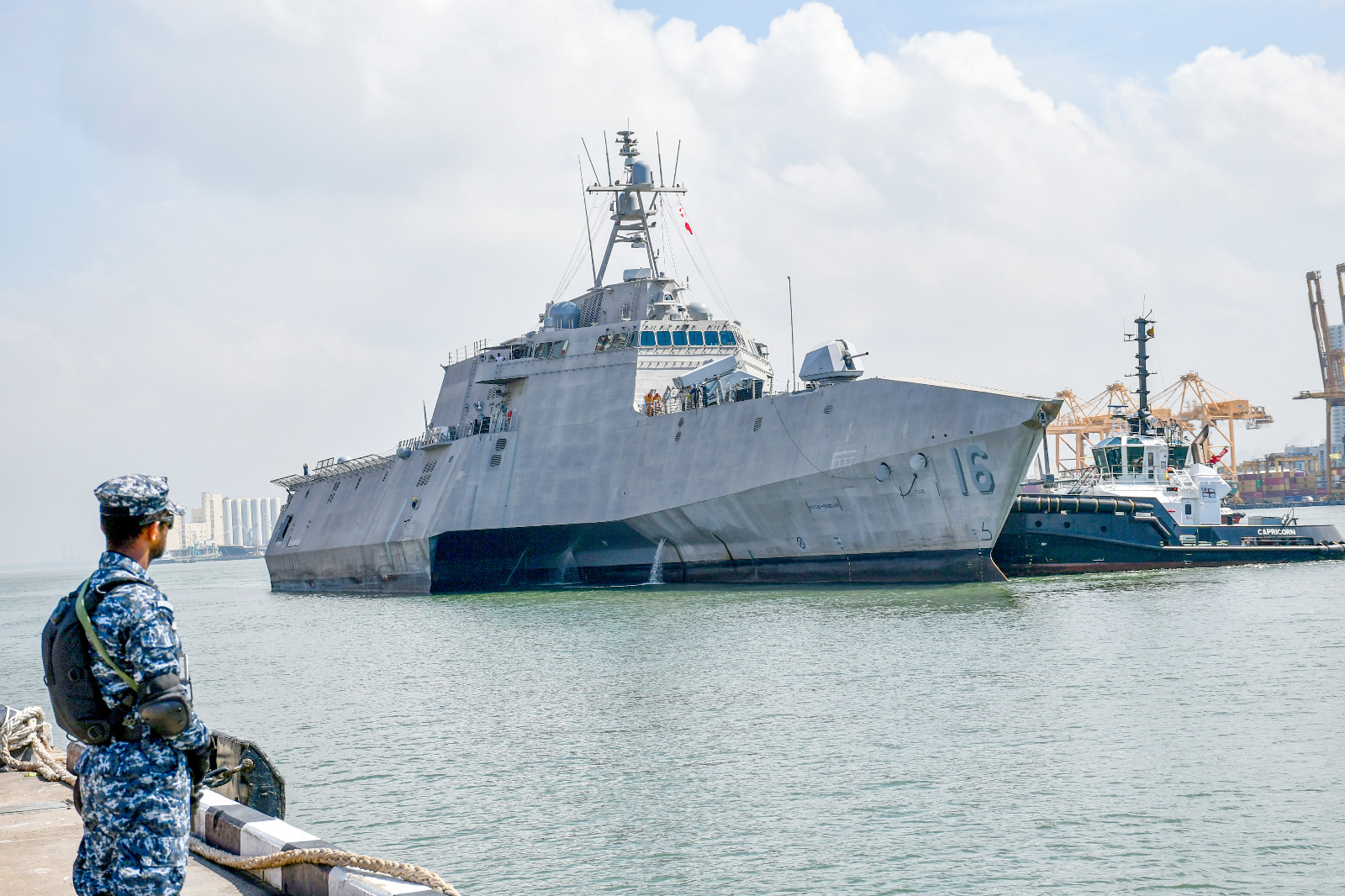
The U.S. Navy ship USS Tulsa (LCS 16) arrived at the Port of Colombo this morning, 7 October 2026 for replenishment purposes.
The visiting ship was welcomed by the Sri Lanka Navy in accordance with naval traditions.
The 127.7-metre-long platform is a Littoral Combat Ship commanded by Commander BM Wanier. Commissioned on 16 February 2019, USS Tulsa has since been in service with the US Navy.
The ship previously made a port call in Sri Lanka on 27 August 2025.
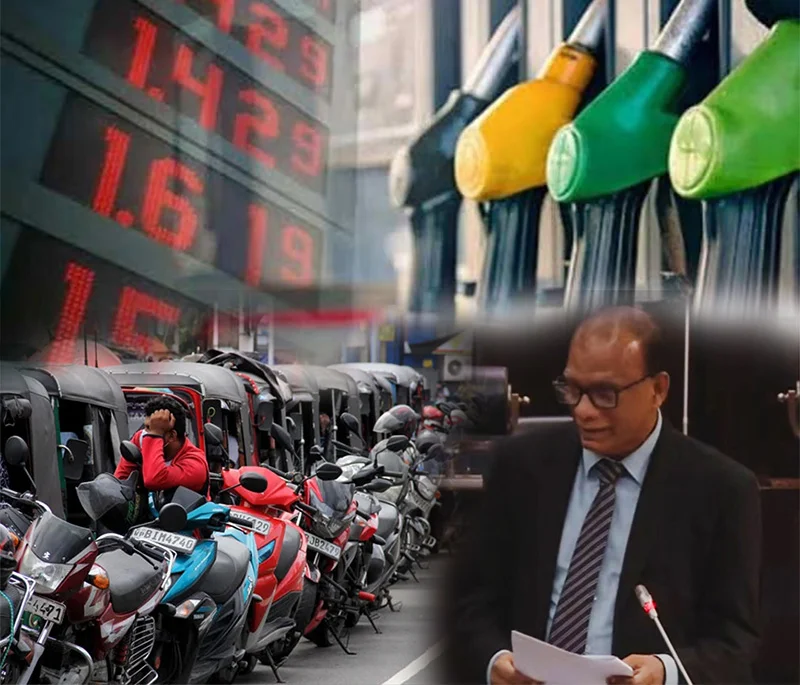
Govt. tells fuel distributors to maintain stocks to ensure uninterrupted supplies
by Saman Indrajith and Norman Palihawadane
The government had instructed private fuel distributors to maintain minimum stocks and ensure uninterrupted supplies to the market, Energy Minister Anura Karunathilaka told Parliament yesterday (06).
Karunathilaka said the Ministry of Energy Secretary had notified the relevant companies of the requirement, following a reduction in supplies by some private distributors, amid higher international fuel prices.
The Minister said private companies had informed the government that they were facing losses because international prices had risen while fuel was being sold, locally, at prevailing prices. As a result, some companies had reduced the volumes released to the market.
The reduced supplies had increased the burden on the Ceylon Petroleum Corporation (CPC), whose share of the diesel market had risen from about 54% to 82%, the Minister said.
“The CPC currently holds an 82% share of the market,” he said, adding that it had increased its supplies, compared with February, to compensate for the reduction by private distributors.
Karunathilaka said the government could not, under the existing agreements with private companies, specify the quantities they should supply to individual filling stations. However, it could require them to maintain minimum stocks in the country.
The Minister said the Energy Ministry had already instructed companies that had failed to maintain the required stocks to take steps to prevent supply disruptions.
The Minister attributed the queues reported at some filling stations to reduced supplies from private distributors, as well as normal variations in fuel distribution. He also said demand for CPC fuel had increased because private companies generally did not provide fuel to dealers on credit, while the CPC offered a three-day credit facility.
“We expect that, as the Ceylon Petroleum Corporation takes on this additional burden, the problem will ease to some extent by Wednesday or Thursday,” Karunathilaka said.
He said instructions had also been issued to increase supplies to CPC filling stations. A special discussion on the issue is scheduled for today (07), with officials of the Energy Ministry and CPC expected to participate,
along with President Anura Kumara Dissanayake.
Meanwhile, Petroleum Dealers’ Association officials have called for an early solution to the supply issue. Association Chairman D.V. Shantha Silva said queues had been reported at many filling stations, mainly those operated by private distributors.
He said the situation was not due to an overall shortage of fuel, but was linked to reduced orders by Lanka IOC, Sinopec and R.M. Parks amid concerns over losses incurred on fuel sales.
The Ceylon Petroleum Private Tanker Owners Association has urged motorists to refrain from panic buying, saying there was no nationwide disruption to fuel supplies.
The government earlier increased fuel prices and introduced a per-litre diesel subsidy following concerns raised by distributors over rising international prices.

Former first lady Shiranthi Rajapaksa arrested by CIABOC

U.S. Navy ship USS Tulsa arrives in Colombo for replenishment visit

Smriti Mandhana appointed India captain across formats

Ronaldo apologizes for Portugal walkout; says Jesus broke promise

Showers in the Western, Sabaragamuwa, Central, Uva, North-western and Southern provinces and in Anuradhapura and Mannar districts

Fuel crunch looms

‘Dates have the highest sugar content to fight Coronavirus’

Sunday Island 27 December – Headlines

#SundayIsland 17th December – Headlines

Sunday Island – 28th March

Sunday Island Headlines – 21 March

Sunday Island – 21st February – Headlines
-

 News7 days ago
US-assisted ‘Ice’ detection: NPC to examine IGP’s move to transfer drug-busting team
-

 Editorial6 days ago
Colombo Port drug bust: The plot thickens
-

 Editorial7 days ago
Drug busting, transfers and trust deficit
-

 Features4 days ago
The first woman in the foreign service or Ceylon Overseas Service it was then called
-
 News7 days ago
Sri Lankan facing death penalty in Saudi Arabia: Mano G appeals to Crown Prince
-

 Editorial5 days ago
Fuelling discontent and protest
-

 News3 days ago
Geneva takes up Sallay’s case and govt. ignores opportunity to answer accusations
-

 Latest News5 days ago
Tharindu Rathnayake, bowlers secure Asian Games Bronze for Sri Lanka