
News
SJB, FSP agree on common agenda


Focus on abolition of Executive Presidency
BY SHMAINDRA FERNANDO
SJB MP Kabir Hashim, MP, says the main Opposition party and the Frontline Socialist Party (FSP) have recently agreed on the abolition of the Executive Presidency.Hashim yesterday (20) told The Island that they agreed on empowering Parliament at the expense of the Executive President.The SJB and FSP delegations met at the Opposition Leader’s Office at , Sir Marcus Fernando Mawatha this week. The SJB delegation consisted of lawmakers, General Secretary Ranjith Madduma Bandara, Kabir Hashim, Eran Wickremaratne and Mujubur Rahuman whereas the FSP was represented by Central Committee members, Pubudu Jagoda and Duminda Nagamuwa.The SJB, offshoot of the UNP, secured the recognition of the Election Commission in Feb 2020 while the FSP is yet to be registered as a political party.
Lawmaker Hashim said that the SJB was keen to discuss the current situation with all political parties represented in Parliament and out as part of the overall efforts to reach agreement on a common programme.Referring to the proposals made by the Bar Association of Sri Lanka (BASL) to resolve the political crisis that would be a prerequisite for addressing the economic downturn, lawmaker Hashim said that the SJB and the FSP agreed on the need for President Gotabaya Rajapaksa to agree on a timeline for him to step-down.Responding to The Island queries, one-time UNP Chairman said that the SJB could work together with the FSP on both political and economic issues. The talks took place amidst the FSP, the breakaway faction of the JVP, was consolidating its position as the spearhead of the ongoing protest campaign meant to force President Gotabaya Rajapaksa to step down.
MP Hashim said that they agreed to prepare a document meant for future cooperation. Asked whether they have scheduled another meeting with the FSP, the Kegalle District MP said that they were keen to prepare a working document before they next meet for talks.The top SJB spokesperson said that in spite of swearing in UNP leader Ranil Wickremesinghe as the Prime Minister, the President was on a difficult wicket.Lawmaker Hashim said the SJB was also engaged in talks with the JVP though the deliberations weren’t at official level. “We are proceeding with efforts to finalize a common agenda meant to restore normalcy. We had talks with the BASL, industry leaders as well as civil society,” MP Hashim said.Asked whether the SJB had met Premier Wickremesinghe or sought a meeting with him, MP Hashim said that when Dr. Harsha de Silva raised a spate of issues at hand, especially the recent hard default, the Premier assured the Parliament that party leaders would be fully briefed pertaining to the current situation.Lawmaker Hashim was referring to the first occasion Sri Lanka experienced a hard default as the grace period for the International Sovereign Bonds (ISB) Coupon payment lapsed on May 18. Last month Sri Lanka announced a pre-emptive negotiated default ofall outstanding debt as at April 12.On April 18 the ISB Coupon worth $ 78 million fell due and those had 30 days to obtain “Consent Solicitation” from all ISB holders for payment suspension by May 18.
FSP spokesperson Pubudu Jagoda told The Island that the party discussed the developing situation with some political parties, including the SJB and ’43 Brigade’ led by SJB MP Patali Champika Ranawaka. The FSP delegation comprised Central Committee members, Pubudu Jagoda, Duminda Nagamuwa and Sanjeewa Bandara. MP Patali Champika Ranawaka and Attorney-at-Law Shiral Lakthilake represented the ‘43 Brigade.’Jagoda said that the ’43 Brigade’ was of the view the executive presidential system should be retained with necessary amendments.According to Jagoda, the Eksath Samajawadi Pakshaya and the Tamil National Alliance (TNA) agreed that the executive presidency should be abolished. FSP leader Kumar Gunaratnam and Pubudu Jagoda had represented the party whereas Jaffna District MP M.A. Sumanthiran, PC, and Shanakiyan Rasamanickam represented the TNA.
Jagoda said that the current environment was conducive for building a common agenda that could accommodate the vast majority of political parties represented in Parliament and other groups bent on abolishing the executive presidency.He emphasized the pivotal importance of a common response to what Jagoda termed the government crackdown in Colombo, its suburbs and the provinces where over 1,000 persons had been arrested by the police in connection with the ongoing investigations into mob assaults ignited following unprovoked attacks on those demanding the resignation of the President and the Premier.

A specialists committee has been appointed by the Secretary to the Ministry of Agriculture, Livestock, Lands and Irrigation adhering to the decision of the Cabinet of Ministers dated 29.12.2025 for submitting appropriate recommendations analyzing the provisions of the draft bill formulation in regard to Animal Welfare.
Based on the recommendations of the said Committee, the Legal Draftsman has been instructed at the meeting of the Cabinet of Ministers held on 18.05.2026 to prepare the final bill on the animal welfare.
Wherefore, the Legal Draftsman has formulated the draft bill and the clearance of the Attorney General has been received in the connection.
Accordingly, the Cabinet of Ministers granted approval to the resolution furnished by the Minister of Agriculture, Livestock, Lands and Irrigation to publish the said draft bill in the
Government Gazette Notification and subsequently forward the same to the Parliament for its concurrence.
Under the legal provisions for elections in this country since 2004, it is mandatory for voters who come to mark their votes to verify their identity through a valid identity card, and it is also mandatory for all such voters to be marked with an appropriate mark using indelible ink. The dual purpose of these two functions is to prevent a voter from voting more than once in a single election.
It has been observed that having to follow two different
methods at the same time to achieve the same objective hinders the efficiency of the duties performed at the polling stations and also incurs additional costs to the government.
Therefore, it has been deemed appropriate to remove the legal provisions regarding the use of indelible ink and marking the voter with the appropriate mark from all election acts.
Accordingly, the development activities of the province, as well as national security, will benefit. Therefore, the Cabinet of Ministers has approved the resolution furnished by the
President to take necessary steps to remove the legal provisions
• Section 36 of the presidential Election Act, No 15 of 1981
• Section 38 of the Parliamentary Election Act, No 01 of 1981
• Section 36 of the Provincial Council Election Act, No 02 of 1988
• Section 53 A of the Local Government Elections Ordinance (262 Authority)
• Section 21 of the Referendum Act No 7 of 1981
News
Showers will occur in the Western, Sabaragamuwa and North-western provinces and in Galle, Matara, Kandy and Nuwara-Eliya districts

WEATHER FORECAST FOR 24 JUNE 2026
Issued at 05.30 a.m. on 24 June 2026 by the Department of Meteorology
Several spells of showers will occur in the Western, Sabaragamuwa and North-western provinces and in Galle, Matara, Kandy and Nuwara-Eliya districts. Showers or thundershowers may occur at a few places in the Uva province and in Ampara and Batticaloa districts after 2.00 p.m.
Fairly strong winds about (30-40) kmph can be expectedat times over the Western slopes of the central hills, the Northern, North-central, North-western and Southern provinces and in Trincomalee district.
The general public is kindly requested to take adequate precautions to minimize damage caused by temporary localized strong winds and lightning during thundershowers.

Animal Welfare Draft Bill to be Gazetted
Legal provisions on marking voters using indelible ink during elections removed

Showers will occur in the Western, Sabaragamuwa and North-western provinces and in Galle, Matara, Kandy and Nuwara-Eliya districts

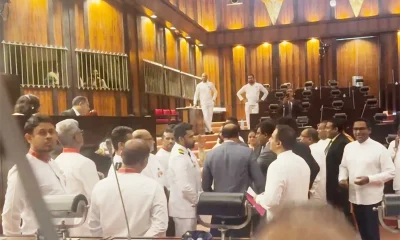
Court vacancy row throws Parliament into turmoil; sittings disrupted

Climate, pollution, forest loss now hitting economy: BASL chief

GSP+ in jeopardy: GL

‘Dates have the highest sugar content to fight Coronavirus’

Sunday Island 27 December – Headlines

#SundayIsland 17th December – Headlines

Sunday Island – 28th March

Sunday Island Headlines – 21 March

Sunday Island – 21st February – Headlines
-

 News5 days ago
Creditor receives USD 2.5 mn as Lankan public bears loss from theft of Treasury funds
-

 News4 days ago
Creditor not yet paid
-
 News4 days ago
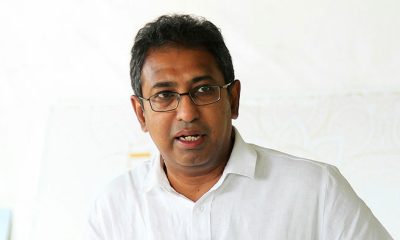
Consumers bearing 22% tax burden despite 18% VAT claim: Dr. Harsha de Silva
-

 Opinion6 days ago
Beyond diagnosis: A strategic design for 7% growth by 2029 (Part I)
-

 Opinion5 days ago
SriLankan Airbus struck by lightning
-

 Features3 days ago
Nanda Pethiyagoda Wanasundara as three generations of family saw her
-

 Latest News3 days ago
Sooryavanshi thumps fastest List A fifty as India A win tri-series
-

 Editorial3 days ago
Fuel crisis: Beyond price debate