
News
SJB accepts SLPP’s A’pura challenge

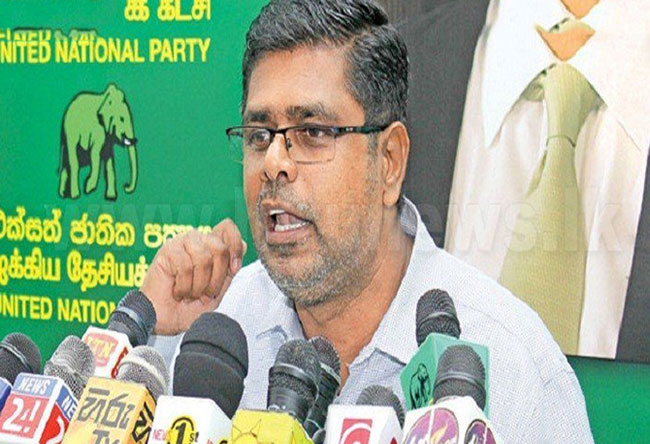
‘Hold LG polls as previously scheduled for March’
By Shamindra Ferdinando
Top Samagi Jana Balavegaya (SJB) spokesperson Mujibur Rahuman says that Wednesday’s SLPP propaganda rally in Anuradhapura had contradicted their much disputed claim the Local Government polls couldn’t be held due to the threat still posed by Covid-19 epidemic.
Pointing out that the SLPP has launched a countrywide campaign regardless of repeated warnings that such gatherings could be super spreader of Covid-19, lawmaker Rahuman said therefore LG polls could be held as scheduled.
“We are contemplating seeking the Election Commission’s response to the ruling party’s Anuradhapura move,” the Colombo District MP told The Island.
Referring to the recent issuance of a gazette regarding the postponement of the LG polls previously scheduled to be held by the third week of March, 2022, lawmaker Rahuman challenged the SLPP to reverse it.
Now that Premier Mahinda Rajapaksa, in the presence of President Gotabaya Rajapaksa, at the Anuradhapura rally, had declared that the government was ready to face the Opposition challenge, the LG polls could be re-scheduled, he said.
Minister Janaka Bandara Tennakoon handles Provincial Council and Local Government portfolio in the absence of State Minister Roshan Ranasinghe who is overseas.
Lawmaker Rahuman said that State Minister Ranasinghe was on record as having said that Covid-19 epidemic had compelled them to postpone elections. Against the backdrop of the Anuradhapura rally, the government couldn’t skip scheduled LG polls on the false pretext of Covid-19 threat, the former UNPer said.
The Island sought an explanation from Chairman of the Election Commission Attorney-at-Law Nimal Punchihewa as regards the postponement of LG polls citing Covid-19 threat. Civil society activist Punchihewa emphasized that the gazette issued in that regard didn’t give any specific reason for the polls postponement. Punchihewa said that the EC was ready to conduct the election depending on the government decision. Responding to another query, Punchihewa said that postponement of polls was in line with the relevant constitutional provisions.
Lawmaker Rahuman said that the SLPP quite conveniently failed to address any of the contentious issues -ranging from ruination of Maha season due to hasty ban on fertilizer and agro-chemicals and the growing foreign currency crisis that had caused countrywide shortage of essential items, including medicine.
He pointed out that the absence of any of the ministers representing constituent parties of the SLPP indicated that recent issues, such as a section of the cabinet challenging the government in the Supreme Court over Yugadanavi deal as well as sharp differences over the economic crisis had affected the ruling coalition. Senior SLFPer Minister Nimal Siripala de Silva’s declaration against the move to tax ETF and the EPF couldn’t have happened at a worse time, the SJB MP said.
The SJB spokesperson said that cabinet minister Udaya Gammanpila’s admission that the country is in a debt trap contradicted the current dispensation’s stand on the present crisis. The government recently stripped Susil Premjayantha of his ministerial portfolio for criticizing the SLPP’s agriculture policy, MP Rahuman said. How would they tackle ministers Gammanpila, Weerawansa, Vasudeva Nanayakkara and now Nimal Siripala de Silva? MP Rahuman asked.
The government parliamentary group comprises145 lawmakers with the main constituent having 117 members. The second and the third largest political parties are the SLFP (14 members) and the NFF (??????members), respectively.
Lawmaker Rahuman said that if the SLPP was confident it could reverse its decision and pave the way for LG polls. However, if the SLPP continued to avoid LG polls on the false pretext of the covid-19 threat, it would underscore the crisis the government was in.
“Let the electorate decide,” the MP said, adding that the SJB remained confident of attracting the vote. He also dismissed claims of turmoil within the SJB.
Of the 54 member SJB group in Parliament, several have voted with the government on two controversial votes-on the 20th Amendment on Oct 2020 and the Colombo Port City Economic Commission Bill in May 2021.SJB dissidents ensured 2/3 majority for the government on both occasions.
MP Rahuman said that though the SLPP boasted of having a 2/3 in Parliament, it couldn’t have at least leaders of the constituent parties at the Anuradhapura meeting. “That is the reality. Their much touted 2/3 didn’t reflect in the current political environment,” the former UNPer said.


News
Formulation of a Draft Economic Development Bill to expedite the process of Digital Transformation and Digital Economic Development


It is essential to establish an institutional framework with legal powers to ensure the effective implementation of national digital policy and guidelines.
Quality human capital should be attracted to this institutional framework for the compilation of policies, implementation of policies, regulation, and empowerment of operations. The continuous participation of the private sector should also be considered in establishing a strong institutional framework.
It has been further identified that attention should also be
drawn to new fields of digital innovation, including support for artificial intelligence and related activities.
Taking into consideration the aforementioned matters, a concept paper has been formulated to prepare a Draft Economic Development Bill for the establishment of a new institutional framework.
Accordingly, the Cabinet of Ministers has approved the resolution furnished by the President in his capacity as the Minister of Digital Economy to instruct legal draftsman to formulate a Draft Economic Development Bill based on the aforementioned concept paper.
The Sri Lanka Community and Health Survey is the main data source for obtaining necessary information for reviewing progress toward achieving the national health development goals, as well as the expected sustainable development goals by 2030.
The last survey was conducted in the year 2016, and the Sri Lanka Community and Health Survey should be conducted to obtain updated data to enable the collection of related data and indicators concerning the health and well-being targets of the Global Sustainable Development Objectives.
Accordingly, the Cabinet of Ministers has approved the resolution furnished by the President in his capacity as the Minister of Finance, Planning, and Economic Development to take necessary steps to conduct the aforementioned survey.
The access to secure, reliable and affordable drinking water and adequate sanitation facilities is essential to maintain public health, promote social well-being and foster economic development.
The Sri Lankan Government recognizes water supply and sanitation services as both an economic good and a basic human need. Therefore, when pricing for water and sanitation, a balance should be maintained between the financial sustainability of the service providers and the requirement to ensure fair and affordable access for all strata in the society.
Accordingly, the Sri Lankan government has identified the necessity of a national water supply that is sensitive to gender equality and social integration applicable to all water supply and sanitation service providers. At present, there is no formal national framework for setting, reviewing, approving, and implementing tariffs for water supply systems operated by various water supply providers as well as for setting, reviewing, approving, and implementing tariffs for sanitation systems.
Therefore, the Ministry of Housing, Construction, and Water Supply has formulated a water tariff policy covering all water supply service providers under the Sri Lanka Water Supply and Sanitation Sector Reform Program, which is a policy-based loan program implemented under Asian Development Bank funds.

Formulation of a Draft Economic Development Bill to expedite the process of Digital Transformation and Digital Economic Development
Cabinet approval for Sri Lanka Community and Health Survey – 2026/2027
A National Water Tariff Policy for all Water Supply and Sanitation Services
National Policy on Green Hydrogen in Sri Lanka
Cabinet nod to amend the Customs Ordinance
Cabinet nod to submit the Anti-Corruption (Declaration of Assets and Liabilities through Centralized Electronic System) Regulations 2026, made under Section 156 of the Anti-Corruption Act, No.9 of 2023, for approval by Parliament

‘Dates have the highest sugar content to fight Coronavirus’

Sunday Island 27 December – Headlines

#SundayIsland 17th December – Headlines

Sunday Island – 28th March

Sunday Island Headlines – 21 March

Sunday Island – 21st February – Headlines
-
 Latest News6 days ago
Kusal Mendis, Pathum Nissanka, bowlers put Sri Lanka 1-0 up
-
 News6 days ago
New US tariffs proposed on 60 countries, including Sri Lanka
-
 Features5 days ago
Power crept into the Sangha and is now tearing it apart
-

 Features5 days ago
Kondachchi wind farm and battery storage project to boost energy security, says Power Ministry Secretary
-
 Features5 days ago
Saudi Arabia sets new benchmark in Hajj management as 1.7 million pilgrims complete sacred journey
-

 News3 days ago
Women’s T20 World Cup 2026 warm-up: Chamari Athapaththu’s 94 helps Sri Lanka beat Pakistan
-

 News4 days ago
Asst. Manager, security officer arrested over Rs 30 mn snatch at Horana PB branch
-

 Editorial2 days ago
Probe Sallay’s complaint