
Features
Sir Andrew Caldecott (1884-1951) Governor of Ceylon with special experience


(Excerpted from Selected Journalism by HAJ Hulugalle)
Sir Andrew Caldecott arrived in Ceylon as Governor of the Island seven years ago yesterday. He will be 60 years of age on the 26h of this month. No excuse is therefore necessary for making some attempt to review his career.
The roll of Ceylon’s past Governors includes many remarkable men who made their mark as pioneers, administrators, scholars or writers. Sir Andrew Caldecott will take his place among them on his merits, but also on the suffrage of those peoples among whom he has served. He may not be so brilliant a writer as Clifford, so profound a scholar as Chalmers, so eloquent as West-Ridgeway or so experienced a parliamentarian as Gregory but he combines in his character qualities which made him one of the most successful and popular proconsuls ever to leave England to carry the white man’s burden.
When he was promoted from the Chief Secretaryship of Malaya to the Governorship of Hongkong, the people of Malaya felt that they were losing a close friend. When his appointment as Governor of Ceylon was announced there was consternation in Hongkong. Frantic messages were sent to Whitehall by representatives of the different communities in that Colony. One of their leaders said; “Let the powers-that-be understand that the Colony of Hongkong is impatient at being treated in this curt and casual manner which constituted an unfortunate characteristic of Colonial administration before certain now important countries fought for and won Dominion status. Whatever may be the needs of Ceylon, the needs of Hongkong are certainly considerable.”
Replying to these protests, the Secretary of State for the Colonies said in a telegram addressed to the Governor: “I have received telegrams (1) from unofficial members of the Executive Council, Hongkong and (2) from Chinese members of the Executive and Legislative Councils pressing strongly for your retention at Hongkong on the ground of outstanding qualifications for the post and asking that the question of your transfer may be reconsidered. Please inform these gentlemen that I have read with pleasure their tribute to yourself and have every sympathy with their desire that your services should not be lost to Hongkong but that your appointment to Ceylon was decided upon for reasons of high policy and I regret that there can be no question of reconsideration,”
The personal qualities which won the respect and esteem of the people of Malaya and Hongkong have not failed Sir Andrew Caldecott in Ceylon. Whatever differences of opinion there might have been on political questions or administrative acts, his distinction of mind, unfailing courtesy, sympathy for the under-dog, complete freedom from racial arrogance or class snobbery and his many social gifts have made his regime of office especially notable at a time of stress and tension in the Island’s history. Not the least admirable among these qualities was the dignity and self-discipline with which he adapted himself to the conditions imposed by the war.
The berth of a Colonial Governor under a half-way-house Constitution is not a bed of roses. Sir Graeme Thomson and Sir Edward Stubbs, who had previous experience of Ceylon, learned that lesson to their cost. No doubt Sir Andrew Caldecott had sensed this when in his first public declaration in the Island he said: “When the kind people of Hongkong made complimentary references to myself last Spring at our sad parting, I was reminded of the well-known saying that a country gets the Government it deserves. The period of Governorship is a mirror in time wherein the people of the State see reflected their own expression, attitudes and actions, and although he may help in its composition, nevertheless the beauty and symmetery of the scene must depend on the posture and gesture of every single figure in the foreground and background.”
He added: “As Governor under your Constitution I shall endeavour to the first of my judgement and ability to promote the good name, sound credit, clear conscience and peace of Ceylon. in the certainty that the Officers and Ministers of State, and members of the State Council and of every local government body in this Island have an identical purpose. I look forward to taking my part in the team, shoulder to shoulder in that common progress towards the common goal.”
Who would have thought in 1937 that the British Empire would two year’s later be plunged in a world war and that nearly three years of the Governor’s period of office here would be mainly concerned with keeping Ceylon on a war footing? Some may say that his capacity as a constitutional ruler cannot be fairly appraised on this record under war conditions. In a sense this is true. At the same time, a man less gifted with the qualities of statesmanship would almost certainly have made many blunders when confronted with new and unexpected situations. The fact that Ceylon has emerged from the ordeal without a serious breakaway is due to no small measure to the tact, firmness and devotion to duty displayed by the Governor, undeterred by ill-health or even domestic tragedy.
A great deal of the Governor’s time and energies, especially in the first few years of his term of office were taken up by political questions. One of his first tasks was to carry out the instructions of the Secretary of State to investigate and report on the constitutional question. Although he had no parliamentary experience and was no constitutional lawyer he discharged the responsibility to the satisfaction of Whitehall. His report was distinguished by a sound grasp of the problem and felicity of expression which have earned for it an abiding place in the Island’s State papers. Had his recommendations with necessary modifications been adopted promptly, the country would have long since settled down to work for the solution of the many social and economic problems which await urgent attention.
The intervention of the war side-tracked the constitutional problem and has led to the present pot-hunting campaign. On the day of his arrival Sir Andrew said in one of his speeches: “I commend to you these words which I read some time ago: “The justification of majority rule lies in the fair treatment of the minorities; the strength of the minorities is commensurate with the reasonableness of their demand”. Recent development in the constitutional sphere have given the impression that the Governor has indeed condoned unreasonable demands. But that is a question which only the historian, with the full facts before him can decide.”
Another matter in which the Governor and his Ministers were at cross-purposes was the Indian question and his insistence on the so called pledges. To what extent his actions were prompted by Whitehall under pressure from the Government of India it is not possible to say.
It is unfortunate that the country was not able to profit more than it has done by the Governor’s special experience in particular lines of work. He was, for instance, a Town Planning Administrator and Housing Commissioner in Malaya but his regime in Ceylon will leave no stamp on our city and towns although, under different circumstances, he might have been able to do something like what Lord Curzon did in seven years for India and Sir Mirza Ismail did in a somewhat longer period for Mysore. The truth is that Sir Andrew Caldecott was determined to carry out his duties as a Constitutional Governor; and so long as Executive Committees of the State Council and not a Cabinet appointed by him formulated policy, the opportunities available to him for influencing policy were few.
Every Governor must expect political storms and tempests which in the absence of unusual common sense and patience on his part may develop into serious crises. Sir Andrew Caldecott had more than his share of these eruptions but he was neither rattled nor ruffled and they did nothing to weaken his grip on affairs.
Few Governors probably worked harder in the office; but none entered with greater joy into the extra-mural duties of a Governor, while his state of health permitted, than Sir Andrew Caldecott. On Saturday last he turned up at the schoolboys’ sports meet in the rain and had an unaffected smile and a warm handshake for every one of the successful competitors. He has kept his youth, one suspects, by his love of the young and his readiness to promote their interests. That is what makes his interests in the Scout Movement and Child Protection Society something more than an official gesture.
It remains to add few words about the man. It is not surprising that he missed his First in Greats at Oxford. His enthusiasms are various; his interests are catholic. Nothing human is alien to him. He plays the piano, he paints pictures, he writes verse. He composed national anthems for Malayan Sultans and he wrote the history of Jelebu (wherever that may be).
It was said of Lord Curzon’s seven year regime in India as Governor – General, that it closed in sorrow and anger. Though the East has taken as much from Sir Andrew Caldecott as it has given, we cannot believe that a lover of humanity, as he is, can ever leave it in anger. A citizen of the world, as he likes to call himself, an English gentleman, as we recognize him, his 37 years in the tropics have not been in vain.
(First published under the title “An English gentleman retires” on October 10, 1944)

Rajan Philips
The second anniversary of Anura Kumara Dissanayake’s election as President has come and gone, but not before getting marked by a spate of judgements delivered and announced on a single day following the anniversary. Far away in New York, it has been a week of speeches by state and government leaders making their pilgrimage to the 81st Annual Sessions of the United Nations that is entering its ninth decade. President AKD did not make the trip this year to the UN Sessions, which are now reduced to being a convenient meeting place for world leaders to hold sideline meetings on bilateral as well as other contentious matters.
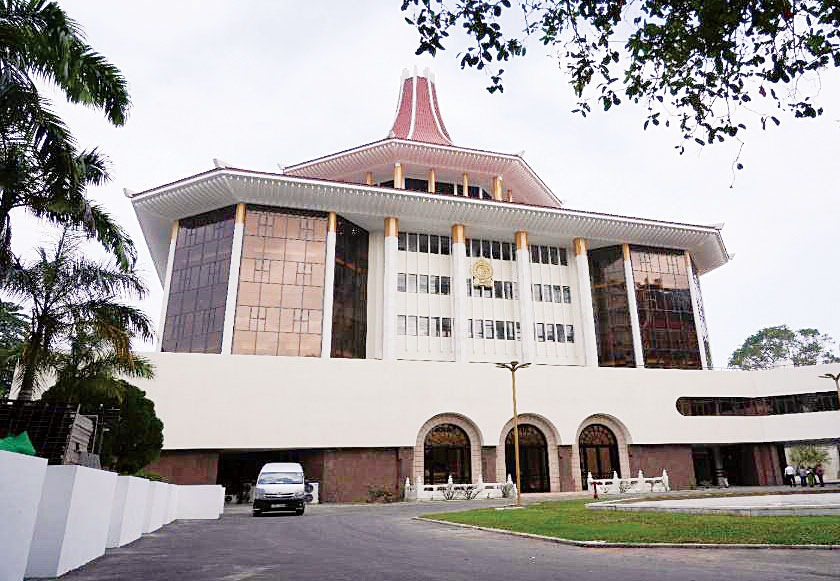
Sri Lanka is not in the crosshairs of any such contentions, but there are enough internal crosshairs that the NPP government and a feckless opposition are constantly trying to avoid. The day of judgements too has come and gone. All in all, it was a good day for the NPP government, at least in the sense that the government suffered no reputational damage from any of the three judgements. There were two Supreme Court rulings, one on the bill for the 22nd Amendment to the Constitution and another on the constitutionality of the Anti-Corruption Amendment Bill. The third court ruling was the verdict given by the Colombo Permanent High Court following the Trial-at-Bar of 24 people accused for their role in the 2019 Easter attacks.
Easter Justice
The three trial-at-bar judges, Navaratne Marasinghe, Ramanathan Kannan and Sujeewa Nissanka, reached a unanimous verdict and found 15 of the accused guilty and found the other nine not guilty and released them forthwith. The accused were spared of the death sentence, but the lengths of rigorous imprisonment sentences are just as bad. One was sentenced to 260 years, four got 240 years each, five 220 years, and another five 200 years. In addition, the court ordered the instant confiscation of the movable and immovable assets of all 15 found guilty.
The verdict marks a substantial milestone in the search for justice on behalf of the victims of the Easter attacks. The government can claim some political credit for the conclusion of the trial after seven years of fits and starts, and high level stymying under three presidents who preceded President AKD. Much greater credit of course belongs to the hundreds of law enforcement officials who built up a mammoth case of 23,270 charges against 25 suspects (one of whom died in hospital during the trial) and won convictions of 15 of them.
But this is not the end of the journey for those seeking Easter justice based on the whole truth. There are other trials going on and the elusive mastermind is yet to be found. Mohammed Ibrahim Mohammed Nawfar (alias Naufar Moulavi) is one of the 15 convicted by the Permanent High Court. Naufar Moulavi was identified in May 2021 as the mastermind by the Gotabaya Rajapaksa government. The government claimed that FBI investigation had confirmed it. This claim is not supported by the FBI affidavit filed by agent Merrilee R. Goodwin in a US Court in California, in December 2020.
The purpose of the FBI affidavit was to support the indictment of Mohammed (Moulavi) Naufar, Mohamed Anwar Mohamed Riskan and Ahamed Milhan Hayathu Mohamed “for conspiring to provide, providing, and attempting to provide material support to a foreign terrorist organization, namely ISIS” (Islamic State of Iraq and al-Sham), in violation of US laws. But neither Naufar nor the other two were identified as masterminds. The only mastermind identified in the affidavit is “Jahran Mohamed Cassim, also known as (“aka”) Mohamad Cassim Mohamad Zahran, aka Zahran Hashim (“Zahran”). Zahran killed himself in the suicide bomb he detonated, along with scores of victims, and spared himself from earthly trials.
To close the loop on this, the three men identified in the FBI affidavit, namely, Moulavi Naufar, Mohamed Riskan and Ahamed Milhan, are among the 15 convicted by the trial-at-bar High Court. But their conviction does not bring closure to the enduring question whether there was a political mastermind(s) behind the 2019 Easter attacks. There is still no clarity on what the former Attorney General Dappula De Livera publicly alluded to as evidence of “a grand conspiracy behind the attacks that killed 269 people and injured over 500.”
That was on 18 May 2021, and the statement was a follow up to the letter that Mr. De Livera had written on the state of the police investigations, to then Inspector General of Police (IGP), the late C. D. Wickramaratne. Mr. De Livera soon went on to retire after a remarkable prosecutorial career, and reportedly turned down the government’s offer of appointment as High Commissioner to Canada. Mr. Wickramaratne himself has since died under rather tragic circumstances.
Those who allege that the Catholic Church is making unproven allegations about Easter attacks masterminds, conveniently gloss over the fact that the Church is not accusing anybody of being a mastermind, but is only asking for a thorough inquiry that will put to rest, once and for all, the perennial question about the Easter mastermind. The difference now is that after suffering frustrations with three presidents and their governments, the Church is experiencing a positive response from the current president and his NPP government.
Amendment Politics
Aside from the lawfare politics of the Easter attacks, the politics of the 22nd Amendment to the Constitution is running its course after the Supreme Court ruling that a referendum is not required for the amending bill to become law, but only a two-thirds majority in parliament. The ruling was widely expected but not because of some ‘fix’, but because it would have been silly to find a judicial reason to have a referendum on the retirement ages of judges. This is not to absolve the government for its missteps on this matter and for putting everyone through months of constitutional contortions. Rather it is to highlight the absurdity of getting exercised virtually over every constitutional amendment and insisting that enacting the amendment without a referendum is tantamount to an assault on democracy. The referendum requirement has become a constitutional curse.
The 1972 Constitution of the First Republic had a very straightforward amending procedure with no referendum requirement, so straightforward that JR Jayewardene was able to throw out a whole (1972) constitution lock, stock and barrel, and replace it with his new constitution of a totally different (presidential) persuasion, simply through a parliamentary select committee process and a two thirds majority in parliament. No one called for a referendum to justify so momentous a change, but now a referendum is required to determine at what age a superior court judge can retire. Nonetheless, as President Jayewardene’s admirers and followers celebrate his 120th birth anniversary, there is no gainsaying that regardless of whether one agrees or disagrees with his presidential achievements and legacies, JR Jayewardene was without question the most consequential political leader of Sri Lanka in the 20th century.
In the 21st century and on the 22nd amendment, with no referendum required, the Bar Association is changing tack and calling on parliamentarians to vote with their conscience, without toeing the party line. After Friday’s vote, it may want to poll the MPs to find out who among them voted listened to their conscience, and who toed the party line. The Association may be having a difficult time going through the withdrawal syndrome after months of heightened exertions. As for the opposition and Sajith Premadasa, the latter has simply promised that a future SJB government will repeal the 22nd Amendment. To what end? To reenact another episode of confusion and distraction.
An Economynext commentator has described the Supreme Court ruling on the referendum requirement for 22A, as being “surgical in its constitutional analysis.” Well said. The ruling plausibly addresses every good and bad argument that was flung at the judges and demonstrates, citing copious precedents, that at the end of the day, no matter who the individual judges and their abilities are, and what anyone thinks of them, the ‘Court’ can find its collective voice and express itself with clarity and authority.
The same Economynext commentary interprets the 22nd Amendment as “a foundational prerequisite for operationalizing the newly enacted, stringent Anti-Corruption Act, which is a key commitment of the government era for the IMF.” The commentary suggests that “multiple clauses in the 22nd Amendment are designed to satisfy governance and anti-corruption structural benchmarks within the ongoing IMF Extended Fund Facility (EFF) agreement.” While noting the risk of scaring investors who might view 22A as being anti-democratic and antithetical to judicial independence, the commentary goes on to opine that the passage of 22A combined with a strong and systematic anti-corruption drive could be a boost to investor confidence, especially in the critical sectors of logistics, renewable energy and technology.
The above is an interesting interpretation even though I am not sure whether anyone associated with the government has formulated the intentions of the 22nd Amendment quite this way. Objectively, the argument is plausible and will justifiably rile the ire of the left opposition to the NPP government and its inclination towards the IMF. At the same time, there is no mistaking the government’s intention and determination to fight corruption in politics and public life. Apart from, or rather as part of, its arresting politics, the government is also going ahead with the passage of the Anti-Corruption (Amendment) Bill, which too has had its determination by the Supreme Court, albeit by a different three-judge Bench, almost concurrently with the 22A ruling by the five-judge Bench. The Supreme Court’s determination on the Anti-Corruption Bill was triggered after it was challenged by Transparency International Sri Lanka.
But unlike the SC ruling on 22A, the ruling on the Anti-Corruption Bill singles out a provision as requiring approval in a referendum for its enactment. The provision involves Clause 17 of the Bill which elevates the bail granting threshold for determination by a High Court and not a Magistrates Court as currently practised. The subject offence involves a bribe not less than Rs. 100,000, or causing a government loss of not less than Rs. 500,000. The Court held that such a change infringes the fundamental rights of citizens against arbitrary detention and will require a referendum approval. The Bill of course could be passed without a referendum after removing the specific provision. Remarkably, the government argued that the proposed amendments to the Anti-Corruption Act are necessary to remove current bottlenecks, achieve conformance with UN standards, and comply with the IMF program in Sri Lanka.
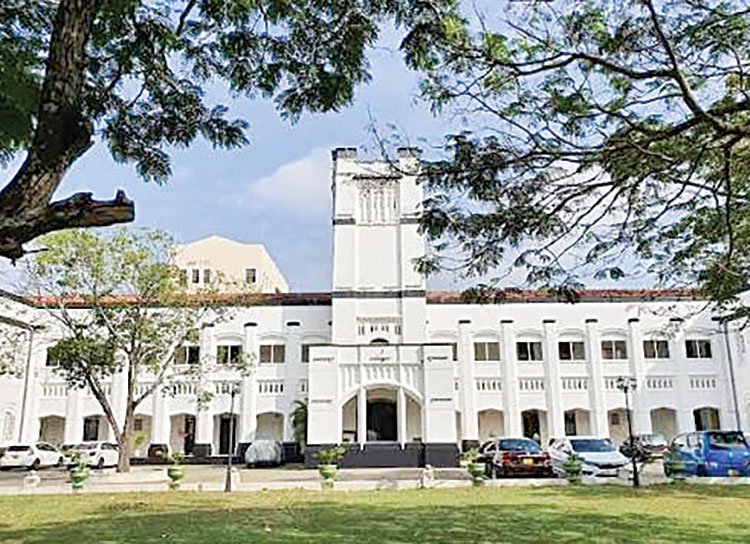
Little breathing space between papers at the final exam and my mind goes blank answering Sinhala paper
(Excerpted from The Art of Governance, autobiography of MDD Pieris)
Then came the final blow. When the time table for the final examination was out, I discovered that I would have to answer all my nine papers, of three hours each at one continuous stretch without even a half days break! I was due to answer the European history paper one afternoon; then go on next morning to British history; afternoon to Ceylon history; the next morning to English Poetry; afternoon to English drama; the following morning to English prose; and that same afternoon to suddenly switch from thinking and writing in English to thinking and writing in Sinhala, answering the first of the three papers in Sinhala, with the other two coming morning and afternoon the following day! Several of my friends urged me to go and speak to the university administration about a change, but at the same time, others who had had difficulties and sought recourse reported that they were rather rudely treated by the officers concerned.
This deterred me from going. I was a polite person by nature and just as in the case of Mr. Athulathmudali about whose insistence on politeness I have already written about, I too resented the prospect of being treated rudely. Therefore, I decided, quite foolishly no doubt, and come what may to go through and sit for the nine papers in four and half continuous days. Thus began the most difficult and harrowing period of my life, a period even worse than the experience at the university entrance examination.
In that instance, there was certainly disappointment and frustration but since I was attempting a near impossibility, there was less stress because mentally I was prepared for failure. This was reflected in a reasonably good appetite, and the ability to sleep. This time, at the final examinations, I lost both. Normal eating was impossible. My stomach was in knots. I just went through the motions and nibbled something and basically sustained myself with a combination of powdered milk and Ovaltine. Sleep became disturbed. After six hours of strenuous concentration a day answering question papers, there was little the mind could absorb by way of preparation for the next day.
During the day, nothing was possible since the morning’s paper was over at noon, and by the time you walked back from the Arts block to Marrs Hall just to look at the food and freshen up and then walk back to the examination hall to be there about 10 minutes before the 2 p.m. start of the next paper, there was neither time nor inclination to look at or absorb anything. I did try to look through whatever I could for the next days two papers during the night whilst keeping in mind the necessity to get some rest and sleep. Therefore, I did try to get six hours of sleep in the night. But it turned out to be an unhealthy and disturbed sleep leaving you not fresh, but jaded in the morning.
The mind was overactive. By this time, the numbers in the hall had dwindled due to the vacation. Only the few sitting for their final examination were in residence, and they were busy with their studies. There was therefore also a sense of loneliness and isolation prevailing. Added to all this was the horrible thought of failing and having to repeat all nine papers the following year. One had very much to try to find some degree of good cheer from within one’s own resources. Given my predicament I had precious little of that.
In these almost nightmarish conditions, I struggled through eight of the nine papers. The last paper during the final afternoon was the third paper in Sinhala literature, which was on prose. I still have a vivid memory of that afternoon. Rain clouds were building up and as we got down to answering the paper, it was getting quite dark. The lights shone brightly in the examination hall. There were five questions to be answered and I had just finished answering one, and had barely started on the next, when my mind went completely blank. I have never experienced such a thing before or since. The thinking processes suddenly stopped as if a plug had been pulled out from an electricity supply. I was in the middle of a sentence, I found impossible to complete. It was total disconnection.
There was just nothing I could do except to lay down my pen and gaze out of the window. There were two things in my favour at this critical moment. I possessed a temperament that didn’t panic easily or once embarked on a course, give up easily. I therefore calmly decided to stop trying to struggle, and relax. I was aware that precious minutes were ticking by. But I knew that what could not be cured must be endured, and that any attempt at force and struggle would only serve to aggravate the situation. That part of my mind was clear and rational. I spent almost 20 precious minutes doing nothing. Then gradually I found that I was able to focus once again.
I cautiously and with a degree of fear took up my pen and leaving room to complete the question I had begun to write on, started on a new question. The ideas flowed once again. I had however to be careful. There was no guarantee that everything would not come to a stop once again. I had already lost valuable time. Any further problem now would be the end of the paper and the end of perhaps the whole examination. I therefore deliberately slowed down my pace of writing and wrote slowly and steadily not pushing myself.
When the time came for the papers to be collected I had been able to answer only three out of the five questions in full. For the balance two, I was only just able to write down a few points. Answers in continuous prose were not possible. Up to this time, I had hope of at least passing the whole examination and obtaining my degree. Now, I was not so sure. There was a distinct possibility, I would fail the last Sinhala paper.
The next day I went home to Colombo, utterly drained. It appeared that my father’s prediction after reading my horoscope was not only accurate but frighteningly so. I too believed with him that there could not possibly be a worse period in the future. Starting from the stress of suddenly having to change schools in mid university entrance course to the end of my participation in school cricket through contracting measles, to the enormous trials and tribulations of the university entrance, to the disappointment of not being able to read for English “honours,” and now this situation at the final examination was almost too much for one person to take.
I was in a state which perhaps verged on a nervous breakdown, For a good two weeks at home, I was listless, unable to concentrate on anything. I could not read anything. Even the newspapers repelled me. The sound of music was irritating, and sleep desultory. I was taken to see the doctor, who advised complete rest. He did not give medicine. It was clear that I had severely overtaxed the system, and time would be the healer, as indeed was so gradually much to the great relief of my parents and myself. The newspaper once again began to interest me, and gradually books. Even then, I could not read for long periods for some time. I used to lose concentration and the mind began to wander.
In due course, I received a letter from the university, inviting me to teach an English course to the new batch of students about to enter the university. This was the vacation course in English for them. But I was just in no mood to teach. I was now back to normal, but did not wish to take upon myself the responsibilities of a teaching assignment. Therefore, I wrote back politely declining. But the letter from the university was a boost to my confidence. I knew that I would not have been called unless I had fared reasonably well, at least in my English papers, and got at a minimum a “B.” But what of the rest? I was still apprehensive. What came to mind was the unfinished Sinhala paper, and its possible impact on the whole examination.
Assistant Librarian Vidyodaya University
When the results came in due course, to my great relief I had passed. There was no question of a class. Nor was I expecting one. What I dreaded was sitting for the whole examination once again. I could now get this episode of my life out of the way and decide how to proceed. By this time the new Vidyodaya University had just begun to function. My father was a member of the Governing Council of the Vidyodaya Pirivena, the Vidyadhara Sabha and for long an associate and a friend of the renowned scholar Ven. Weliwitiye Soratha, the head of the Pirivena, who was the first Vice Chancellor of the new university.
Our family had many connections with Vidyodaya, including my maternal grandfather Mr. C. Don Bastian Jayaweera Bandara, himself a renowned scholar, writer, publisher and social worker, having had his higher education there. I for my part, for a period studied Sinhala under Ven. Soratha. Busy as he was, he found the time to teach me because of these family connections. I must have been a good student in his opinion, because he very graciously presented me a two volume set of his monumental work of the Sinhala dictionary, a task which he undertook and completed all by himself, a set which is one of my valued possessions even today.
When it became known that I had passed out, Vidyodaya was keen to have me and my father was equally keen that I should help out in whatever capacity. Finally, I was appointed as an Assistant Librarian and along with others, plunged into the task of setting up a proper library for the new university. At this time, the university functioned in the premises of the Vidyodaya Pirivena at Maligakande and it was rapidly becoming apparent that space was becoming a serious problem.
One of the most important tasks of a librarian is to classify knowledge accurately and correctly and this had to be carefully done. The system of classification adopted at the time was the Dewey Decimal System, and I spent much time at home poring over the volumes containing the system, so that during the working day classification and the typing of the card indexes, etc., could proceed with speed. Accuracy and speed were both necessary, accuracy, because a misclassified book is a lost book, speed because hundreds of books were lying on the floors, in cartons, in crates, on windowsills and all over the place.
I found the wide reading that I had done whilst at Peradeniya now of great assistance. With a quick perusal I was able to determine the classifications and sub-classifications. This was important. For instance, if one took up a book on European history, one had to determine whether it should be classified and appear on the shelves as general history; a history of a period; diplomatic history; economic history; social and cultural history; military history; a history of important treaties, and so on. This was so for all subjects and the wider your reading the easier it was.
But always at the end of the day was a general conference at which we took up for discussions amongst other matters, certain books which were exceedingly difficult to classify, partly because their contents approached the borders of many different subjects. Titles were frequently misleading. For instance, the book “Two eggs on my plate,” had nothing to do with cuisine. It was a tense memoir of certain military activities during World War II.
Three Maps of Ceylon Cinnamon
From the Pathfinder Collection
By Jennifer Moragoda
jennifermoragoda787@gmail.com
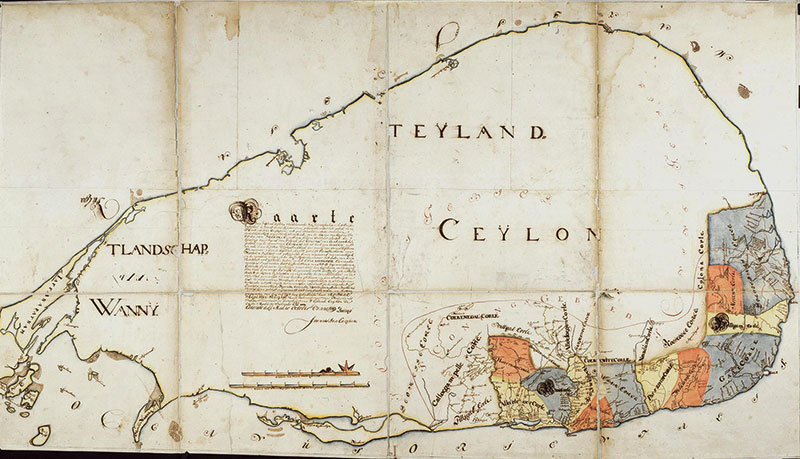
A remarkable Dutch map of Ceylon made in 1719 allows us to follow cinnamon through the country almost village by village.
Part of a series of thirty-six maps showing territories of the Dutch East India Company, it was drawn by Joannes van Campen and shows mainly the south-western portion of the island then under Company control. The twelve korales or provinces are distinguished by colour and extend, in the map’s description, from the river Caymelle to the Valave. Brohier notes that Caymelle was the Dutch name for the Maha Oya. A brown line marks the boundary of the Kandyan king’s territory. Within this political geography, a red line encloses what might otherwise be described simply as ‘Canelle Landen’: “the expanse of the luxuriant cinnamon bushes from the Chilaw river to the hook of Dondra.”
What makes the map extraordinary, however, is its detail. It marks the old administrative divisions through which the cinnamon country extended; villages and places associated with the seasonal work of the peelers; the forty-six numbered points along the annual route of the Cinnamon Captain; and the five coastal places to which the peeled bark was delivered.
Two further Dutch maps narrow the lens. A plan of Salpiti Korale maps cinnamon gardens and grounds among localities that are now part of greater Colombo and its suburbs. At an even more microscopic level, three drawings of a single chena near Hanwella represent individual trees by letters and colour and enumerate them.
Together they preserve an unusually detailed geography of Ceylon cinnamon and the enterprise built around it under the Dutch.
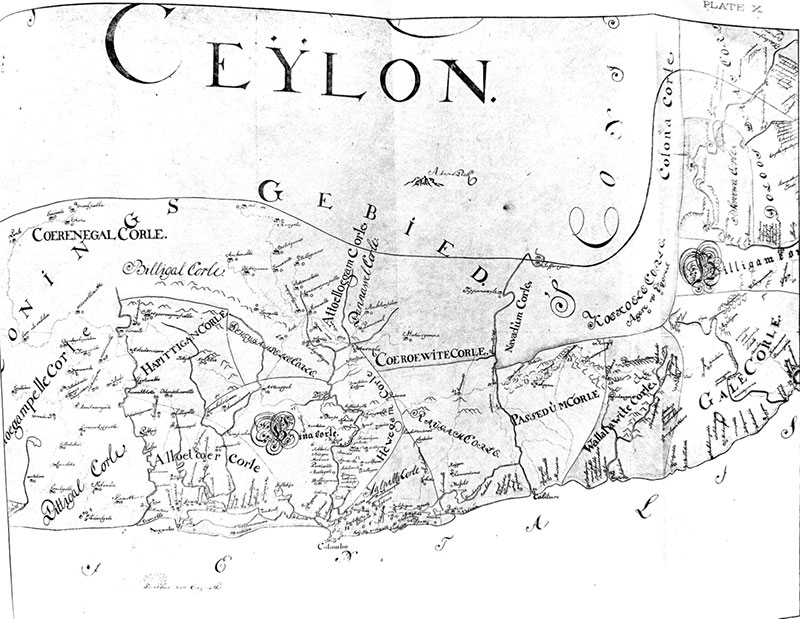
Van Campen’s map in facsimile M. F. N. Rotteveel’s 1901 facsimile of Van Campen’s 1719 map.
Much of that detail can be recovered today through the meticulous work of R. L. Brohier and J. H. O. Paulusz. Their descriptions and translations of Dutch maps and records provide the context that makes otherwise cryptic routes, symbols and localities intelligible.
A Circuit Through Cinnamon Country
Van Campen’s map immediately provides an overview of the country from which cinnamon was obtained. It is divided according to the old Sinhalese territorial and administrative divisions of korales and pattus. Many of their names, and the places associated with them, remain recognizable today, although their old boundaries are now less familiar. The map may surprise modern readers who are unaware that its cinnamon country extended as far north as the Chilaw River and south to Dondra.
The map also makes clear that the geography of cinnamon did not coincide neatly with political boundaries. It marks the limits of Dutch territory and the adjoining lands of the Kandyan king, while cinnamon also grew beyond Dutch-controlled territory. Access to cinnamon in Kandyan territory could therefore depend upon relations with the Kandyan court.
The most striking feature of the map is the minute detail with which this cinnamon geography is recorded. Forty-six numbered points trace the ordinary land route followed by the Cinnamon Captain, head of the Mahabadda or Cinnamon Department, on his annual general visitation at the commencement of the harvest. Starting from Colombo, his circuit took him north and then through a succession of korales to the south before he returned along the coast to Colombo.
The route recorded in Brohier and Paulusz runs through Negombo, Pittigal Korale, Hapitigam Korale, Sinna Korale, Rayigam Korale, Pasdun Korale, Wallalawiti Korale, Galle Korale, Beligama Korale, Morawa Korale and Dolosdas Korale, the latter embracing the Gangaboda and Welaboda Pattus of Matara and the eastern and western Giruwa Pattus of Hambantota.
On the map, the numbered stations allow that journey to be followed across the country. Even where individual names become difficult to decipher on a reduced reproduction, the extent of the circuit can be grasped.
But another set of small red circles gives the map an even more unusual human geography. In the words of its description, these indicate the villages and places “in which and near which” the cinnamon peelers commonly pitched their tents during the peeling season “in order to gather that costly bark.” These temporary encampments belonged to the older system of harvesting in which parties of peelers travelled through the cinnamon country, cutting suitable stems and bringing them back in bundles to be peeled and fashioned into quills.
The red circles are scattered through the cinnamon country densely enough that the map gives a visual impression of the scale of the seasonal harvest before one has deciphered every locality. J. H. O. Paulusz considered the map “of unusual value, indeed indispensable for studying the history of the Salagama community because it illustrates their manner of life, the districts in which they lived, and the hardships and dangers they endured.”
The Captain’s numbered route and the peelers’ encampments therefore record two related geographies. One is the official circuit of inspection. The other is the far more dispersed geography of the people actually gathering and preparing the cinnamon.
The map completes the picture by identifying five coastal delivery points—Negombo, Colombo, Beruwala, Galle and Matara—to which the peeled bark was “carried on their shoulders and transported with great labour.” Taken together, these details allow the old cinnamon enterprise to be visualized almost in motion: the Captain moving between his 46 stations; peelers establishing seasonal camps in and near particular villages; cinnamon being gathered and prepared in the surrounding country; and the finished bark moving towards five points on the coast.
The map also bears the letters A–H on a smaller circuit associated with Maradana, “where the best of that fragrant bark is peeled.” Brohier’s explanatory note identifies the area within this orbit as including Maradana, Wellicadde, Kirilepona and Bamblepitie—names recognizable today as Maradana, Welikada, Kirulapone and Bambalapitiya. These are now parts of a densely built city; on Van Campen’s map they belonged to the geography of cinnamon.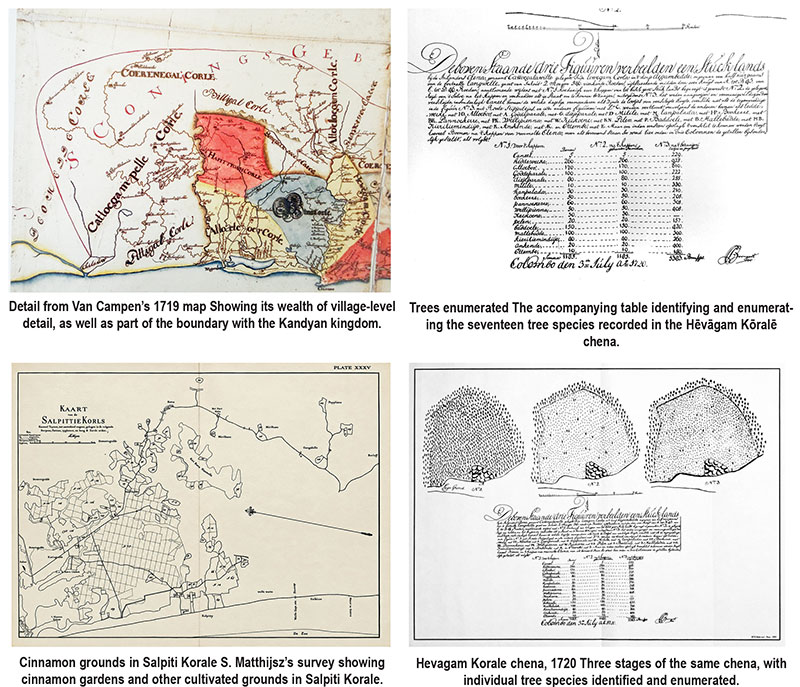
That juxtaposition is one of the pleasures of reading the old maps. Familiar names survive, but the landscapes attached to them have changed almost beyond recognition.
Salpiti Korale, Plot by Plot
A second map sharpens the focus further.
Where Van Campen’s map provides an overview of the geographical reach and movement of the cinnamon enterprise, the detailed plan of Salpiti Korale attaches cinnamon more closely to individual grounds and localities in and around what is now greater Colombo. Similar detailed plans were drawn for other korales and areas in which cinnamon grew.
The plate itself carries a striking collection of names familiar to a modern resident: Kotte, Mirihana, Welikada, Nawala, Pepiliyana, Kollupitiya, Wellawatte and Galkissa, or Mount Lavinia, among others. They appear beside or among numbered and outlined cinnamon grounds. The importance of the map is not that all of modern Colombo lay within Salpiti Korale—it did not—but that it allows particular 18th-century cinnamon localities around the expanding city and its eastern and southern approaches to be set against places we know today.
A related survey shows how closely Dutch mapping followed Colombo’s expansion. Brohier notes that, as settlement spread beyond the Fort and Pettah, a map made about 1766 by Lieutenant C. D. Wentzel surveyed the Colombo district for a radius of five miles in all directions from the Fort. Particular care was taken to mark the cinnamon-growing districts, partly for the information of the authorities and partly as a warning to inhabitants.
The records preserve some striking glimpses of areas we do not normally associate with cinnamon. A Dutch governor deplored the number of valuable bushes being “pitifully cut down for firewood especially near Liveramentu (Thimbirigasyaya-Narahenpita) where it grows luxuriantly.”
It is difficult now to associate Thimbirigasyaya and Narahenpita with luxuriant cinnamon, yet that is precisely why this cartographic detail matters. Pepiliyana, Nawala, Welikada, Wellawatte and other familiar names cease for a moment to be simply modern suburbs and become part of an older cinnamon geography.
In this sense, the Salpiti map performs a different task from Van Campen’s. The first shows the astonishing geographical reach of the cinnamon enterprise. Salpiti brings us down almost plot by plot.
Down to the Individual Tree
A third example reduces the scale to a single piece of ground. Three charts dated 1720 depict a chena called Katugalavila in the village of Degambedda in Hevagam Korale, about half an hour’s journey from the fort at Hanwella. The original survey was by L. Boomgart; the version reproduced by Brohier and Paulusz is an 1899 facsimile by M. F. N. Rotteveel.
The three drawings show the same ground before clearing, after cutting and burning, and after planting and regrowth. Seventeen kinds of tree are identified by letters, with their Sinhala names recorded in Dutch spelling. Before clearing, the plot contained five cinnamon trees; in the third stage it contained 229 cinnamon shoots and young trees. Brohier called the plan both “a picture of the ground” and a “working-plan,” and remarked on its striking representation of detail and use of colour.
This small survey is useful here chiefly because it shows just how far Dutch cartographic attention could descend: from an extensive cinnamon country, to individual grounds, and finally to individual trees.
The 1719 map shows the cinnamon country extending from the Chilaw River to Dondra. The Salpiti Korale map brings us into recognizable localities around Colombo and its suburbs. At Degambedda, near Hanwella, the cartographic lens descends to a single chena and finally to individual cinnamon trees.
Taken together, the three maps turn the broad designation Canelle Landen into something much more precise: a country of rivers, political boundaries and old administrative divisions; roads, villages and seasonal encampments; identifiable cinnamon grounds; and, finally, individual plants.
They also help explain the practical appeal of later attempts to concentrate cinnamon production in more accessible and systematically cultivated grounds. Van Campen’s map makes visible the enormous geographical reach of the older, dispersed system—the distances travelled, the seasonal encampments and the labour required to bring the prepared bark to the coast. The hardships of that system are less visible on the map itself, but they are amply recorded in the contemporary documentation. The later transformation of cinnamon cultivation is another chapter. These maps preserve the geography that preceded it.
Retracing the Circuit
There is a modern postscript to this story. In recent years, the Pekoe Trail, a long-distance walking route through the tea estates of the hill country, has offered a new way of experiencing Ceylon’s montane landscape and tea heritage. The Cinnamon Captain’s circuit suggests the possibility of a low-country counterpart.
It need not be a walking trail. Selected stages of the forty-six-point circuit could be retraced largely by road, linking surviving place names and old cinnamon localities with places where cinnamon is still cultivated today. The korales no longer function as administrative divisions, roads have changed and much of the old cinnamon country has been transformed or built over, but enough of the underlying geography survives to make the old route intelligible.
Three centuries ago the circuit was travelled at the commencement of the harvest by an official inspecting the cinnamon country. Retraced today, it could offer a way of rediscovering a geography that these extraordinary maps have preserved in remarkable detail.
Notes: This article draws extensively on Volume II of R. L. Brohier and J. H. O. Paulusz’s Land, Maps & Surveys: A Descriptive Catalogue of Historical Maps in the Surveyor General’s Office, whose detailed descriptions, annotations and translations of Dutch maps and records make it possible to reconstruct much of the geography discussed here.
Images 3–5 reproduced from R. L. Brohier and J. H. O. Paulusz, Land, Maps & Surveys, Vol. II (1951).

Buttler out of Oval decider as Lawrence earns ODI call-up

Showers will occur in the Western, Eastern, Uva and Sabaragamuwa provinces and in Galle, Matara, Kandy and Nuwara-Eliya districts.

Nor’easter brings flooding as New York and New Jersey declare emergency 2 hours ago

Trump rejects Iran deal to reopen Strait of Hormuz in seven days

Govt plans to hire 121,000 state workers, redistribute tax revenue

Parliament clears 22A amid protests

‘Dates have the highest sugar content to fight Coronavirus’

Sunday Island 27 December – Headlines

#SundayIsland 17th December – Headlines

Sunday Island – 28th March

Sunday Island Headlines – 21 March

Sunday Island – 21st February – Headlines
-

 News4 days ago
Mastermind Naufer Moulavi among 15 found guilty
-
 News6 days ago
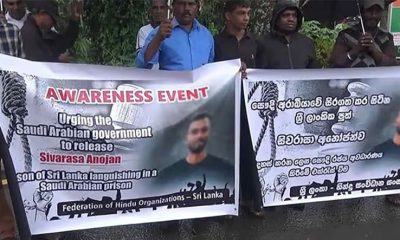
Hatton youth protest against reported death sentence for Lankan in Saudi Arabia
-
 News5 days ago
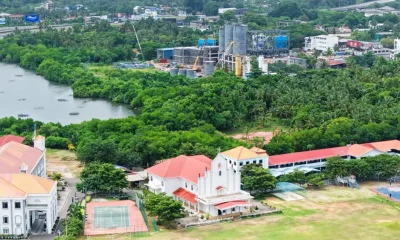
Protest against setting up of cement factory in highly populated area near BIA
-
 News6 days ago
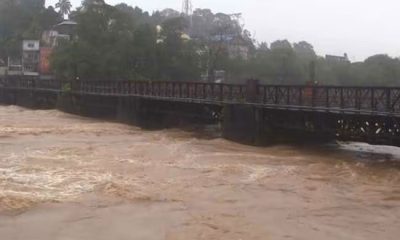
Mahaweli rises as heavy rain triggers flood, landslide fears
-

 Latest News7 days ago
Landslide Red Alerts issued to the districts of Kandy, Kegalle and Nuwara Eliya
-
 Midweek Review4 days ago
Thileepan’s fast unto death: An authentic narrative that many missed
-
 Latest News3 days ago
Showers above 100 mm are likely at some places in the Western, Sabaragamuwa, Central and North-western provinces and in Galle and Matara Districts
-

 Editorial4 days ago
Big Bad Bills