
Life style
Sifting hidden truths from hoary old traditions

In a world where modernity often tramples tradition, author and researcher Asiff Hussein is making a strong case for why Sri Lanka must revisit its ancient practices, legends, and medical knowledge. Hussein, whose latest book, The Zeylonese Treasure Book of Myth, Mystery and Mystique, explores forgotten layers of history, folklore, and science, argues that many traditions are not merely quaint relics but repositories of wisdom waiting to be rediscovered.
“There is a reason for traditions to evolve and take root in any given community. Else they wouldn’t be there in the first place,” Hussein told The Island. “Many of these have stood the test of time and to discard them would be to disregard valuable knowledge passed down to us through countless generations.”
Cravings and Science in Tradition
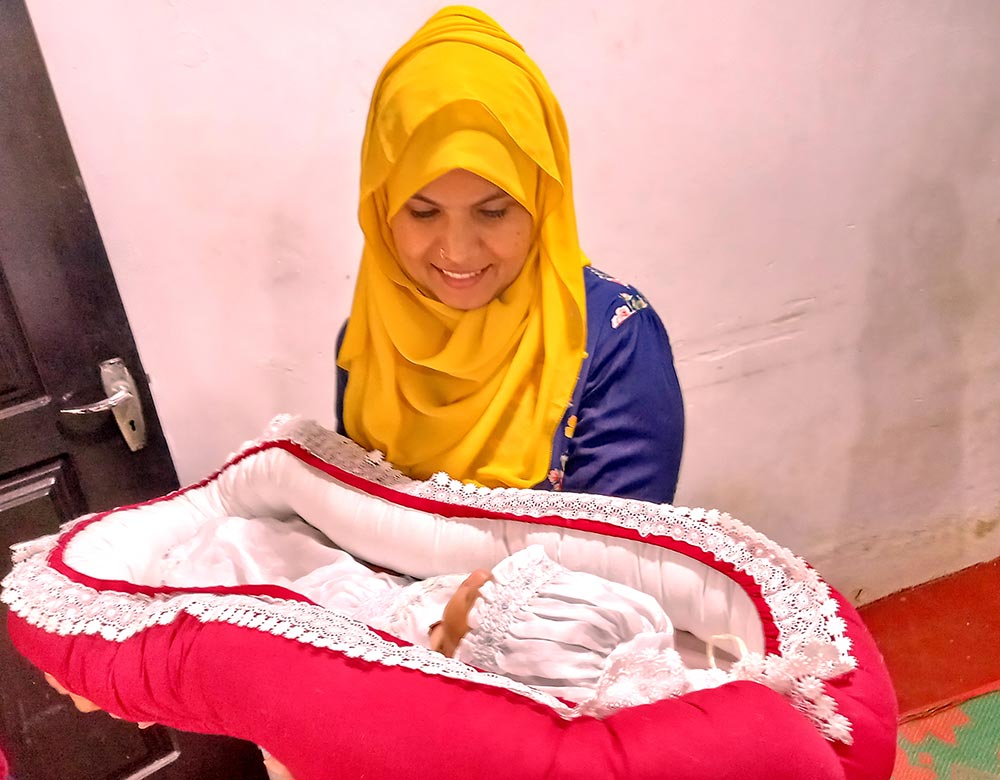
Hussein illustrates this point with the concept of dola-duka, or pregnancy cravings. “The Sinhala word dola comes from the Sanskrit dvihrda, meaning ‘two hearts’ – the desire of both the mother and the unborn child. Such cravings are often the body’s way of responding to deficiencies,” he explained. A woman craving sour foods may be seeking vitamin C, while a desire for meat may reflect her body’s need for protein. Even a craving for sprats can be interpreted as the body’s way of replenishing calcium.
“These practices are not superstition. They show that our ancestors observed and internalised biological truths long before the arrival of modern medicine,” Hussein said.
Myths, Legends and the Roots of History
For Hussein, Sri Lanka’s ancient chronicles such as the Mahavamsa and the Yalppana Vaipava Malai deserve deeper respect. “One simply cannot dismiss these records as myths just because they don’t tally with our current understanding,” he stressed.
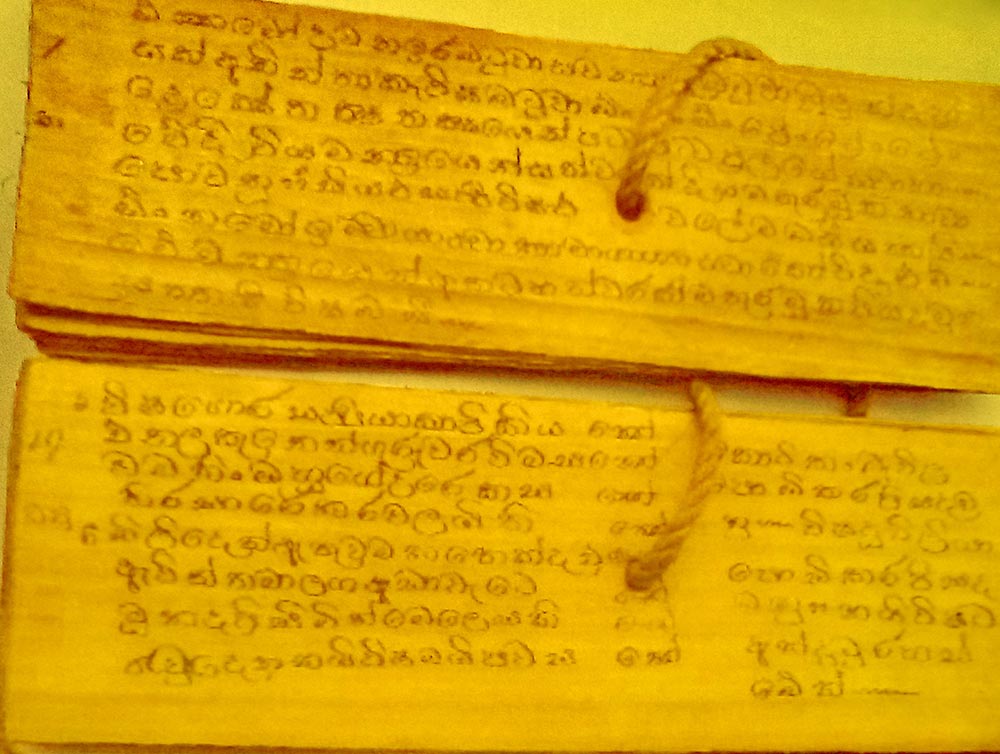
A medical palm leaf manuscript in Sinhala in the possession of a Moor family of Gevilipitiya. Courtesy Asiff Hussein
The Mahavamsa refers to peoples such as the Yakkhas, Nagas and Rakshasas. Hussein believes these may have been early inhabitants of the island whose languages and cultures left indelible marks on Sinhala. He points out that many common Sinhala words such as kola (leaf), linda (well), gediya (fruit), and bilinda (child) are neither Aryan nor Dravidian in origin, but remnants of older, forgotten tongues. “Indeed there may have been not just one, but several such ghost languages that left their mark on Sinhala,” he explains. The existence of synonymous words of obscure origin in Sinhala suggests there were more than one non-Aryan, non-Dravidian people living here long before recorded history,” Hussein argues.
The Buddha and the Solar Eclipse
Even seemingly miraculous stories in the chronicles, Hussein believes, may have real historical underpinnings. For instance, the Mahavamsa describes how the Buddha once appeared in Nagadipa and enveloped warring Nagas in darkness before restoring the light.
Hussein points to the work of Brigadier Siri Munasinghe and Dr. Kavan Ratnatunga, who suggest this episode may have been inspired by a total solar eclipse in 481 BC, visible from Jaffna. “That event, considered miraculous at the time, may have been attributed by later monks to the Buddha. We must not dismiss such accounts outright, but examine how natural phenomena were remembered and mythologised,” he said.
“Thus, we cannot discount such ancient knowledge as mere myth but need to probe deeper with a scientific mind to get at the truth.”
Medical Lore: From Ola Manuscripts to Modern Science
Hussein is equally committed to reviving respect for Sri Lanka’s traditional medical knowledge. “Yes, we need to open our minds to harvesting ancient knowledge rather than disregarding it outright,” he said, lamenting that modern medicine often dismisses indigenous practices as quackery.
He reminds us that Eastern medical traditions go back centuries. King Aggabodhi VII, for instance, studied local herbs and their effects on human health, a practice recorded in the Chulavamsa. Much of this knowledge, Hussein notes, is preserved in ola leaf manuscripts kept by medical families, temples, and libraries.
He recalls the pioneering work of Dr. C.G. Uragoda, who demonstrated scientific bases for age-old remedies such as the use of Venivel against tetanus and the concept of “heatiness” in foods, which he linked to histamine content. Portuguese chronicler João Ribeiro, writing in the 1600s, even claimed that local physicians could treat cancer and heal broken bones within days using herbal methods. Robert Knox, the English captive of Kandy, likewise described how villagers used herbs to set bones and treat sores.
“These observations should not be ignored. They demand rigorous study,” Hussein said. “Sadly, our medical fraternity has to break away from their brusque ways and look at local knowledge from a fresh and inquiring perspective rather than dismiss these claims as quackery.”
Holding On and Letting Go
Yet, Hussein is pragmatic about traditions that no longer serve a practical purpose. “There is no need to stick to them other than for sentimental or aesthetic reasons,” he said.
One example is the khaki police uniform, a colonial relic from British India. “The word khaki means dusty, and it was chosen for camouflage in India’s arid environment. But why must Sri Lankan police still wear an unsightly colour that resembles human waste? Even police in desert countries like Algeria and Egypt wear smart blue uniforms,” Hussein observed.
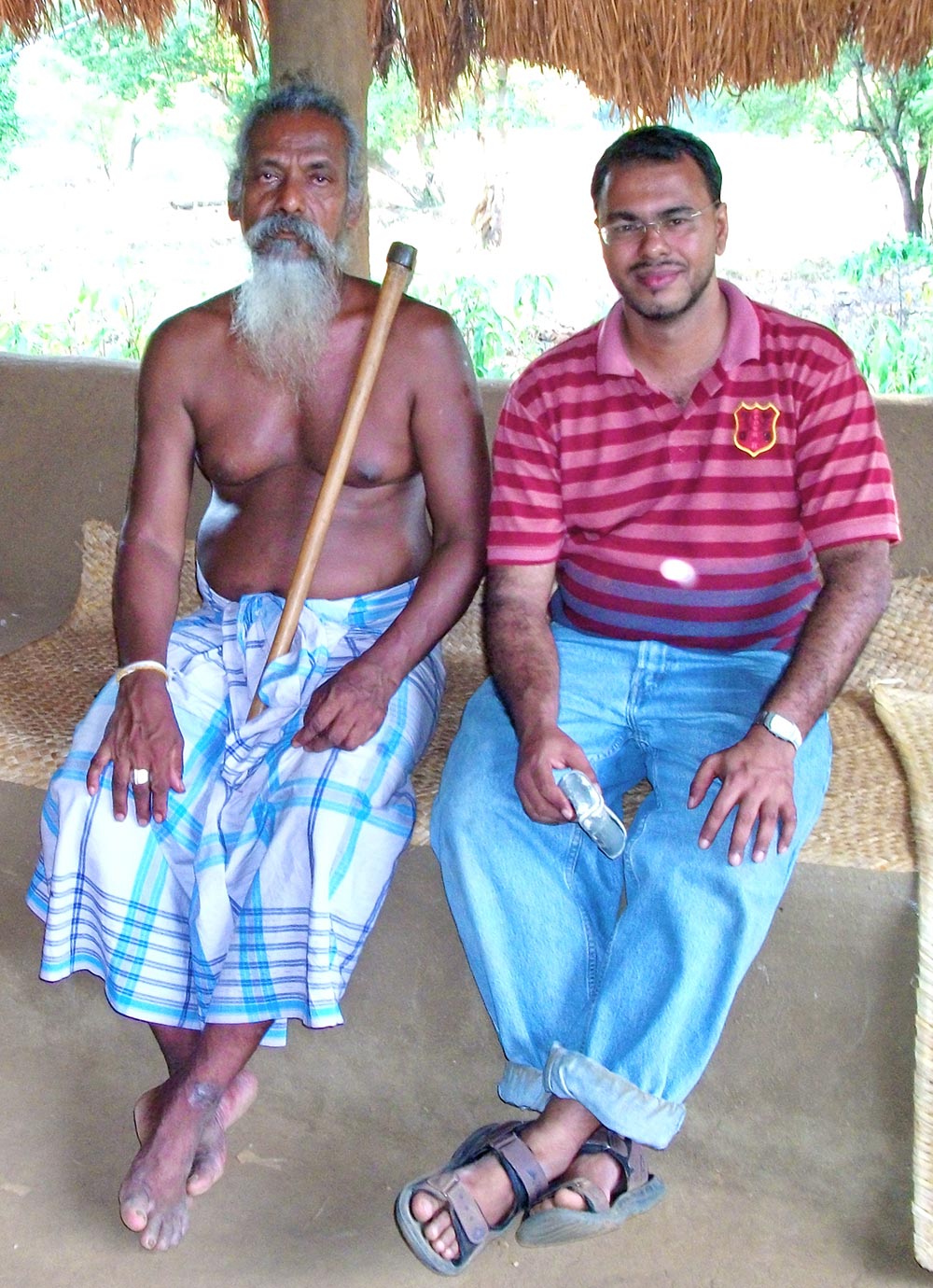
Asiff Hussein in his younger days with Vedda chieftain Uruvarige Vanniyalaatto at his home in Dambana
On the other hand, some traditions may endure for aesthetic or cultural reasons. Mosque minarets, for instance, once allowed the call to prayer to reach greater distances before loudspeakers existed. Today, Hussein notes, they serve mainly as architectural symbols but could regain relevance if noise pollution forces communities to revert to the human voice.
Revivals for a Better Future
Importantly, Hussein believes certain old traditions could be creatively revived. Among them are clay and wattle-and-daub houses, which he says are perfectly suited for Sri Lanka’s tropical climate.
“These houses are naturally cool, and architects should seriously consider modern designs using thick clay walls, which slow down heat flow and allow for insulation. When I was in New Mexico in 2010, I noticed adobe houses served the same function in arid climates. We should not dismiss our indigenous architecture,” he explained.
A Living Body of Knowledge
For Hussein, the real challenge is in knowing which traditions to preserve, which to let go, and which to adapt for the future. “Traditions come about due to certain conditions. If those conditions no longer prevail, we can move on. But if they still have practical or aesthetic value, or can be adapted, we should not discard them blindly,” he reflected.
His approach is neither romantic nor rigid. It is, instead, a call for balance: to honour the past without being enslaved by it, and to embrace modern science without arrogance.
As our conversation drew to a close, Hussein left me with a reminder: “None are so blind as those who refuse to see. We need to look at our traditions afresh, with open eyes and inquisitive minds. Only then can we sift the truths from the myths and use that knowledge to enrich our modern lives.”
By Ifham Nizam ✍️

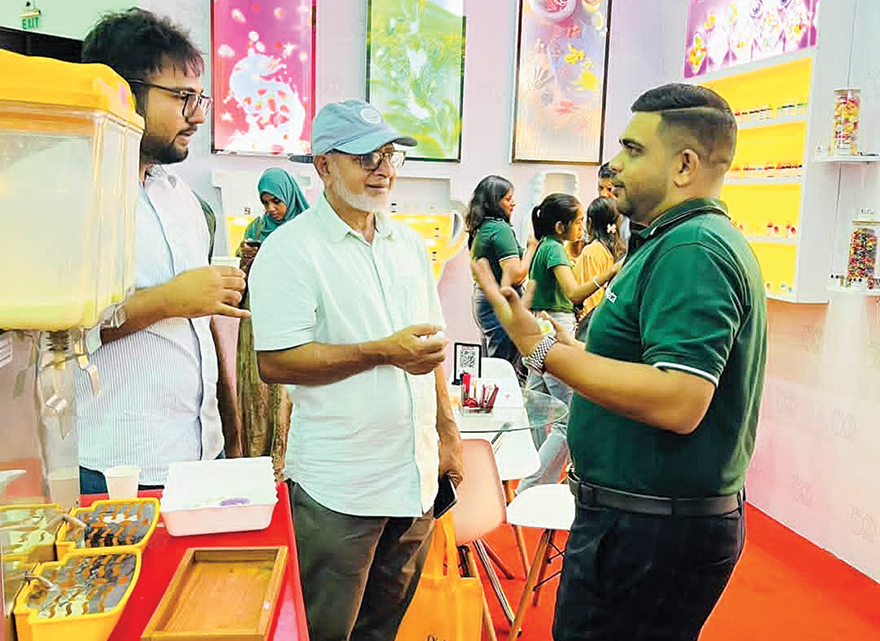
Salman Faiz has turned his family legacy into a modern sensory empire. Educated in London, he returned to Sri Lanka with a global perspective and a refined vision, transforming the family legacy into a modern sensory powerhouse blending flavours,colours and fragrances to craft immersive sensory experiences from elegant fine fragrances to natural essential oils and offering brand offerings in Sri Lanka. Growing up in a world perfumed with possibility, Aromatic Laboratories (Pvt) Limited founded by his father he has immersed himself from an early age in the delicate alchemy of fragrances, flavours and essential oils.
 Salman Faiz did not step into Aromatic Laboratories Pvt Limited, he stepped into a world already alive with fragrance, precision and quiet ambition. Long before he became the Chairman of this large enterprise, founded by his father M. A. Faiz and uncle M.R. Mansoor his inheritance was being shaped in laboratories perfumed with possibility and in conversations that stretched from Colombo to outside the shores of Sri Lanka, where his father forged early international ties, with the world of fine fragrance.
Growing up amidst raw materials sourced from the world’s most respected fragrance houses, Salman Faiz absorbed the discipline of formulation and the poetry of aroma almost by instinct. When Salman stepped into the role of Chairman, he expanded the company’s scope from a trusted supplier into a fully integrated sensory solution provider. The scope of operations included manufacturing of flavours, fragrances, food colours and ingredients, essential oils and bespoke formulations including cosmetic ingredients. They are also leading supplier of premium fragrances for the cosmetic,personal care and wellness sectors Soon the business boomed, and the company strengthened its international sourcing, introduced contemporary product lines and extended its footprint beyond Sri Lanka’s borders.
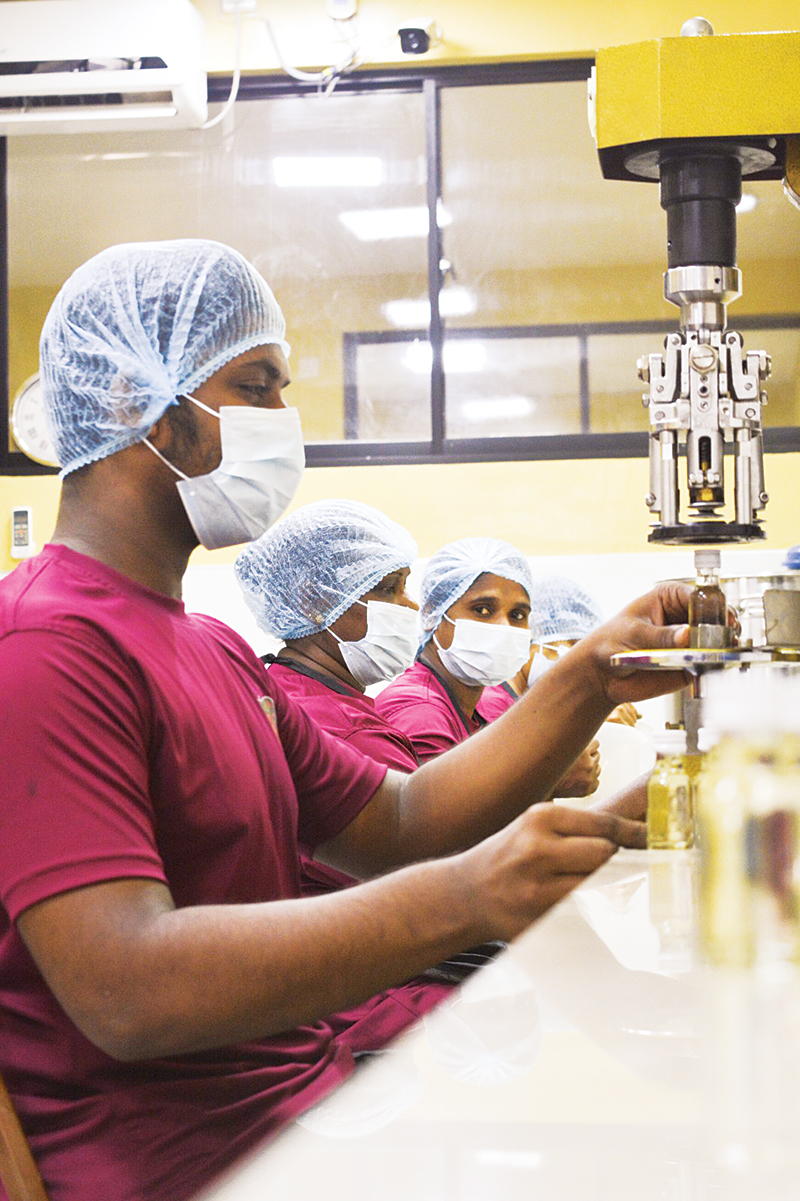
Where raw materials transform into refined fragrance

Salman Faiz -carrying forward a legacy
Today, Aromatic Laboratories stands as a rare example of a second generation. Sri Lankan enterprise that has retained its soul while embracing scale and sophistication. Under Salman Faiz’s leadership, the company continues to honour his father’s founding philosophy that every scent and flavour carries a memory, or story,and a human touch. He imbibed his father’s policy that success was measured not by profit alone but the care taken in creation, the relationships matured with suppliers and the trust earned by clients.
“We are one of the leading companies manufacturing fragrances, dealing with imports,exports in Sri Lanka. We customise fragrances to suit specific applications. We also source our raw materials from leading French company Roberte’t in Grasse
Following his father, for Salman even in moments of challenge, he insisted on grace over haste, quality over conveniences and long term vision over immediate reward under Salman Faiz’s stewardship the business has evolved from a trusted family enterprise into a modern sensory powerhouse.
Now the company exports globally to France, Germany, the UK, the UAE, the Maldives and collaborates with several international perfumes and introduces contemporary products that reflect both sophistication and tradition.
We are one of the leading companies. We are one of the leading companies manufacturing fine and industrial fragrance in Sri Lanka. We customise fragrances to suit specific applications said Faiz
‘We also source our raw materials from renowned companies, in Germany, France, Dubai,Germany and many others.Our connection with Robertet, a leading French parfume House in Grasse, France runs deep, my father has been working closely with the iconic French company for years, laying the foundation for the partnership, We continue even today says Faiz”
Today this business stands as a rare example of second generation Sri Lankan entrepreneurship that retains its souls while embracing scale and modernity. Every aroma, every colour and every flavour is imbued with the care, discipline, and vision passed down from father to son – a living legacy perfected under Salmon Faiz’s guidance.
By Zanita Careem
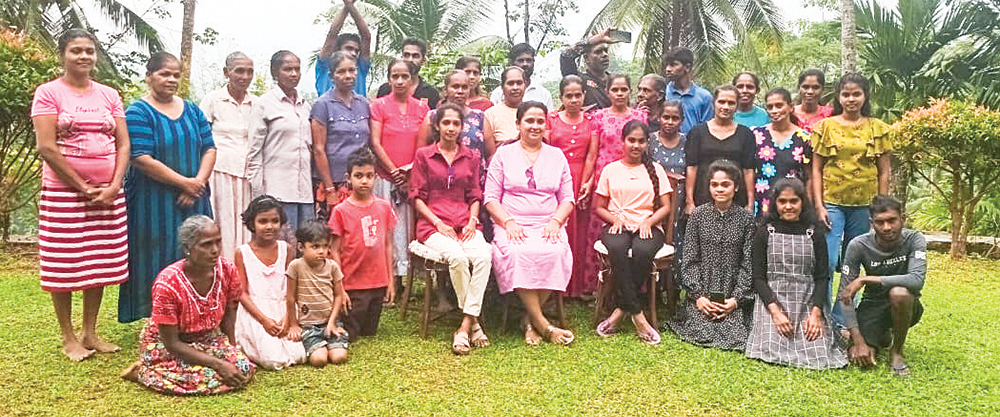
Harini and Chanaka cultivating change
When Harini and Chanaka Mallikarachchi returned to Sri Lanka after more than ten years in the United States, it wasn’t nostalgia alone that they brought home . It was purpose.Beneath the polished resumes and strong computer science backgrounds lay something far more personal- longing to reconnect with the land, and to give back to the country that shaped their memories. From that quiet but powerful decision was born Agri Vision not just an agricultural venture but a community driven movement grounded in sustainability ,empowerment and heritage. They transform agriculture through a software product developed by Avya Technologies (Pvt Limited) Combining global expertise with a deep love for their homeland, they created a pioneering platform that empowers local farmers and introduce innovative, sustainable solutions to the country’s agri sector.
After living for many years building lives and careers in theUnited States, Harini and Chanaka felt a powerful pull back to their roots. With impressive careers in the computer and IT sector, gaining global experience and expertise yet, despite their success abroad, their hearts remained tied to Sri Lanka – connection that inspired their return where they now channel their technological know-how to advance local agriculture.
For Harini and Chanaka, the visionaries behind Agri Vision are redefining sustainable agriculture in Sri Lanka. With a passion for innovation and community impact, they have built Agri Vision into a hub for advanced agri solutions, blending global expertise with local insight.
In Sri Lanka’s evolving agricultural landscape, where sustainability and authenticity are no longer optional but essential. Harini and Chanaka are shaping a vision that is both rooted and forward looking. In the heart of Lanka’s countryside, Uruwela estate Harini and Chanaka alongside the ever inspiring sister Malathi, the trio drives Agri Vision an initiative that fuses cutting edge technology with age old agricultural wisdom. At the core of their agri philosophy lies two carefully nurtured brands artisan tea and pure cinnamon, each reflecting a commitment to quality, heritage and people.
Armed with global exposure and professional backgrounds in the technology sector,they chose to channel thier experiences into agriculture, believing that true progress begins at home.
-
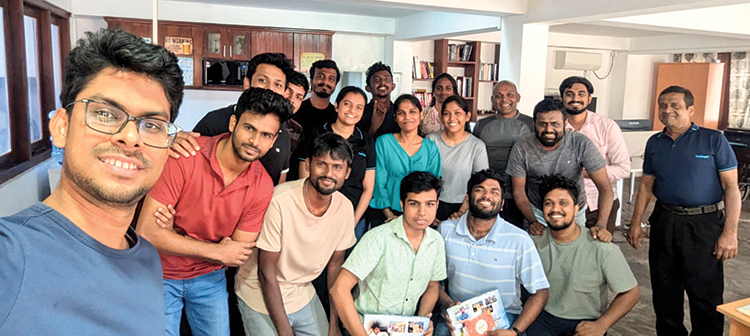
- Avya Technologies (Pvt) ltd software company that developed Agri Vision
-
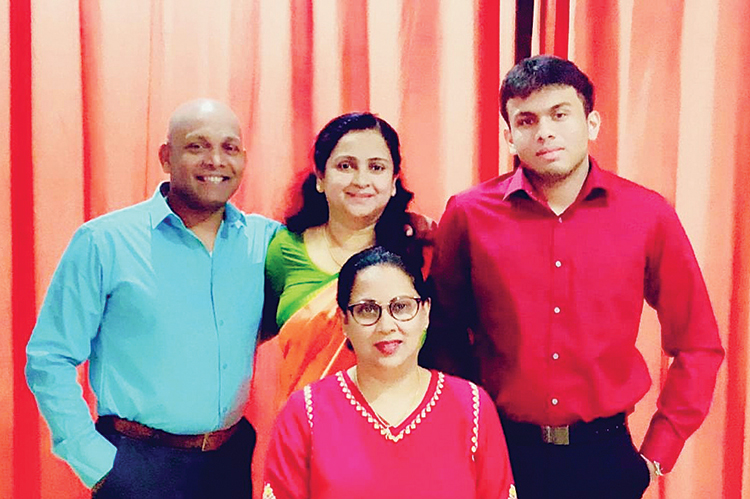
- Chanaka,Harini and Shakya Mallikarachchi and Malathi Malathi dias (middle)
But the story of Agri Vision is as much about relationships as it is about technology. Harini with her sharp analytical mind, ensures the operations runs seamlessly Chanaka, the strategist looks outward, connecting Agri Vision to globally best practices and Malathi is their wind behind the wings, ensures every project maintains a personal community focussed ethos. They cultivate hope, opportunity and a blueprint for a future where agriculture serves both the land and the people who depend on it .
For the trio, agriculture is not merely about cultivation, it is about connection. It is about understanding the rhythm of the land, respecting generations of farming knowledge, and that growth is shared by the communities that sustain it. This belief forms the backbone of Agro’s vision, one that places communities not only on the periphery, but at the very heart of every endeavour.
Artisan tea is a celebration of craft and origin sourced from selected growing regions and produced with meticulous attention to detail, the tea embodier purity, traceability and refinement, each leaf is carefully handled to preserve character and flavour, reflecting Sri Lanka’s enduring legacy as a world class tea origin while appealing to a new generation of conscious consumers complementing this is pure Cinnamon, a tribute to authentic Ceylon, Cinnamon. In a market saturated with substitutes, Agri vision’s commitment to genuine sourcing and ethical processing stands firm.
By working closely with cinnamon growers and adhering to traditional harvesting methods, the brands safeguards both quality and cultural heritage.
What truly distinguishes Harini and Chanake’s Agri Vision is their community approach. By building long term partnerships with smallholders. Farmers, the company ensures fair practises, skill development and sustainable livelihoods, These relationships foster trust and resilience, creating an ecosystem where farmers are valued stakeholders in the journey, not just suppliers.
Agri vision integrates sustainable practices and global quality standards without compromising authenticity. This harmony allows Artisan Tea and Pure Cinnamon to resonate beyond borders, carrying with them stories of land, people and purpose.
As the brands continue to grow Harini and Chanaka remain anchored in their founding belief that success of agriculture is by the strength of the communities nurtured along the way. In every leaf of tea and every quill of cinnamon lies a simple yet powerful vision – Agriculture with communities at heart.
By Zanita Careem
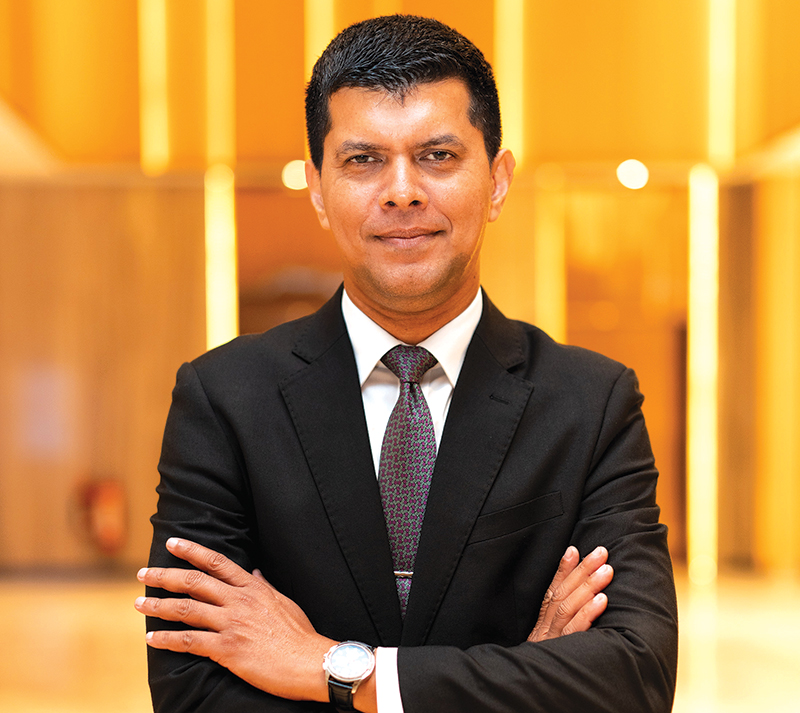
Courtyard by Marriott Colombo has welcomed Suranga Peelikumbura as its new General Manager, ushering in a chapter defined by vision, warmth, and global sophistication.
Suranga’s story is one of both breadth and depth. Over two decades, he has carried the Marriott spirit across continents, from the shimmering luxury of The Ritz-Carlton in Doha to the refined hospitality of Ireland, and most recently to the helm of Resplendent Ceylon as Vice President of Operations. His journey reflects not only international mastery but also a devotion to Sri Lanka’s own hospitality narrative.
What distinguishes Suranga is not simply his credentials but the philosophy that guides him. “Relationships come first, whether with our associates, guests, partners, or vendors. Business may follow, but it is the strength of these connections that defines us.” It is this belief, rooted in both global perspective and local heart, that now shapes his leadership at Courtyard Colombo.
At a recent gathering of corporate leaders, travel partners, and media friends, Suranga paid tribute to outgoing General Manager Elton Hurtis, hon oring his vision and the opportunities he created for associates to flourish across the Marriott world. With deep respect for that legacy, Suranga now steps forward to elevate guest experiences, strengthen community ties, and continue the tradition of excellence that defines Courtyard Colombo.
From his beginnings at The Lanka Oberoi and Cinnamon Grand Colombo to his leadership roles at Weligama Bay Marriott and Resplendent Ceylon, Suranga’s career is a testament to both resilience and refinement. His return to Marriott is not merely a professional milestone, it is a homecoming.

Nepal, Scotland chase win to close out what-if tournament

How dark web agent spotted bedroom wall clue to rescue girl from years of harm

US build-up of warships and fighter jets tracked near Iran

Showers above 75 mm are likely at some places in the Central, Uva and Eastern provinces and in Polonnaruwa district

Zimbabwe take on Ireland with clarity about Super Eights path

CEB seeking tariff hike while making huge profits, says opposition trade union leader

‘Dates have the highest sugar content to fight Coronavirus’

Sunday Island 27 December – Headlines

#SundayIsland 17th December – Headlines

Sunday Island – 28th March

Sunday Island Headlines – 21 March

Sunday Island – 21st February – Headlines
-
 Life style2 days ago
Marriot new GM Suranga
-

 Business1 day ago
Ministry of Brands to launch Sri Lanka’s first off-price retail destination
-
 Features2 days ago
Monks’ march, in America and Sri Lanka
-

 Midweek Review6 days ago
A question of national pride
-

 Business6 days ago
Autodoc 360 relocates to reinforce commitment to premium auto care
-
 Opinion5 days ago
Will computers ever be intelligent?
-

 Features2 days ago
The Rise of Takaichi
-
 Features2 days ago
Wetlands of Sri Lanka: