
Features
Several missed opportunities of achieving communal harmony

(Continued from Feb. 08)
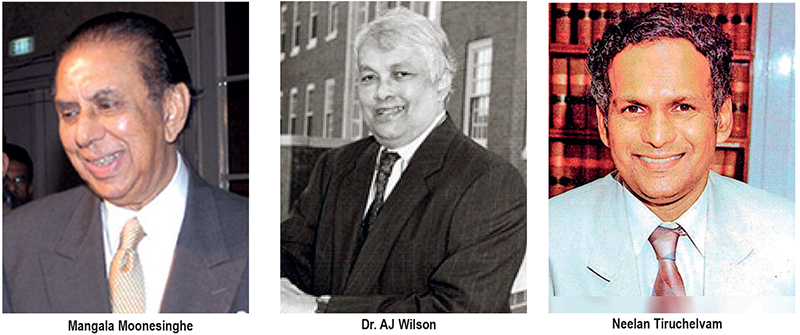
Although the die had been cast, the next event was a pusillanimous attempt, even the purpose of which was shrouded in doubt and conjecture. This was a tentative legislative step in the form of the District Developments Councils Act of 1980. The legislation was preceded by the appointment of a Presidential Commission, which was presided over by Mr. Victor Tennekoon QC, a former Chief Justice and Attorney General, and comprised a membership of four Sinhalese, three Tamils, and three Muslims.
At the initial stage itself, lack of courage was demonstrated in the reluctance to include in the Terms of Reference any allusion to the ethnic conflict. This gave rise to an irreconcilable difference of opinion among the members as to the nature and scope of their mandate. Hardline opinion within the government precluded direct reference to the ethnic dimension. But some of the members of the Commission, including Professor A. J. Wilson, a close confidant of President J. R. Jayewardene and son-in-law of the leader of the Federal Party, Mr. S. J. V. Chelvanayakam, had secured informal agreement with the President that the government would be well disposed to consideration of broader issues having a bearing on the ethnic conflict, should these be addressed in the contents of the report. This was, however, strongly resisted by the majority of the members who were inclined to adopt a narrow, technical interpretation of the Terms of Reference.
In the end, the report of the majority tended to have an exclusively administrative focus. The thrust of the recommendations had to do with making district administration more receptive to the needs of the people in the 25 administrative districts, and improving the quality of services delivered to them through the instrumentality of District Development Councils. The main levers for effecting this purpose were the Councils themselves and the District Ministers. Elected DDC members, joined by members of Parliament from the district, formed the composition of the Councils. The District Minister, as the principal repository of executive power in the district, had the role of coordinating the functions of all central government institutions operating in the district.
Even from the limited perspective of streamlining the administrative machinery at district level, this proved, across the board, an exercise in futility, even though there were some positive features. Obvious blemishes marred critical aspects of the enacted law, for example, vesting in the President, rather than in the membership of the Council, responsibility for appointment of the District Minister. In any event, the Councils were seriously hamstrung by both pecuniary and institutional constraints. There was no political will to allocate financial resources, and the prevailing culture of patronage inhibited Ministers and officials at the Centre from genuine transfer of authority to the district tier. The impact of the legislation, by and large, was negligible.
The true issues, however, lay elsewhere. The context of the legislation was one in which Tamil formations, such as the Tamil United Liberation Front, were struggling to maintain their moderate postures in an increasingly polarized environment, with pressure from radical elements proving almost irresistible. Two members of the Commission, Prof. A. J. Wilson and Dr. Neelan Tiruchelvam, in their dissenting report, tried to find space, at least interstitially, in a situation where the province could not be identified realistically as the unit of devolved power, to use the district development structure in the North and the East as an intermediate mechanism to allay minority apprehensions and to hold extremism at bay. It was an uphill task, further compounded by two Muslim members of the Commission, in a different dissenting report, expressing the polar opposite view, hostile to ampler devolution on the ground of perceived harm to Muslim interests. Fissures and divisions within the polity were manifested by the resolve of the major Opposition party, the Sri Lanka Freedom Party, to distance itself entirely from the work of the Presidential Commission.
This unpromising backdrop produced a result which was seen largely as a non-event. This paled into insignificance in comparison with a sequence of tragic events which pushed themselves to the centre of the stage. These included the burning of the Jaffna Library during the run-up to the District Development Council elections in the North, and the events of Black July, 1983, which gravely scarred inter-communal relations for a long time. Policymakers at a critical juncture had once again let a limited opportunity slip through their fingers.
ZENITH OF INDIAN INTERVENTION
The next few years typified the high point of Indian intervention. The story of the Thimpu Principles, the IndoSri Lanka Accord, and other connected developments is chronicled in the substantive chapters of this work.
MANGALA MOONESINGHE SELECT COMMITTEE OF PARLIAMENT
In the sunset years of the United National Party administration, yet another attempt was made “to arrive at a political solution to the question involving the devolution of power to the Northern and Eastern Provinces” and to rein in terrorist connected violence. This was the Parliamentary Select Committee on the Ethnic Conflict, appointed in August, 1991. There were several novel features in this endeavour.
First, in contrast with initiatives typically resorted to by the executive arm of government, this was an attempt by the legislature. Consisting of 45 Members of Parliament, drawn from across the political spectrum, this was one of the largest Select Committees appointed by the Parliament of our country. Its chair was Mr. Mangala Moonesinghe, a Member of the Opposition. It deliberated for two years and had 49 meetings. Its outcome was the submission of several reports— the Majority Report, to which the United National Party, the Sri Lanka Freedom Party, the Sri Lanka Muslim Congress, the Communist Party of Sri Lanka and the Lanka Samasamaja Party subscribed, a dissenting report of seven Tamil political parties, and a further dissent by Mr. Dinesh Gunawardena of the Mahajana Eksath Peramuna.
Second, there was a substantial convergence of approach between the two major parties, the Sri Lanka Freedom Party and the United National Party, on the contours of devolution acceptable at the time. Departing from antagonistic attitudes typical of the recent past, there was a measure of agreement about the desirability of a federal constitution and the need for more generous devolution of power.
Third, the Majority Report of the Committee made a detailed proposal which was intended to serve as the foundation of a compromise between two schools of thought— one, stoutly resisting any idea of merger of the Northern and Eastern Provinces, and the other demanding such merger as the indispensable basis of a viable solution. An imaginative via media, although somewhat hazy at the edges, was the concept of the Apex Council which formed the centerpiece of the Majority Report. Formulated in a Concept Paper and further refined in an Option Paper, it adopted as a point of departure two separate Provincial Councils for the North and the East. This dichotomy would characterize the provincial executive as well: each Provincial Council would have an Executive Minister as the head of the Board of Ministers. However, over and above these, the two Provincial Councils together would constitute a Regional Council for the entire North East region.
When the two Provincial Councils met together to discuss matters relating to the region as a whole, they would constitute themselves as the Regional Council. The Regional Council would be headed by a Chief Minister for the entire region, the two Executive Ministers functioning in rotation. The two Provincial Boards of Ministers meeting on matters pertaining to the region would be designated the Regional Board of Ministers. There would be a Regional List and a Provincial List, and legislative functions were to be exercised by the Regional Council for the region with respect to those functions set out in the Regional List. The Provincial List would contain matters such as land, finance, and law and order, and the Regional List would apply to such matters as planning and economic development.
There would be a single Governor for the region, and the rights of minorities would be guaranteed by the Constitution. Legislation passed by the Regional Council would not be operative in the Province until it was approved by the relevant Provincial Council.
Although presenting several features of interest as a pragmatic mediating mechanism, the proposal did not enjoy a sufficiently broad support base to be capable of implementation. In any case, there was no indication of commitment by the Presidency and the Government. Indeed, during the pendency of the Mangala Moonesinghe Committee, the Government of President Ranasinghe Premadasa passed incompatible legislation. The effect of the Transfer of Powers (Divisional Secretaries) Act of 1992 was to vest in divisional secretaries powers which had previously been exercised by the Government Agents. This was, arguably, an insidious attempt to claw back to the Centre powers exercised as a matter of practice at the periphery, thus undermining the direction and thrust of the Mangala Moonesinghe Committee proposals.
KUMARATUNGA’S ACCESSION TO POWER AND THE JAFFNA TALKS
The election of Chandrika Bandaranaike Kumaratunga, first as Prime Minister and then as President in 1994, marked a significant event in the politics of the Island.
Kumaratunga’s identification as the dove of peace, evoking emotive responses especially in the North of the country, was a powerful element of the imagery at a time when a war weary mood had gripped the nation. This was effectively captured in Kumaratunga’s message to the country soon after her victory at the Parliamentary election: “The verdict of our people in the recent elections leaves me in no doubt of the depth and intensity of their desire and commitment to peace. This must be, however, peace with honour, for both parties to the conflict, for it to be strong and durable.”
Unfortunately, this pervasive feeling of euphoria did not last long. In retrospect, the reasons for this are worth reflection.
There is no doubt that one of the priorities of the new government was peace negotiations with the LTTE. There were four rounds of talks in Jaffna over a period of six months. The first letter from Kumaratunga to Prabhakaran was written on September 2, 1994, and the initial round of talks took place on October 13 and 14. The final letter from Prabhakaran, signifying the irretrievable breakdown of the negotiating process, was dated April 18, 1995.
Failure of this phase of the talks is attributable to a number of causes:
I The structure of the process discouraged systematic progress. Although there were face-to-face meetings between the two delegations at regular intervals, the critical component of the process consisted of an exchange of letters over the entire period. Some of these letters were exchanged between Kumaratunga and Prabhakaran, but, for the most part, the signatories were Kusumsiri Balapatabendi, at the time Secretary to the Prime Minister, or Anuruddha Ratwatte, Deputy Minister of Defence, on the Government side, and S. P. Tamilselvan, Head of the Political Wing, on behalf of the LTTE. This epistolary medium of communication was profoundly unsatisfactory: it provided no scope for a meeting of minds to discuss complex issues in depth and with sincerity.
II The level of the government delegation gave rise to deep disappointment on the part of the LTTE. Kumaratunga nominated four representatives—Mr. K. Balapatabendi, Secretary to the Prime Minister; Mr. Lionel Fernando, Secretary to the Ministry of Information, Tourism and Aviation; Mr. R. Asirwatham, Chairman of the Bank of Ceylon; and Mr. N. L. Gooneratne, Chairman of Design Consortium Limited. Three other members were inducted into the delegation as the talks continued. These were the Right Reverend Bishop Kenneth Fernando, Dr. Jayadeva Uyangoda, and Mr. C. Abeysekara. The LTTE complained bitterly that “the nominees were personal emissaries or confidants of the President, who lacked professional experience in peace negotiations, nor did they possess any political authority to make decisions”. In correspondence with the status of the government delegation, the LTTE nominated as their representatives Mr. K. Karikalan, Deputy Head of the Political Section; Mr. S. Elamparuthy, Political Organizer of the Jaffna District; Mr. A. Ravi, Head of the Department of Economic Research and Development; and Mr. S. Dominic, Head of the Department of Public Administration. It seemed to the LTTE that the composition of the government delegation was indicative of a lack of seriousness of purpose.
III The LTTE, as part of the measures to engender an enabling environment, pressed for a ceasefire. The government steadfastly resisted this demand on the basis that it would be appropriate not at the very outset, as a precondition for commencement of talks, but when reasonably substantial progress had been made. The maximum concession which the government was minded to make was a “cessation of hostilities” which they qualitatively distinguished from a ceasefire. Modalities of the truce, embodied in the document which came into effect on January 8, 1995, were brief and sketchy. They supplied an insufficient framework for dealing with the volatile situations which inevitably developed. Among these were the mobility of armed LTTE guerrillas and the movement of Sea Tigers. There were recurring complaints that the government showed no interest in taking steps to convert the cessation of hostilities into a ceasefire.
IV There was, throughout the process, an all-too-evident trust deficit. The government entertained serious doubts about the LTTE’s commitment to the search for a durable political solution. Reciprocally, the LTTE believed that government initiatives were motivated by the quest for partisan political gain. They gave vent to this sentiment in the observation that “the government was very subtle and sophisticated in the art of propaganda. Already an effective campaign had been launched internationally.”23 The LTTE felt that, uppermost in the government’s mind, was the development of a pre-emptive strategy to impute blame to the LTTE, in the eyes of the international community, should the talks fail. The depth of mutual suspicion and distrust could well have been mitigated by availability of foreign facilitation, for which there was no provision at that stage.
V Serious incidents, potentially destructive of the process, occurred from the very outset. On 12 November, 1994, to coincide with Kumaratunga’s assumption of office as President, the LTTE declared a unilateral cessation of hostilities for seven days. In an army ambush in the Nedunkerni area, a senior LTTE cadre was killed and decapitated. Acrimonious correspondence followed, with regard to return of the severed head. In an incident on the waters around Mannar, the Sea Tigers attacked and destroyed a Sri Lankan frigate, causing the deaths of 24 Navy personnel.
In this background, the cessation of hostilities agreement, once signed, to be effective, necessarily required a mutually acceptable monitoring mechanism. This was entirely lacking. The International Committee of the Red Cross (ICRC), invited by the government to take on this role, declined on the ground of want of military expertise needed for successful implementation of the mandate.
The government then set up peace committees in six areas of the North East and invited four foreign delegates from three Western countries—Auden Holm and John Gabrielson from Norway, Lt. Col. Paul Henry Horsting from Holland, and Maj. Gen. C. Milner from Canada— to function as chair of these committees. Less than an optimal arrangement, this suffered a setback at the start, with bitter recriminations by the LTTE over the government’s failure to arrange a meeting between them and the foreign monitors prior to the latter being dispatched to Trincomalee and Batticaloa to commence their work. The process was grievously impaired by the absence of even the semblance of an effective authority to perform an indispensable function.
VI From beginning to end, a debilitating factor was excessive informality hardly commensurate with the nature of the issues involved. The government sought the LTTE’s concurrence to use, as an intermediary, a retired French diplomat, who had served as ambassador in Haiti and was willing to offer his services on the firm understanding that the government of France was in no way privy to his assignment. The LTTE saw no merit in this proposal because of its entirely unofficial character, and also because of the special relationship of the suggested intermediary with one party. As the talks floundered on the verge of collapse, and one final attempt to salvage them was decided upon, the person selected to spearhead the effort was a senior member of the Christian clergy, scarcely equipped with credentials for so daunting a task.
VII The structure of the talks called for a sharp focus on “existential” issues in the North and East as a preliminary to discussion of political issues. This part of the negotiation, however, was mired in rancour and suspicion throughout its course. Lifting of the economic embargo gave rise to incessant disputes which were never resolved. The border post at Thandikulam exemplified
this situation. Restrictions on fishing, opening of the Sengupidy road and its bearing on Pooneryn camp, and the movement of armed LTTE cadres in the East, were among the other issues which proved incapable of resolution. In the absence of any coherent strategy, the talks did not move forward.
The important question is whether these shortcomings were seriously considered, and a productive effort made to overcome them, in the Norwegian-facilitated negotiation which occupied the next phase. This is considered in the chapters which follow.
(Excerpted from The Sri Lanka Peace Process: An Inside View by GL Peiris)


Understanding Sri Lanka through the India AI Impact Summit 2026
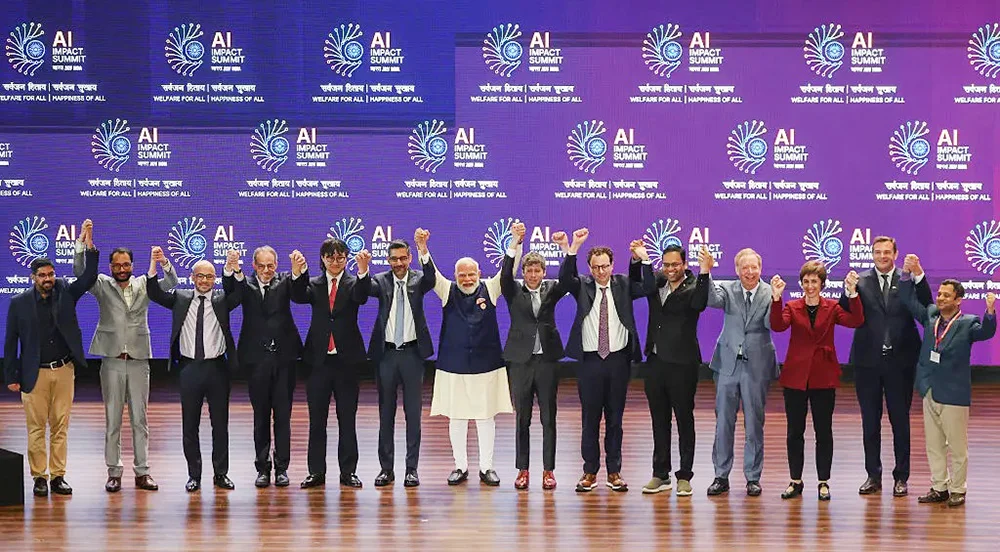
Artificial Intelligence (AI) has rapidly moved from being a specialised technological field into a major social force that shapes economies, cultures, governance, and everyday human life. The India AI Impact Summit 2026, held in New Delhi, symbolised a significant moment for the Global South, especially South Asia, because it demonstrated that artificial intelligence is no longer limited to advanced Western economies but can also become a development tool for emerging societies. The summit gathered governments, researchers, technology companies, and international organisations to discuss how AI can support social welfare, public services, and economic growth. Its central message was that artificial intelligence should be human centred and socially useful. Instead of focusing only on powerful computing systems, the summit emphasised affordable technologies, open collaboration, and ethical responsibility so that ordinary citizens can benefit from digital transformation. For South Asia, where large populations live in rural areas and resources are unevenly distributed, this idea is particularly important.
People friendly AI
One of the most important concepts promoted at the summit was the idea of “people friendly AI.” This means that artificial intelligence should be accessible, understandable, and helpful in daily activities. In South Asia, language diversity and economic inequality often prevent people from using advanced technology. Therefore, systems designed for local languages, and smartphones, play a crucial role. When a farmer can speak to a digital assistant in Sinhala, Tamil, or Hindi and receive advice about weather patterns or crop diseases, technology becomes practical rather than distant. Similarly, voice based interfaces allow elderly people and individuals with limited literacy to use digital services. Affordable mobile based AI tools reduce the digital divide between urban and rural populations. As a result, artificial intelligence stops being an elite instrument and becomes a social assistant that supports ordinary life.
Transformation in education sector
The influence of this transformation is visible in education. AI based learning platforms can analyse student performance and provide personalised lessons. Instead of all students following the same pace, weaker learners receive additional practice while advanced learners explore deeper material. Teachers are able to focus on mentoring and explanation rather than repetitive instruction. In many South Asian societies, including Sri Lanka, education has long depended on memorisation and private tuition classes. AI tutoring systems could reduce educational inequality by giving rural students access to learning resources, similar to those available in cities. A student who struggles with mathematics, for example, can practice step by step exercises automatically generated according to individual mistakes. This reduces pressure, improves confidence, and gradually changes the educational culture from rote learning toward understanding and problem solving.
Healthcare is another area where AI is becoming people friendly. Many rural communities face shortages of doctors and medical facilities. AI-assisted diagnostic tools can analyse symptoms, or medical images, and provide early warnings about diseases. Patients can receive preliminary advice through mobile applications, which helps them decide whether hospital visits are necessary. This reduces overcrowding in hospitals and saves travel costs. Public health authorities can also analyse large datasets to monitor disease outbreaks and allocate resources efficiently. In this way, artificial intelligence supports not only individual patients but also the entire health system.
Agriculture, which remains a primary livelihood for millions in South Asia, is also undergoing transformation. Farmers traditionally rely on seasonal experience, but climate change has made weather patterns unpredictable. AI systems that analyse rainfall data, soil conditions, and satellite images can predict crop performance and recommend irrigation schedules. Early detection of plant diseases prevents large-scale crop losses. For a small farmer, accurate information can mean the difference between profit and debt. Thus, AI directly influences economic stability at the household level.
Employment and communication reshaped
Artificial intelligence is also reshaping employment and communication. Routine clerical and repetitive tasks are increasingly automated, while demand grows for digital skills, such as data management, programming, and online services. Many young people in South Asia are beginning to participate in remote work, freelancing, and digital entrepreneurship. AI translation tools allow communication across languages, enabling businesses to reach international customers. Knowledge becomes more accessible because information can be summarised, translated, and explained instantly. This leads to a broader sociological shift: authority moves from tradition and hierarchy toward information and analytical reasoning. Individuals rely more on data when making decisions about education, finance, and career planning.
Impact on Sri Lanka
The impact on Sri Lanka is especially significant because the country shares many social and economic conditions with India and often adopts regional technological innovations. Sri Lanka has already begun integrating artificial intelligence into education, agriculture, and public administration. In schools and universities, AI learning tools may reduce the heavy dependence on private tuition and help students in rural districts receive equal academic support. In agriculture, predictive analytics can help farmers manage climate variability, improving productivity and food security. In public administration, digital systems can speed up document processing, licensing, and public service delivery. Smart transportation systems may reduce congestion in urban areas, saving time and fuel.
Economic opportunities are also expanding. Sri Lanka’s service based economy and IT outsourcing sector can benefit from increased global demand for digital skills. AI-assisted software development, data annotation, and online service platforms can create new employment pathways, especially for educated youth. Small and medium entrepreneurs can use AI tools to design products, manage finances, and market services internationally at low cost. In tourism, personalised digital assistants and recommendation systems can improve visitor experiences and help small businesses connect with travellers directly.
Digital inequality
However, the integration of artificial intelligence also raises serious concerns. Digital inequality may widen if only educated urban populations gain access to technological skills. Some routine jobs may disappear, requiring workers to retrain. There are also risks of misinformation, surveillance, and misuse of personal data. Ethical regulation and transparency are, therefore, essential. Governments must develop policies that protect privacy, ensure accountability, and encourage responsible innovation. Public awareness and digital literacy programmes are necessary so that citizens understand both the benefits and limitations of AI systems.
Beyond economics and services, AI is gradually influencing social relationships and cultural patterns. South Asian societies have traditionally relied on hierarchy and personal authority, but data-driven decision making changes this structure. Agricultural planning may depend on predictive models rather than ancestral practice, and educational evaluation may rely on learning analytics instead of examination rankings alone. This does not eliminate human judgment, but it alters its basis. Societies increasingly value analytical thinking, creativity, and adaptability. Educational systems must, therefore, move beyond memorisation toward critical thinking and interdisciplinary learning.
AI contribution to national development
In Sri Lanka, these changes may contribute to national development if implemented carefully. AI-supported financial monitoring can improve transparency and reduce corruption. Smart infrastructure systems can help manage transportation and urban planning. Communication technologies can support interaction among Sinhala, Tamil, and English speakers, promoting social inclusion in a multilingual society. Assistive technologies can improve accessibility for persons with disabilities, enabling broader participation in education and employment. These developments show that artificial intelligence is not merely a technological innovation but a social instrument capable of strengthening equality when guided by ethical policy.
Symbolic shift
Ultimately, the India AI Impact Summit 2026 represents a symbolic shift in the global technological landscape. It indicates that developing nations are beginning to shape the future of artificial intelligence according to their own social needs rather than passively importing technology. For South Asia and Sri Lanka, the challenge is not whether AI will arrive but how it will be used. If education systems prepare citizens, if governments establish responsible regulations, and if access remains inclusive, AI can become a partner in development rather than a source of inequality. The future will likely involve close collaboration between humans and intelligent systems, where machines assist decision making while human values guide outcomes. In this sense, artificial intelligence does not replace human society, but transforms it, offering Sri Lanka an opportunity to build a more knowledge based, efficient, and equitable social order in the decades ahead.
by Milinda Mayadunna
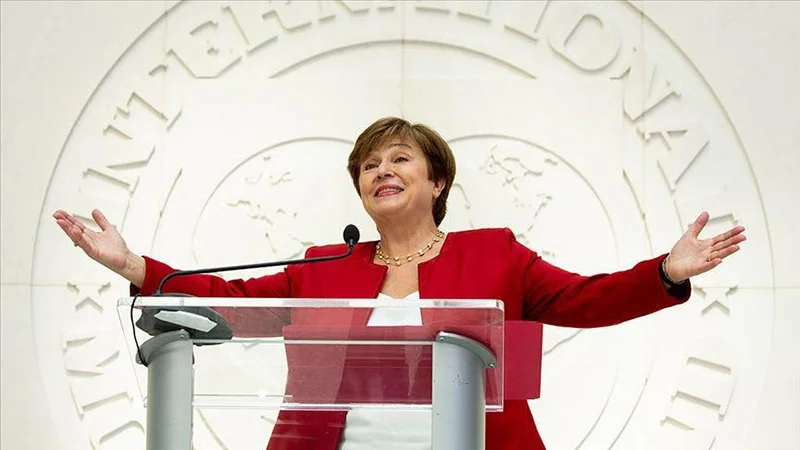
The visit by IMF Managing Director Kristalina Georgieva to Sri Lanka was widely described as a success for the government. She was fulsome in her praise of the country and its developmental potential. The grounds for this success and collaborative spirit go back to the inception of the agreement signed in March 2023 in the aftermath of Sri Lanka’s declaration of international bankruptcy. The IMF came in to fulfil its role as lender of last resort. The government of the day bit the bullet. It imposed unpopular policies on the people, most notably significant tax increases. At a moment when the country had run out of foreign exchange, defaulted on its debt, and faced shortages of fuel, medicine and food, the IMF programme restored a measure of confidence both within the country and internationally.
Since 1965 Sri Lanka has entered into agreements with the IMF on 16 occasions none of which were taken to their full term. The present agreement is the 17th agreement . IMF agreements have traditionally been focused on economic restructuring. Invariably the terms of agreement have been harsh on the people, with priority being given to ensure the debtor country pays its loans back to the IMF. Fiscal consolidation, tax increases, subsidy reductions and structural reforms have been the recurring features. The social and political costs have often been high. Governments have lost popularity and sometimes fallen before programmes were completed. The IMF has learned from experience across the world that macroeconomic reform without social protection can generate backlash, instability and policy reversals.
The experience of countries such as Greece, Ireland and Portugal in dealing with the IMF during the eurozone crisis demonstrated the political and social costs of austerity, even though those economies later stabilised and returned to growth. The evolution of IMF policies has ensured that there are two special features in the present agreement. The first is that the IMF has included a safety net of social welfare spending to mitigate the impact of the austerity measures on the poorest sections of the population. No country can hope to grow at 7 or 8 percent per annum when a third of its people are struggling to survive. Poverty alleviation measures in the Aswesuma programme, developed with the agreement of the IMF, are key to mitigating the worst impacts of the rising cost of living and limited opportunities for employment.
Governance Included
The second important feature of the IMF agreement is the inclusion of governance criteria to be implemented alongside the economic reforms. It goes to the heart of why Sri Lanka has had to return to the IMF repeatedly. Economic mismanagement did not take place in a vacuum. It was enabled by weak institutions, politicised decision making, non-transparent procurement, and the erosion of checks and balances. In its economic reform process, the IMF has included an assessment of governance related issues to accompany the economic restructuring process. At the top of this list is tackling the problem of corruption by means of publicising contracts, ensuring open solicitation of tenders, and strengthening financial accountability mechanisms.
The IMF also encouraged a civil society diagnostic study and engaged with civil society organisations regularly. The civil society analysis of governance issues which was promoted by Verite Research and facilitated by Transparency International was wider in scope than those identified in the IMF’s own diagnostic. It pointed to systemic weaknesses that go beyond narrow fiscal concerns. The civil society diagnostic study included issues of social justice such as the inequitable impact of targeting EPF and ETF funds of workers for restructuring and the need to repeal abuse prone laws such as the Prevention of Terrorism Act and the Online Safety Act. When workers see their retirement savings restructured without adequate consultation, confidence in policy making erodes. When laws are perceived to be instruments of arbitrary power, social cohesion weakens.
During a meeting between the IMF Managing Director Georgeiva and civil society members last week, there was discussion on the implementation of those governance measures in which she spoke in a manner that was not alien to the civil society representatives. Significantly, the civil society diagnostic report also referred to the ethnic conflict and the breakdown of interethnic relations that led to three decades of deadly war, causing severe economic losses to the country. This was also discussed at the meeting. Governance is not only about accounting standards and procurement rules. It is about social justice, equality before the law, and political representation. On this issue the government has more to do. Ethnic and religious minorities find themselves inadequately represented in high level government committees. The provincial council system that ensured ethnic and minority representation at the provincial level continues to be in abeyance.
Beyond IMF
The significance of addressing governance issues is not only relevant to the IMF agreement. It is also important in accessing tariff concessions from the European Union. The GSP Plus tariff concession given by the EU enables Sri Lankan exports to be sold at lower prices and win markets in Europe. For an export dependent economy, this is critical. Loss of such concessions would directly affect employment in key sectors such as apparel. The government needs to address longstanding EU concerns about the protection of human rights and labour rights in the country. The EU has, for several years, linked the continuation of GSP Plus to compliance with international conventions. This includes the condition that the Prevention of Terrorism Act (PTA) be brought into line with international standards. The government’s alternative in the form of the draft Protection of the State from Terrorism Act (PTSA) is less abusive on paper but is wider in scope and retains the core features of the PTA.
Governance and social justice factors cannot be ignored or downplayed in the pursuit of economic development. If Sri Lanka is to break out of its cycle of crisis and bailout, it must internalise the fact that good governance which promotes social justice and more fairly distributes the costs and fruits of development is the foundation on which durable economic growth is built. Without it, stabilisation will remain fragile, poverty will remain high, and the promise of 7 to 8 percent growth will remain elusive. The implementation of governance reforms will also have a positive effect through the creative mechanism of governance linked bonds, an innovation of the present IMF agreement.
The Sri Lankan think tank Verité Research played an important role in the development of governance linked bonds. They reduce the rate of interest payable by the government on outstanding debt on the basis that better governance leads to a reduction in risk for those who have lent their money to Sri Lanka. This is a direct financial reward for governance reform. The present IMF programme offers an opportunity not only to stabilise the economy but to strengthen the institutions that underpin it. That opportunity needs to be taken. Without it, the country cannot attract investment, expand exports and move towards shared prosperity and to a 7-8 percent growth rate that can lift the country out of its debt trap.
by Jehan Perera

 It’s a good sign, indeed, for the local scene, to see artistes, who have not been very much in the limelight, now making their presence felt, in a big way, and I’m glad to give them the publicity they deserve.
On 10th February we had Yellow Beatz in the spotlight and this week it’s MISTER Band.
This outfit is certainly not new to our scene; they have been around since 2012, under the leadership of Sithum Waidyarathne.
The seven energetic members who make up MISTER Band are:
Sithum Waidyarathne (leader/founder/saxophonist/guitarist and vocalist), Rangana Seram (bass guitarist), Vihanga Liyanage (vocalist), Ridmi Dissanayake (female vocalist), Nuwan Cristo (keyboardist/vocalist), Kasun Thennakoon (lead guitarist), and Nuwan Madushanka (drummer).
According to Sithum, their vision is to provide high quality entertainmen to those who engage their services.
“Thanks to our engaging performances and growing popularity, MISTER Band continues to be in high demand … at weddings, corporate events and dinner dances,” said Sithum.
They predominantly cover English and Sinhala music, as well as the most popular genres.
And the reviews that come their way, after a performance, are excellent, they say, and this is one of the bouquets they received:
It was a pleasure to have you at our wedding. Being avid music fans we wanted the best music, not just a big named band, and you guys acceded that expectations. Big thanks to Sithum for being very supportive, attentive and generous.
-
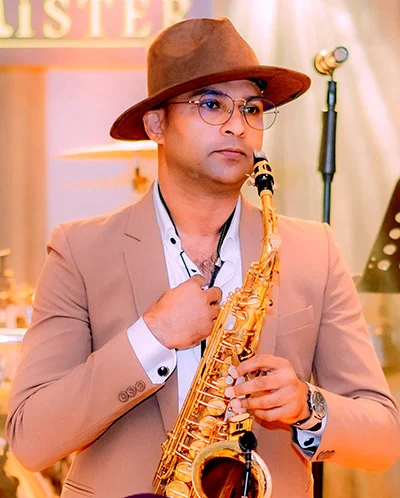
- Sithum Waidyarathne: Band leader and founder
-

- Ridmi Dissanayake: MISTER Band’s female vocalist
The best thing is the post feedback from all the guests. Normally we get mixed reviews but the whole crowd was impressed by you.
MISTER Band was one of our best choices for our wedding.
What is interesting is that for the past four consecutive years, this outfit has performed overseas, during New Year’s Eve, thereby taking their music to the international stage, as well.
The band has also produced a collection of original songs, with around six original tracks composed by the band leader, Sithum Waidyarathne, including ‘Suraganak Dutuwa,’ ‘Landuni,’ ‘Dili Dili Payana,’ ‘Hada Wedana,’ and ‘Nil Kandu Athare.’
Two more songs are set to be released this month: ‘Hitha Norida’ and ‘Premaye Hanguman.’
In addition to their original music, they have also created a strong online presence by performing and uploading over 50 cover songs and medleys to YouTube.
“We’re now planning to connect with an even wider audience by releasing more cover content very soon,” said Sithum, adding that they are also very active on social media, under the name Mister Band Official – on Facebook, Instagram, YouTube, and TikTok.

Navy seize an Indian fishing boat poaching in Mannar seas

Fair weather will prevail except for showers in the Southern province and in Rathnapura, Monaragala and Kaluthara districts after 2.00 p.m

Families of those sentenced to death for killing MP Atukorale seek AKD’s intervention

OPV leaves Baltimore, expected in Colombo in May

Unions sound alarm over coal procurement and power sector restructuring

MAS Group moving to India: CP asks NPP govt. to act

‘Dates have the highest sugar content to fight Coronavirus’

Sunday Island 27 December – Headlines

#SundayIsland 17th December – Headlines

Sunday Island – 28th March

Sunday Island Headlines – 21 March

Sunday Island – 21st February – Headlines
-

 Features2 days ago
Why does the state threaten Its people with yet another anti-terror law?
-

 Features2 days ago
Victor Melder turns 90: Railwayman and bibliophile extraordinary
-
 Features2 days ago
Reconciliation, Mood of the Nation and the NPP Government
-

 Features1 day ago
LOVEABLE BUT LETHAL: When four-legged stars remind us of a silent killer
-
 Features2 days ago
Victor, the Friend of the Foreign Press
-

 Latest News4 days ago
New Zealand meet familiar opponents Pakistan at spin-friendly Premadasa
-

 Latest News4 days ago
Tariffs ruling is major blow to Trump’s second-term agenda
-

 Latest News4 days ago
ECB push back at Pakistan ‘shadow-ban’ reports ahead of Hundred auction