
Opinion
Seventy years ago: Great August hartal

REAR VISION
By Jayantha Somasundaram
The Lanka Sama Samaja Party (LSSP) founded in 1935 contested the following year’s State Council election and returned two out of the fifty elected members in the legislature. However, the Party’s horizon was extra-parliamentary; its focus being organising workers into unions and leading the unions not merely towards economic and workplace goals, but also towards the political objective of the revolutionary transformation of society.
During the Second World War which commenced in 1939, and which for then-Ceylon reached a climax with the Japanese attack on Colombo and Trincomalee in April 1942, the LSSP was banned, its leaders like N. M. Perera, Philip Gunawardena and Colvin R. De Silva were jailed, and the Party was driven underground by the island’s British rulers.
When the War ended in 1945, the wartime economic boom which had enabled Colombo to accumulate a healthy sterling balance through exports also came to an end. The result was strikes which broke out in October 1946, organised by the no longer proscribed LSSP (Socialist Party), and the newly formed Communist Party (CP). This wave of strikes covered the Public Service, the Mercantile Sector and the Plantations, a successful general strike which secured higher minimum wages, medical leave entitlements and paid-recreation leave among other benefits for wage earners.
In 1947 another round of strikes occurred, again involving workers in different sectors of employment. The leadership was provided once again by the LSSP through its trade unions the Ceylon Federation of Labour and the CP’s Ceylon Trade Union Federation. The Ceylonese Board of Ministers headed by D. S. Senanayake took a hard line and “passed repressive legislation which included the use of the military against the strikers,” wrote US Professor Patrick Peebles in The History of Sri Lanka and “(N. M.) Perera was arrested.” Government forces opened fire in Kolonnawa where they killed Kandaswamy, a protesting government clerk.
General Election 1952
Despite this unrest among urban workers, the General Elections held in May 1952 saw the United National Party (UNP) under Dudley Senanayake win a landslide victory of 54 seats (out of 95 elected members in parliament). The Sri Lanka Freedom Party (SLFP) got nine seats, the LSSP nine, the CP four, the Tamil Congress four and the Federal Party two. S.W.R.D. Bandaranaike, leader of the SLFP became Leader of the Opposition in Parliament.
However, not unlike the present, between 1951 and 1953 the island’s economy continued to decline as export earnings fell while living costs spiralled. Consequently, from late 1952 there was once again unrest among wage earners, workplace slowdowns, labour strikes and hunger strikes.
Further, in a response with a familiar ring, an International Bank for Reconstruction and Development (World Bank) mission which visited Ceylon in 1951, in its report the following year noting that welfare expenditure accounted for a third of government spending, recommended that such welfare spending be pruned. Consequently the Central Bank proposed to the Government an increase in the price of staples like rice, wheat flour and sugar, an end to the free midday meal for school children and a hike in postal rates, bus and train fares. Cutbacks which the Dudley Senanayake Government implemented in 1953.
The attack on living standards prompted many around the country to stage local protests, but the Government refused to back down, and the protests not only snowballed but became more organised. As events unfolded the LSSP took the initiative to convene a meeting of the Island’s major trade unions and together they decided on a single day of mass protest to demonstrate to the Government the depth of peoples’ anger and despair. Three opposition parties, the LSSP, the CP and the Federal Party (FP), closed ranks and called upon the people to stage an Island-wide anti-Government protest on Tuesday 12th August 1952. This decision was proclaimed at a public gathering in Colombo on 23rd July. The Opposition called for the 12th to be a day of mourning, the hoisting of black flags and a boycott of workplaces, shops, offices and schools; a single day of protest.
Northern Province Joins
In the meantime the tempo of protests and agitation continued, its reach extending with each passing day. “For the first time Tamil workers in the Northern Province joined their comrades in other parts of the country in the demonstrations and decided to take part in the proposed one day-protest,” wrote Political Science Professor Ranjith Amarasinghe. There were protests in front of rice stores and the home of a government minister. These were merely a dress rehearsal for the 12th. Amarasinghe went on, “action such as parading the troops in the streets or the refusal to negotiate only helped to antagonise the workers further and the strikes continued in the urban industrial and plantation sectors.”
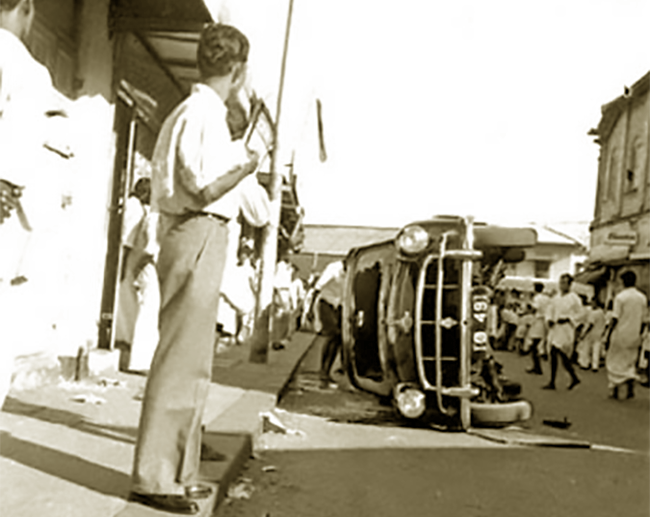
At midnight 11th August the Hartal began at the Railway’s Ratmalana Workshop where workers downed tools and effectively brought the facility to a standstill. By dawn on the 12th the transport strike showed itself to be totally effective such that even those who did not join the Hartal could not travel to work. From its Colombo epicentre the Hartal fanned out along the western coastal arteries across the populous Western and Southern Provinces, and then into the population centres in the interior of the country. Public anger was manifested in blocked roads which became impassable for traffic, the felling of telephone poles and the torching of buses cutting communication and transport.
The Hartal now took on a life of its own, no longer being led or limited by party or union leaders and no longer adhering to the planned one day protest. The opposition leadership issued a statement reminding people that it was a one-day protest; this call for restraint would be repeated in the days to come. The people had taken control and the reins of the movement were no longer in the hands of either the political or union leadership. In fact what was envisaged as an urban workers protest broke these bounds and quickly became as much, if not more, the Hartal of Rural Sri Lanka.
Colvin R. de Silva described the Hartal as “the first occasion in the whole history of Ceylon (where) the masses revolted against the domination of the Ceylonese capitalist. This was also the first mass revolt that marked the worker-peasant alliance, the social instrument of the national liberation of Ceylon.”
State of Emergency
The Hartal was the most widespread, popular, militant, peoples’ protest in a century. In fact, it took on a momentum of its own, and an intensity that the leadership of the LSSP, CP and FP had not envisaged. Up until last year’s Aragalaya, it was the most potent act of protest, defiance and direct action on the part of people for radical economic and political change.
“The Hartal started as a strike but grew into something more, perhaps not a revolutionary upsurge as described by the Sama Samajists, but the first post-Independent movement of mass power in action,” wrote historian Nira Wickramasinghe in Sri Lanka in the Modern Age.
Initially in certain areas, the Police confidently coped on their own. In Maradana for example, Deputy Inspector General Gabriel Rockwood even declined the offer of military assistance. But as the Hartal persisted, and in the face of island-wide strikes, agitation and sabotage, a State of Emergency was declared and the Army was called out to support the Police.
The Ceylon Light Infantry’s B Company under Major Maurice Jayaweera, was deployed in Moratuwa while C Company, under Major Roy Jayatillake, was deployed in Colombo. An artillery detachment, under Colonel Derek de Saram, cleared the High Level Road which passed through the Kelani Valley, a Left stronghold. Colonel Anton Muttukumaru Acting Commander of the Ceylon Army had to resort to the use of recruits in order to provide personnel to quell the Hartal.
The Hartal was most effective and mobilised its largest protesters in the Western, Southern and Northern Provinces. Completely unprepared for the Hartal’s wildfire spread and impact, the Government panicked; opposition party offices were raided and the presses where their bulletins and other publications were printed were sealed. A minimum of ten people, perhaps twelve, were killed, hundreds injured and thousands arrested.
The Government declared a State of Emergency for the first time since the violence of 1915, and ordered a curfew. It then went on to craft a conspiracy theory to explain the inexplicable events that had occurred. The Senanayake Administration produced a document claiming to have been found in the Communist Party’s Kandy Branch office which referred to an ‘army of liberation for the Central Province.’
Only Parliament
Parliament remained the only arena where the Opposition could respond publicly to the developing situation in the country. On 17 August Parliamentarian Pieter Keuneman who was also General Secretary of the Communist Party accused the Government of having “no justification whatsoever for the terrorism it has unleashed against the people of Ceylon who demand food at a price which they can afford…I accuse the Government of declaring a State of Emergency…to cover up their bankruptcy and panic by giving the armed forces legal power to join the police in shooting down people.”
“The Hartal broke the myth of the omnipotence of the UNP and gave the masses a new confidence in their own strength,” wrote Leslie Goonawardene, General Secretary of the LSSP.
When the Aragalaya reached its climax last year the ruling family had to take refuge in Navy bases and on a Naval vessel to escape the peoples’ wrath; at the height of the Hartal recalls LSSP General Secretary Tissa Vitarana in Groundviews two years ago, the Dudley Senanayake Cabinet were forced “to have an emergency meeting of the Cabinet in a British warship in the Colombo Harbour.”
Like the Aragalaya seven decades later, the Hartal shook the ruling party and its leadership to its very core. It resulted in the resignation of Prime Minister Dudley Senanayake in October 1953 and his stepping out of politics; just as its progeny, the Aragalaya of 2022 resulted in the fall from power of President Gotabaya Rajapaksa and Prime Minister Mahinda Rajapaksa.







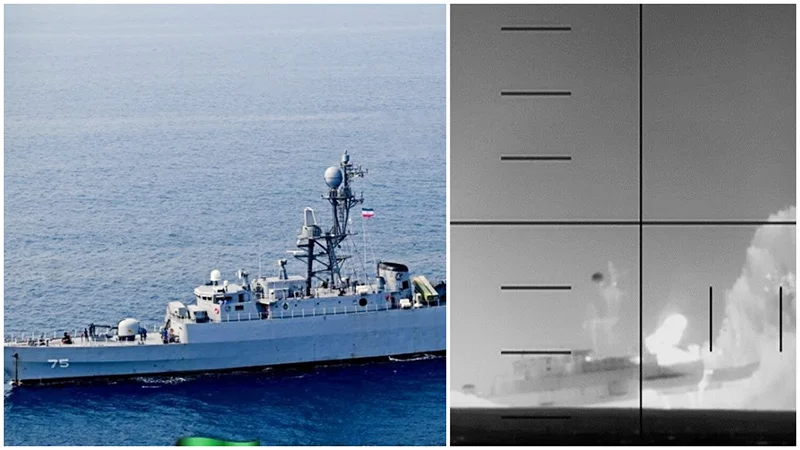
 The terms ‘nonalignment’ and ‘neutrality’ are being touted in local and global news due to Sri Lanka’s denial to Iran to dock three of its naval vessels in national harbors for an unplanned ‘goodwill visit’ between 9 and 13 March, and refusal to the United States to land two of its fighters at the civilian airport in Mattala between 4 and 8 March. Intriguingly, both requests were received on the same day, 26 February 2026, just 48 hours prior to the onset of hostilities.
Though Sri Lanka denied permission for the so-called ‘goodwill visit’ its Navy and Airforce rescued over 30 Iranian crew members and recovered over 80 bodies when their ship, the IRIS Dena was sunk by the US Navy and allowed another Iranian ship, the IRIS Bushehr to dock in Trincomalee as it claimed technical difficulties. This was done only after taking the ship under Sri Lankan control, by separating its sailors from the ship and bringing it to Colombo, thereby ensuring it no longer had any offensive military intent.
The Sri Lankan President in a press conference in Colombo on 5 March noted on the Iranian issue, “our position has been to safeguard our neutrality while demonstrating our humanitarian values.” As he further noted, “amidst all this, as a government, we have intervened in a manner that safeguards the reputation and dignity of our country, protects human lives and demonstrates our commitment to international conventions.” Explaining what he meant by neutrality, he noted, “we do not act in a biased manner towards any state, nor do we submit to any state … we firmly believe that this is the most courageous and humanitarian course of action that a state can take.” On the US issue, the President observed in Parliament on 20 March, “they wanted to bring two warplanes armed with eight anti-ship missiles from a base in Djibouti” and “we turned down the request to maintain Sri Lanka’s neutrality.”
In both incidents, in addition to reiterating Sri Lanka’s neutrality, the other point that has been emphasis+ed is Sri Lanka’s long-standing official position of ‘non-alignment.’ As the President noted in his parliamentary speech, “with two requests before us, the decision was clear… we denied both in order to avoid taking sides.” Suddenly, the concepts of neutrality and non-alignment are in the forefront of Sri Lanka’s political discourse after a considerable time, but it has emerged more in a rhetorical sense than at a considered policy position at the level of government thinking and popular acceptance.
I say this because two crucial concepts are missing in these conversations and pronouncements. These are ‘morality’ and ‘national interest’ even though they are irrevocably linked to the previous concepts which would be meaningless if adequate heed is not paid to the latter two. Let me be clear. I agree with Sri Lanka’s position with regard to both incidents and the diplomatic and statesman-like way both were handled. It brought to the fore something on which I have written about in the past. That is, the necessity and the reasonable possibility of smaller states to take clear positions when dealing with powerful countries. Sri Lanka has done so this time.
However, both neutrality and nonalignment cannot be taken out of context merely as terms. They must be situated in a broader historical and political context which can only be done if morality and national interest are not only brought into the equation, but also into policy and the public consciousness. Non-alignment as an international relations concept found its genesis at the time of the Cold War on the basis of which nations, which mostly consisted of former European colonies or what were known collectively at the time as the ‘Third World’, decided not to join major power blocs of the time, i.e. the US and the Soviet Union as well as former imperial centers.
At least, this was the official position and, in this sense, indicated a desire to follow an independent path stressing national sovereignty and national interest, rather than neutrality in the conventional sense. But in practice, even in the heyday of the Nonaligned Movement’s influence in the 1970s, many of its members were very clearly aligned to one or the other of the superpowers based on matters of political necessity and simple survival. The formal dictionary meaning of neutrality is, “not taking sides in a dispute, conflict, or contest, often implying a position of impartiality, independence, or non-participation.” These are the two rhetorical positions Sri Lanka took with regard to both incidents referred to above.
But both decisions should have been more specifically taken, and the local and global discourses emanating from them cautiously guided, based on principles of morality and national interest. These do not contradict nonalignment and neutrality in their general sense. Sri Lanka’s decision to not approve docking or landing rights to both warring countries in this context is correct. But where is morality? It is partly embedded in the President’s stated interest in ensuring no further lives were lost.
What is missing in this moral position however is the clearly articulated fact that the war against Iran by the US and Israel are illegal, immoral and contradicts all applicable international laws and conventions. Sri Lanka’s statements and what is publicly available on the President’s and the Foreign Minister’s reported conversations with Gulf leaders are inconsequential and bland. Despite Iran’s bleak track record when it comes to democracy and human rights within, the country has stood by Sri Lanka during the civil war years supplying weapons when very few states did, and also when Sri Lanka was named and shamed in the circus of the UN’s Human Rights Council for almost two decades. Taking a position regarding the illegality of the war against Iran does not mean Sri Lanka cannot be neutral or non-aligned. It could have still taken the same decision it has already taken. But it would have been able to do so from a moral high ground.
The other reason often given for harping on neutrality and non-alignment is the fear of being reprimanded by the mad men and women currently holding power in the US. But the Republican Party or President Trump are not the Caesars of the Roman Empire. Trump’s term ends in January 2029. The Republican Party is already feeling the negative consequences of the war at home. Given the chaos Trump has brought in, which has added to the cost of living of US citizens, the needless expenditure the war has burdened the US taxpayers with, and the US’s continued marginalisation in the international order, it is very unlikely any of the present practices (note: not policies) will be carried forward in the same nonsensical sense. This is precisely the time to take the moral high ground. If we do, and continue to do so, it will become apparent that we as a nation act upon principles and laws. Such continuity will earn the country respect in the global arena even though not necessarily make us popular. This is a crucial asset small nations must have when dealing with global powers. But this must be earned through consistent practice and not be the result of accidents.
This is also where national interest comes in as a matter of policy. Sri Lanka needs to reiterate not only for the present but also for the future that its decisions are based on national interest. This could include permitting the US or any other country to land or dock in a future conflict if it benefits us in terms of local defense. But such a decision should not be a decision forced upon us. This is not old-school nonalignment or neutrality. Instead, it is about taking a position – not a particular side – in the interest of safeguarding the national interest as a matter of principle and taking the moral high ground in international relations which will ensure both nonalignment and neutrality in a pragmatic and beneficial sense in the long term.
Our leaders and our people need to learn how to be pro-Sri Lankan both in domestic and global matters as a national operational principle.
Opinion
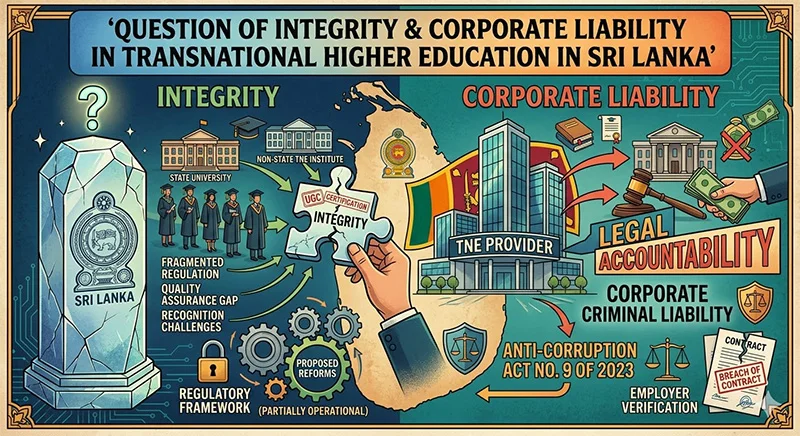
Question of integrity and corporate liability in Transnational Higher Education in Sri Lanka

According to a paper commissioned by Anthony Welch for the 2021/2022 UNESCO Global Education Monitoring Report on “Non-state actors in Education Across Asia”, the rise of Transnational HE was underpinned by tensions between growth in demand, and, on the other hand, the inability or unwillingness of many governments to finance this expansion sufficiently (UNESCO & Welch, 2021). Globally, almost 70 million, or one in three of all students, are now enrolled in private HEIs (UNESCO & Welch, 2021). This pattern is similar and highly diverse in Asia where more than 35% of students are in the private sector.
However, enhance transparency in governance in Transnational education is of paramount importance as there is a corporate liability disregarded at a greater extent by the private HE mushrooming in this country. As Transnational Higher Education attracts many students, the responsibility of the relevant authorities should strengthen the integrity of governance of this sector and increase accountability.
On the other hand, corruption perception index in the 2025 (CPI) released by Transparency International, Sri Lanka, showed significant improvement, rising 14 places to rank 107th out of 182 countries, up from 121st in 2024. Despite such a movement ahead, accountability lies among the Private HEIs engaged in Transnational HE to prevent any risk leading to corruption.
Having considered the aforementioned scenario following cases, encountered in the recent past and I wonder what “higher education” do they offer.
Risk of corruption
An applicant, being a sole proprietor, has signed an agreement with another agent of private HEI in Nachchaduwa, Anuradhapura (Registered office), where operating office being the, Rathmalkatuwa, Inamaluwa, Kandalama, Dambulla, without looking at the agreements entered with the Foreign University by the respective agents. Sub agents are not aware on what conditions the principal foreign university has imposed, whether the respective university is authorised to offer such programmes in overseas. Have they been accredited in their countries by the accreditation authorities, despite their listing in the World Higher Education Database and Association of Commonwealth Universities. Whether these private HEIs are blacklisted organisations need to be checked with National Information Centres of the respective countries. All agents operating Transnational HE should be accountable and responsible as they are serving the poor students of this country who ultimately face consequences when they go on searching for employment opportunities. They are facing many issues with respective Qualification Frameworks operating in those countries.
Fake Credentials and Fabricating Documents
There are massive complaints regarding the issuance of fake certificates and forgery in Higher Education forwarded by many parties. Some organisations themselves print certificates without obtaining original certificates from the principal foreign university. Poor students do not know this situation of the higher education provider.
Call for State organisations to be aware of Transnational HE
There are many state organisations without proper verifications on credentials engage in recruitment of their employees just based on the listing of world higher education database and Association of Commonwealth Universities without further checking on the existence of such programmes in the respective countries with their accreditation authorities.
Recently while World Higher Education Database and UKEnic has clarified on the nonexistence of a respective university, there are instances where institutions that were accredited in the past but were not accredited now. The respective Universities in certain instances were listed and not currently listed due to non-acceptance by the accreditation authorities. Therefore, organisations need to be cautious about the accreditation of such universities in the respective countries as Sri Lanka is haunted by a massive network of agents and subagents of foreign HEIs operated as designated centres, appointed agents.
There are many ways to do Transnational education. There is distance education done with a local partner. There are several forms of arrangement in transnational education such as franchising arrangements, partnerships with local providers, either at the programme level or (occasionally) at the level of creating a whole new institution, branch campuses. However, there is a necessity of some kind of regulation as there is an escalation of fraud.
Overall regulations governing the operations of Transnational HE in Sri Lanka as a country aim to reach Sustainable Development Goals (SDG 4) was deemed as transparent and not fully understood by stakeholders, there are no local mechanisms to affirm and benchmark the quality of Transnational Education programmes to that of the local HE standards. There is a sense of flexibility in forging Transnational Education partnerships though the absence of regulations, which may over time negatively impact public perceptions of Transnational Education’s quality
Despite these circumstances there are countries that maintain their Agent network through proper training and licensing system to facilitate their regulation.
Transparency of Agents engaged in Transnational HE
A parent has made a complaint against a leading HEI for misleading through an unauthorised three-year degree programme (two-year top-up) and causing irreparable career damage and mental distress, wasting money and time. When she forwarded the matter to the Chief Executive, New Zealand Qualification Authority (NZQA) for entry into the teaching profession, she was informed that the HEI concerned was not permitted to engage in such programmes overseas. The question is how the MOU was signed and how programmes were offered in Sri Lanka.
Where is the corporate liability and integrity in these activities?
by Dr. Janadari Wijesinghe
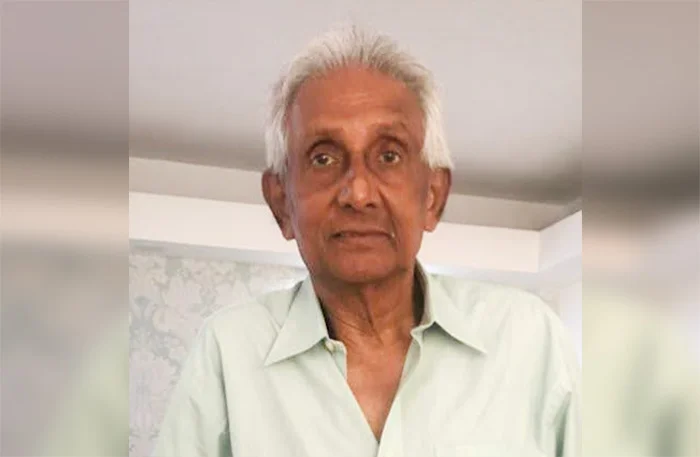
Tassil Samarasinghe passed away on Monday, March 16, 2026. Fondly known as ‘Kunjan’ to his family and close friends, Tassil hadn’t been in the best of health over the past few years. He experienced difficulty maintaining his balance, and, therefore, walking, which probably caused the fall at home, and resulting in an head injury, which took his life.
Tassil was my school friend. We were members of the 16th Colombo Cub pack and scout troop at S. Thomas’ College, Mt. Lavinia, in the 1950s and ’60s. I remember how he played Ali Baba’s mother in the scout concert, produced and directed by our scout master, the late Mr. Wilson I. Muttiah.
We were also next-door neighbours in Mt. Lavinia. During school holidays, in the early morning, Tassil and I would go on long walks, along the beach, sometimes helping the fishermen to draw in their nets. Tassil was a good conversationalist and highly opinionated, even as a teenager.
In those days a fellow beachcomber was former Prime Minister Sir John Kotelawala. We used to put our feet on his fresh footprints in the sand, and declare that we were walking in his footsteps!
The rest of the day we would play cards (304) with his mother and some of the boarders staying at their home. Then my family moved away to Colombo, but I was always a welcome guest at the Samarasinghe residence.
One of Tassil’s many hobbies, in addition to collecting stamps and playing bridge, was breeding ornamental fish in large ground tanks. I, too, was bitten by the aquarium fish bug. He was also a lover of good music, like his older brother Nihal – known to Thomian cubs and scouts of that era as ‘Local’ – who rose to fame as ‘Sam the Man’, the acclaimed Sri Lankan western musician, singer and band-leader.
In school, Tassil was popular with our GCE O-Level English teacher Mr. A.S.P. (Shirley) Goonetilleke.
After leaving school, Tassil and I were members of the Rotary Club together, where we would occasionally meet. Tassil married Shirani and they had two children, Tilani and Viswanath. Unfortunately, Viswanath lost his life in a bicycle accident several years ago.
I extend my deepest sympathies to Shirani, Tilani and family.
“You will always remember
Wherever you maybe,
The School of your boyhood,
The School by the Sea.
And you’ll always remember
The friendships fine and free,
That you made at S. Thomas’
The School by the Sea.”
(Rev Canon Roy H. Bowyer-Yin)
Farewell, dear friend. May you attain the supreme bliss of Nibbana.
‘GAF’

Esterhuizen, bowlers lead South Africa to 3-2 series win

IPL captains’ meeting: What’s on the agenda?

Russia launches 948 drones at Ukraine in largest attack over 24-hour period

Oil at $150 will trigger global recession, says boss of financial giant BlackRock

Showers will occur at several places in the Western and Sabaragamuwa provinces and in Galle and Matara districts after 2.00 pm

Senior citizens above 70 years to receive March allowances on Thursday (26)

‘Dates have the highest sugar content to fight Coronavirus’

Sunday Island 27 December – Headlines

#SundayIsland 17th December – Headlines

Sunday Island – 28th March

Sunday Island Headlines – 21 March

Sunday Island – 21st February – Headlines
-

 Features3 days ago
Trincomalee oil tank farm: An engineering marvel
-
 News7 days ago
Bailey Bridge inaugurated at Chilaw
-
 News6 days ago
CIABOC tells court Kapila gave Rs 60 mn to MR and Rs. 20 mn to Priyankara
-

 News7 days ago
Pay hike demand: CEB workers climb down from 40 % to 15–20%
-
 Features6 days ago
Science and diplomacy in a changing world
-

 Features3 days ago
The scientist who was finally heard
-

 News5 days ago
Colombo, Oslo steps up efforts to strengthen bilateral cooperation in key environmental priority areas
-
 News19 hours ago
Japanese boost to Sri J’pura Hospital, an outright gift from Tokyo during JRJ rule