
News
SDC conducts workshop on Inclusive Business Accreditation

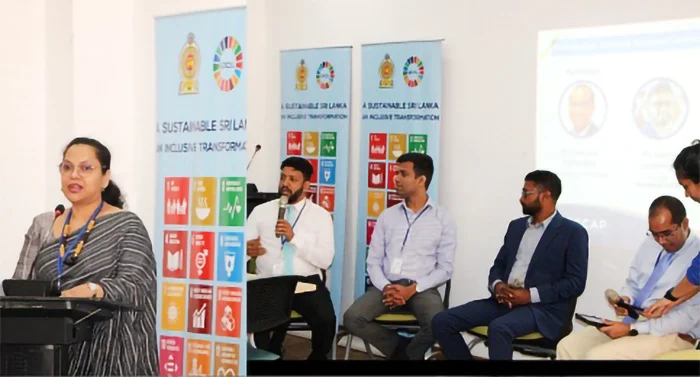
The Sustainable Development Council (SDC) successfully conducted a workshop on ‘Establishing an Inclusive Business Accreditation System’ for Sri Lanka in collaboration with the United Nations Economic and Social Commission for Asia and the Pacific (UNESCAP) and the United Nations Resident Coordinators Office on 24th February 2025, bringing together government officials, industry experts, and passionate entrepreneurs dedicated to building a more inclusive business ecosystem in Sri Lanka.
The Workshop focused on the establishment of an Inclusive Business (IB) Accreditation System and the transformative power of IB models to contribute not only to economic growth but also towards a more just, stable, and resilient society. Accreditation would play a pivotal role in distinguishing credible IBs from those engaging in superficial social responsibility efforts.
The Guidelines for Promoting Inclusive Businesses adopted by the ASEAN member states proposes IB Accreditation as a core policy instrument to promote inclusive businesses in the region. An IB Accreditation would offer significant benefits to both the government and businesses. For the government, it would drive solutions addressing the needs of low-income populations by encouraging businesses to adopt inclusive business models. The system would also enable more effective promotion and recognition of inclusive businesses, inspiring others to follow suit. Additionally, it could help the government to identify businesses eligible for both financial or non-financial incentives. For businesses, IB Accreditation would help gain enhanced visibility and brand recognition, boosting access to investment and new market opportunities, while attracting impact investors to support their growth. In addition, a well implemented IB Accreditation System could provide accredited businesses opportunities to access a range of advantages, including financial and non-financial incentives and businesses support services which would help scale operations and increase social impact.
The workshop focused on areas such as the Inclusive Business Landscape in Sri Lanka, IB Accreditation Process and Steps in the implementation of an IB Accreditation System and Financial and Non-Financial Incentives that can be linked to an IB Accreditation System. Several ASEAN member states have put in place IB Accreditation systems based on the IB Accreditation Principles advanced by the ASEAN Secretariat and the workshop facilitated participants to learn from comparative experiences and good practices from IB Accreditation Systems implemented in Cambodia, Vietnam, the Philippines, Malaysia, and South Korea.
The Workshop kicked off with a presentation on the Inclusive Business Landscape in Sri Lanka and recommendations for driving inclusive business growth by the Director General of the Sustainable Development Council Chamindry Saparamadu, followed by a panel discussion with inclusive business leaders on their challenges, successes, and opportunities in leveraging IB Accreditation. Vihagun Ariyaratne, the Founder of Owita Naturals Pvt Ltd, Asitha Jayasinghe, Founder of Blackpool Coffee, and Dushmantha Dissanayake, Agri Entrepreneur/ SME Finance Specialist, elaborated on the importance of accreditation and how it will enhance brand value, accountability, transparency, and help businesses adopt a holistic approach to inclusivity and ethics.
The Workshop Participants delved into the vital steps required to establish an IB Accreditation System in Sri Lanka that will drive sustainable growth, innovation, and equal opportunities for all under the expert guidance of Marta Perez Cuso from the Trade, Innovation and Investment Division of UNESCAP who brings forth extensive experience in promoting inclusive enterprises throughout the Asia Pacific Region, including in India, Cambodia, Vietnam, and Thailand, Ms. Pham Hong Ngan, Research Consultant from Vietnam shared insights from the Vietnam Accreditation Pilot, and Mr. William Baxter, Project Lead, Inclusive Business at the European Chamber of Commerce, presented key learnings and recommendations for developing an IB Accreditation System in Sri Lanka.
The workshop was successfully concluded, obtaining important feedback and suggestions from relevant government agencies such as the Ministry of Industries, Export Development Board, Industrial Development Board, Sri Lanka Accreditation Board, Sri Lanka Standards Institute, Board of Investment, the Central Bank of Sri Lanka and the Development Finance Department, business chambers, and other relevant stakeholders regarding the way forward for establishing an IB Accreditation system through the facilitation of resource persons Ms. Ganga Iddamlgoda, Ms. Sheron Hewawaduge and Mr. Navaka Navarathne.
An Outcome Report with recommendations for establishing an IB Accreditation System is expected to be presented to the Government in due course.

News
Comprehensive reforms to be introduced in the higher education sector in line with primary and secondary education reforms – PM

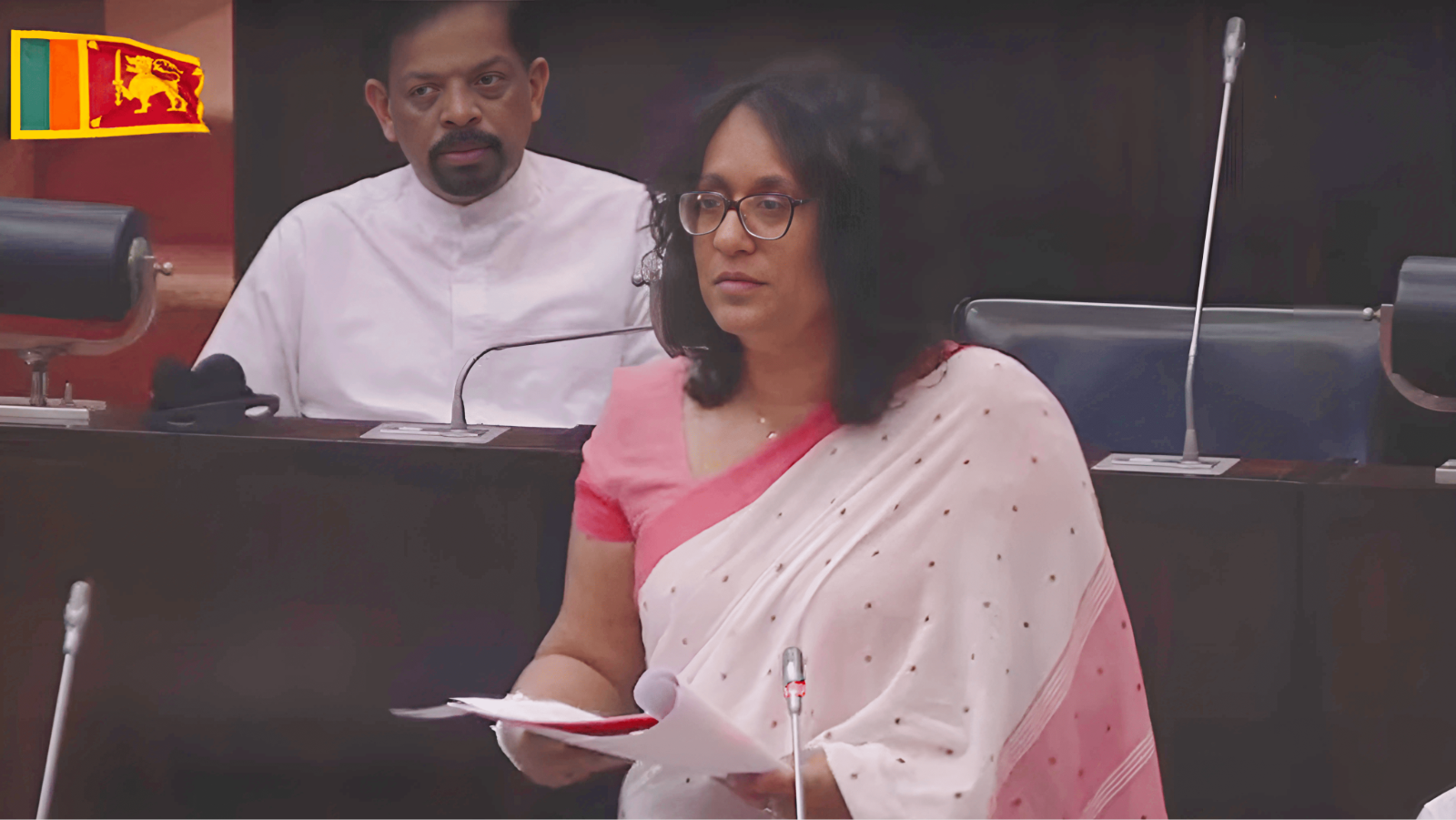
Prime Minister Dr. Harini Amarasuriya stated in Parliament on Wednesday [06th of May] that the Government has planned to introduce relevant changes in the higher education sector aligning with the new reforms being implemented in the primary and secondary education sectors.
The Prime Minister made these remarks while responding to questions raised by Member of Parliament Manjula Sugath Rathnayaka.
The Prime Minister further stated:
“A special expert committee appointed for this purpose has been in operation over the past six months, and based on the report of this panel, existing issues in the higher education sector will be identified and the necessary reforms will be implemented.
A total number of 281,810 students sat for the 2025 G.C.E. Advanced Level Examination, of whom 176,538 qualified for university admission. Following the subject streams, the number of students who qualified is as follows: 32,935 in Biological Sciences, 23,012 in Physical Sciences, 39,608 in Commerce, 58,269 in Arts, 4,199 in the General Stream, 12,472 in Engineering Technology, and 6,043 in Bio-Systems Technology from which 42,937 students are expected to be admitted to universities.
While ensuring the quality of education, the Government gives priority to improving facilities for university students. It has also been decided to maintain the intake for first-degree admissions at the same level as in previous years.
A new course in Geographic Information Systems has been introduced at the University of Ruhuna, and a course in Electronic and Intelligent Systems Engineering has been introduced at the University of Peradeniya from the academic year 2025/2026. Fifty students will be enrolled for each of these new programmes. Steps have already been completed to release the cut-off marks and forward the registration lists to the respective universities”.
Responding to a question raised by the Member of Parliament K. Kader Mastan regarding preschool education, the Prime Minister stated:
“As most preschools in the country are managed by the private sector, the Ministry currently has no provision to offer permanent appointments or salaries to their staff. However, steps are already being taken to provide a certain allowance to volunteer teachers in selected preschools under Provincial Councils.
By 2027, the entire preschool education system is expected to undergo comprehensive reform, with necessary measures being jointly undertaken by the Ministry of Education and the Ministry of Women and Child Affairs.
In addition, based on the recommendations of the National Education Commission, a national policy to regulate preschool education is scheduled to be established in 2026. Under this policy, teacher guidelines and model activity manuals are being prepared, along with plans to conduct teacher training programmes at the provincial level”.
Commenting on volunteer teachers, the Prime Minister emphasized that, in accordance with the Cabinet decision dated 04.01.2007, the policy of not recruiting any volunteer teachers beyond the approved 4,700 teacher aides will continue to be implemented.
[Prime Minister’s Media Division]
News
Joint programme between President’s Fund and Janashakthi Foundation to expand healthcare facilities for children
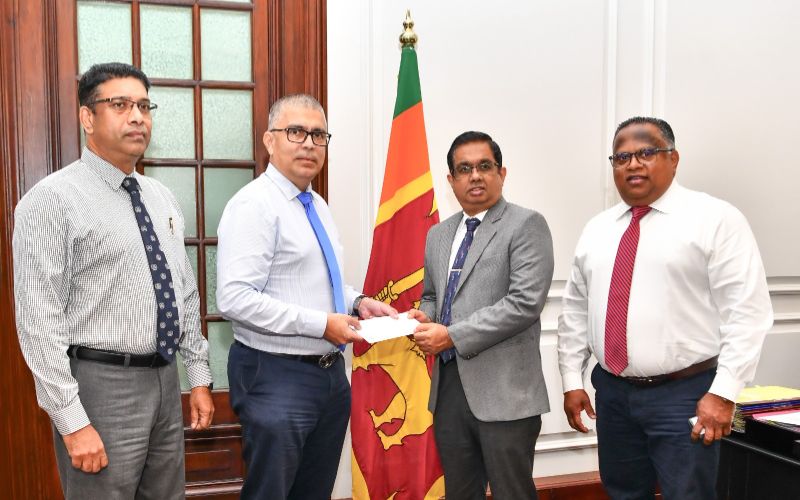
A special collaboration between the Presidents’s Fund and the Janashakthi Foundation, aimed at expanding healthcare facilities available to children under the age of 18, was launched on Wednesday (06) morning.
Implemented under the theme “Building a Healthier Today for a Winning Tomorrow”, this national initiative has been introduced through the joint efforts of the President’s Fund and the Janashakthi Foundation with the objective of reducing the financial barriers associated with children’s healthcare.
Under the President’s Fund, only a portion of the medical expenses incurred by a patient is generally covered. However, under this new collaboration, the Janashakthi Foundation will provide either an equivalent amount or the remaining balance of the treatment cost, whichever is lower.
Speaking on the occasion, Secretary to the President’s Fund and Senior Additional Secretary to the President, Roshan Gamage, stated that the present Government had taken steps to decentralise and digitalise the operations of the President’s Fund, thereby transforming it into a truly people-centric fund. He noted that this had reinforced public confidence in the Fund’s transparency, accountability and effectiveness and added that the collaboration with the Janashakthi Foundation had further strengthened this process.
Gamage further stated that close and meaningful coordination with the private sector would help enhance healthcare assistance provided to children and minimise the gap between the financial aid available and the actual cost of essential medical treatment.
Also addressing the gathering, Managing Director and Group Chief Executive Officer of the Janashakthi Group, Ramesh Schaffter, stated that difficulties in accessing medical treatment constitute a major obstacle preventing children from progressing towards a better future.
He further stated that the collaboration seeks to reduce that obstacle by extending support to children who are in urgent need of assistance, thereby laying the foundation for future generations to face tomorrow with greater confidence.
Under this programme, applicants seeking additional financial assistance are required, when applying to the President’s Fund, to duly complete and submit a consent form authorising the secure sharing of their information with the Janashakthi Foundation.
The identification of children requiring financial assistance, verification of their information and approval of funds will continue to be carried out by the President’s Fund.
Under this initiative, payments will generally be made to the guardians of children following the completion of treatment. However, in cases involving emergency treatment and treatment conducted overseas, payments will be made in advance.
Applicants submitting medical assistance applications to the President’s Fund from 15 May 2026 onwards will be eligible to apply for additional funding from the Janashakthi Foundation.
The event, held at the Hilton Colombo, was attended by J.M. Wijebandara, Director General of Legal Affairs at the Presidential Secretariat and Advisor to the President (Legal Affairs); C.T.A. Schaffter, Founder and Chairman Emeritus of the Janashakthi Group; Gamika De Silva, Group Chief Marketing Officer; Dilshan Wirasekara, Deputy Chief Executive Officer of the Janashakthi Group; as well as officials of the President’s Fund and the Janashakthi Foundation.
President’s Media Division (PMD)
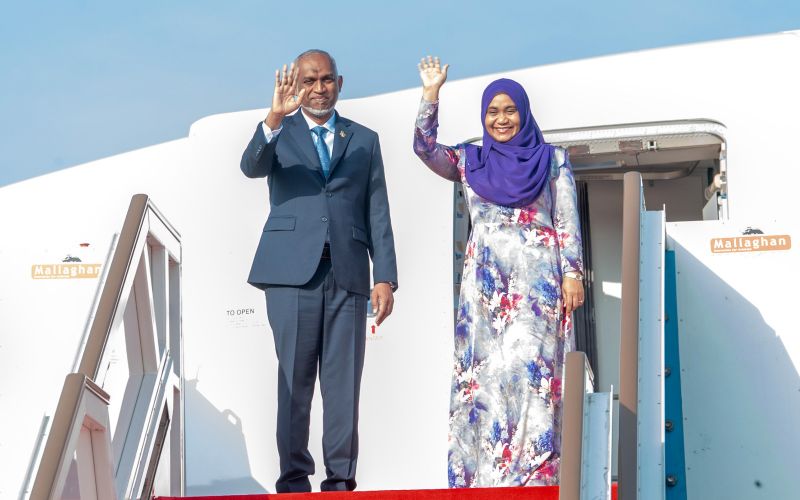
The President of the Republic of Maldives, Dr. Mohamed Muizzu, departed Sri Lanka on Wednesday morning (06) from the Bandaranaike International Airport, Katunayake, concluding a successful state visit to the country.
The visit by the Maldivian President and his delegation further strengthened the longstanding friendship and cooperation between the Maldives and Sri Lanka, while delivering a range of mutual benefits to the peoples of both nations.
This marked President Muizzu’s first state visit to Sri Lanka, during which several mutually beneficial areas of cooperation were agreed upon, underscoring the success of the visit.
Minister of Science and Technology, Krishantha Abeysena, Minister of Youth Affairs and Sports , Sunil Kumara Gamage, Member of Parliament Oshani Umanga, along with senior officials of the Ministry of Foreign Affairs, were present at the airport to bid farewell to the Maldivian President, the First Lady and the accompanying delegation.
(President’s Media Division)

Comprehensive reforms to be introduced in the higher education sector in line with primary and secondary education reforms – PM

Hantavirus-hit cruise ship on way to Canary Islands after three evacuated

Joint programme between President’s Fund and Janashakthi Foundation to expand healthcare facilities for children

Maldivian President concludes state visit to Sri Lanka

India to host Zimbabwe for maiden women’s bilateral series

Showers above 75 mm are likely at some places in the Sabaragamuwa, Central, Uva, Southern and North-central provinces

‘Dates have the highest sugar content to fight Coronavirus’

Sunday Island 27 December – Headlines

#SundayIsland 17th December – Headlines

Sunday Island – 28th March

Sunday Island Headlines – 21 March

Sunday Island – 21st February – Headlines
-
 News3 days ago
CJ urged to inquire into AKD’s remarks on May 25 court verdict
-
 News7 days ago
“Three-in-one blood pressure pill can significantly reduce risk of recurrent strokes”
-

 News4 days ago
USD 3.7 bn H’tota refinery: China won’t launch project without bigger local market share
-

 News18 hours ago
MIT expert warns of catastrophic consequences of USD 2.5 mn Treasury heist
-

 News7 days ago
Alarm raised over plan to share Lanka’s biometric data with blacklisted Indian firm
-
 News5 days ago
Easter Sunday Case: Ex-SIS Chief concealed intel, former Defence Secy tells court
-
 News6 days ago
Ten corruption cases set for court in May, verdict ordered in one case – President
-

 News7 days ago
USD 2.5 mn fraud probe: Interdicted MoF official found dead at home