
Business
SCIENTER Technologies’ eFinancials to Seamlessly Integrate Operations of Mercantile Investments

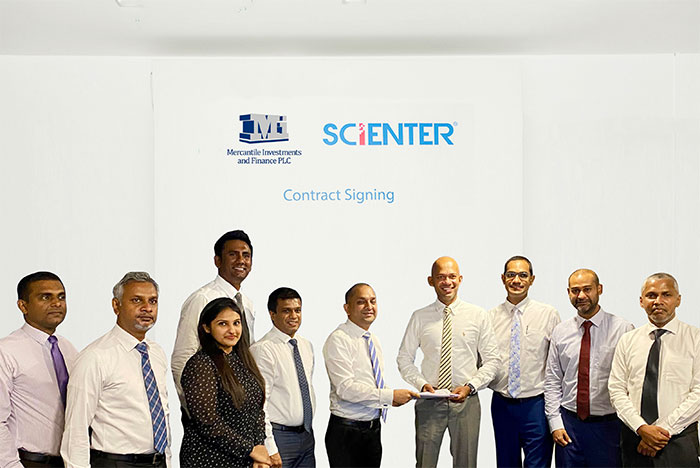
SCIENTER Technologies (Pvt) Ltd. welcomes on board Mercantile Investments and Finance PLC (MI) as its newest patron. The technology firm recently entered into a Memorandum of Understanding with Mercantile Investments in implementing the full suite of its dynamic, core financial platform – eFinancials. Implemented by over 25 financial service providers, including non-banking financial institutions and banks, the solution has gathered an unmatched reputation both here and overseas, making it one of the most successful, integrated financial platforms in the market.
Designed as a comprehensive software solution, eFinancials is the ideal core technology platform that integrates all main functions and processes related to financial services and transactions. The eFinancials suite of modules and solutions offers the latest features and functionalities for the origination and management of varying loan schemes, savings and fixed deposits, leasing and mobile banking (eWallet), along with the ability to integrate modules for back-end operations such as collections and recoveries, general ledger, treasury and financial management.
The possibilities of the solution are wide-ranging, as it incorporates a flexible and configurable back-end architecture, which gives SCIENTER the versatility to adapt the platform to the requirements of the financial service provider. Moreover, it can be configured to suit the service levels of various departments and personnel.
Commenting on the new partnership, Managing Director of SCIENTER Technologies, Rajiva Witharana notes that ‘It is an absolute pleasure to tie up with Mercantile Investments due to its leading position within the financial services sector. Now, in the implementation process, we have adapted the e-Financials platform to seamlessly integrate MI’s core functions into a single operational platform; this was done while keeping in mind their operational and process requirements. eFinancials provides an extensive range of modules, catering to numerous needs, apart from the most basic functions. Our team is constantly finding new avenues in expanding the suite of capabilities and has succeeded in creating separate modules to manage mobile banking functionalities and exposures to money laundering activities. These are just a few examples of its full capacity, which are absolute requirements to accountable and growth-oriented financial service providers.”
Commenting on the partnership, the COO/Director Non-Board of Mercantile Investments, Mr. Dhanushka Fonseka, stated that the level of service delivered to a client is a critical factor for any organisation to succeed; and that the partnership with SCIENTER and the eFinancials platform will unquestionably enable MI to fill potential gaps and deliver a unique experience to all stakeholders.
Remarking on the industry position of SCIENTER, Mr. Deva Anthony – CFO/Director Non-Board of Mercantile Investments added, “We have seen SCIENTER Technologies evolving and making a mark in technology solutions, especially for the Finance Industry. Mercantile Investments is happy to tie up with SCIENTER to acquire their tailored IT system solutions to enhance the company’s long-term IT strategy towards future business competitive advantage.” Moreover, according to Mr. Prasad Indika, AGM Information Technology at MI, the company is confident in the system’s advanced features and therein its ability to accommodate user needs while trusting that SCIENTER’s experienced and capable staff will enable Mercantile Investment to fulfil their technology needs, to a large extent.
MillenniumIT ESP is overseeing the project management aspect of the implementation, with their team providing an end-to-end management approach. The teams of all three parties will work cohesively to make the turnaround time for implementation as effective and efficient as possible.
SCIENTER Technologies (Private) Ltd. is one of Sri Lanka’s prominent tech solutions providers in enterprise applications and business software solutions – with a journey of over 26 years in the industry. SCIENTER’s portfolio complements the operational requisites of diverse business segments including the financial sector and the hospitality industry (hotels and restaurants), in addition to membership clubs and other commercial segments. Its flagship solution, eFinancials, offers an extensive range of key modules that complement multiple areas such as leasing, loans, recovery, fixed deposits, savings, treasury and internet banking alongside novel and advanced functions such as CRIB management, mobile banking (eWallet), anti-money laundering, audit application, recovery app, recovery call centre, and lead management.
(Photo caption) – Heading the contract signing was Mr. Rajiva Witharana – Managing Director, SCIENTER Technologies (Private) Ltd (centre left) and Mr. Dhanushka Fonseka – COO/Director Non-Board (Mercantile Investments) (centre right).
Pictured from left to centre – Mr. Chandana Nanayakkara – AGM Finance (Mercantile Investments), Mr. Uthpala Gunawardana – Associate Lead, Business Architecture ( MillenniumIT ESP), Ms. Dinushi Suriyaarachchi – Senior Vice President, Head of Sales and Marketing, SCIENTER Technologies (Private) Ltd, Mr. Dhanushka Kollure – Senior Vice President Head of Banking and Finance Services, SCIENTER Technologies (Private) Ltd and Mr. Dinith Galappatthi – Chief Technology Officer, SCIENTER Technologies (Private) Ltd.
Pictured from right to centre – Mr. Prasad Indika – AGM Information Technology (Mercantile Investments), Mr. Sanka Jayasundara – Senior Director, Business Architecture (MillenniumIT ESP) and Mr. Deva Anthony – CFO/Director Non-Board (Mercantile Investments).

Corporate accolades underscore the alignment between its operational excellence and national development
In an era where national competitiveness is intrinsically tied to digital connectivity, strengthening the country’s digital backbone has become an urgent priority. Within this context, the evolving role of Sri Lanka’s leading telecommunications provider, SLT-MOBITEL, offers valuable insight into how technological infrastructure can underpin broader economic resilience.
Telecommunications and digital networks are foundational to economic transformation. By expanding high-speed broadband access, upgrading enterprise cloud capabilities, and bridging the urban-rural connectivity divide, SLT-MOBITEL helps reduce business transaction costs, streamline supply chains, and enable micro, small, and medium enterprises to reach global markets.
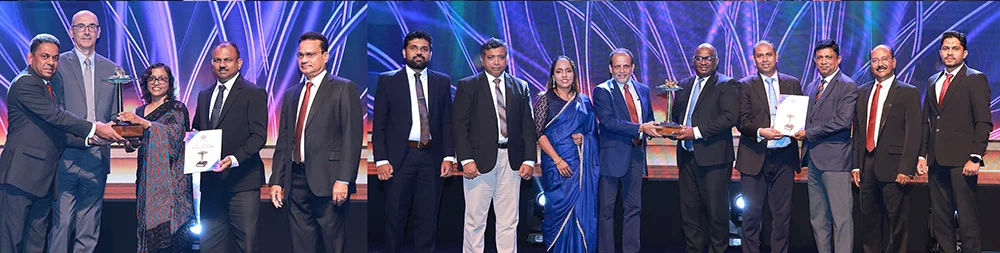
Recent corporate accolades further underscore this alignment between operational excellence and national development. SLT-MOBITEL’s triple triumph at the National Business Excellence Awards 2026 – winning in the Infrastructure and Utilities sector, Performance Management, and ICT Services categories – highlights its growing impact. Notably, the recognition of eChannelling’s contributions to digital healthcare reflects a broader strategic pivot toward integrated technology solutions.
“Institutional efficiency of this nature is critical for attracting foreign direct investment, as global partners increasingly assess a country’s digital maturity and systemic stability before committing capital,” noted industry observers.
Moreover, the company’s transition from a conventional telecom utility to a comprehensive digital solutions provider aligns seamlessly with Sri Lanka’s national digitalisation agenda. As the country pursues public sector modernisation, enhanced e-governance, and a competitive knowledge economy, the private sector must step up to deliver secure, scalable, and future-ready networks. Investments in data centres, cybersecurity frameworks, and advanced ICT infrastructure act as strategic buffers, ensuring that Sri Lanka’s economic apparatus remains agile and resilient amid future global uncertainties.
However, industry experts caution that while these achievements are commendable, SLT-MOBITEL still has a considerable distance to cover in fully enabling a truly digital economy.
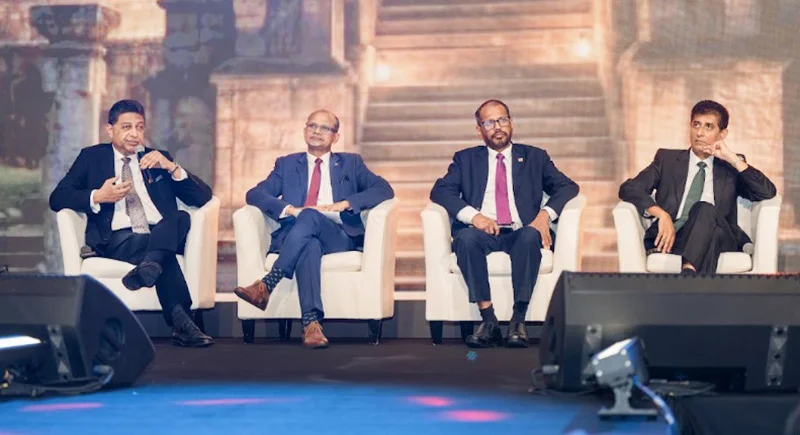
Port City Colombo (PCC) took a prominent role as Platinum Sponsor at the second edition of Sri Lanka Beyond Your Dreams, a high-level diplomatic and investment engagement hosted by the Consulate General of Sri Lanka in Dubai and the Northern Emirates. The event, held on 2nd September 2026 at the Hilton Dubai Al Habtoor City, brought together over 400 senior UAE-based business leaders, investors, diplomats, and institutional stakeholders, alongside Sri Lanka’s most senior government representatives.
The gathering was graced by Dr. Thani bin Ahmed Al Zeyoudi, UAE Minister of Foreign Trade, as Guest of Honour, and Vijitha Herath, Sri Lanka’s Minister of Foreign Affairs, Foreign Employment and Tourism. A high-level Sri Lankan delegation – including the Secretary to the Prime Minister, the Chairman of the Board of Investment, the Chairman of the Export Development Board, and the Director General of Commerce – underscored the government’s strong commitment to deepening economic diplomacy with the UAE.
In his keynote address, Minister Herath reaffirmed the centuries-old ties between Sri Lanka and the Arab region, emphasising the UAE’s vital role as a key economic partner. He stressed the urgency of finalising a Comprehensive Economic Partnership Agreement (CEPA) with the UAE, which would establish a robust framework to elevate trade, investment, and bilateral cooperation. Declaring Sri Lanka “open and ready for business,” he positioned Port City Colombo as the physical embodiment of this economic mission – a modern Special Economic Zone (SEZ) with a dedicated legal framework and competitive incentives, offering UAE investors a natural gateway to South Asia while maintaining strong Gulf connectivity.
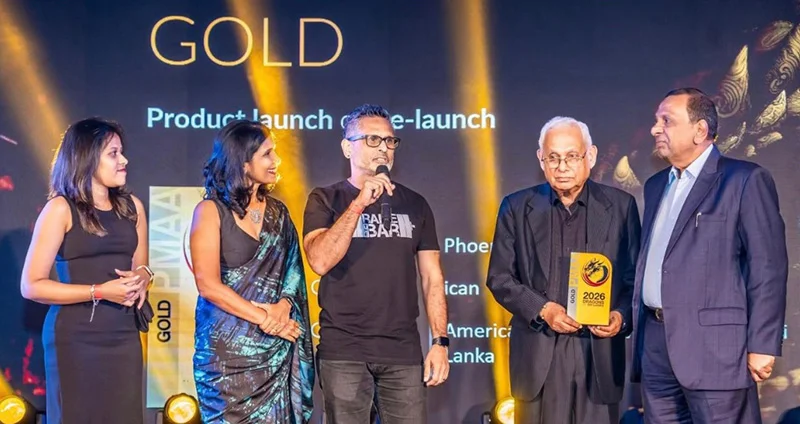
American Premium Water has secured four wins at Dragons of Sri Lanka Awards 2026, including three Gold Dragons and one Black Dragon, marking a significant milestone for the brand following its relaunch last year.
Part of the prestigious Dragons of Asia awards, Dragons of Sri Lanka brings the program’s regional platform to the local market, celebrating creative and effective marketing communications, with entries evaluated on strategic thinking, creativity, execution and impact. Established in 2000, Dragons of Asia is one of Asia’s premier results-driven marketing awards programs.
For American Premium Water, the achievements are particularly significant given that the company’s debut at the Dragons awards has resulted in four Dragons across four categories. In the distinction of Gold Dragons, American Premium Water was recognized across three categories including Product Launch or Re Launch, Cause, Environment or Sustainability and Creative Excellence while the Black Dragon was awarded in recognition of Small Budget.
Competing alongside leading brands and agencies in Sri Lanka, American Premium Water’s four wins demonstrate the strength and effectiveness of its recent work. Winning three Gold Dragons across three distinct categories highlights the breadth of the brand’s achievements, while the Black Dragon for Small Budget further emphasizes its ability to create meaningful impact through focused and efficient investment.


Sri Lanka reiterates its territory won’t be used against India

UK-led Core Group calls Jaffna mass graves a ‘stark reminder’ but stops short of calling for international accountability

India underscores security and defence in overall partnership with SL

If Sri Lanka wants ‘real’ stability, only one way to achieve it, in a short time

Human dignity comes centre stage in Afghan refugee deportation crisis

‘Dates have the highest sugar content to fight Coronavirus’

Sunday Island 27 December – Headlines

#SundayIsland 17th December – Headlines

Sunday Island – 28th March

Sunday Island Headlines – 21 March

Sunday Island – 21st February – Headlines
-

 News5 days ago
Namal remanded until Sept. 18 over Airbus deal investigation
-

 Latest News4 days ago
Tharanga creates history with Diamond League crown in Brussels
-

 News4 days ago
Dispute which triggered listed company director being detained at BIA resolved
-

 Features3 days ago
After the parade: What a traffic OIC’s walk-out tells us
-
 Opinion6 days ago
In Memory of Dr Upatissa Pethiyagoda
-

 Editorial5 days ago
Power vs Equality
-

 Latest News6 days ago
SLPP MP Namal Rajapaksa arrested by CIABOC
-
Editorial3 days ago
Arrests as theatre