
News
Savings, Thrift and the Economic Future of Sri Lanka – Reflections on the 54th Anniversary of the National Savings Bank

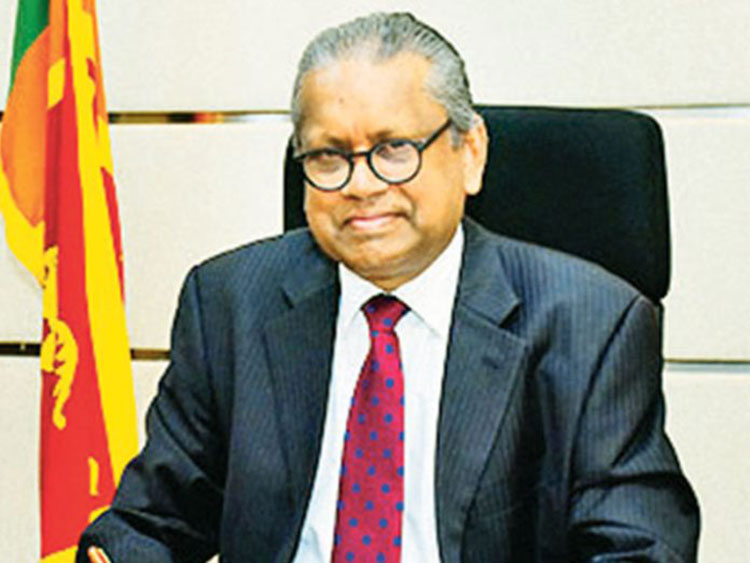
Dr. Harsha Cabral PC, Chairman, National Savings Bank
At defining moments in a nation’s economic journey, it is essential to reflect on the fundamental values that sustain long-term prosperity. Among these values, few are as powerful, as timeless, and as transformative as the culture of savings and thrift.
As the National Savings Bank commemorates its 54th anniversary, we are reminded that this institution was established not merely as another financial entity, but as a national instrument entrusted with mobilizing the savings of the people of Sri Lanka and directing them towards the development of the nation.
Yet the history of organized savings in Sri Lanka extends far beyond the creation of the modem bank in 1972. The roots of the National Savings Movement can be traced back to 1832, when the earliest forms of savings institutions and postal savings initiatives began operating in the country. Those early efforts laid the foundation for what would eventually become one of Sri Lanka’s most trusted financial institutions.
Over nearly two centuries, this proud tradition of savings has evolved alongside the nation itself. Today, the National Savings Bank stands as a pillar of financial stability with an asset base approaching Rs. 1.8 trillion, safeguarding the savings of millions of Sri Lankans while contributing significantly to the country’s economic resilience. It is also noteworthy that the Bank recorded its highest-ever profit in 2025, marking a significant milestone in its financial journey and reaffirming its strength and sound management.
Further reflecting its growing stature and public trust, the National Savings Bank is today recognized among the top five most valuable brands in Sri Lanka, highlighting the strong reputation and credibility the institution has built over the years. This journey reflects more than institutional growth; it represents the enduring confidence of generations of Sri Lankans in the value of prudent financial management.
The Economic Significance of Savings
In economic theory and practice alike, savings constitute the foundation of capital formation and sustainable development. Without savings, there can be no meaningful investment. Without investment, economic growth cannot be sustained. In simple terms, the economic progress of a nation depends upon the ability of its citizens to convert present income into future opportunity.
When individuals deposit their savings in financial institutions, those funds do not remain idle. They are mobilized and channeled into productive investments , financing government development programs, supporting infrastructure projects, enabling entrepreneurship and strengthening the financial system.
Resultantly, the savings of ordinary citizens become the capital that powers national development. For developing economies such as Sri Lanka, the importance of domestic savings cannot be overstated.
Nations that depend excessively on foreign borrowing become exposed to external economic shocks, currency volatility and debt vulnerabilities. By contrast, countries that cultivate strong domestic savings enjoy greater economic independence and stability.
The relationship between savings and development therefore follows a powerful cycle:
Savings generate investment.
Investment increases productivity.
Productivity drives economic growth and prosperity.
Thus, the act of saving — often perceived as a personal financial decision ultimately becomes a collective contribution to national progress.
Philosophy and Value of Thrift
Closely linked with savings is the concept of thrift, a principle that has shaped the economic philosophies of many successful societies. Thrift is not merely the act of saving money; it is a mindset of discipline, prudence and foresight. It. represents the ability to balance present needs with future responsibilities.
In Sri Lanka’s cultural traditions, thrift has long been recognized as a virtue. Generations were raised with the belief that careful management of resources ensures stability for families and prosperity for communities. However, the modern economic environment presents new challenges to this traditional wisdom. Rapid urbanization, technological change and consumer-driven lifestyles often encourage immediate spending rather than long-term financial planning.
In such an environment, the culture of thrift must be actively nurtured and preserved. Thrift should not be viewed as a constraint on prosperity. On the contrary, it is the very foundation upon which sustainable prosperity is built. A society that practices thrift allocates its resources more wisely, invests more productively and secures its future more effectively.
The Role of Savings Institutions in Nation-Building
Financial institutions have a crucial responsibility in fostering a culture of savings.
The mandate of the National Savings Bank has always extended beyond traditional banking. Since the inception, the Bank was designed as a specialized savings institution dedicated to protecting depositors and encouraging savings among the people. Over the past 54 years, the Bank has consistently upheld this mission through a wide range of initiatives aimed at strengthening financial literacy and expanding financial inclusion.
Programs encouraging youth savings, educational scholarships and community engagement initiatives have helped cultivate responsible financial habits among younger generations. Such initiatives are particularly important because the habits, developed during the childhood and youth often shape financial behavior for life. Furthermore, through its long-standing collaboration with the postal network, the Bank has been able to reach communities in even the most remote regions of the island. This partnership has ensured that the opportunity to save is not limited to urban populations but is available to citizens throughout Sri Lanka. Financial inclusion is not merely a social objective; it is also an economic imperative. When more citizens participate in the formal financial system, the nation benefits from a broader and more stable base of savings.
Savings and Sri Lanka’s Economic Resilience
The recent economic challenges faced by Sri Lanka have underscored the importance of strengthening domestic financial resilience.
Periods of economic uncertainty reveal the vulnerabilities of economies that depend heavily on external borrowing or short-term capital flows. In such circumstances, the availability of strong domestic savings becomes an invaluable stabilizing force. A robust national savings base provides governments and financial institutions with the resources required to support development while reducing reliance on foreign debt.
Equally important is the role of savings at the household level. Families that maintain financial reserves are better equipped to cope with unexpected events, whether economic downturns, health emergencies or employment disruptions. In this sense, savings operate as both an economic safeguard and a social stabilizer. Encouraging a culture of savings, therefore, strengthens the resilience of individuals, families and the nation as a whole.
The Digital Era and the Evolution of Savings
The financial landscape is undergoing a profound transformation driven by technological innovation. Digital banking, mobile financial services and financial technology platforms are redefining how people manage their finances. These innovations have made saving more accessible, convenient and efficient than ever before.
For institutions such as the National Savings Bank, embracing digital transformation is essential in ensuring that the culture of savings continues to evolve in step with changing consumer expectations.
However, while technology can facilitate savings, it cannot replace the underlying discipline required to sustain it. Digital convenience must, therefore, be accompanied by continued emphasis on financial literacy and responsible financial behavior. The challenge of the digital era is not simply to create new financial tools, but to ensure that those tools strengthen rather than weaken the tradition of thrift.
Building Financial Awareness Among the Next Generation
Perhaps the most important investment any nation can make is in the financial education of its youth. Young people today will face a world that is economically more complex and interconnected than ever before. As such, equipping them with the knowledge and habits necessary to manage their finances responsibly is essential.
Encouraging children to open savings accounts, teaching them the value of delayed gratification and instilling the discipline of regular saving are small steps that can produce lifelong benefits. When a child learns to save, the impact extends far beyond the individual. It strengthens families, contributes to economic stability and cultivates a generation capable of making sound financial decisions.
A Legacy of Trust
The growth and success of the National Savings Bank over the past five decades have been made possible by a single invaluable asset: public trust. Millions of Sri Lankans have entrusted their hard-earned savings to the Bank with the expectation that those funds will be protected and managed responsibly.
Today, with assets approaching Rs. 2 trillion, the Bank stands as one of the strongest custodians of public savings in the country. This trust imposes a profound responsibility. The Bank must continuously uphold the highest standards of governance, transparency and prudence in safeguarding the financial wellbeing of its depositors. Maintaining that trust is not merely an institutional obligation — it is a national duty.
Towards a Savings-Oriented Economy
As Sri Lanka looks to the future, the importance of strengthening a savings-oriented economic culture becomes increasingly clear. Economic resilience cannot be built solely through policy reforms or international agreements. It must be developed on the financial habits and discipline of citizens. A nation that saves regularly and accumulates the resources necessary to invest in education, infrastructure, innovation and social welfare emerges less vulnerable to external economic pressures and is more capable of charting its own development path.
The task before us is therefore both economic and cultural: to reinforce the understanding that saving is not merely a financial activity, but a civic responsibility. Savings often begin with small acts — a modest deposit made today, a portion of income set aside for tomorrow.
Yet when millions of citizens practice this discipline. collectively, those small acts accumulate into a powerful national force.
They finance development. They strengthen resilience. They safeguard the future.
As we celebrate the 54th anniversary of the National Savings Bank, we do so with gratitude for the trust placed on the institution by generations of Sri Lankans and with renewed determination to uphold the ideals upon which the Bank was founded.
From the early beginnings of the savings movement in 1832, to the establishment of the Bank in 1972, and to the present day where it stands with assets approaching Rs. 1.8 trillion, the journey of the National Savings Bank reflects the enduring power of a simple but transformative idea: that the prosperity of a nation begins with the savings of its people. If Sri Lanka is to build a stable, resilient and prosperous future, the culture of thrift and savings must remain firmly at the heart of our economic journey.
For in the final analysis, a nation that saves wisely builds its future securely.


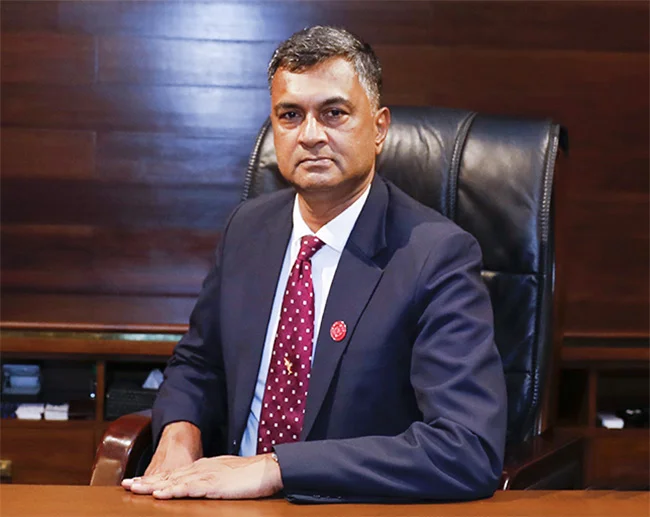
Defence Secretary (retd.) Air Marshal Sampath Thuyakontha has discussed with UN officials in New York the deployment of Sri Lankan troops in Haiti, under a new UN authorised force, tasked with tackling heavily armed gangs operating in the violence ravaged country.
The UN is in the process of building up a force comprising approximately 5,500 officers and men for deployment in Haiti.
The Sri Lankan delegation included Sri Lanka’s Permanent Representative to the UN, former Chief Justice Jayantha Jayasuriya. The UN has tagged the deployment Gang Suppression Force (GSF).
According to the Defence Ministry, Sri Lanka negotiated a Memorandum of Understanding (MoU) regarding the GSF. Although Sri Lanka has contributed to UN-led missions, the proposed deployment differed due to the nature of the operation, sources told The Island.
The delegation has assured that all personnel, assigned for UN missions, including the proposed GSF deployment in Haiti, would be subjected to a comprehensive screening process, in line with UN standards. War-winning Sri Lanka has declared, in New York, that the country was in the process of developing, what the Defence Ministry here called, National Human Rights Vetting Mechanism in consultation with the UN Resident Coordinator in Colombo.
The US has backed the deployment of Sri Lankan troops under UN command. Various interested parties, over the years, protested against the deployment of Sri Lankan troops on the basis of unsubstantiated war crimes allegations.
Thuyakontha has assured that troops would maintain highest standards of discipline during overseas missions. Sri Lanka brought the war here to a successful conclusion in May 2009 against predictions of contrary outcome by so-called experts.
The US and Panama proposed the GSF to replace a Kenya-led multinational force undermined by a lack of funding. Its strength hovered around 1,000, rather than the desired 2,500. The U.N. Security Council authorised the 5,500 strong force on September 30, 2025, with the new power to arrest gang members.
By Shamindra Ferdinando
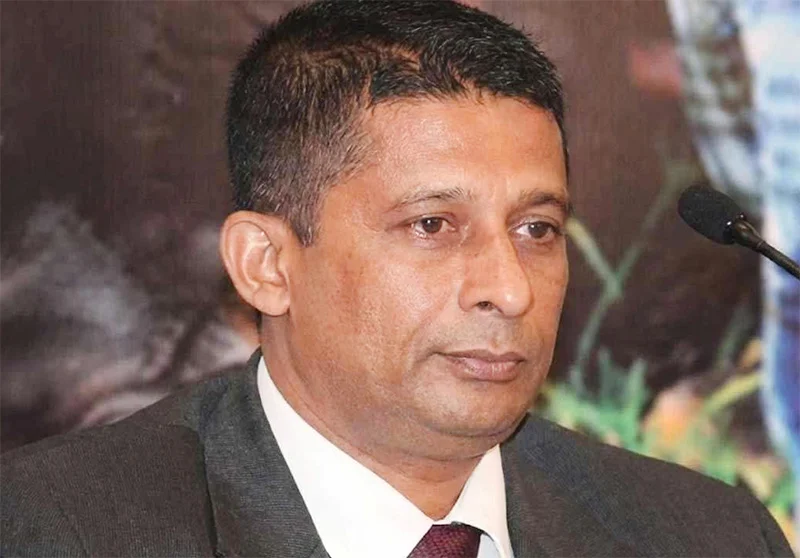
Sallay’s case:
Attorney-at-law Udaya Gammanpila yesterday (27) said a lawyer could not be deprived of his or her right to represent a client.
The former Minister and leader of Pivuthuru Hela Urumaya (PHU) Gammanpila said so addressing the media at the party headoffice at Pita Kotte. Gammanpila was responding to recent media reports that he had been prohibited from representing retired State Intelligence Service (SIS) Chief Maj. Gen. Suresh Sallay. Therefore, there was absolutely no basis for claims that he had been barred from meeting the retired officer, now named the third suspect in the Easter Sunday case, the ex-parliamentarian said.
Gammanpila emphasised that in terms of the Constitution a suspect’s right to be represented by a lawyer was recognised as a fundamental right. The Criminal procedure Code, too, guaranteed the suspect’s right to consult a lawyer, the ex-lawmaker said, pointing out that the Judicial Organisation Act underscored the same.
Declaring that the retired officer’s wife had named him as Sallay’s lawyer in a letter addressed to Director, CID, Gammanpila said that the courts, police and the Attorney General’s Department couldn’t under any circumstances interfere with his right to represent Sallay.
The CID arrested Sallay on 25 February and detained him under Prevention of Terrorism Act (PTA) for a period of 90 days. Sallay has filed a writ petition before the Court of Appeal through his lawyers, challenging his arrest and detention by the CID under the PTA.
Former Minister Gammanpila said that even if a Magistrate had the power to prohibit a lawyer from representing a particular suspect, such a course of action couldn’t be resorted to without giving the lawyer concern an opportunity to explain his/her actions.
Declaring that in case of misconduct on the part of a lawyer only the Supreme Court could take disciplinary action, the PHU leader said, adding that he sought a certified copy of the proceedings of the day when a section of the media reported the Magistrate’s declaration of the purported ban. Gammapila said that he was really keen to know what happened during the proceedings on that day.
Sallay served as Director, Directorate of Military Intelligence (DMI) from 2012 to 2016 and received the appointment as head of SIS following the 2019 presidential election. Sallay held that appointment till early October, 2024.
Gammanpila said that he couldn’t be barred for speaking to the media after meeting Sallay, currently held under PTA, or for authoring a book on the 2019 Easter Sunday carnage. According to Gammanpila as long as the suspect had no objections to his lawyer sharing some information with the media it shouldn’t be an issue for Additional Solicitor General Dileepa Peiris.
By Shamindra Ferdinando
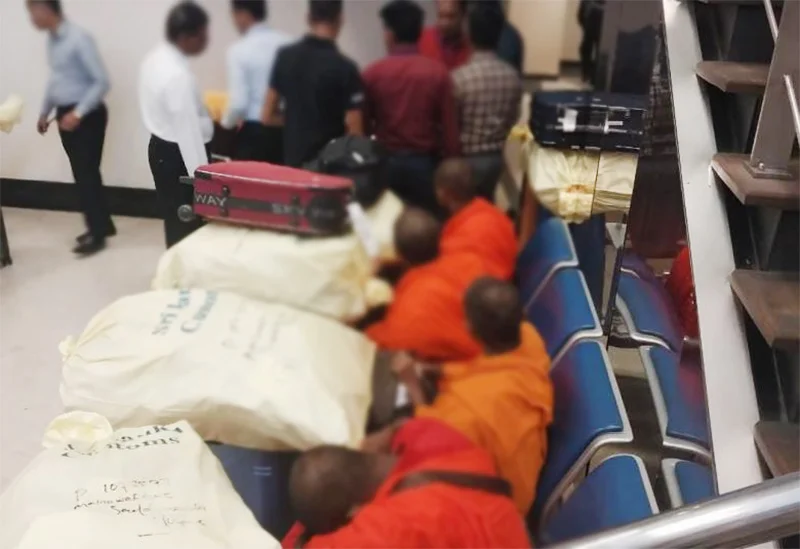
Police investigating the thwarted a bid made by 22 Buddhist monks to smuggle in narcotics, with a street value of Rs 660 mn via BIA, from Thailand, over the weekend, believe the monks who organised the clandestine operation had sent groups of monks to Thailand before.
Sources said that they had brought in narcotics on earlier occasions.
Police have seized the mobile phones used by the suspects and sought INTERPOL assistance.
Earlier, the Negombo Magistrate’s Court remanded those 22 monks, arrested in connection with the largest drug bust in the airport’s history.
The monks were produced before the Negombo Magistrate’s Court and ordered to be held in custody until 02 May, as investigations continue into the alleged smuggling operation and any wider networks involved.
However, other sources said that more than 110 kilogrammes of suspected Kush and Hashish, with an estimated street value exceeding Rs 1.1 billion, had been found, concealed in false-bottoms of their suitcases. The bags reportedly packed with school supplies and sweets are said to have contained over five kilogrammes of narcotics per individual.
The arrests followed a raid by the Police Narcotics Bureau on Saturday night. Investigators have also recovered mobile phone evidence indicating that the group had travelled to Bangkok on 22 April using airline tickets allegedly given by a sponsor. Authorities allege that the suspects were photographed in civilian clothing, while overseas, engaging in activities deemed suspicious.
Police say this marks the first reported instance of a large-scale narcotics operation via the airport involving Buddhist monks. The suspects are young monks from different parts of the country.
By Norman Palihawadana

Plane crashes near South Sudan’s Juba, killing all 14 on board

Gunmen kidnap 23 children from Nigerian orphanage

US press gala shooting suspect charged with attempting to kill Trump

Showers above 75 mm are likely at some places in the Western, Sabaragamuwa, Central, North-western, North-central and Southern provinces and in Mannar district

Hazlewood and Bhuvneshwar lead rout of Delhi Capitals

Govt. assures UN of readiness to introduce ‘vetting process’ for troops on overseas missions

‘Dates have the highest sugar content to fight Coronavirus’

Sunday Island 27 December – Headlines

#SundayIsland 17th December – Headlines

Sunday Island – 28th March

Sunday Island Headlines – 21 March

Sunday Island – 21st February – Headlines
-

 News6 days ago
Lanka faces crisis of conscience over fate of animals: Call for compassion, law reform, and ethical responsibility
-
 News5 days ago
Whistleblowers ask Treasury Chief to resign over theft of USD 2.5 mn
-

 News5 days ago
No cyber hack: Fintech expert exposes shocking legacy flaws that led to $2.5 million theft
-

 News2 days ago
BIA drug bust: 25 monks including three masterminds arrested
-

 Business3 days ago
Nestlé Lanka Announces Change in Leadership
-

 News2 days ago
Banks alert customers to phishing attacks
-
 News3 days ago
Hackers steal $3.2 Mn from Finance Ministry
-

 News6 days ago
USD 2 mn bribe: CID ordered to arrest Shasheendra R, warrant issued against ex-SriLankan CEO’s wife