
Business
Sathosa Motors celebrates 60 years of excellence and partnership with Isuzu


Sathosa Motors PLC
Positioned at the forefront of the commercial vehicle industry segment, Sathosa Motors (SML) PLC celebrates its glorious 60th anniversary in 2022, coinciding with its 60th year of partnership with Isuzu Japan since 1962, the most trusted Japanese truck brand and the market leader in the Japanese commercial truck segment in Sri Lanka. SML can be credited with the rise in popularity of Japanese vehicles in Sri Lanka, making Isuzu the most sought-after vehicle by fleet owners, the government sector, etc. SML is now star-rated by Isuzu Motors Japan, a distinguished quality standard provided for the facility, customer experience, technical expertise, and standard equipment usage, and among the top 16 Isuzu dealers worldwide. Sathosa Motors PLC (SML) is also the franchise holder for Isuzu vehicles, Isuzu Marine Engines, and Isuzu Genuine spare parts manufactured by Messrs Isuzu Motors Limited.
Proud history
Isuzu vehicles and spare parts imports and sales were handled by the New Vehicles & Machinery Department of C.W.E. up to 1985. The Ministry of Trade and Commerce under whose purview C.W.E. operated, decided to convert the New Vehicles & Machinery Department as a fully owned subsidiary company of the Co-operative Wholesale Establishment titled “Sathosa Motors Limited” on 1 January 1985 to give more freedom to carry on business operations efficiently, facing competition from other vehicle dealerships. Access Engineering PLC (AEL), a leading business enterprise in Sri Lanka, acquired the shareholding held in Sathosa Motors PLC by ITOCHU Corporation of Japan in February 2012. Subsequently, through the mandatory share purchase offer Access Engineering increased their shareholding up to 84.42%. In its most recent pioneering achievement, SML introduced the EURO IV emission standard commercial trucks in 2018, the first brand new EURO IV vehicles to enter the market. SML has commenced sales of Isuzu Marine Engines in 2021, continuing its legacy of the highly reliable diesel engine in the Marine Sector.
Christopher Joshua, the Managing Director of SML said, “We are delighted to celebrate SML’s 60th anniversary this year and to be reputed as the market leader in the Japanese commercial truck category of the automotive industry. During this landmark year, we are also celebrating 60 years of our partnership with Isuzu, a renowned vehicle brand in the world. We are grateful to Isuzu for retaining their faith and confidence and support to SML for over six decades and for bestowing a coveted star rating to SML as one of its best 16 dealers worldwide, which is a real honour for SML and reflects its professional and trustworthy service. Buoyed by our loyal customer base and ability to adapt to the new normal, SML is driving a new identity in aftersales services for strengthening its leadership position.”
State-of-the-art aftersales facilities
Six decades later, SML has created a value proposition for its loyal customer base by providing unmatched after-sales care service. The company’s key business lines are sales of new vehicles, spare parts, marine engines; and workshop services. SML caters to the country’s need for reliable, low-maintenance transportation solutions, especially to the business community.
One of the main reasons why SML has carved out a leadership status in the commercial vehicle segment is its renowned Isuzu diesel engines, time-tested, reliable, durable, and efficient. Moreover, SML possesses the expertise for commercial engines and repairs which ensures superlative after-sales service to Isuzu customers. The company has built a long-term customer base, many of whom use only Isuzu in vehicle fleets we can call it a prestigious customer base, which represents every sector in our economy.
SML has state-of-the-art aftersales facilities at Vauxhall Street Colombo, Peliyagoda, and Kurunegala. SML has made substantial investments in developing workshop facilities, upgrading them with world-class equipment such as Hydraulic Lifts up to 30T, imported precision tools, and other major facility upgrades. SML’s investments in workshop facilities reaped benefits through the pandemic, enabling the company to post a reasonable performance. Although the sector had a slow start due to the COVID-19 lockdown, steady growth in the volumes at workshops was seen and the year recorded the historic highest in revenue.
The head office and Peliyagoda workshop facilities have been upgraded and improved, increasing workshop capacity. Altogether, the Group has increased its workshop capacity by four times than its previous capacity, catering to a larger clientele in more regions. In its service and repair solutions, the workshops provide services that include all minor and major vehicle spare parts supply and repair as well as lubricant support. SML workshops rely on a range of advanced technology equipment installed for collision repair and analytics. The machinery is operated by skilled and versatile technicians trained locally and overseas, to the stringent manufacturers’ standards of operation.
SML is re-assessing the traditional methods of client servicing to identify innovative ways to reach and service clients more conveniently, safely, and efficiently. In addition, the company is keenly assessing its internal processes, systems, and IT infrastructure to streamline and increase efficiencies in the supply chain.
Marine Engines
The company has been making rapid inroads into the Marine Engines segment, having sold as many as 20 engines within a year of commencing this product line. The brand of marine engines is being well accepted by the fishery industry and boat owners. The Made in Japan brand new marine engines supplied by SML are popular around the world and deliver higher fuel efficiency and reliable performance over a long duration. Backed by an all-island dedicated aftersales support, with Isuzu trained and certified technicians and spare parts supply, the company is building a steady inflow of repeat customers who have provided excellent feedback on the performance of SML’s marine engines.
Strategic expansion plan
Strengthening its position further, SML is expanding its position as a trusted leader in the automotive industry, investing extensively in workshop facilities, and setting up new branches in strategic locations in selected cities. In 2021, a new branch was opened in Negombo focusing on inboard marine engines and spare parts sales. SML aims to expand the workshop and spare parts facilities in the coming year, offering new and existing customers’ direct access to obtain after-sales services from regional branches. In addition, where required, the Company is keen to appoint dealers in remote areas to support customers. The Company now has 10 locations providing after-sales service, of which 03 spare parts branches were opened in Dambulla, Kandy & Badulla in 2021.
Commenting further, Priyantha Perera, Executive Director of SML said, “Despite 60 years in the industry, SML remains agile and has transformed from a sales-oriented company to an aftersales service-oriented company by driving network and service expansion to provide superior aftersales service. Our workshops have state-of-the-art facilities which are the gold standard in the industry and the only such dedicated facility for commercial vehicles which distinguishes our offering. A significant investment was made to enhance infrastructure in the workshops including vehicle painting services in a pleasing ambiance. SML has single-handedly developed the Japanese truck segment, carving out 60% of the market share. More importantly, our workshops offer services to all brands of vehicles although the core business remains Isuzu vehicles. Our teams are professionally trained here and abroad while continuous training is given to ensure they remain at the cutting-edge in vehicle servicing, repairs, and maintenance.”
Why a reliable vehicle aftersales services matter
The reason why people opt for reputed vehicle brands is to ensure they have access to proper vehicle maintenance and care from a qualified after-sales provider. These factors contribute in a major way to the longevity of the vehicle, the safety, and optimization as well as reducing repair costs over time due to the fact that the vehicle is maintained in the best shape by the aftersales service provider. SML has built strong relationships based on trust and reliability with its customers over the years.
The Company plans to grow the after-sales and spare parts segment of the business and introduce new business ventures beyond its traditional and comfort product lines. As a trusted partner for a wide customer base island-wide, SML extends sound advice including the need to maintain vehicles in good running conditions by having them checked regularly, as the ban on vehicle s imports may not be lifted in the foreseeable future.
Vehicles need to be regularly checked, serviced, and attend to any pre-mature irregularity immediately without damaging the vehicle further. Usage of genuine spare parts is important to keep the vehicle in good condition while good servicing and proper care enhance the performance as well as the longevity of the vehicle. In order to maintain the vehicle in pristine condition, you need a reliable after-sales care partner. SML is fully geared to provide that service – offering a free health check-up for Isuzu vehicles using specialized tools imported from Japan that diagnoses the current condition of the vehicle and its performance and recommends suitable repair and maintenance tips. As most Isuzu vehicles are used for the distribution of essential services, we at SML are ready to provide exceptional and uninterrupted service during this period of hardship to keep 100% uptime of Isuzu vehicles to serve the entire nation.

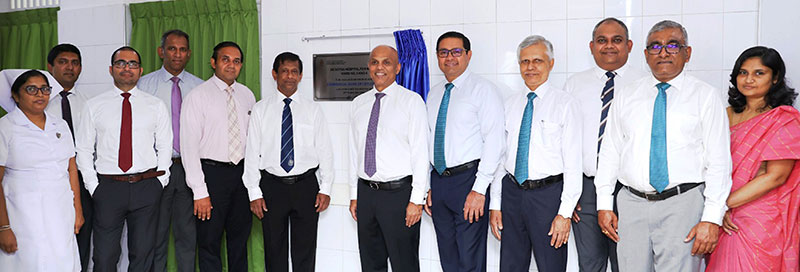
The Commercial Bank of Ceylon recently handed over Wards No. 03 and 04 of the De Soysa Hospital for Women, after the completion of a comprehensive renovation project launched in March this year to mark International Women’s Day.
Wards 03 and 04 handle a substantial share of the hospital’s patient load, and account for approximately 2,500 to 3,000 deliveries and 4,000 to 5,000 admissions annually. Their refurbishment was designed to significantly enhance patient care, safety and comfort, and directly benefit thousands of mothers and newborns.
Five Trustees of the Commercial Bank’s Corporate Social Responsibility Trust participated in the formal handing over of the refurbished wards to the hospital authorities. They were Sharhan Muhseen, the Bank’s Chairman, Raja Senanayake, Deputy Chairman, Sanath Manatunge, Managing Director/CEO, Hasrath Munasinghe, Chief Operating Officer, and Prasanna Indrajith, Chief Financial Officer.
Established in 1879, the De Soysa Hospital for Women is the first maternity hospital in Sri Lanka and the second oldest in Asia and is credited with, among others, performing the country’s first caesarean section in 1905 and establishing one of its earliest organised operating theatres in 1907.
The Commercial Bank’s Corporate Social Responsibility Trust, through which this project was implemented, has via its healthcare-related interventions supported more than 100 government hospitals with essential equipment and infrastructure, contributed to emergency medical services through the ‘Adopt an Ambulance’ initiative, and implemented targeted community health interventions such as water storage solutions for families affected by kidney disease.
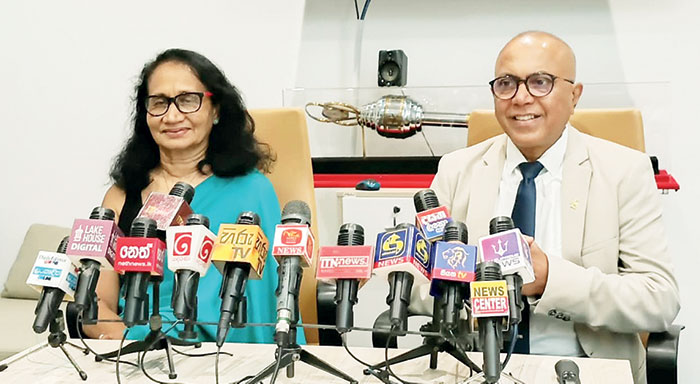
The International Institute of Health Sciences (IIHS) Multiversity is expanding its international education programmes with the aim of creating overseas employment opportunities for Sri Lankan nurses and allied health professionals while contributing to foreign exchange earnings.
Speaking to the media during a conference at IIHS Multiversity in Kerawalapitiya, Dr. Kithsiri Edirisinghe, CEO, Co-Founder and Dean of IIHS aid that the institute has established academic partnerships with overseas universities and higher education institutions, including the University of Surrey in the UK, Deakin University in Australia, Metropolia University of Applied Sciences in Finland, Asia e University in Malaysia and SUNY Canton in the United States.
Under its ‘Study in Sri Lanka, Graduate to the World’ model, students can complete foundational and diploma-level qualifications locally before progressing to international top-up degrees or overseas employment.
Dr Edirisinghe said the model could substantially reduce the cost of obtaining internationally recognised qualifications. It estimates that completing a four-year bachelor’s degree at the University of Surrey in the UK would cost about USD 145,700, including tuition and living expenses, compared with about USD 27,750 through the IIHS pathway in Sri Lanka.
Dr Edirisinghe said the institute’s focus on overseas deployment addressed both Sri Lanka’s economic needs and the growing global demand for healthcare workers.
“Our winning model is producing job-ready, registration-ready healthcare professionals who can seamlessly enter foreign healthcare systems,” he said.
IIHS, which began operations in 2002 as the American College of Health Sciences, established its institutional base in Welisara in 2008 and launched its purpose-built greenfield multiversity campus in 2023.
The institute said it has upgraded the qualifications of more than 5,000 government nurses, supported over 2,500 youth on international employment pathways and trained more than 1,000 allied health professionals. It has also carried out over 250 community health projects.
The institute has identified Germany and Japan among its target markets, with pathways planned for 2,000 nurses for Germany and a one-year preparation programme linked to around 4,000 healthcare positions in Japan.
Dr. Renuka Jayatissa, Vice-Chancellor and a specialist medical doctor, said demographic changes and the growing burden of non-communicable diseases were changing healthcare requirements in Sri Lanka.
Business
Sampath Bank launches Sri Lanka’s first community-powered book discovery platform at Colombo International Book Fair
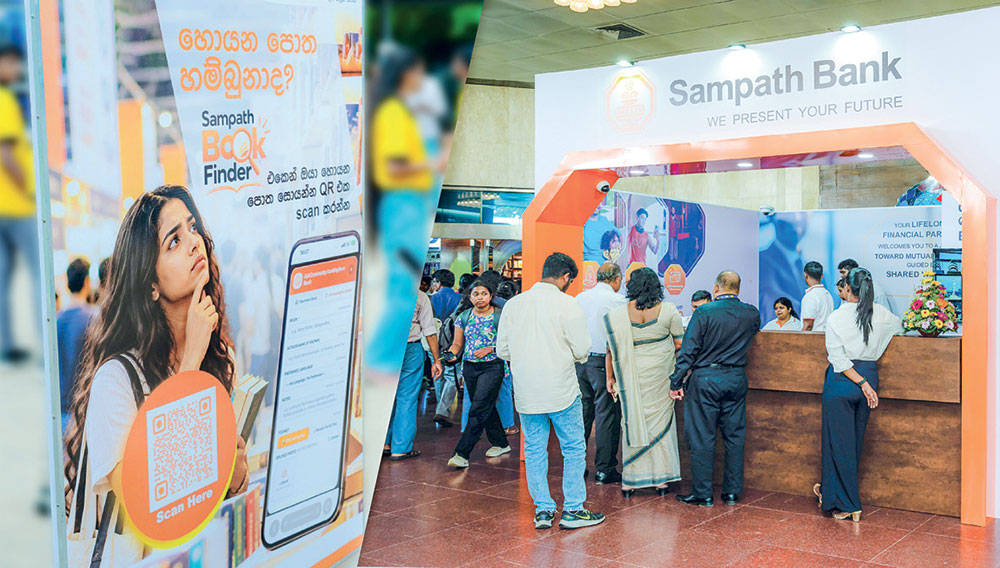
Sampath GPay customers can enjoy 25% cash back on Book Fair purchases
Sampath Bank PLC has launched Sampath Book Finder, Sri Lanka’s first community-powered book discovery platform, giving visitors to the Colombo International Book Fair a faster and more seamless way to find the books they are looking for across the fair’s 150+ stalls, while also opening up new opportunities to discover titles recommended by fellow readers.
Introduced on the opening day of the Colombo International Book Fair on 25 September, Sampath Book Finder brings together digital innovation and the collective knowledge of readers to address a familiar challenge at one of Sri Lanka’s largest literary gatherings, where the scale of the fair can make locating a particular title a time-consuming exercise. When a book proves difficult to locate, visitors can access bookfairtracker.com or scan the designated QR code and submit a request to the community, allowing readers who have already spotted the title to share its location and help others find it without having to search stall after stall.
Commenting on the initiative, Milinda Weerasinghe, Chief Marketing Officer, Sampath Bank PLC, said, “At Sampath Bank, we believe meaningful innovation begins by identifying everyday challenges and creating solutions that make a real difference. Sampath Book Finder brings this thinking to the Colombo International Book Fair by turning the collective knowledge of readers into a real-time digital solution, empowering them to find what they are looking for, discover something new and help others do the same, while making the overall experience more convenient and connected.”
The platform also turns book discovery into a shared experience, allowing visitors to recommend books they encounter by sharing the title, publisher, hall and stall number, which enables fellow readers to discover sought-after titles and recommendations while making it easier to locate them within the fair.
Sampath Bank’s longstanding association with the Colombo International Book Fair also continues in 2026, marking more than 20 years of partnership, with the Bank serving as the Official Banking Partner for this year’s fair. As part of its presence at the event, SampathCards offer 25% cashback for Sampath GPay customers on their purchases and 3 months 0% instalment plans for book purchases via Sampath credit cards, while visitors can also access banking services through the Bank’s physical presence at the fair. Customers registering to open selected Fixed Deposits at the premises will receive an additional 0.25%, adding further value and convenience for visitors.

Debris found from plane that went missing off US coast

Construction of Jet A-1 Aviation fuel pipeline and new oil tank complex at Muthurajawela begins under President’s patronage

Landslide Early Warnings issued to the Districts of Kandy, Kegalle, Matale and Ratnapura

No handshakes and a delayed ceremony as India beat Pakistan at Asian Games

Showers or thundershowers will occur in most parts of the island after 1.00 p.m

Lanka enters new phase of prosecutions as hurdles clear

‘Dates have the highest sugar content to fight Coronavirus’

Sunday Island 27 December – Headlines

#SundayIsland 17th December – Headlines

Sunday Island – 28th March

Sunday Island Headlines – 21 March

Sunday Island – 21st February – Headlines
-

 News7 days ago
Police remove Thileepan statue in Jaffna
-

 Features7 days ago
The 22nd Amendment, constitutional recovery and illiberal slippage
-

 Features7 days ago
Of foreigners as CEOs of Lankan ventures
-

 Latest News5 days ago
Gold winner Tharanga gets brand-new Honda Vezel from SLAAJ
-

 News7 days ago
Sajith rejects Jt. Opp. protest sabotage claim; SJB TU chief demands remedial action
-

 Features5 days ago
Why Sri Lanka needs an Inclusive Civic Nationalism – urgently
-

 News4 days ago
US-assisted ‘Ice’ detection: NPC to examine IGP’s move to transfer drug-busting team
-

 Features6 days ago
Thailand’s biggest new global star …